Crash: The Political Ecology of the Car Economy

I

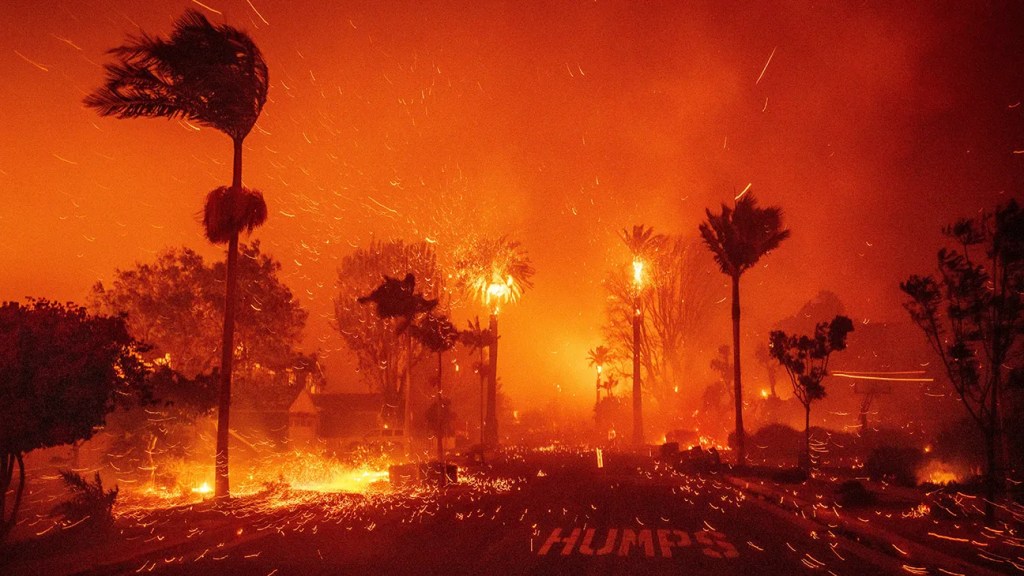
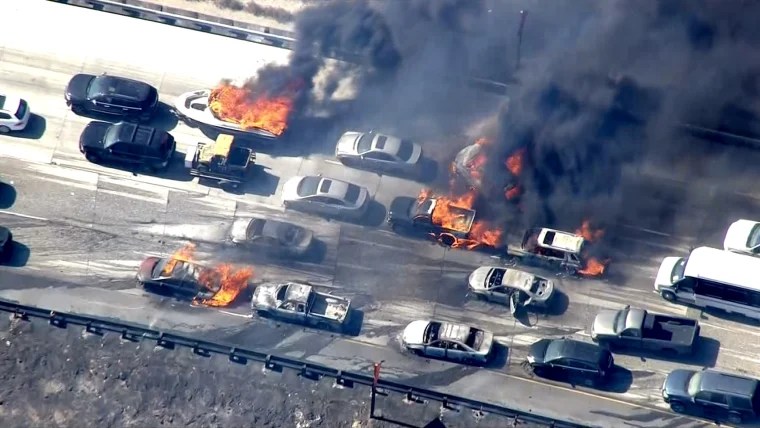
This summer wildfires severely impacted Europe especially Spain and France where infernos threatened Madrid and Bordeaux and hundreds of thousands of people were evacuated from their homes. In Britain firefighters responded to almost a thousand reports of wildfire while Italy, Greece, Croatia, Albania, Ireland, the Netherlands, Belgium and Ukraine were also affected. Though Europe is the fastest warming region virtually every continent was touched by wildfires. Fierce, recurring heatwaves created tinderbox conditions. Britain has had five successive heatwaves with many wildfires. These were all the result of burning fossil fuels and pumping GHGs into the atmosphere.

By now the truth of climate breakdown is surely understood by everyone even the bad faith contrarians who enjoy megaphoning denialism. Spain, France and Britain’s political leaders – Sanchez, Macron and Burnham all concede anthropogenic climate breakdown is causing their country’s wildfires. Yet governments everywhere are still failing to meet the challenge of climate breakdown with sufficient urgency. Prolix promises remain promises while supposed moves away from oil, coal and gas, are delayed or swerved despite the incontrovertible fact the heatwaves will return again soon.     

Before the apocalyptic wildfires in Europe, the adoption of Green policies was already faltering in the EU amidst signs of opposition from some political parties and voters, particularly but not exclusively on the right. Climate action hesitancy at the political summit of society is apprehended by the public. In Britain, the newly installed PM Andy Burnham, was immediately tested: should disposable BBQs be banned when ongoing wildfires had destroyed 57,000 acres of land and homes? Eventually Burnham opted for a risible temporary ban while reports suggest he’ll allow drilling to proceed in the Rosebank and Jackdaw oil fields in the North Sea.

Commitments to cap the rise in global temperatures at 1.5 degrees centigrade was agreed by 194 parties including the EU when the 2015 Paris Climate Agreement was signed. Since 2015 individual countries have adopted legally binding targets to achieve Net Zero to honour the overall goals of Paris and move away as quickly as possible from peak global emissions. Mitigation of GHG emissions demands a sustained global effort and would mean nothing less than a major transformation of society especially energy, transport and consumption. 

The recent fifth edition State of Climate Action 2025 (produced by the US based National Oceanic and Atmospheric Administration), translates the Paris’s chief climate goal into actionable targets for 2030, 2035 and 2050, covering key sectors like energy, agriculture, building, industry, forests and land. Of 45 benchmarks none are on track to contribute capping warming at 1.5 degrees centigrade. While most indicators are heading in the right direction many indicators are alarmingly “well off track.”

The overall message is: climate action needs to be stepped up. Deforestation (10% of global GHGs) is ongoing threatening biodiversity. Currently we are in the midst of the Sixth Mass Extinction since life began 3.7 billion years ago because of human activity. The largest source of GHGs in the energy sector is coal and we need to ditch it fast. Funds for climate action need to be scaled up. Climate action finance hit a high of $1.3 trillion in 2023 (mainly in China and Europe) but $1 trillion is needed annually. In comparison public fossil fuel finance has received $75 billion annually since 2014. Meanwhile steel decarbonisation has stalled. Introducing decarbonised cement (the second most used material or resource after water) is virtually non-existent because of prohibitive costs and endemic low profitability in the sector (see below). Expanding rapid transport networks (buses, light rail, metros) needs to be 5 times faster. Other mitigation measures like technological carbon capture or removal also need speeding up (10 times faster), and so on.  

Effective climate action faces formidable obstacles while further rises in GHG are already locked-in. Meanwhile the Anthropos may already have passed certain ‘tipping points.’ Coherent climate action is hampered by our geopolitical moment in the hyper-modern era such as the retreat from global norms of governance and international law, the rise of revanchist nationalism and Leviathan’s renewed appetite for unilateral action such as re-territorialisation and war. The chaos of conflict is not only producing more GHG emissions but makes breaking the fossil fuel habit harder. Russia’s war to conquer eastern Ukraine and reassert its hegemony over Kyiv is funded by selling its fossil fuels.    

A prominent sign of the clean energy future is the rise in EVs which promise to remake transport whose main arch is the car economy. EVs are considered a leading edge of the energy ‘revolution.’ But would simply replacing the GHG emitting Internal Combustion Engine (ICE) with electric actually deliver the transition that’s needed? We question this conclusion below while sketching a political ecology of the car economy. This argument echoes past critical voices overlooked in current discussions about transport and Net Zero. Instead it’s often assumed climate action would leave the world largely unaltered. But a more radical remaking of global transport is needed than simply replacing ICE vehicles with EVs. The car is central to life currently but is it viable in the longer term? Perhaps only a sustainable civilization that abandoned the car would stave off species ecocide?

Before addressing such a question let’s begin by running a quick eye over the ‘EV revolution.’   

II

Around 5% of the total global car stock is EVs (80 million vehicles including battery and plug-in hybrids) while 25-30% of vehicle sales are EVs (this proportion is growing). The more new cars sold are EVs, the more their share of the global car fleet. Also technology is improving (longer battery life, faster charging), costs are falling, government support for EVs, charging infrastructure and clean energy is growing – all important steps but the pace of change needs to accelerate.

China leads the charge to a clean energy future with over half of global EV sales while rapidly introducing the essential charging infrastructure. These are key state-led priorities while the size of China’s domestic market is a huge boost to global climate action. In 2025 20 million EV cars were sold – one in four of all cars sold globally. China built 60% of these vehicles. Though China was the biggest market Europe was the fastest growing EV market in 2025. Norway led with EV sales hitting more than 95% of new cars sold – 30% of all Norwegian vehicles though this includes plug-in hybrids. Sweden and Denmark followed with 58% and 56% respectively while 48% of all car sales in China were EVs (joint fifth highest of 2025). Norway’s flourishing EV market demonstrates the importance of generous subsidies encouraging EV uptake.

China, Europe and the US shared 95% of all EV sales though other regions have started their journey to adopt EVs. Ultimately success will be clinched by the coverage of a plug-in charging infrastructure. Equally government subsidies and regulatory support reinforce public confidence the future lies with EVs and clean energy. Most EV charging is at home while two thirds of public charging point installation since 2020 was in China. Here the ratio is 1:10 (charging points to EVs). The US has 200,000 public charging points while there are a million plus in Europe which leads on coverage density (fast chargers every 50km on autoroutes). Everywhere charging points are getting faster.

If emissions targets are to be hit all road vehicles will have to be electrified. For example heavy duty trucks are 10% of ICE road vehicles but produce 70% of all ICE CO2 emissions. In 2024 75,000 EV trucks were sold in China. China was the best performer and was also the biggest market for electric buses. In 2024 Volvo and Scania introduced electric trucks with a range of 600km. The NOAA’s SoCA 2025 report argues EVs will need to reach 75-95% of all passenger vehicle sales by 2030 if transport is to contribute to limiting global warming to 1.5 degrees centigrade. Given the global community is “off track” on transport the EV uptake will have to be faster while any temptation to relax benchmarks is resisted. More is needed everywhere.

Still the question remains: will replacing ICE vehicles with EVs deliver the global transport revolution that could properly tackle climate breakdown?

 III

In some corners of social science and political economy, the global order after 1945 was defined as Fordism (or sometimes, relatedly, Americanism). Though Fordism as a neologism originated in the 1920s a decade after Henry Ford’s Highland Park plant in Michigan started producing Model T automobiles, its most celebrated usage was by the Italian Communist Antonio Gramsci who elliptically explored the idea of Fordism, Taylorism and Americanism in a fascist prison cell.  

Gramsci was a university student who joined the Italian socialists (PSI) in 1913. He politically cut his teeth among the militant car workers of Turin northern Italy. Many of these workers had migrated from the countryside. Gramsci himself was a transplant from Italy’s impoverished rural south (Sardinia). Gramsci was ambivalent about Fordism which subordinated workers to a labour process now fully capital’s object (Marx’s real subsumption of labour-power coeval with the destruction of artisanal labour and craftism). But Fordism was the future supposedly encapsulating a more ‘rational’ social organisation than the admixture of old and new typical of Europe. Fordism and Americanism promised to liquidate the pre-modern survivals of European society. In the Soviet Union of Lenin and Trotsky, Henry Ford’s cult flourished among workers and intellectuals.

Analysis didn’t narrowly define Fordism but understood standardised mass production underpinned consumerism while this model was exported and imitated across the world. Fordism lent stability to the mid-C20th world economy. Developed economies enjoyed full employment and affluence reflected in organised labour’s apotheosis, especially in Western Europe where Labour/Social Democracy established a consensus uniting cradle to grave welfarism and expansive state intervention.       

Today cars are everywhere and we are auto dependent but originally they were “playthings of the wealthy” (Peter Dauvergne). It’s worth emphasising more radical critiques of the global car economy are rarely aired when deliberating about climate action. Andre Gorz criticised a political economy that allowed a luxury object to become a mass-produced object available to the many. Cars were not discrete use objects like a bicycle but required extensive auxiliary businesses, infrastructure and the oil industry to support them. The symbiotic relationship of cars and oil meant every car owner was a customer for Big Oil’s ‘gas.’

Gorz argued the car was inherently contradictory, a “luxury object undermined by its dissemination.” He employed an analogy illustrating his point: grant everyone a villa on the Riveria, the Riveria would cease to exist. Society faced a social choice: continuing elite access to the Riveria (villas, private beaches, exclusive views and so on) or socialise the Riveria and create public beaches and turn villas into guest houses, public gardens, public swimming pools and so on.

The car economy has profoundly remade the built environment of towns, cities and beyond. As the spatial was reconfigured all other modes of transport were either pushed aside or subordinated to the car’s primacy. Cars were consumerism gone awry. Invoking an older language Gorz suggested this primacy was a triumph of “bourgeois ideology” – a dominant social imaginary exalting the car as freedom or self-contained independence, a metal silo separating people from people. If the consumer qua car owner was sovereign, the Other was an obstacle. But universalising the car was killing the car itself or at least the notional freedoms of the car.   
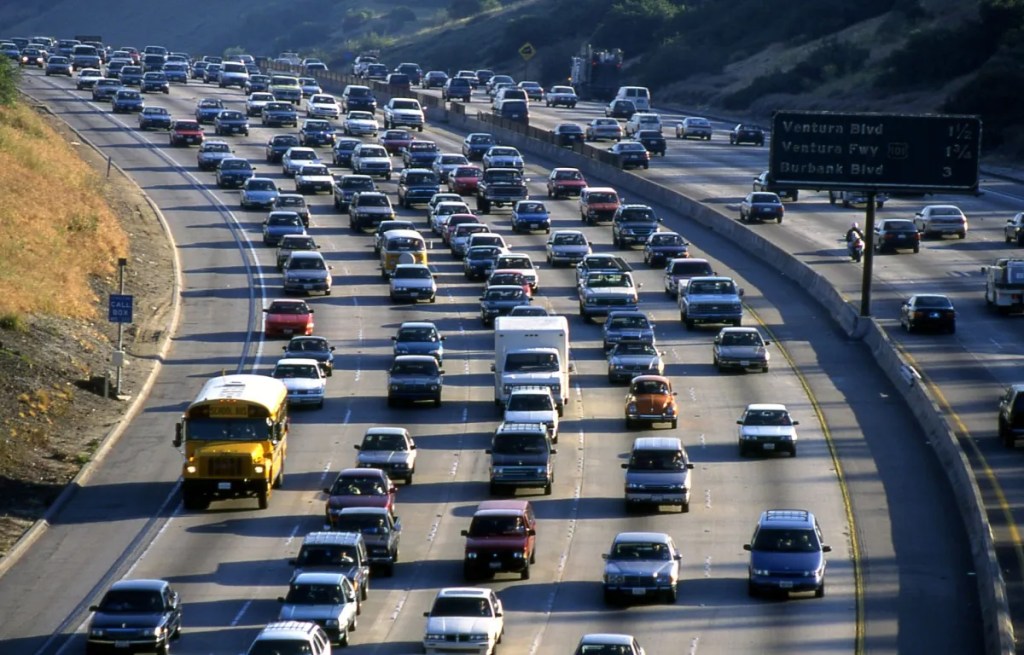
          

Currently there are 1.7 billion cars, trucks and commercial vehicles globally. That is one vehicle for every 4.8 people. Road transport accounts for 12% of global GHG emissions.

Henry Ford and rivals like General Motors created the mass automobile market for the ‘common man.’ The modern assembly line was adapted from innovations introduced in the Chicago meatpacking yards in the 1860s. Prices were slashed to near cost, costs was constantly lowered, politicians were lobbied and rival transport forms like the electric trolley bus, were crushed or marginalised. ‘Obsolescence’ was a built-in feature of cars as old models would be replaced by new models. Cars were ultimately products of consumption, ultimately disposable with the negative consequences this entailed for the environment.     

The Model T car first appeared in 1910. Growth was rapid with the Highland Park plant eventually churning out 15 million Model T’s before production was ended in 1927. By then half the world’s cars were Model T’s. In 1914 260,720 cars were built by a 13,000 strong workforce. Prices tumbled from $850 in 1910 to $260 in 1921, a far lower price than rivals, making the Model T affordable to the average American worker. Millions of affordable cars meant more streets and highways. The Federal Highway Act 1921 subsidised state highway departments local road building programs while states taxed ‘gas’ to raise more finance for construction.  

In the C20th a strong nexus between production and consumption was established though occasionally disrupted by recurrent economic crisis. The arrival of neo-liberalism reshaped Fordism with observers inferring post-Fordism’s arrival. The latter was considered a watershed heralding greater flexibility in production, just in time supply lines, greater automation and more widely the feminization of the workforce and the rise of new sectors like services signalling the end of jobs for life. Organised labour was also weakened. Latterly we have seen the internet’s arrival, digital tech, platform capitalism and AI that as Big Tech’s handmaiden threatens to reshape employment even further. Yet there is also continuity. Key features of Fordism remain in our hyper-modern world especially consumerism. But the citizen as sovereign consumer increasingly diminishes the citizen as endless consumption becomes sovereign.    

IV

A viable electric battery is a recent development. Cars were universally powered by the ICE using oil. As an energy source oil is a hydrocarbon (or carbon) whose source is dead animals. These ‘stores’ of carbon, the decayed remains of marine animals, zooplankton and algae which settled in many layers hundreds of millions of years ago, transformed over eons into petroleum by heat and pressure combined. Such subterranean energy sources were the vast if finite natural basis of that unnatural human enterprise: the car-carbon economy that underpinned the Second Industrial Revolution. This Second followed the First Industrial Revolution whose primary energy source was coal – still part of the energy picture two centuries later.    

The socially imaginary premise of the car-carbon economy was originally the promise of peak Americanism: freedom for the citizen. In post-war US society, the car-carbon economy brought the now symbolic America frontier simultaneously within reach and erased it as (white) flight from the cities established the suburban sprawl, new industries and employment which dictated an explosive extension of cars and roads. Car ownership and suburbia were inevitable companions. Fordism/Americanism created the blueprint for the global car-carbon economy, its spread from North American to its planetary triumph in the C20th. While fossil fuels was the world economy’s primary energy, the latter’s competitive dicta was eternal growth and endless consumption which ignored ecological limits and acted as though the resources of several earths were available.  

Fordism globalised but in the post-war decades US manufacturing inevitably lost its dominance as its share of the world car market fell from 75% in 1950 to 19% in 1991. This development was partly about new foreign competitors in other countries adopting Fordist patterns of car ownership and modifying its blueprint (lean production, automation and so on).

Today there are 1.7 billion cars and road vehicles in the world. According to the International Panel on Climate Change (IPCC) the transport sector as a whole accounted for 23% of global CO2 emissions in 2010. GHG emissions have risen 250% since 1970 during the Great Acceleration. IPCC projections for 2020-50 suggest further increases in passenger travel demand in every region of the world. The US based Union of Concerned Scientists noted cars and trucks emit a fifth of all US CO2 emissions while every gallon of gas consumed produces 23 pounds of CO2 (19 pounds straight from the tailpipe). Overall transport accounts for 30% of the US’s CO2 emissions – more than any other sector. Globally road transport’s share of all transport GHG emissions is 75%. Cars account for 60% of the road transport total – far more than any other mode of transportation. Overall the transport sector (roads, shipping, aviation and so on) is the source of 15-16% of global GHG emissions.  

Cars not only emit CO2 but also other noxious GHGs like sulphur dioxide, nitrous oxide (NO2) and particulates at levels harmful to human health despite strict tailpipe emission standards in some parts of the world. Research published in The Lancet Public Health (Britain) revealed London’s ULEZ restricting vehicles in the city centre introduced by its Mayor Sadiq Khan, helped NO2 roadside levels fall by 27% directly boosting children’s lung capacity and resulting in fewer respiratory and heart problems.

So road vehicles are a major source of CO2 emissions. Formidable obstacles face any transition to a clean energy future. Merely replacing ICE road vehicles with EVs will fall short of clean energy and emission goals if the car retains its dominant place. This is despite the endeavours of countries like China, supposedly building an electro-state according to respected observers like Adam Tooze, as it exports its clean energy revolution to receptive countries in the global South. These countries, desperate for energy, also wish to escape the disciplinary regime of fossil fuel dependence and its global backstop, an increasingly erratic US. Baleful Trumpian decisionism means full blooded support for Big Oil and fossil fuels.

V

In a 2020 study of the ‘political economy of car dependence’ Mattioli, Roberts, Steinberger and Brown (henceforth MRSB) examined the difficulties of decoupling ‘human well-being’ from the car and fossil fuels. The authors identified five major constraints on any radical overhaul of transport. These were: (i) the car manufacturers, (ii) the ongoing provision and maintenance of transport infrastructure especially the road network, (iii) the broader political economy or reality of urban – or suburban – sprawl, (iv) the provision of public transport, and finally, (v) cultures and patterns of car consumption.    

MRSB critically recommended a ‘systems of provision’ approach rooted in political economy. The plural aspect is key. Each element is linked to the other elements and mutually reinforcing, they form an iron cage of “carbon lock-in.” There were important subsidiary issues most importantly the state’s ‘capture’ by car manufacturers and Big Oil. It can also be argued such powerful interests were virtually immune to any accountability given democracies qua representative democracies were basically liberal oligarchies (Cornelius Castoriadis). This meant the executive was insulated from democratic control. Elected representatives played a mediatory role in a process of opinion formation and political steering whose imperatives were ultimately drafted by the executive. There is a broad political consensus on transport lending an apolitical façade to transport policy. We might say this is a largely an acceptance of ‘what is.’

Globally passenger travel is expected to increase. Currently road transport accounts for half of all final oil use. These projected increases inevitably outweigh mitigation measures for GHGs or attempts to make transport more energy efficient. MRSB believe “need satisfaction” is a hurdle for climate mitigation efforts as high car use stems from the belief cars are considered fundamental to independence. Yet near universal access or use of cars, destroys independence and social inclusion though in an environment made for cars this is a difficult criticism to land. Overall climate action and alternative transport models are incompatible with consumerism and the car’s continued dominance.

Some scientists and radical ecologists fear this is an era of Nature’s erasure, of post-Nature. Some insist the Anthropocene, the result of human activity, is here. In 2024 the International Union of Geological Sciences (IUGS) hotly debated this topic but finally voted to reject the idea a new geological epoch had displaced the Holocene, the remarkably stable geological epoch of the last 11,700 years and the foundation of settled agriculture and human civilization.

Perhaps the rhetoric of post-Nature was exaggerated though the IUGS is likely to revisit this debate soon. Recently a group of Israeli scientists led by Ron Milo proposed a novel way of thinking of human civilisation and its relation to Nature. Milo’s team calculated humanity’s actual physical output they defined as Anthropogenic Mass (AM). This AM has outweighed the living biomass of the biosphere since 2020. AM – or Partha Dasgupta’s ‘produced capital’ (roads, factories, machines, tunnels, ships and so on) – is the product of homo faber and forms civilization’s material basis. Milo’s team estimated this AM weighs 1.1 teratonnes or more than one trillion metric tonnes. A teratonne is one followed by twelve zeroes. For every living person AM equalling or exceeding her body weight is produced every week. The mass pf plastic – now everywhere – is greater than the mass of all land-based mammals, a sobering metric. The building materials of the world’s roads and highways (a mixture of aggregates, asphalt, bitumen, sand and concrete) forms a significant proportion of AM.

In a recent article in Phenomenal World Jack Copley explains how quarrying and production of cement/concrete, the world’s most ubiquitous construction material (and the most consumed article on the planet after water), contributes a staggering quarter of the world’s industrial carbon emissions. For every ton of cement there is a ton of CO2. ‘Green’ decarbonised cement is feasible but its 100% cost mark-up is prohibitive given the chronic low profitability of the sector. Cement/concrete production, requiring capital intensive plant, is crisis prone for various reasons including an inherent tendency to overcapacity as cement is relatively perishable (and doesn’t travel far) meaning localised production subject to the cyclical vicissitudes of the construction industry more generally. To this staggering emission cost we should add the aggregated mass of 1.7 billion road vehicles made from steel, iron (both 50-60% of a car’s mass), aluminium, rubber, glass, plastics and copper.

In 1896 Bridget Driscoll was the first ‘pedestrian’ killed – run over by a car in Crystal Palace. The coroner deemed Driscoll’s death an “accident” and “hoped such a thing would never happen again.” Since 1896 millions have died in road traffic accidents.The World Health Organisation (WHO) estimates 1.6 million people currently die in annually on the roads. Yet transport policy is widely seen as apolitical. There is silence about the link between consumerism and car ownership’s promotion as the acme of freedom. Yet car mania destroys the ‘commons.’ Road building, often justified as the solution to traffic congestion, spells induced demand: as congestion on two lanes is replaced by congestion on three lanes and so on.

MRSB emphasise car owners strong attachment to their cars despite the marginal cost benefits. Yet malls, schools, hospitals, workplaces, retail parks and the rest, though notionally accessible by other forms of transport, were built for cars first, buses second and trains rarely. Not all bus services are a form of public transport provision in any case. In Britain, Thatcher’s 1985 Transport Act created a deregulated bus service market which predictably led to a race to the bottom. Subsidies were cut, companies privatised, routes and service disappeared, fares rose and drivers pay was hit as passenger numbers fell. Cars dominance of social space – or anti-social space – was reinforced. Unsurprisingly households with multiple car ownership are on the rise. In 2024 a third of UK households had access to two or more cars. As MRSB conclude the habitus of car consumption feeds transport policy inertia.

With neoliberalism the state is both both deregulatory and regulatory. Thatcher’s transport policy promoted deregulation, privatisation, market forces and shareholder windfalls. Decades later the disastrous results of this policy direction are clear. MRSB emphasise the state’s role vis-à-vis transport provision described as a mixed private-public system: individuals buy cars, pay insurance and car tax etc while public pays for infrastructure via taxation. In effect the public is paying a hidden subsidy benefitting car owners. We should also recall that many roads existed before the arrival of ICE vehicles and were essentially expropriated or remade for the ICE.     

MRSB identified five key features of the car industry including high capital intensity or sunken cost (design, manufacturing and marketing), endemic overcapacity and overproduction reveal a glut of global competitors and low/or declining profit margins. Car and vehicle manufacture have an outsized economic significance for society. Presently global turnover of car manufacture is between $2.75 and $3 trillion or 1% of total global GDP (and a higher proportion of manufacturing than this figure implies). With the growing importance of computer tech, AI and the rise of ‘platform capitalism’, the main car giants aren’t as dominate as they once were but still occupy seven places in the top fifty richest corporations. At the time of writing Amazon is the wealthiest corporation while Toyota and VW are the highest placed car manufacturers.   

Economies of scale were a key feature of car manufacture. With the introduction of the single steel body in the 1920s mass production received a boost. Yet large capital investment was essential for a viable car industry but even a large domestic market (like the US and China) car manufacturers were compelled to become global producers. ‘Global models’ were made for many national markets while manufacturing was internationalised to exploit cheaper labour or gain market entry. These and other factors raised the entrance level of manufacture, driving corporate centralisation and monopolisation. State support had an important role promoting economic development. Late entrants like Japan and South Korea saw an active state using tools like import substitution and protection of domestic markets to help their fledgling industries grow. Inevitably the state today is essential to facilitate EV takeoff.

Earlier we alluded to ‘planned obsolescence’ – a market driven process treating cars as disposable or supposedly a matter of ‘consumer choice.’ New models would replace old while it was popularly believed short-lived models generated greater sales (and unnecessary waste). Yet the picture is more complicated. Obsolescence is unavoidable in a system dominated by competition and capital accumulation but is also an inherent feature of technological innovation. Car manufacture has been a leading edge of innovation and productivity overall. This is reflected in the fact cars on the road today are on average older than those from 20 or 30 years ago, partly because they were engineered and built better.

Yet as MRSB argue despite annualised model updates, the car is basically a highly standardised product offering only superficial variations in design, trim, colour and so on. High levels of fixed capital investment in manufacture limits flexibility. Such sunken costs of plant and machinery and the competitive pressure for more investment and greater productivity has paralleled a long secular decline in profitability with overproduction and overcapacity stubborn persistent features of the industry.

Though tailpipe emissions are the focus of GHGs and CO2, the car industry across the board is inherently wasteful of resources, materials with its own emission costs. Roughly 10% of a car’s lifetime carbon footprint is generated making it. Presently EV manufacture creates more GHGs than ICE vehicles primarily due to electric battery manufacture. Despite climate breakdown only superficial adjustments are being introduced by vehicle manufacturers – mainly the fanfare introducing EVs. Consider the huge growth in SUVs currently 55-60% of new passenger car sales globally. Just 20% of SUVs are EVs. Yet SUVs are heavier and larger than the average car and emit 20-25% more CO2. They are also more lethal for pedestrians in collisions especially children. Leaving aside the litany of criticism of SUVs let’s simply observe that in the age of climate breakdown, the narcissism in purchasing an SUV is extraordinary.      

VI

Currently cars dominate global transport. Still mainly based on the ICE, the car is energy and resource hungry in a way no longer ecologically sustainable in the medium to long term. Neither is the replacement of ICE vehicles with EVs and clean energy grids a wholly satisfactory solution if mass individual car ownership are retained. It seems any effort to roll back individual ownership and use will engender further battles.

In other words technology isn’t neutral – it’s always historically specific, belonging to a distinct social field as Don Ihde argues. Technology is as old as humanity as a species but the difference with the emergence of ‘civilization’ as sedentary dominance hierarchies around 5,000 years ago, is that technology was not only greatly amplified but controlled by elites and used to maintain their rule. On this understanding technology is never simply the application of technique or ‘disinterested’ science but is entangled in relations of social domination and the exploitation of Nature.

Consumerism needs to be ditched as well as forms of car use based on the separation of each from all. Separation appears to indicate complexity and differentiation in society. In contrast a social-political project aiming to rollback consumerism, might seem utopian and authoritarian, an assault on ‘choice’ and the spontaneous freedom of the consumer. But this would be a false conclusion. The car owner as sovereign consumer is nourished by an ‘illusion’ springing from a peculiar communal break with reality unable to grasp the ecological limits of human activity. For the late Bruno Latour this was a socially necessary illusion and it obscured the truth climate breakdown was an emergency. We would add an acute observation of the late French sociologist Alain Touraine who speculated late modern societies were undergoing de-modernization and de-socialisation, becoming less differentiated as various social-historical trends transformed citizens into consumers and social action once defined by doing, withered with contemporary society marked by being.

The car and the ramified infrastructure supporting it, confronts us all as a given or fait accompli. It isn’t really subject to democratic control or genuine social regulation. Any remaking of transport, society and the social-historical project to tackle climate breakdown would necessarily be democratic. In fact it would require an extension of democracy, grassroots citizens democracy to challenge corporate power and its state backers. Such a project would draw on what Cornelius Castoriadis described as the ‘revolutionary potency of ecology’ not only mobilising citizens democratic energies but fully accepting humanity’s embeddedness in Nature. The destination would be a new sustainable, balanced relation to the natural foundations of human life.

Jules Etjim August-September 2026

Some resources and reading:

Mattioli et al or MRSB The Political Economy of Car Dependence (2020): https://www.sciencedirect.com/science/article/pii/S2214629620300633?via%3Dihub#sec0004

World Resources Institute summary of NOAA annual report includes link to 2025 report: https://www.wri.org/research/state-climate-action-2025

Jack Copley https://phenomenalworld.org/analysis/cements-stubborn-emissions/

Ron Milo et al: https://www.nature.com/articles/s41586-020-3010-5

Cornelius Castoriadis The Revolutionary Potency of Ecology (1992)

Partha Dasgupta On Natural Capital: The Value of the World Around Us (2025)

Peter Dauvergne The Shadows of Consumption: Consequences for the Global Environment (2008)

Peter Freund and George Martin The Ecology of the Automobile (1993)

Andre Gorz Ecologica (2010)

Don Ihde The Philosophy of Technology: An Introduction (1993)
Strange Victories: Caesar Adrift in Persia


I

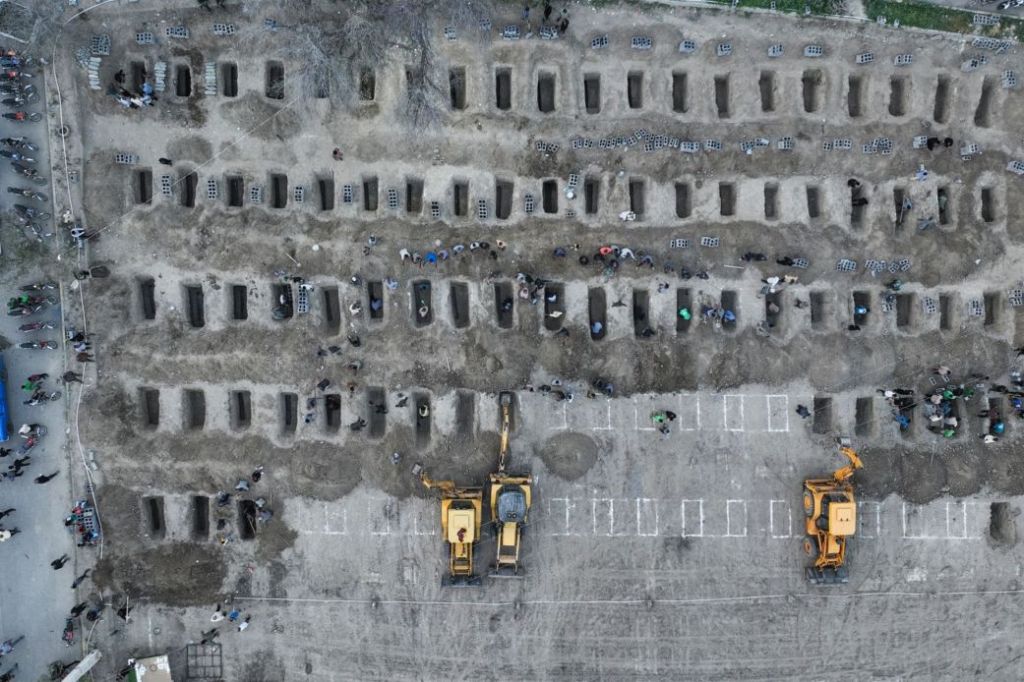
On 28 February the US and Israel unleashed a devastating ‘surprise’ attack on Iran. Air and missile strikes killed leading members of Iran’s leadership, hit military bases, command and control centres, depots, bunkers, air defence but also government buildings, hospitals and schools – most notably the Shajareh Tayyebeh girls elementary school in the southern town of Minab, killing 156 civilians, 120 of them young girls.

Three weeks later a Japanese reporter asked Trump why he didn’t inform his European and Japanese allies of the plan to attack Iran. Trump responded the attack was a ‘surprise’ like Japan’s attack on the US naval base Pearl Harbour in 1941. Trump was answering questions in the White House. Sat next to Trump was Japan’s visibly discomfited PM Sanae Takaichi on an official visit to Washington.   

The greatest surprise was reserved for the Iranians who thought they were still negotiating with Steve Witkoff (Trump’s golfing buddy and business partner) and Jared Kushner (Trump’s son in law and business partner), running through the minutiae of a nuclear deal. On the war’s first day Iran’s Supreme leader Ayatollah Ali Khamenei was killed with other leading personnel of the Islamic Republic.

Reports from the Omani mediated US-Iran Geneva talks reveal Witkoff was out of his depth and didn’t understand Iran’s offer on a nuclear deal: a hiatus on its civil nuclear program for 3-5 years (partly reflecting the reality of damage inflicted by US-Israeli strikes on nuclear facilities in 2025). On the last negotiating day Witkoff demanded a 10 year lay-off. Two days later the US attacked. Yet Iran had abjured building its own bomb, agreed a full return to IEAA oversight, committed to degrading the 440kg of enriched stockpiled weapons grade uranium and operating fewer centrifuges.                                                                                                                                  

But Washington opposed any enrichment – effectively a ban on any civil nuclear program. In the spirit of ‘know thy enemy’ (Sun Tzu’s The Art of War) Tehran offered the US various commercial partnerships for exploiting their oil and gas in a naked appeal to Trump’s Carbon Id. Though the US tentatively offered the removal of 80% of the US sanctions in place, Witkoff informed Washington he didn’t trust the Iranians. But the bad faith was on the American side. Sensing war was imminent the Omani foreign minister crossed the Atlantic to persuade Trump and Vance a deal was near, aware Witkoff and Kushner weren’t properly conveying Iran’s concessions or commitment to negotiations. War started the following day.                                                                                                                                                                                                                                                                                                                                                                   

II

After two months its clear the US-Israeli military action is faltering despite their evident military superiority and must count as a failure on its own terms though Trump’s actual objectives in going to war were never entirely clear. Perhaps this is because war was begun on a whim, a swelling sense of US invincibility after the Venezuelan President Nicholas Maduro was successfully kidnapped.

US military adventures usually begin with illusions of the invulnerability of American power but this is shadowed by a darker, subterranean presentiment – a will to death or imperial death instinct that would unleash indiscriminate violence displaying what Melanie Klein described as projective identification: unconsciously disavowing unwanted feelings of anger, humiliation, rage, projecting them on to another object or subject and thereby justifying inflicting death on the Other (people elsewhere). Trump’s dog at the Department of ‘War’, the brilliantined, reptilian former Fox TV news anchor Pete Hegseth combines the martial masculinity of the manosphere with millenarian Christian nationalism. MAGA’s ‘isolationist’ credo ‘America First’ is also a restatement of America’s freedom of action unencumbered by obligations to friends and allies – marking something of a psychotic break or disavowal of the complexity of reality. In the early days of success on the battlefield, Trump even claimed military intervention would help revive the revolt that previously threatened clerical rule before it was brutally crushed. It’s doubtful Trump believed his own fable (rarely aired publicly since). What’s clear is the US and Israel entered war while negotiations were ongoing exemplifying what Paths and Bridges described elsewhere as malign decisionism in action: in this case pushing a lever to launch the world’s most powerful military machine; a move the Narcissist-In-Chief, with Netanyahu’s encouragement, found simply irresistible.        

Since 28 February Trump has serially declared victory or an end to the conflict. At a rally in Kentucky on 11 March Trump declared: “Let me say, we’ve won.”  On the White House lawn on 20 March Trump said: “I think we’ve won.” Four days later Trump said in the Oval Office: “We’ve won this war.” The day after he told a fundraiser “we are winning so big.”

Yet despite Trump bloviating triumphalism, reality has interrupted with Iran’s refusal to surrender as energy and commodity supply shocks continue to reverberate globally. Nonplussed with Iran’s refusal to cave, Trump has raged issuing chilling threats to send Iran to the “stone ages.” The US’s strategic problem is underscored by the ‘Trump effect.’ Paul Krugman, the Nobel Prize winning Keynesian economist observed Trump’s “jawboning” in the conflict’s early weeks (declaring a US victory or an imminent negotiated settlement), helped dampen energy price rises. But too many such pronouncements recalled Groundhog Day and their effectiveness has diminished.

Krugman suggests the war and its energy shocks show the importance of energy security (diversifying energy sources) and transitioning to renewables. Trump is unintentionally reinforcing the case for a green energy revolution. For Krugman there are greater problems in the pipeline. Though 20% of global oil supply passed through the Strait of Hormuz there was initially no short term danger of an oil shortfall (though Asia acquired a greater proportion of their oil from the Gulf and were more economically integrated into the region). Spiking prices reflected future supply concerns. When Iran was first attacked oil supplies were already at sea (on delivery so to speak). There was a brief grace period – Krugman thought 4 to 6 weeks (he was posting a month after the war’s start). Therefore if the war didn’t end soon there would be crunch point in April when 20% of missing global oil supply would finally be felt.

Some shortfall could be covered by releasing reserves or increasing supply elsewhere. The US eased sanctions so India could buy more Russian oil. But diminishing supply would still see prices rise. China has insulated itself from Gulf energy supplies in recent years (building reserves, buying from South America and Russia, pushing ahead with the renewable energy revolution) but 6% of supply still came from the region – not negligible for the world’s biggest manufacturing economy. According to Krugman a prolonged energy shock could still send the world economy into a tailspin.

The war’s actual course has reinforced a sense Trump isn’t fully in control of events with a concomitant loss of US authority: no longer a reliable, stable partner. This doesn’t mean Iran is ‘winning’ – the Islamic Republic is in a parlous state and remains deeply vulnerable to further destruction of its civilizational infrastructure. But the war is patently not following Washington’s expectations. One indicator of this is the debate on the end of the US dollar’s supremacy as the world’s reserve currency of choice (a port in a storm). Premature? Probably. The dollar’s value rose at the war’s start indicating the dollar’s appeal as a safe haven. Yet the debate itself reflects anxieties about the US’s trajectory. Are foreign treasuries, banks and investors considering dumping some of their dollar holdings? China holds a staggering $3.42 trillion in reserves which is estimated to equal 70% of China’s overall reserves. China overhauled Japan as the biggest overseas holder of US securities in 2014. As China’s development swiftly proceeded discussion about the wisdom of such ‘dollar dependency’ pointed to the danger of financial volatility and dollar depreciation. Yet the advantages of being the US’s prime creditor currently outweigh such concerns. Even so China’s share of US debt started to fall slowly from 2021 onwards.

Trump is caught on his own hook. He was persuaded by Trump Whisperers like Netanyahu and the echo chamber of his court the clerical regime only needed a push to collapse. A year before the war Trump hosted the alt-right wingnut Laura Loomer in the Oval Office. Loomer advised purging various staffers and advisors as not loyal to the MAGA brand. Recently one of those staffers Nate Swanson warned an Iran under attack would shut down the Strait of Hormuz (or the ‘Gulf of Hormuz’ as Witkoff prefers). In truth this wasn’t an example of sharp strategic acumen but shows Trump’s coterie have been selected in a process favouring deference (and mendacity) to the top dog with expertise and specialised knowledge winnowed out. Unpleasant thugs like Stephen Miller have been elevated, Marco Rubio diminished further and reduced to a shadow of his former shadow. Few former POTUS’s would have been persuaded war on Iran would be a virtually cost free win-win.

Iran has displayed intransigence and refusal to surrender but also been greatly weakened while the gravest threat it faced to its survival was the domestic revolt in its towns and cities that were suppressed with grim brutality. Trump’s military action, the threats to destroy bridges, desalination plants, electricity generating capacity – Iranian civilization in fact – expose his hypocritical support for the people’s rebellion. Apocalyptic American threats – destroy the village to save the village – are unlikely to have helped political opposition to the regime.

At the time of writing (20 April) Trump was to send VP Vance back to Islamabad to continue negotiations but Tehran – mistrustful of the Americans and aware of the leverage derived from the global energy shocks – was in no hurry to resume talks. A chokehold on the Strait of Hormuz has proven an effective card given the absence of the dubious benefits of an Iranian bomb. Without downplaying the dangers the ruling regime faces (internally and externally), Tehran clearly understands the benefits of generating global economic pain.

The war’s course can be read as the latest example of the surprises thrown up by asymmetric conflict. Firstly, we have again seen the limits of US military power and, perhaps, secondarily the senescence of an imperial colossus whose tentacles spread from Rome on the Potomac. But the US as hegemon and military empire remains powerful and truly global in scope. The US has 750 known bases throughout the world in 80 different countries (those openly acknowledged). A 2022 Stockholm Institute of Peace Research Institute (SIPRI) study reported the US accounted for 39% of arms spending (this was 3.5% of US GDP or $877 billion). Trump is now proposing an eye watering hike in US defence spending in 2026 of $1.5 trillion, the largest spending increase since the Second World War (this includes a proposed Golden Dome missile defence system).  

A widely reported aspect of the perversities of this asymmetric conflict is its ‘missile math.’ Reports suggest the US only has 25% of its global Patriot missile battery needs (shortfalls were the real reason the US stopped sending the battery to Ukraine rather than Trump’s cool sentiment towards Kyiv). The US can only build 650 Patriot batteries annually. Some Patriot missiles were fired last year countering Iran’s performative ballistic missile retaliation on US Gulf bases. When the US-Israel embarked on war, Iran was estimated to have 3,000 ballistic missiles stockpiled. The US’s stunning early successes, virtually casualty free, can’t obscure that its sophisticated arms are finite and expensive. In contrast Iran’s relatively cheap missile and drone stock are simple but plentiful. A single Patriot interceptor costs $4m. A whole battery costs over $1bn while a typical Iranian drone costs $35,0000. A single Tomahawk cruise missile costs between $2m to $3.6m and though Iranian ballistic missiles are far more expensive than its drones (between $1m and $2m) 2 to 3 Patriot missiles are required to shoot them down.

In the post-war decades the potency of US military power was enhanced by its network of allies – a reality eluding Trump’s understanding. Recent attacks on NATO assume the US would be more effective as a unilateral force. Yet much of the post-war security architecture of the Liberal Leviathan (John Ikenberry) including mutual defence of overseas allies, was simply the first line of defence (and offence) of the US homeland. During the Cold War it might have appeared gauche to talk of an American empire given US power largely rested on its sheer economic dynamism while Washington championed political liberalism and democracy but the democracy at home was flawed, disfigured by the legacy of slavery and racism, and the US state wasn’t averse to overthrowing democracies elsewhere and supporting authoritarianism. As critics like Chalmers Johnson and Gore Vidal eloquently argued the besetting sin of the American Republic was empire.

In 2022 SIPRI reported the US’s peer competitor China accounted for 13% of global defence spending (1.6% of GDP or $292bn). Russia followed with 3.9% of global defence spending. The US, China, Russia and India were the greatest defence spenders with US military expenditure substantially outdistancing its rivals. Since 2022 global defence spending has accelerated against the backdrop of what Adam Tooze popularised as a global polycrisis – incommensurate but interconnected and often intractable crises whose backdrop is the hyper-object (Timothy Morton) of climate breakdown. The idea of polycrisis has prompted a wide ranging interdisciplinary debate that has become a touchstone for efforts to illumine our C21st moment. Paths and Bridges has invoked the emergence of a contra-polar world of conflicts between states and powerful Leviathans that are unilaterally challenging the rules and norms of global governance.

III

So paradoxically, Trump’s war – a stunning display of American military power on a basic level – has weakened US power and its global standing overall. In comparison its peer competitor China appears a beacon of sanity and stability. China is reaping geopolitical dividends as the US continues to blunder in the Gulf and Persia.

When Trump insults Europeans allies or dismisses NATO, he warms the heart of the O.G. in the Kremlin whose recent geopolitical course Trump envies. The US’s allies were told they weren’t needed but then Trump appealed for their aid in the US-Israeli war effort including policing the Strait of Hormuz. Yet Trump’s illegal war circumvented Congress and ignored a despised UN while threats to destroy Iran’s civilian infrastructure (like Israel’s scorched policy in Gaza) if followed through would be a war crime.  

Trump’s war has weakened his domestic support further. Though Iran is a phobic object for the MAGA base, launching another ‘forever war’ has sharpened divisions among ‘America First’ adherents and GOP supporters who oppose not only foreign wars but foreigners wars. A majority of voters disapprove of the war as perceptions Trump is fighting Netanyahu’s war grow. Trump was again recently forced to deny Israel’s hawkish leader (likely to be politically ousted in Israel before 2026 is out), was setting the war agenda.

Even with a ‘ceasefire’ economic and political turbulence across the world continues because of the closure of the Strait of Hormuz. Asia is most severely hit, heavily dependent on oil and gas and other commodities from the Gulf. South East Asia has driven much global growth in recent decades but now faces surging energy and food costs, cancelled flights (some airlines will go bankrupt) as what Damien Cave (The New York Times 22 April) identified as the three pillars of their highly integrated economies: transport, manufacturing and social mobility (a growing middle class) – come under immense pressure. In recent years global South countries have tried striking a ‘third’ or equidistant course between the superpowers. The growing economic strength of the post-colonial nation-states is reflected in a shift in the centre of gravity of the global system to the south with the ‘provincialisation of Europe’ (Dipesh Chakrabarty) which now extends to North America. These years saw the rise of the BRICs (Brazil, Russia, India and China) but also countries like Indonesia,Taiwan, Singapore, South Africa, Vietnam, Philippines and others.  

Cave notes many of Asia’s most successful export industries require energy inputs from the Gulf but collapsing supply not only chokes off inputs for manufacturing and transport but drives up prices for the remaining supply. Crude oil, LNG, phosphate, urea, helium, ammonia and phosphate are all subject to shortages. The Marxist political economist and blogger Michael Roberts argues stagflation (falling growth and rising prices) could lead to slumpflation. Damage and destruction of oil and gas installations in the Gulf might also push the oil price to $150 dollars per barrel (three times the pre-war price). Already a barrel of crude oil is 50-60% higher than the start of 2026. 11 million barrels of crude oil a day have been lost due to war with 30-40% of Gulf oil and gas installations estimated to have suffered damage. LNG prices have also increased though not as sharply though Paul Krugman thinks further price rises and graver energy shocks are likely.

In their ‘War on Iran’ post (26 March) Kate MacKenzie and Tim Sahay at the Phenomenal World blog discussed the tightening of energy supply in South East Asia where various forms of rationing have been introduced. Philippines with 45 days of fuel left declared a national state of energy emergency. In South Korea TV news anchors removed their jackets and urged viewers to use their A/C units less. Could energy supplies tighten further? MacKenzie and Sahay recall 2022 when the supply of LNG tightened and European countries outbid Bangladesh and Pakistan on the wholesale market literally leaving both countries in the dark. China has banned fuel exports usually destined for Australia, Philippines and Bangladesh. Australian farmers (heavily reliant on diesel) are delaying seeding crops. High end manufacturing of semi-conductors in Taiwan has been hit as Qatari helium supply suffers (a third of the world’s helium). The ripples of supply shock are felt everywhere.

MacKenzie and Sahay argue the energy shock signals a universal dependency on carbon but is also a presentiment of the fossil economy’s mortality in the face of the green revolution. Trumpian governance committed the US (as the world’s largest producer of oil and gas) to enforcing the disciplinary regime of the fossil fuel economy. Having won a second term Trump departed the Paris climate accord again and is opening up the American wilderness to oil and gas exploitation while blocking green energy initiatives. The violent kidnapping of the Maduro’s would help US oil companies gain access to Venezuelan oil Trump claimed. But considerable investment would be required entailing real risks to exploit reserves needing a high level of refining. Given this unattractive prospectus the animal spirits of US oil corporations were barely stirred.

Paul Krugman argues that as with earlier energy shocks demand destruction and diversification are sure to follow as countries pursue energy security, hastening the green energy transition. Even the Gulf states are keen to hitch their wagon to renewables, a real extant revolution led by China busily building an electrostate at a gallop. Trumpian chaos illustrates the danger of over reliance on fossil fuel. Krugman claims oil and gas prices would now be higher but for the initial expectations of a short war. The OECD has downgraded growth forecasts for the G7 economies which will all grow more slowly except the US whose faster growth will rest on oil and gas exports (Iran enjoyed a similar energy boon before the US blockade began). The US is the biggest global oil and gas supplier: 20-22% of world oil and 25% of world gas supply in 2025 surpassing Russia (holder of the greatest natural gas reserves) and Saudi Arabia (the greatest exporter of oil by value given the US consumed most of its own supply). Inflation will rise everywhere including the US though Michael Roberts disputes the OECD’s assumption the US will escape a growth downgrade and points to other analyses projecting lower US growth. Clinging to Pollyannish sentiments are hard when Trump publicly announces domestic price increases are worth the pain while US Treasury Secretary Scott Bessent cheerily echoes this message before a G7 audience.

Paul Krugman questions the US economy’s capacity to absorb oil price increases (elasticity). Price rises can be borne for a limited period before GDP starts to decline. In a world where economic growth is the engine of ‘civilization’ – in Trump’s world, this isn’t good news. Rising energy costs across economy and society are effectively a “tax on growth” (Roberts). Krugman argues there is a point when the oil price is so high demand is choked and growth dented. The idea the US economy would escape the turmoil created by Trump’s war was overdone. Indeed like everywhere else US gas pump prices have risen. Fossil energy prices are unlikely to return to their pre-war baseline. By surviving US-Israeli blows, Iran has delivered its own blow to Trump’s credibility and US power.


 IV

Trump desperately needs his war to end. Failing to set strategic goals was a characteristic error. After two months the political strains in the US-Israeli coalition were laid bare when Trump lost patience with Netanyahu ordering an end to the bombing of Lebanon. This effectively conceded Iran’s interpretation of the first ceasefire (this ended on 22 April and was extended by Trump indefinitely). This was a humiliation for Netanyahu who has burnt through a lot of political capital and more in terms of Israel’s relations with the outside world. In the US a majority of American adults now hold unfavourable views of Netanyahu and Israel according to the Pew Research Centre (strongest among the young). Similarly 2 to 1 American adults disapprove of the war (more Republicans approve the war than disapprove but the minority is significant) while a majority of adults don’t think the war is going well.

Other political straws in wind underline Trump’s unpopularity. In Europe the political spectrum from left to right is increasingly united in hostility to Trump. Factors feeding the antipathy include US tariffs, threats to seize Greenland and hostility to NATO – all playing poorly with European voters. In contrast a growing band of Sinophiles suggest China – an exemplar of stable governance, driving the clean energy revolution and a technology that it shares with other countries, looks like the future. Though cooler attitudes to China prevail in the developed rich countries than the global South, more favourable attitudes are gaining ground.

US hegemony was derived from a powerful domestic economy able to impose itself globally, an international financial system with the dollar at its heart, parallel institutions of global governance with the US’s imprimatur and an extensive fossil energy economy. Will Trumpian governance diminish or rejuvenate American power? There are many questions and issues but renascence seems unlikely and in our C21st moment; of a global polycrisis, the US adopting the mantle the Great Climate Change Denier, leaves many countries facing an existential choice: stick with geopolitically erratic fossil fuels or adopt renewables and join a green energy revolution that ultimately points to a different civilizational horizon.

This transition is likely to continue to be exceptionally chaotic. Despite climate breakdown reliance on fossil fuels won’t be easily sloughed off in an interdependent globalised economy. Adopting clean energy isn’t a simple either/or binary choice because the modern economy is built around fossil fuels. Even so the clean energy and renewable revolution is an unstoppable global force no matter the fiat of the Caesar who sits in the White House.

Finally, Nigeria is Africa’s most populous country (240 million population) and its fourth most powerful economy, a major oil producer and exporter in its own right. Yet the crisis in the Gulf has seen fuel prices spike 50% in the country. The living standards of millions have been tangibly affected and such pain will only increase if conflict continues. Energy shocks, supply chain shortages, the rising cost of living mean increasing levels of social contestation. In many ways Nigeria is typical of the sort of ‘middling power’ or state, that is being exposed by the damaging ripples of Trump’s war. Fifteen years ago the ‘Arab Spring’ erupted across the MENA. The social conflicts and revolutions that ensued had various catalysts – the burden of authoritarianism, high levels of youth unemployment, the role of the internet allowing people to share information and learn what was happening elsewhere but also the rising cost of living including for food and fuel in societies where social inequality was a yawning chasm. We should resist catastrophist perspectives but Trump’s energy shock if it isn’t quickly reined in, has the potential to unfold along paths not dissimilar to the revolutionary wave of the ‘Arab Spring.’

Jules Etjim 17-25 April 2026

‘Citizen’ Andrew

I

It seems the electoral meltdown widely foretold: Labour’s humiliation in the Gorton and Denton by-election by the victorious Greens, a self-inflicted defeat where Keir Starmer essentially cast away Labour’s sixth safest seat, has knocked the crisis embroiling the ex-Prince formerly known as Prince Andrew from the headlines.

Currently the apocalypse the US and Israel unleashed against Iran dominates headlines but even this will eventually pass thanks to the ‘missile math’, regime collapse, crashing stock markets, Trump’s ennui or a combination of these. Whatever the outcome the balance of forces pitting the world’s pre-eminent superpower with the MENA’s only nuclear weapons state in a patently malign and one sided might is right attack against the crisis wracked Islamic Republic, dictates there’s unlikely to be a favourable outcome for Iran.

So respite (a relative quantity) will be temporary and Andrew Mountbatten-Windsor – currently the 8th in line to the British crown until his ignominious removal (always a fanciful succession scenario) will again dominate the headlines of the redtops and serious broadsheets, not to speak of a tsunami of digital content. This is the sort of unwanted clean sweep illustrating the anachronism of P.T. Barnum’s adage ‘no publicity is bad publicity.’ Currently, Canada is the latest Commonwealth country demanding ‘citizen’ Andrew be removed from the hallowed line of succession. 

Formerly resident of the 30-bedroom Royal Lodge in Windsor, ‘citizen’ Andrew has undergone a comedown of sorts and is currently holed up in the more ‘secluded’ 5-bedroom Wood Farm (with sea view) on the Royal family’s Sandringham estate in Norfolk pending another head spinning move to the nearby 5-bedroom Marsh Farm. Happily within dog walking distance moving won’t require a whirly bird. Out of the woods and into the marsh then. Except ‘citizen’ Andrew is neither out of the woods or the boggy stuff. There is no bolt hole on the Sandringham estate in Norfolk or anywhere that would allow him to quietly disappear or escape the enduring public disdain for the man disclosed by the Epstein files or the police investigation of his alleged misconduct as a special international trade representative for the British government, or the ignominy of being the first Royal arrested since Charles I in 1646 by parliamentary forces.

‘Citizen’ Andrew’s woeful appointment in 2001 was the wheeze of Blair’s New Labour government (echoes of Mandelson in 2025 anyone?) but was also supported by the future Tory chancellor and austerity hatchet man for the ages George Osborne and the CBI head Digby Jones who felt the ‘playboy prince’ would “put the country first.” But Blair and company were discreetly warned off making this appointment by an unlikely Cassandra. According to Entitled, a ‘biography’ cum patient piece of detective work of the errant ‘playboy prince’ by Andrew Lownie, Prince Charles counselled the government his brother was an unsuitable choice as he would be too busy “playing golf and chasing women.”

Damning enough you would think especially from your brother and prospective heir to the throne but obviously this verdict wasn’t damning enough for Tony Blair and Jack Straw. So knowing better (Royals are idiots after all), they appointed Prince Andrew any way. Yet Prince Charles’s whisper was also something of an understatement. Despite the concerns of Foreign Office underlings (knocked back by their superiors), Prince Andrew played fast and loose with the public purse. Helicopters were treated like uber taxis. Massages were charged to the taxpayer and much else. On one trip the whole floor of a Bangkok hotel was booked for the prince and his coterie. Though they were used to guests procuring prostitutes, hotel staff were reportedly “amazed” to see 10 prostitutes a day visiting Andrew’s room.

II

As the late Tom Nairn observed, the Windors’ inhabit the interface between glamour and the super-ordinary. They combine mundanity (even banality) with something more intangible and perhaps more super-charged than monarchies elsewhere. Relatedly, the Royals are supposed to exist in a rarefied world far above the heads of ‘us mere mortals’ and after a fashion Andrew has done so. Except mixed in with the usual folk hailing from Britain’s elite and satellite fixtures of its celebrity culture (however you feel about them there is something peculiarly diminishing and disappointing to learn Billy Connolly and Elton John among others, attended Andrew’s stag before his marriage to Sarah Ferguson), he also ran with Libyan gun runners, autocrats and dictators and their offspring, Chinese spies he considered friends and those at the shady, grifting end of wealth who (like Andrew himself) would have struggled to explain the source of their money if they were ever put on the spot (such as Jeffrey Epstein).

The Royal family in Britain have – excuse the hyperbole – almost twice ‘died out’ since the monarchy returned after the brief Cromwellian interregnum, only for Royals (and not so distant relatives) to be imported from the continent. The first was a member of the ‘House of Hanover’ whose line ended with Queen Victoria’s death in 1901, and then the ‘House of Saxe-Coburg and Gotha’ (both German principalities) via Victoria’s marriage to Prince Albert. Their son became Edward VII and shortly after a Royal House makeover introduced the ‘House of Windsor’ in 1917 to neutralise anti-German sentiment.

The fate of the ‘House of Windsor’ has been tied to the slow unwinding of Britain’s antique unitary state. For the most part the monarchy has functioned to bind the ‘home’ nations – periphery and centre – together into one. If all the ‘home’ nations were participants and beneficiaries of the joint enterprise of Britain’s rise to industrial and imperial ascendancy in the C18th and C19th, the monarchy was titular head of the show though its role wasn’t merely symbolic. For instance the monarchy was deeply involved in the transatlantic slave trade, chartered slave trading companies and had its own special royal brand for the slaves it owned. Charles expressed ‘personal sorrow’ that slavery had happened on a visit to Kenya in 2023 but the Palace has yet to issue a formal apology for its involvement.  

British identity and monarchy are intimately related. In Britons: Forging the Nation 1707-1837 (1992), Linda Colley emphasized the exceptional importance of Britain’s many wars with France – a rivalry stretching from the end of the C17th to Victoria’s accession to the throne. For long periods this was an existential struggle for national survival often overlaid with a deep confessional significance. There was Catholic France versus Protestant Britain – though Britain’s confessional fractures gradually became attenuated with growing religious tolerance (Ireland was a different story because of the conflict between the Protestant plantation and the local Catholic population).

Britain’s struggles with France contributed to the formation of British national identity but this identity – or imagined community to use Benedict Anderson’s indispensable concept – was never a pure synthesis of separate English, Scottish and Welsh national identities but the union and subordination of each to something ‘new’ leaving space for these older identities to contribute to the forging of British identity. The institution of monarchy played an important mediatory role in the intersection of the separate nationalities. Yet the national components were never wholly equal while the monarchy rested heavily on the English part of Britishness. Also there were coercive aspects like forced assimilation and the persecution of Welsh language speaking in the C19th via the education system. The result was that by the early C20th Welsh language speakers had become the minority in Wales for the first time. Ironically, English had long become the dominant language in Scotland due to the influx of southern populations into the Scottish lowlands centuries beforehand.

Tom Nairn’s prescient anatomy of Britain’s break-up chiefly focused on the insurgent centrifugal force of ‘peripheral’ nationalism – Scottish, Welsh but also the peculiar conflict between Catholic republicanism and a hyper-British Protestant identity. Indeed Nairn’s exploration of an Ulster Protestantism rooted in the Protestant petit-bourgeoisie and working class, was unusual as a leftist analysis because Protestantism was treated seriously as a force with agency and not simply as an archaic tribal wrinkle destined to be erased by modernization or ‘transcended’ when socialism and the deflected Irish national question rendezvoused as the political unity of the Catholic and Protestant working class was established.  

Within the framework of the unitary state, the British monarchy was simultaneously a part of, and set apart from society. Nairn’s exploration of the mortality of the British state extended to analysing the monarchy in The Enchanted Glass: Britain and its Monarchy (1988, 2011), which presented the royal institution as part of the warp and weft of British culture, identity and society. There was a period when the British monarchy was envied by foreign admirers for symbolising a prosperous and stable society. But the long drawn out “twilight” and gentle descent into the post-imperial age meant the monarchy was destined to share the fate of the British state which had become a token of rebarbative backwardness. More importantly the monarchy-British state were virtually incapable of implementing the reforms necessary to retool the economy and overhaul society. Clearly the impulse for such a project would come from elsewhere, from the popular democratic domain, and would represent a challenge to the status quo. The structural infirmities of the state exposed the mortality of the monarchy. Yet the British state and the monarchy still disposed of considerable resources to live on. In fact its institutional staying power was unquantifiable and underlined the challenge facing any project of radical democratization.

In 2026 Britain is undergoing a period of political polarisation. After two years in government Labour is already failing. What makes Labour’s failure so grave is that it follows more than a decade of catastrophically poor Tory governance against the backdrop of MAGA and Trump. More fallout from the ‘Andrew crisis’ is sure to follow (not to speak of the Mandelson scandal) and it all prompts a question: is Britain any nearer to becoming a Republic than it was in the year of the Royal family’s annus horribilis in 1992?

1992 was the year of the Royal divorce (Charles and Diana), the Royal separation (Andrew and Sarah) and the Windsor Castle fire. In 1997 divorcee Diana was killed in a car crash in Paris while being pursued by paparazzi resulting in a public crescendo of grief and anger aimed at the Royal family. In comparison a 20 year old Harry dressing up as a Nazi at a party or Sarah Ferguson’s cash for access sting at the hands of the News of the World in 2010 was ‘small beer’ (the rag was closed down a year later by Murdoch as a casualty of the phone hacking scandal). But in 2019 Andrew’s calamitous Newsnight interview with Emily Maitlis (“I have a peculiar medical condition which is that I don’t sweat”) was quickly followed by the Harry and Meghan imbroglio. The young couple married in 2018 but ‘quit’ the Royal family in 2020. Subsequently accusations of royal racism were aired.

This is an edited reel of recent Royal scandals and the question is: how much scandal can one institution take? For Britain’s Republican minority, the Republic has often seemed a distant prospect. Despite the boom in declinist narratives dwelling on Britain’s sundown post-war years (timelines usually start with straitened circumstances Britain in 1945 with the humiliating 1956 Suez crisis marking a particularly sobering and clarifying milestone), the reign of Elizabeth II was by contrast (at least before 1992) remarkably serene and unruffled as a Royal press officer might say.  

What do the polls currently say? A recent IPSOS poll (February 2026) shows just 28% of the public think the Royal family have handled the ‘Andrew crisis’ well compared to 38% who think the opposite. As the police investigation into Andrew’s alleged misconduct unfolds – initiated by the Thames Valley Police after a complaint by the anti-monarchist campaign Republic (not the Royal House or the government bear in mind), more questions are likely to be asked about who knew what and when and neither the King or the heir apparent and youthful clean broom in waiting, William are likely to escape scrutiny.

The same poll shows 25% support abolishing the monarchy (this is an increase of 10% in 10 years). 50% think the monarchy won’t exist in 50 years. There is a generational divide in support for the monarchy. Gen Z are, unsurprisingly, more negative about the Royal family than older generations as 39% think Britain would be a better country if the monarchy was abolished (compared to 20% who think it would be worse).

Though ‘William and Kate’ remain ‘popular’ (their numbers were slightly lower than the previous poll) and though 8 out of 10 respondents think the Royals will still be here in ten years, the age of deference is clearly over. Polls generally fail to capture the waning of attachment to monarchy, the intangible loss of potency of the past. In this respect, deference perhaps mutated on contact with the news media spectacle and celebrity culture which in an unholy alliance with the ‘House of Windsor’ launched the Royal Spectacle. In late modern society where being has increasingly displaced doing, there is a restless search for significance. A by-product of a culture focused on royals and celebrities is what psychologists term para-social relationships which describe intense, one-sided emotional investment of people in celebrities, royals and other people they don’t personally know. It’s often said the Royal family made a Faustian ‘bargain’ with the media allowing limited access to satisfy the demand for glamour but forestall cries for full access. A more sophisticated take on the Royal-media-public relationship might read: some access and Royal glamour to forestall a potentially fatal loss of public interest in the monarchy whatsoever.

In any case Britain’s first family is accessible and inaccessible, near and far, like us and not like us, of us but not of us. Both terms are essential to their continuing appeal, for the entertainment and consumption of the public who in this demotic age are increasingly ‘free’ to choose: a para-social obsession over royal doings, comings and goings or affect indifference or disdain and all the attitudes between these two poles. But whatever the choice – hardly a Sartrean choice in a social universe where ‘citizens’ are in fact subjects, the Royals would remain eternal and omnipresent until the day they aren’t.

It’s clear the ‘Andrew crisis’ will rumble on with disclosures from the Epstein files and the police investigation producing further tremors and shocks. There is irony in the fact the Epstein scandal and the file release, has so far had a greater impact in Britain than the US. This isn’t to discount future political earthquakes in the US. Lazy local ‘let’s pat ourselves on the back’ commentators who bemoan the lack of arrests stateside compared to Britain, forget this vast tranche of files exists because two individuals were arrested, charged and eventually jailed for criminal sex trafficking of minors: Epstein himself and Ghislaine Maxwell. The DoJ finally released those files because they were supposed to have completed their evidential review.

Yet it’s clear there are many other perpetrators of crimes related to Epstein’s sex trafficking. We are willing to concede that not everything has been released and much has been redacted. Victims are still not being listened to and obstacles to truth and justice remain. The suspicion lingers this is a partisan operation to shield Trump (and others) from closer scrutiny. But whether this is true or not, it hardly alters the fact it will probably take a change of administration in 2028 (actually taking office on January 2029) to revisit or reset the DoJ’s investigative priorities.

Even so Keir Starmer, who never met Jeffrey Epstein, isn’t mentioned in the 3.5m DoJ Epstein file dump, could yet lose his premiership due to his own hubris in selecting Peter Mandelson as the British ambassador to Washington. Some claim Andrew is a ‘small fish’ compared to the POTUS (or even ex-POTUS Clinton who recently testified before the House Oversight Committee). Perhaps but this view ignores how a scandal enveloping an entitled and venal individual, is reverberating throughout the monarchy and British society. The ‘Andrew crisis’ is grave but could escalate further and possibly capsize the monarchy. Britain’s monarchy is 1,200 years old, stretching back to the first Anglo-Saxon kingdoms of the C9th and England’s unification the following century. Though not the oldest monarchy (the distinction of the oldest continuous monarchy belongs to Japan) it is one the oldest and almost five times older than the American Republic (celebrating 250 years July 4 2026). Part of the peril of the ‘Andrew crisis’ springs from Charles’ failure to get ahead of the crisis from the start. Reactive, inadequate responses might ultimately leave Charles regretting he didn’t take more decisive action earlier.

If the monarchy is so damnably hard to shrug off with republicanism only making modest ground in public opinion despite all the scandals which dogged the last years of Elizabeth’s reign, then perhaps radicals should settle for reform of the institution?

Precedents for ending monarchy don’t all involve revolutionary regicide. The Great Revolutions in England, France and Russia (the last a belated peculiar version of the earlier revolutionary pattern) all notably ended with the execution of their monarchs (or royal families). But shedding blue blood to eliminate monarchy isn’t a necessity of the ideal-typical revolutionary path. Transitions to a Republic weren’t always lubricated with royal blood. Kaiser Wilhelm II abdicated during the 1918 November Revolution and fled to the Netherlands where he died in exile in 1941 in a country recently occupied by Nazi Germany. Exile has often been the fate of those royal heads whose dynasties were abruptly terminated by the interference of the masses in history. The last emperor of China abdicated at the age of six due to the Xinhui revolution which ended two thousand years of imperial dynastic rule. Later ‘Puyi’ was a Japanese puppet during the occupation of Manchuria but remarkably ended his days as a gardener and librarian in Beijing where he died of poor health aged 61 in 1967 during the tumult of the ‘Cultural Revolution.’  As recently as 2008 Nepal’s Constituent Assembly voted overwhelmingly to abolish its discredited monarchy compelling the Nepalese King to become a private citizen.

On a deeper level we might argue the Palace failed to divine the cultural shift Thatcherism ushered in. In Tom Nairn’s argument, Thatcher was hostile to consensus and the negative entropic force of tradition. Yet Thatcherism – a centralising as well as an avowedly decentralising project (free market, strong state) – was as much a demiurgic centrifugal force with the unexpected potential to dynamite the unitary British state as Irish Republicanism or Scottish constitutional nationalism aspired to be. This is a counter-intuitive, if contentious view of but let’s recall Thatcherism unleashed the destructive force of neo-liberalism resulting in mass unemployment, de-industrialization, widening social inequality (reversing a benign post-war trend) but also prompting a revival of popular nationalism, particularly English national identity which the monarchy as part of the British state had previously helped ‘contain’ within an Anglo-British identity.    

Etiolated Scottish and Welsh identities could be comfortably tolerated within this matrix while English identity was sublimated in an Anglo-British or straightforwardly British identity (though British identity was always arguably heavily English). But once English identity began to differentiate itself from British identity it risked reinforcing a fissiparous logic of conflict focused on national identity, albeit apparently benign and pacific in nature because it played out within a relatively stable civic horizon though the conflict in Northern Ireland, where a hyper-British Protestant identity faced a Catholic Irish Republican identity (national grievances feeding confessional grievances and vice versa), demonstrated the potential for sharper conflicts.

As the nations began to gently pull apart aspects of ‘peripheral’ national identity began to come to the fore. Nairn noted Thatcher was clearly frustrated with Scotland’s resistance to her efforts to release the people’s slumbering entrepreneurialism. He speculated Celtic communal survivals and a non-conformist religious inheritance stymied the Tories appeal among Scottish voters (Wales demonstrated a similar immunity to Thatcher’s charms). We might add there were not dissimilar divisions within England like the North-South divide. In the 1980s the Tories strongest support was in the ‘Home Counties’ (Buckinghamshire, Hertfordshire, Essex, Berkshire, Middlesex, Sussex, Kent and Surrey). In some ways the South/’Home Counties’ was the foci of English identity.

We mention this because the monarchy was itself obviously English and yet it adopted symbols, emblems and traditions of the Celtic ‘Home’ countries, occupied Balmoral Castle in the Scottish Highlands for part of the year and even embraced tartanry: a repertoire of kitsch, sentimental and pseudo-folkloric elements denoting ‘Scottish’ culture which sprang from the aptly described ‘invention of tradition’ which took place in the last third of C19th, deriving inspiration from Sir Walter Scott and constituting a bowdlerisation of aspects of Scotland’s archaic clan tradition.

We have discounted ‘reforming’ the monarchy, establishing a new contract between the ‘House of Windsor’ and society. In the past discreetly retiring Royal miscreants would have done the job sweeping Royal scandals under the Wilton. No longer – hence the reform claque. Perhaps we could make the Royal family more civic and Ordinary Joe relatable like the bicycling Dutch Royals (literally known as the Bicycle Monarchy) instead of gloweringly totemic. But while: ‘they are just like us’ might appeal such a recasting risks dispelling the magical miasma haloing their Royal personages especially if the template for ordinary is deeply flawed like Andrew. In this respect the Royal family might be the one part of society that would have benefitted from a two child sovereign grant cap. Though its true the ‘spares’ – with so much time on their hands – will get up to mischief as Prince Harry has in his own modest fashion. In any case you can never predict where the ‘rotten eggs’ in the line of succession will pop up.

Muscle bound by social power clad in ermine and tradition, and clinging to the mystical principle blue blood sets them apart from the rest even in the modern age, poses dangers for the monarchy because it’s at odds with essentially the demotic temper of society. Equally relevance would constitue too much exposure. Despite the impression given off by Charles’ warning about Andrew’s unsuitability, that the King might possess the strategic acumen for steering the monarchy safely through treacherous waters, we suspect an inherent perspectival sctotomization prevents the monarchy detecting approaching icebergs. Naturally, we think this ‘blindness’ extends to the heir, William even if in other respects he is uncommonly bright for a Royal. Perhaps we also share something of this impairment – when the monarchy starts to slip away and the Republic beckons it may take us all by surprise.

In The Enchanted Glass (1988, 2011) Nairn pondered reforming the crown: a new, more circumspect ‘constitutional’ monarchy able to respect the principle of federalism and tolerate greater democracy. He discounted reform’s chances. ‘Late Nairn’ cleaved to democratic republican vistas and a radical overhaul of British state and society. Monarchy simply wouldn’t be compatible with such a dramatic popular democratic transformation. In the final analysis, the ‘House of Windsor’ was not only addicted to the “glamour of backwardness” but was an irreplaceable arch of a state whose authentic democratization would require us to remove this arch.

A Republican Britain has been glacially slow in appearing but if a political movement is to emerge and pose a frontal challenge it will happen in part because of the monarchy’s sclerotic infirmities but also because of the impact of ongoing internal and external shocks to wider British society. Those shocks included Thatcherism and Brexit (approaching its tenth anniversary). Both offered explicitly messianic projects of national revival and both have failed. Against the backdrop of the continuing effects of the 2008 global financial crisis, the years of austerity and the cost of living crisis, a different fully democratic project which spurns more painful snake oil ‘solutions’ of a grievance driven populist right is urgently required. Such a radical, democratic project would address the crisis of the status quo that is fundamentally about the absence of democratic control throughout British society where the economy serves a minority.

Ultimately monarchy is inseparable from this status quo and if the latter is to be democratically upended the former will surely also have to go. There is a paradox in the fact Britain could lead the global battle for democracy (autonomy) by belatedly joining the modern world.

Jules Etjim /// February-March 2026

Some reading referred or alluded to here:

Andrew Lownie Entitled: The Rise and Fall of the House of York (2025)

Tom Nairn The Enchanted Glass: Britain and It’s Monarchy (1988, 2011)

Tom Nairn The Break-Up of Britain (1977, 1981)

Tom Nairn After Britain (2000)

Linda Colley Britons: Forging the Nation 1707-1837 (1992)

Benedict Anderson Imagined Communities: Reflections on the Origins and Spread of Nationalism (1983)

Stuart Hall The Great Moving Right Show essay in Selected Political Writings (2017)


The Syrian Spring and the C21st Revolution

I

What happened to the revolution? Is revolution dead in the C21st?

In a season of wintry reaction it appears so though the unexpected triumph of the Syrian Spring suggests revolution still has some claim on the future. In December 2024 millions of Syrians rejoiced when Bashir al-Assad’s tyrannical rule finally ended. Whatever the future holds Assad’s humiliating ouster and flight to Moscow, is a watershed for Syria and the region. Yet months after Assad’s fall, victory appears to be a cruel illusion given the prosaic conduct of Syria’s new rulers. Let’s briefly signpost three reasons why this is so. Firstly, the tardiness of anti-Assad forces victory in a country ruined by years of devastating conflict. Destruction was part of the survival plan and Assad travelled a nihilistic path of ‘we win or we burn the whole country down.’

Secondly, there is a wider sense revolution isn’t a primary experience of our late modern age, and, thirdly, the cascading impact of a global ‘crisis of democracy’ following a decade on the heels of the collapse of ‘actually existing socialism.’ Political liberalism in retreat deprives popular opposition in authoritarian arenas of confident democratic lodestars that could both galvanise and clarify progressive goals though democratic politics hasn’t disappeared. After the 2008 financial crash, climate breakdown, renewed Great Power competition and surging Populism, the future of revolution is shrouded in doubt.

In Power Politics (1971), Martin Wight claimed revolution was still at the heart of the modern inter-state system and international politics. Wight noted that between 1462 and 1960 there had been 256 years touched by revolutionary storms in contrast to 212 years of non-revolutionary calm. Many longstanding stable social orders had revolutionary origins. Yet revolutionary origins or otherwise, social change in these societies wasn’t wholly pacific as they were subject to the original Great Acceleration of modernity and capitalism’s take-off including brutal land enclosures, explosive urbanisation and industrialisation, the conquest of the New World and the Atlantic slave and plantation economy and later, colonialism and fratricidal world wars.(1)

If we grant Wight’s claims for revolution’s foundational role in making modernity, it should also be admitted ‘revolutionary years’ is somewhat misleading without weighing the degree of their international impact for no ‘revolutionary year’ is ever uniformly revolutionary. Few social ruptures haven’t also provoked reaction or counter-revolution. Consider the tumultuous year of 1848: a fierce revolutionary wildfire swept Europe and shook the ancien regime to a degree rarely matched in later upheavals. Yet by 1849 the counter-revolution was in the saddle and radicals were in despair. But these revolutions had happened. A failed revolution is no less of a revolution despite defeat. Equally, a revolution may formally triumph but fall short of its original promise. Something similar can be said of the Arab and Syrian Spring.  

A stark feature of the C21st revolution like the social ruptures of the Arab Spring in 2010-13, is they appear politically homeless and lacking the élan or gravitas of the Great Revolutions that helped birth modernity like 1776 and 1789 (not to mention their Dutch and English prequels) or the C20th ‘communist’ sequels in Russia and China. Once there was an unalloyed confidence in humanity’s Progress; of history as providential narrative of One Humanity travelling in the same direction but such weltanschauungs have been shattered with darker visions coming to the fore.

The C21st revolution even suffers in comparison to the 1979 Iranian Revolution and Eastern Europe 1989-91, and underwhelms in a world obsessed with the apocalypse but largely indifferent to dramatic social transformations. Instead the C21st revolution seems to constantly miss steps while social struggles are rarely consummated, often extinguished by repression and compelled to begin again after a period of disorientation. Today, episodes of major social contestation like revolution often arrive abruptly and then depart like a furtive tsunami, perplexing, sometimes destructive but leaving few tangible traces.   

Our basic position is revolutions still happen but they are unsung. They are essentially popular expressions of a democratic constituent power or social struggle whose weak telos is democracy if not self-government of the people (direct democracy). They are inherently anti-statist but occur in a period where ‘democratic backsliding’ is gathering pace across the world, a trend greatly amplified by an ailing American Republic. In the post-war years US hegemony and the ascendancy of political liberalism in the developed world effectively foreclosed questions about more radical forms of democracy like autonomy, self-government or self-management of society.  

Given this global social-historical context it’s no surprise the late modern revolution has not only fallen well short of a social transformation but often happened in societies relatively marginal to the global system in contrast to the foundational revolutions (1776, 1789, 1917, 1949 and so on).

The question to be posed is where does the Arab and Syrian Spring fit in this picture?

II

The Syrian Spring has been the subject of a surprising comparison we think is fruitful to explore.

2021 was the 150th anniversary of the 1871 Paris Commune and some observers detected parallels between 1871 and aspects of the Syrian revolution. Leila al-Shami perspicaciously noted the role of embattled urban revolutionary centres like Aleppo and Homs, where the green shoots of participatory democracy appeared in the form of Local Co-ordinating Committees (LCCs) and women and youth played an active role as Assad and his foreign allies unleashed a ferocious counter-revolution. Al-Shami described the LCCs as “remarkable experiments in autonomous self-organization” and pointedly underlined the unsung heroism of the nascent Syrian Commune that succeeded in grimly enduring far longer than the 72 days of its illustrious revolutionary forebear. As we know this wasn’t the view of all and the Syrian Spring attracted an assortment of bad faith critics. The dilemmas of the late modern revolution are real enough but views of the revolution – latterly Salafist dominated – as having always been so, or driven by US regime change, were wide of the mark.(2)  

Comparisons with the Paris Commune prompt questions whether 1871 is remotely relevant today? At this distance the Commune is no more than a distant historical footnote, a fleeting revenant incidentally confirming the obsolescence of the socialist goal. In the early 1960s the Situationist International (SI), affirming the ludic revolutionary horizons opened up by the Communards, described the Paris Commune as the greatest festival of the C19th. A feature of a festival is it briefly interrupts the mundanity of the everyday before ‘normal life’ resumes.(3)

Though revolution may not be redundant it’s surely the case no radical rupture like 1871 is strictly repeatable. As Heraclitus observed: you can’t enter the same river twice. No social-historical event repeats but the river still flows and revolutionary eruptions still happen. It’s possible something like the Commune – a creative constituent power of the people, was trying to be born in Syria 2011-12 and perhaps also in Belarus, Thailand, Hong Kong, Myanmar, Sudan, Lebanon and elsewhere.

So aspects of the Syrian Spring resembled the Paris Commune 150 years before especially the grassroots democracy of the popular movement in besieged urban areas. But there were also negative parallels as both faced counter-revolutionary violence of domestic and international reaction operating in concert. In the late 1930s Franz Borkenau concluded the crushing of the Spanish Republic was the apotheosis of a definite trend in international politics reinforced by fascism’s arrival and ‘clairvoyant’ reaction’s new found capacity to anticipate the peril revolution posed to the existing order and unite in a destructive alliance to prevent revolution fulfilling its own internal logic unimpeded. Events in the Arab Spring’s theatres appear to confirm the sense of a qualitative threshold having been reached in terms of the geo-political and the fate of the C21st revolution.(4)

The Great Revolutions that helped usher in modernity – the 1776 American Revolution, the 1789 French Revolution or even the C20th ‘communist’ revolutions, revealed there were different paths to modernity. Studies of revolution reveal common features and recurring patterns but 250 years of revolution also discloses major discontinuities. We think revolution is intimately connected to modernity, its development and diffusion. Revolution isn’t amenable to a univocal interpretation. In her classic comparative historical study of social revolution, Theda Skocpol focused on the most rarefied revolutionary peaks that successfully reached their term with radical social transformations of society (1789, 1917 and 1949). But a revolution is still a revolution even if it failed or was defeated. A multi-faceted explanans of revolution would be a poor tool if it only included a restricted category of revolution, say Skocpol’s social revolution or its ‘successful’ exemplars.(5)

Clearly the Paris Commune was a ‘failure’ – crushed and drowned in blood but were there any positive parallels?

Firstly, can we confine the Paris Commune to the model celebrated by the classical workers movement as a harbinger of world-wide socialism? We propose reclaiming 1871 from socialist politics and Marxism and reframing the Commune as an exemplar of radical democracy or autonomy. Cornelius Castoriadis suggested the Athenian polis (C8th-5th BCE) – self-government, freedom, direct democracy – was the first truly democratic rupture in the history of human civilisation and a fundamental break with heteronomy. Basically, heteronomy or cognitive closure denoted a societies where the people were not self-consciously creating their own society but instead dominated by their social institutions, religions, myths and culture.(6)

“Flashes” of autonomy like the Athenian polis or the republican tradition of the Italian Renaissance city-states, the early workers movement or the Paris Commune, were rare precedents as social-historical departures in the face of history as fatality. Indeed these ruptures pointed to the indeterminacy or potential radical openness of history as creation and the insurgent constituting power of the people.

The rarefied nature of full-blown autonomy may well explain why Castoriadis baulked at conceiving the Athenian polis as a model (aside from the limitations that women and slaves were excluded from the democratic life of the polis). It was far too positivist and open to unwarranted providential readings. Instead autonomy displayed a weak telos meaning it wasn’t wholly evanescent but neither was autonomy “the real movement that abolishes the present state of things” as Marx had once written of communism. Weighing autonomy’s purchase Castoriadis invoked the metaphor of a potentially transmissible “germ.” Something similar might be said about the Paris Commune. Marx’s appraisal framed the Second International’s belief the Commune prefigured the socialist future. Marx had claimed to understand the historical telos of the Paris Commune better than most of its participants though he also conceded the Commune was the subject of many different interpretations. During the years of the Second International and the moment of Leninism, the Commune was still retroactively seen as part of a providential history of the formation of the working class as a class-for-itself, the premature anticipation of a new socialist order.

But the Paris Commune suffered from what Maurice Brinton described as the “Balkanisation of utopia” – fought over and claimed by various sectarian radical traditions springing from the workers movement and socialist politics. As a “flash” of autonomy we think the Paris Commune wasn’t a singular possibility but various social-historical possibilities that were bloodily suppressed and lost to counter-factual oblivion. Something similar applies to the Arab Spring. The socialist goal disappeared but revolution remains an actuality, perplexing the left. It would be more fruitful to see the Paris Commune as a link in a chain of battles extending to present day ruptures like the Arab Spring and popular efforts to win, extend or defend democracy (including autonomy) – a more radical prospectus than Marxism’s utopia in our view.(7)

On a more rarefied level the Arab Spring is part of a chain of ruptures resulting from modernity’s contradictions. The late sociologist of modernity and revolution S.N. Eisenstadt proposed there were multiple modernities whose corollary was multiple paths to modernity, a social-historical vista that is also a theme of Johann P. Arnason’s Civilizational Theory, a truly ambitious undertaking heavily indebted to ‘late Castoriadis’ that is trying to rethink modernity and the longue durée of civilizations together, offering a more supple and variegated conceptualisation of the social-historical field than classical sociology or Marxism though Arnason does build on the insights of Durkheim and Weber in particular.(8)

We noted the brief flourishing of the LCCs during the Syrian Spring. We think these belong to the revolutionary tradition of councilism – a “flash” of the constituent power of the people apparent in 1789 and the C19th and reappearing repeatedly in the C20th and still displaying signs of life in our dark age. Council democracy has continually established itself in revolutionary ruptures across the last two centuries but also varied in its social content and institutional form from revolution to revolution. The LCCs belonged to the Syrian Spring’s earliest days – conditions that didn’t appear promising for popular democracy. As a participant Marcell Shehwaro described the dilemma: “we knew nothing of self-organized civil society. We had to learn” (quoted in Yassin-Kassab and al-Shami).

We concede the Syrian Spring’s LCCs weren’t full fledged popular grassroots democratic forms. Rather they were the initiative of activists taking distance from political and confessional sectarianism who wished to build participatory structures in local areas but had to do so in semi-clandestine ways because of repression. As Robin Yassin-Kassab and Leila al-Shami recount in Burning Country (2016, 2018), the LCCs emerged soon after the 15 March 2011 Day of Rage demonstration which was met with brutal Assadist violence. Individuals were tasked with returning to their areas and creating a LCC to link up with similar bodies set up elsewhere.(9)  

The LCCs were inclusive and rejected foreign intervention, supported non-violent resistance and called for dialogue among the opposition. The LCCs were internally democratic, undertook grassroots organising, collected reports on the country wide resistance and provided digital and cyber security training to expose Assadist lies about the popular movement. It’s clear the LCCs could have developed further and become a national framework for popular democracy rooted locally but the militarisation of the resistance in the face of fierce counter-revolutionary violence stymied this development.

Also many LCCs activists favoured a transition to a representative democracy with party political competition. This was understandable given the failures of the past (One Party-State rule, bureaucracy, authoritarianism, totalitarianism), meaning ‘democracy’ – understood generically – was considered a goal in itself and not only as a means to an end. This is important because councilism needs its partisans to make the case for popular grassroots direct democracy as an alternative to liberal democracy.

So we view LCCs as proto-councils, the “germ” of a constituent power which found its political form in a reconstructed civil society. Yassin-Kassab and al-Shami note there were no glimpses of worker self-management in Syria as there was in Tunisia and Egypt attributing this absence to the legacy of Baathist repression of the labour movement (crushed under heel for decades while Stalinism simply produced political disorientation) and the composition of the labour force where only 16% of workers were employed in manufacturing, mining, oil construction while many businesses were family enterprises with few employees or artisanal workshops, not to mention the existence of a vast informal sector.      

Hannah Arendt saw council democracy as the basis of the true republic (echoing a young Marx who in 1843 invoked the “true democracy”) and the lost treasure of revolution because with defeat or counter-revolution such popular grassroots organs of everyday democracy had disappeared. We think councilism which has repeatedly appeared, isn’t a utopia but the potential basis of a popular democratic Republic embodying the democratic instituting power of its active citizens. This political vision is wider than Marxism’s whose relation to councilism is more ambivalent than is generally appreciated and whose ban on utopian thinking and too detailed reflection on socialism’s institutional lineaments tends to reinforce a view of the egalitarian society as homogenous without differentiation or complexity. Indeed various thinkers have conceptions of revolutionary organicism including Rousseau, Marx and Lenin.(10)

III

The authoritarian social universe lacks a public sphere stricto sensu because of the invading repressive state imposes uniformity on society. That said there are clearly civilisational variations between different forms of authoritarianism and totalitarianism. Thus the countries of the MENA in the early C21st didn’t look like ‘classic’ totalitarianism and might best be described as belonging to the authoritarian universe. The impact of neoliberalism and globalisation meant a drastic reduction in welfare spending, chronic levels of unemployment, the growth of the informal sector – a ‘withdrawal’ of the state in some respects then – but not as a unitary repressive force.

The Arab Spring and other episodes of social contestation in the C21st share features in common. If the public sphere hardly exists, the explosion of protest across the MENA in 2010-11 helped revitalise it again as a fulcrum of protest against authoritarianism. Various ethnographic studies revealed an informal ‘shadow’ civil society across the urban MENA. In his studies on regional resistance (or its absence), Asef Bayat coined the term social non-movements illustrating how social contestation still exists but had become subterranean in the face of authoritarianism.(11)

When the Arab Spring erupted Bayat linked the ‘Arab Square’ as a site of popular protest to similar protests in Madrid, Bangkok, Sāo Paulo, Kyiv (Maidan or Independence Square) and Hong Kong’s “umbrella revolution” among others. Bayat also pointed to the role of provincial towns and villages in the Arab Spring which started in December 2010 in Tunisia in the “depressed” town of Sidi Bouzid and spread to other towns before reaching the capital Tunis. In Egypt, Cairo was the centre of the revolution but social contestation also rocked Suez, Mahalla, Port Said, Ismaila, Tanta, Aswan, Alexandria and other urban centres. In Libya, the provincial towns of Misrata and Sirte were notable centres of revolt against Gaddafi while in Yemen in Sanda and Taiz protestors occupied their town squares and refused to leave until President Al Saleh had stepped down from office. In Syria, various provincial towns and suburbs of Damascus were part of the revolutionary movement.  

A sharp spatial divide existed within the MENA’s major cities recalling Mike Davis’s portrait of a late modern planet of slums arising from the intersection of explosive urbanisation and the inflation of the informal sector. In his Life as Politics, Bayat discussed these neglected urban spaces of the poor, working class and impoverished middle class. While they weren’t arenas of a frontal challenge to authoritarianism they were spaces carved out by the urban mass using their wits, building their ‘illegal’ homes, illicitly connecting to the mains and water supplies, establishing an informal economy or overarching urban habitus. This was a city of the dispossessed encroaching on the ruling power. What Bayat defined as social non-movements (paradoxically communal and atomised) was very different from those older depictions of class based social contestation. Perhaps the figure of Michael Hardt and Toni Negri’s multitudes (admittedly wider than the urban poor of the cities of the global South) fits this new late modern social terrain. As we know the multitude (leaning into Spinoza, Marx and Deleuze and Guattari) was conceptualised as a nascent social subject composed of a plurality of singular groups (“singularities”) formed in the struggle for democracy.(12)

So social non-movements of the urban poor imposed themselves by means of their everyday activity; a surreptitious crooked path of encroachment, using what the late James C. Scott memorably termed the “weapons of the weak.” Though not obviously political or openly oppositional, a pragmatic, capillary-like, adaptable practice was quietly effective in life world building – for millions across the MENA. Perhaps the Arab Spring was positive confirmation a transition from the social non-movement to open contestation, was possible after all?(13)

IV

We concluded the C21st revolution lacks the grandeur of the Great Revolutions as a result of its peripheral place and inability to deliver fundamental social change (two related conditions no doubt). Yet aspects of the Arab Spring were also a refreshing departure from this pattern of relative marginality which incidentally set it apart from the Paris Commune. So we would qualify the notion the C2st revolution lack the élan of past revolutions. This isn’t to disavow our judgement given the eclipse of the socialist goal and the bankruptcy of the idea of universal Progress against the backdrop of a global paralysis in tackling climate breakdown. We could add political distemper of illiberal Populism fuelling the ‘crisis of democracy.’ Arguably this last primarily afflicts the developed world and testifies to the US’s senescence. But this would be too simplified. The ‘crisis of democracy’ is more widely relevant as it raises the issues of popular sovereignty, self-government and freedom – which all pertain to democracy’s modalities and how to realise authentic popular sovereignty as democratic rule.

In Populism and Civil Society (2021), the political scientists Andrew Arato and Jean Cohen explore the causes, and nature of Populism and its challenge to liberal democracy and constitutionalism and conclude a simple return to the status quo ante or defending liberal or representative democracy cannot by itself spare democracy from Populism’s impact whose own energies derive from democracy’s infirmities. Effectively defending democracy also demands the “democratisation of democracy.”(14)

We would suggest there are two distinct features of the Arab Spring.

The decades long trend of revolution pivoting east and south globally continued with the Arab Spring. A corollary of this social-historical tendency is the continuing provincialisation of Europe (Dipesh Chakrabarty) to which we might add North America. The US share of the global economy measured in GDP declined from 40% in the 1960s to 23% early in the C21st as incomes for the majority of the country’s working population stagnated while the wealthiest became even more wealthier. China’s rise to superpower status means the US faces a global peer competitor threatening to surpass it as a hegemon. Equally it’s hard not to conclude Trump’s governance – for many observers a response to relative US decline – will prove a failure for America and has already weakened its power and influence and incidentally disclosed the outsized impact particular individuals and political programs can have on events.(15)

As diminished Old and New World retreat, the social-historical weight of the rest with China, India, Brazil at their head, looms larger. This new reality, this extraordinary shift in the centre of gravity of the global system isn’t fully appreciated in what was once the developed ‘core’ of global capitalism.  

The second distinct feature of the Arab Spring was that it was that social-historical rarity: a transnational revolutionary wave.

The Arab Spring was sparked in December 2010 when a poor young street vendor Mohammed Bouazizi set himself alight outside the governor’s office in his hometown in Tunisia after years of persecution and humiliation. Popular protest flared into life across the MENA decrying authoritarianism, economic stagnation, poverty and chronic unemployment.

In the past there had been notable regional episodes of social contestation – for example, Egypt’s central role with the rise of Nasserism after the 1952 revolution and the overthrew of the monarchy, strengthened national sovereignty, delivered major land reform and also boosted anti-colonial Arab nationalism. Then in 2011 and 2013 Egypt was in the eye of the storm again when the regional revolutionary wave delivered its most stunning advance: the country’s first democratically elected President, Mohamed Morsi of the Muslim Brotherhood, before his military ouster a year later.   

The region as a whole (MENA/Persia) was fundamental to the world economy thanks to oil and gas and in the post-war decades was the epicentre of at least three revolutionary waves. The first post-war revolutionary wave was detonated by Nasserism in Egypt and was a powerful beacon of resistance to the West across the region. Nasser defied Britain and France and nationalised the Suez Canal and in the late 1950s the appeal of pan-Arab nationalism saw a brief political union between Egypt and Syria. in the 1960s Baathism emerged from this ferment marrying Arab nationalism and statist socialism.

The second revolutionary wave – the Black Wave saw the arrival of political Islam greatly boosted by the 1979 Iranian Revolution which culminated in hierocratic rule in Tehran, and the Soviet invasion of Afghanistan. Designating the Black Wave as revolutionary is contentious.(16) We would agree with those arguing the Ayatollahs consolidation of power was an abrupt counter-revolutionary full stop to the revolution. Political Islam is a complex entity and by no means homogenous. It’s certainly possible to imagine a reformist Islam. Equally, the Muslim Brotherhood in Egypt, Tunisia and elsewhere, whatever their flaws, share little in common with the sectarianism or nihilism of Hezbollah, Islamic State or al-Qaeda (nihilism is Yassin al-Haj Saleh’s oft used description).(17)

The third revolutionary wave was the Arab Spring (foreshadowed by Iran’s 2009 Green Revolution) whose central demands were democracy, dignity, an end to authoritarianism and corruption and social equality. We think the struggles encompassed by the Arab Spring demonstrated the weak telos of autonomy.

The literature on revolution and revolutionary waves is vast. John Markoff made a persuasive case linking social movements as a phenomena of modernity par excellence, to transitional waves of democratisation, waves often displaying a high degree of struggle. Interestingly, transitions to democracy have sprung from revolutionary ruptures or relatively pacific emulative paths which could be understood as forms of passive revolution (to purloin Antonio Gramsci’s concept) with social reform imposed “top down” by established elites wishing to neutralise the possibility of properly radical social transformation. A dimension of such strategies given the radical openness of the social-historical in general, is they would produce many unintended consequences.(18)

Such “top down” democratic transitions weren’t confined to forms of passive revolution and belie certain assumptions about class and revolutionary agency. Ruth Berins Collier’s comparative historical study of the C19th and C20th democratic transitions in Western Europe and South America reveals how democratic political projects were driven by various social forces: established elite groups and class fractions including some improbable candidates as radical agents like elite ‘In Groups’ driving democratisation as well as more obvious candidates such as Middle Sector Groups and subaltern ‘Out Groups’ including coalitions of ‘In’ and ‘Out Groups.’(19)  

Following Castoriadis we think representative democracy is inherently flawed and not simply because of the aristocratic principle’s limitations (the critical ancient Greek characterisation) or democracy’s subordination to ‘consumer society’, capital or the state but also due to the democratic deficits Arato and Cohen claimed arose from the aporias of modernity’s cultural, economic and political logics though democracy’s C21st fate before ‘democratic backsliding’ and rising authoritarianism, remains in the contested balance.

Modernity’s appearance meant a prolonged struggle to redefine political sovereignty against Absolutism as ascriptive identities broke down and subjects became citizens. Civil society emerged from forms of corporatism counter to Absolutism drawing on the estates, new forms of economic activity, religious dissent embodying a “new form of public life” offering a prototype of modern civil life.(20) The movement against Absolutism helped consolidate the sovereignty of ‘the People’ as a constituent power whose authority and legitimacy rested on the people as sovereign, signifying the entrance of a novel social-historical force. Yet representative democracy, initially extremely circumscribed, emerged in lock-step with the nation-state and nationalism.

Universal conceptions of a political community where citizens belonged pitted pluralism against more exclusive definitions of a territorially bounded community which could be defined in national, ethnic or racial terms though these two apparently exclusive views could also be combined. A discursive construction of ‘the People’ was possible on the basis of the friend-enemy distinction – a process apparently contrary to liberal constitutionalism but enabled by political competition in the national political arena.

In On Revolution (1963), Hannah Arendt speculated most revolutions turned despotic had done so because they were, first and foremost, revolutions against Absolutism. Emmanuel Joseph Sieyès, lucidly formulated the French Revolution’s logic, simply transposing the unitary sovereignty of the Absolute monarch whose will was the legitimate source of power and the law, to the Third Estate which pars pro toto functioned as a synecdoche of ‘the People.’ Absolutism shaped the context of the revolutionary reconstitution of legitimate sovereignty though for Sieyès the Constituent Assembly wasn’t wholly legitimate because its power was established before the constitution or law. Expressed differently, sovereign power was inevitably usurping. Locating power, authority and law in the Third Estate as the legitimate representative of the nation were “fictive ideals”, running counter stricto sensu to constitutional alternatives like the very different democratic approach of Montesquieu’s separation of powers underpinning his “empire of laws.” The French Revolution’s aftermath witnessed a series of constitutional crises with dictatorial rule frequently standing in for the supposed ‘General Will’ of the nation.

Nationalism leaned into particularism and tradition with an organic vision of identity subsuming class, confessional or ethnic identities (all supports of hierarchy and status) within a bounded administrative territory. Think of the British state, a unitary state ‘incorporating’ the English, Scots and Welsh but other European states undertook similar assimilationist missions (these by definition were also selective or exclusionary) – the 1789 French Revolution gave a great boost to demiurgic force of French nationalism pulling the countries different regions closer together under the ‘Marseilles’ a unitary process already evident at the end of the Hundred Years War. So 1789 symbolised an inclusive vision of citizenship within the framework of popular sovereignty and was a powerful impetus to French nationalism.

At the start of the C19th democracy was severely limited wherever it notionally existed. John Markoff observes that in 1800 Britain was one of the few ‘democratic’ countries but only 10% of the adult male population were able to vote in elections lacking a secret ballot and where the House of Lords, the Church and Monarchy were enormously influential. Democracy was both an exclusive club and a promising opening with subsequent social struggles in this period focused on widening democracy’s scope.  

Markoff examined the relation between social movements and democratisation processes in the context of the waves of democracy debate. Focusing on the transnational modalities of democratisation and the impact of political challenges and demands on states and elites but also emerging social movements elsewhere. The trans-Atlantic fight to abolish slavery was an example. At the end of C18th this oppressive system appeared stable but disappeared within decades. How? An extraordinary sustained slave rebellion (Haiti) played a huge role as did a transnational anti-slavery social movement which bridged the Atlantic. European countries faced powerful grassroots social movements like that in Britain which included support from broad sections of the working class including cotton millworkers.   

Emulation was a driver of the growth of social movements and democratisation. French abolitionists took inspiration from the artisanal London Society of Friends. More generally, the French Revolution, a veritable social and political earthquake contributed, or demonstrated the power and efficacy of various communicative, associational or political repertoires, greatly expanding a republican political culture with its political clubs, pamphleteers, crowds, journalism and so on.

Benedict Anderson explored how print capitalism facilitated the formation of the imagined community whose exemplars in his classic account were national communities but social movements also exploited the possibilities of cheaper printing, growing communication, literacy’s spread in the burgeoning public (plebian) sphere. With rapid urbanisation in the C18th and C19th, a variety of political and reform movements also formed including the early labour movement which fed from the international spread of democracy. So waves of democracy and transnational revolutionary waves were intimately linked.(21)

The global ‘crisis of democracy’ was a backdrop to the Arab Spring which nevertheless stirred with strong democratic impulses. If older visions of Progress have been discredited, something like such a vision, albeit of a more sober temper, needs reinventing. The immediate post-war years were years of optimism but the consensus omnium life chances for the majority would steadily improve, evaporated as living standards stagnated for the majority. ‘Democratic backsliding’ gathers pace everywhere and nowhere more so than the ailing American Republic that may well be approaching a tipping point into a hybrid authoritarian regime after Trump’s second coming.

Representative democracy’s problems are exposed in countries which democratised at the tail end of the ‘Third Wave’ especially in eastern Europe: Hungary, Poland, Slovakia, the Czech Republic and others, displaying extraordinary signs of accelerated decrepitude within a generation. Perhaps this reflects Soviet authoritarianism’s legacy but the crisis also demonstrates Populism’s impact as a global phenomenon. Arato and Cohen have elaborated a rich variegated context dependent model of Populism but also suggest a fundamental conflict between political sovereignty and constitutionalism. The spread of illiberal Populism throughout the club of democratic nations, is paralleled by the threat of the new authoritarianism led by China and Russia. The Peoples Republic of China ruthlessly ended Hong Kong’s restive democratic experiment (the revolution of umbrellas), a movement difficult to envisage reviving without doing so inside China itself.  

We have underlined how democracy and modernity were companions with the former shaped by the unfolding logics of social differentiation, social mobility, urbanisation and widening autonomy amplified by the global spread of capitalist modernity. Yet the reality of democratic transitions suggests underlying drivers were at play distinct from, but aided by Markoff’s emulative mechanism. Though modern representative democracy was ‘inferior’ to the rarefied democratic peak of the Athenian polis Castoriadis proposed it was superior at least in one respect: it was transnational and based on the bold idea democracy assumed one common humanity.  

As a revolutionary wave the Arab Spring lacked the extensive impact of the French Revolution whose seismic ripples continued long after 1789. Perhaps the Arab Spring resembled the European Revolution of 1848 which by 1849 was dead. Similarly the early impetus of the various popular movements of the Arab Spring, were either beaten back by fierce reaction or descended into protracted civil conflicts. Victories for the popular movement were short lived or laced with disappointment. Social struggles fragmented whether it was the counter-revolutionary removal of Morsi by Egypt’s armed forces (full of cruel illusions for many would be opponents of authoritarianism who felt Morsi was the revolution’s greatest enemy) or Libya’s protracted ‘war of all against all’ after Gaddafi’s overthrow and death.  

Given the Arab Spring’s mixed balance sheet, how is Assad’s belated overthrow in Syria to be assessed?

V

The Syrian Spring is an unambiguous example of John Locke’s notion of a people’s fundamental right of revolution in the face of tyranny. Locke’s right of revolution rested on C17th political philosophy of the social contract and natural law and essentially argued popular rebellion would be justified if a ruler violated the natural right to life, liberty and property and therefore forfeited their authority or right to rule.(22)

On the face of it, the C17th Lockean right of revolution – both timid and bold as befits a doctrine intended to justify the 1688 Glorious Revolution (an elite ‘top down’ and self-limiting project if there ever was one) – is anachronistic but then tyranny is the anachronism which flourishes with many other thriving anachronisms in our late modern moment.

In one sense its clear Locke’s right of revolution was self-limiting because of his conception of the relation of people and government. Civil society was the location of the natural rights of the people to life, liberty and property – fundamentally a negative definition of freedom as its basis was the individual’s right to property. A notional popular sovereignty resided with the people. In practice what would later be characterised as the constituent power of the people was to be dispersed via the separation of powers of government though Lockean government was limited and its authority strictly conditional. Locke belongs to lineage of political philosophy embracing the mixed constitution and dispersal of power as the most suitable guarantor of liberty and freedom.

Generally, we might argue the arrival of modernity and the age of revolution also meant the entrance of the people constituted as – or rather constituting themselves – as a popular sovereign. But how authentic is such a constitution of the people as a democratic subject or sovereign? We mentioned the discursive construction of ‘the People’ by a part (a party, the charismatic leader of a party or movement) which suggests all sorts of political formations which owe little or nothing to the people as a democratic agency. So contemporary defenders of this broad conception, are essentially claiming only representative democracy with its mixed constitution, political pluralism and the separation of powers, is an effective prophylaxis against authoritarianism and totalitarianism. Claude Lefort discussed how popular sovereignty was best understood as an “empty place” meaning in part, that democracy was contradictory: both representing ‘the People’ and and nobody. There was no single fulcrum of democracy. Such political conceptions were ultimately illusory. At best unitary sovereignty was to be resisted and power dispersed in a mixed constitution – a political arrangement which acknowledged the pluralism of society.(23)

Though we can’t fully explore the subject here for space, we might argue such self-limiting models ultimately result in the enervation of democracy and a notional popular sovereignty because although constitutionalising the revolution, may forestall authoritarian or totalitarian developments, in placing obstacles before a revolutionary constituent power that could deliver autonomy (or direct democracy) from the anti-statist location of civil society, an opportunity to deepen and secure the fullest democracy is missed. Critics of the council tradition, autonomy and direct democracy typically complain such a political project is utopian and rests on latent revolutionary organicism whose telos is ultimately totalitarian.(24)

We disagree with this judgement and instead endorse Castoriadis’s critical assessment of representative democracy. Despite breaking with Marxism in the early 1960s, Castoriadis maintained his earlier commitment to councilism and in doing so retained something of his former Marxist hauteur toward ‘bourgeois democracy’ but broadened its scope by uncoupling direct democracy from socialism and the clearly redundant ideology of the working class as the ‘universal class’ of history. Autonomy indicated a self-governing community lucidly making and remaking its own laws and institutions. Instead contemporary societies were marked by heteronomy or cognitive closure defined by hierarchy, authority, domination and the absence of self-government.

Castoriadis was an early critic of representative democracy‘s malaise. In articles and interviews before his death in 1997, he presented his exposure of Western liberalism’s shortcomings whose conjunctural aspect indicated democracy’s “decomposition”, the spread of civic apathy and disengagement from politics that accompanied the professionalisation of politics. Such trends were reinforced by ‘consumer society’ and ‘private existence’ as the capitalist economy eroded the public sphere (ekklèsia) and democratic participation. ‘Late Castoriadis’ noted the generation of passivity erected obstacles to the deepening of democracy. Castoriadis was deeply unimpressed with representative democracy (or liberal oligarchy) as it fell woefully short of democracy proper. In the late modern age and the ‘crisis of democracy’, democracy needs to be vigorously defended but a viable defence also requires accepting this crisis partially stems from the flaws of representative democracy.

A case can be made that the Syrian Spring’s early period which saw the formation of the LCCs in besieged revolutionary neighbourhoods, was direct democracy in action – an example of Castoriadis’s uncommon “flashes” of autonomy. However in Syria, the green shoots of participatory democracy and popular sovereignty were never fully realised because of the revolution’s militarisation. Equally, we would add that in Syria – as in Egypt – despite our criticisms, firmly establishing representative democracy in societies warped by decades of authoritarianism, would be an undoubted major democratic advance.

VI

In Syria the victory of the opposition headed by the Salafist Hay’at Tahrir al-Sham (HTS) which broke out of Idlib in northern Syria at the head of a motley coalition which quickly swept through the country and toppled Assad, could be seen as a (partial) fruition of the promise of the Arab Spring and a blow to authoritarianism and autocracy across the MENA.

After 14 years of destructive conflict Assad appeared to be in the ascendancy despite lacking control of Syria’s entire territory. As recently as 2023 a formerly unlikely rehabilitation was on the cards as Assad arrived at the Arab League summit as the apparent ‘victor’ of a conflict finally winding down. The country was a tomb until the unexpected turn of events in December 2024 promised a new beginning.

Yet a post-Assad Syria faces an unenviable inheritance due to the scorched earth counter-revolutionary violence of the Baathist state that was determined to prevent the formation of a popular movement as a counter-power to the regime in the country’s symbolic public spaces as it was doing in Egypt.

Today many fear post-Assad political arrangements will breakdown sooner or later. Overcoming sectarian and communal divisions presents a grave challenge as well as securing peace and stability as the recent clashes in early 2025 in the eastern coastal region show. Government forces fought Assad’s supporters escalating to the killing of Alawite civilians. Shortly after three-way violence broke out between Druze, Bedouin and government forces in the southern city of Suweida which allowed Israel’s opportunistic intervention on behalf of the Druze community, carrying out air strikes against the new governments security forces in Damascus.  

Israel is the regions undisputed military superpower (and the MENA’s only nuclear weapons state), and a major source of destabilisation for its Arab and Iranian neighbours indicating how the fate of a MENA wide revolution is inseparable from inter-state rivalries. Many observers of the Syrian Spring have churlishly demonstrated a phobic scepticism about the Syrian people’s agency and displayed Islamophobia or a truly Olympian detachment from the struggle against authoritarianism across the MENA.

Some who doubt the Syrian Spring’s revolutionary bona fides belong to the global left and retail the arid political doxa of neo-campism. This part of the left has lost its political compass and think of our conjuncture as shaped by a primordial geo-political struggle between the US and its allies, the imperialist camp (or at least the dominant imperialist camp) and the rest: China, Russia and the global South. So neo-campism treated the Syrian Spring as bogus and portrayed the embattled Damascus regime – flawed for sure – as objectively anti-imperialist with its ‘Axis of Resistance’ backers basically supporting resistance to regime change sponsored by Washington, Riyadh and others.

Such politics speaks more to the obsessions of a section of the left than any cogent analysis of the Syrian Spring. Downplaying the agency of the popular movement in the revolution’s early days inevitably meant fixating on the Salafist militants and jihadis who joined the struggle. Though imperialism (however that is understood in the C21st) has influenced the struggle’s arc (after all, and in no particular order, the US, Russia, Turkey, Saudi Arabia, Iran, Israel and others, all intervened to a greater or lesser degree at various points), a nuance lite insistence on the geo-political’s primacy, prevents analysis of social ruptures in the round.(25)

After subjecting the Syrian people to grievous violence with the aid of its allies (Russia, Iran and Hezbollah’s Shia militias), Assad’s brutal thanatocracy finally collapsed like a house of cards. In 2015, on the brink of defeat, Assad survived thanks to Putin’s timely intervention (Iran persuaded Moscow to save his skin). A combination of Assad’s ruthlessness, Iran’s Revolutionary Guards, Russian airpower and Hezbollah’s fiercely sectarian militias, helped tip the civil war’s balance in Assad’s favour. Yet the Baathist state wasn’t particularly strong or stable. The regime had become hollowed out despite its power resting on a long-established apparatus of death, terror and repression and the imposition of biological precarity on the populace. (26)

The Baathist state’s social base was extremely narrow mainly resting on a few Alawite clans – a minority of a minority. This ‘worked’ for a period given the extensive apparatus of repression but once revolt had reached a certain point then the state’s continued survival was doubtful. Baathism sprang from the flowering of Arab nationalism in the Mashriq but had long squandered any legitimacy it might once have enjoyed. Faux Arab nationalism, fake anti-imperialism and statism and clientelism retailed as Arab socialism all wore thin with the impact of neoliberalism, economic crisis, systemic corruption, chronic unemployment and increasing reliance on repression, all accelerating Baathism’s longstanding decomposition. Assad’s opportunism was such that he was reduced to claiming he was fighting his own local version of the global War on Terror, just as Putin justified terror in Chechnya and the US the invasions of Iraq and Afghanistan – an exculpatory discourse that in the C21st has helped veil imperial projects and counter-revolutionary violence.

VII

This brings us to two related questions: what was or is the nature of the Syrian revolution? Did Assad’s fall signify the revolution’s victory? In a recent article the veteran Syrian radical and intellectual Yassin al-Haj Saleh formulated an answer for the second question but – perhaps diplomatically – left the first question about the revolution’s nature, largely unanswered.(27)

Can the revolution be counted a success? On this score, Saleh is deeply sceptical Ahmed al-Sharaa and the HTS’s rise to power is the fruition of the hopes generated by the Syrian Spring. For Saleh (and most observers including this author), the popular movement’s highpoint was 2011 and 2012 when feverish grassroots activity saw the formation of the neighbourhood based LCCs.

The LCCs were a demotic counter-power and an existential threat to Assad’s rule. As Saleh observed in The Impossible Revolution (2017), in its early days the revolution was predominantly ‘civic’, ‘humanist’ and ‘participatory’ before its inclusive popular radicalism began to be warped by the devastating counter-revolutionary violence of the Baathist state, compelling a part of the opposition to take up the arms of revolutionary self-defence (this was basically the birth of the Free Syrian Army or FSA). Yet revolutionary self-defence was quickly overtaken by the growing influence of martial Salafism and its nihilistic ultra-violence as Saleh described it. Thus he summarised the dilemma: a revolution forced on the back foot was acquiring an “Islamic face.” (28)

Saleh notes the foreign military interventions in Syria – the US in 2014, Russia 2015 and Turkey in 2016 (not to mention Iran, Assad’s constant ally) and the inescapable influence of the geo-political. The conflict began to escape the control of the popular movement as atavistic sectarian conflict became more prominent. Assad’s deliberate cultivation of sectarian violence meant Sunni identity increasingly informed the opposition struggle. By 2016 the revolution’s decay was glaring. Sectarian Salafist forces increasingly dominated the armed struggle vis-a-vis the FSA.

A mordant Saleh even doubts whether any other social force could have felled Assad than the Sunni Salafist coalition finally able to reap the rewards of a favourable window that opened in 2024 despite their absence from the revolution’s early days. Yet Saleh is highly critical of groups like Jabhat al-Nusra (a split from al-Qaeda which merged with other groups to form the HTS) whose ‘politics’ are “rooted in a savage, transnational nihilism that rejects both our societies and the world.” Salafist ideology erased politics and aspired to impose a crude sectarianism on the rich tapestry of Syrian society.

Militant Salafism’s nihilism has been a recurring theme of Saleh’s commentary on the Syrian civil conflict. Salafism as an ideology is a form of Timothy Snyder’s politics of eternity: animated by victimhood and curdled by nostalgia for a mythical past and armed with a program for the future that would attempt to revive that lost ‘Golden Age.’(29)

Yet contemporary fundamentalist movements are a thoroughly modern phenomenon despite their anti-modern goals. The social scientist S.N. Eisenstadt claimed modernity was in many ways a product of sectarian heterodox social movements which had reworked (and often secularised) millenarian aspirations for ‘heaven on earth’ of the nonconformist religious sects that appeared in Europe from the C16th onwards. (30)

The 1979 Iranian Revolution and the Soviet invasion of Afghanistan greatly boosted the rise of fundamentalist political Islam which shared a distinctive form of activist organisation orientated to achieving maximalist social and political goals which Eisenstadt termed the Jacobin model. There was a close functional fit between centralised, hierarchical groups and their ideological programs – that specific content aside, Islam, Zionism, Christian fundamentalist, Hindutva, Communism or fascism and so on – tended to contrast the present as fallen world with a world made pristine again. Such visions of a remade future tend towards homogeneity and contradict the complexity and differentiation of modernity. The ‘Golden Age’ to come was either lost to be recovered or pregnant dialectical possibility re-emerging at a ‘higher level.’ So militant Salafism shared much in common not only with other millenarian religious weltanschauungs like those of C16th Reformation or other modern fundamentalist religious movements but secular political ideologies as well.

Militant Salafism as a form of ‘radicalism’ should be distinguished from the quotidian religion of the ordinary faithful and their simple taken for granted piety. So we differentiate religion-as-faith (mundane and pacific) and religion-as-ideology (militant, sectarian, vanguardist) which wants to remake the world. In this context, post-revolutionary regimes often see the Insurgent Party remake itself as the Party of Order whether secular or hierocratic (as in the case of Iran) implementing their program top-down and unconstrained by popular democracy.

The limited political room for manoeuvre for Syria’s new rulers, Al-Sharaa and HTS makes pursuing maximalist sectarian goals extremely risky. Given the sectarian aspect of Syria’s civil conflict stoked by the Baathist state and the depth of the country’s devastation Syria is highly sensitive to the wider geo-political context and the possibility of destabilisation. Adopting similar sectarian governmental strategies for rule to the Baathist state would reinforce existing confessional divisions and not so latent centrifugal tendencies and leaving the country more vulnerable to external actors like Israel or Turkey.

So far the new government has displayed pragmatism including conciliating the US and actively joining its anti-IS coalition. Anti-democratic, repressive and even sectarian measures can’t be confidently ruled out though the Ministry of Justice is making a show of pursuing those responsible for killing Alawite civilians earlier in the year after clashes with remnants of Assad’s regime. A recent World Bank report estimated it would cost $216 billion to rebuild a shattered Syria illustrating the serious challenge facing any nascent political authority. The Assad regime’s narrow social base was further weakened by corrosive levels of corruption which was intended to bind individuals and groups to the regime but instead hollowed out of the Baathist state.

The 2025 March Agreement, al-Sharaa signed with Mazloum Abdi, commander of the Kurdish dominated Syrian Democratic Forces (SDF), proposes incorporating of the SDF into the new state among other measures based on a five year transitional period before the election of a new Syrian President. As 2026 approaches this agreement hasn’t been fully implemented yet and is also opposed in various quarters (the movers behind the agreement were few) and basically amounts to a moratorium on democracy given the lengthy transitional period envisaged. Al-Sharaa would remain President until 2030 without a Prime Minister, and wield a great deal of executive power. Meanwhile the limited elections held in November 2025 can only be described as typical of a ‘managed democracy’ however they are officially justified.

Returning to Saleh’s views, he recommends Syrian Democrats ground their political reactions to the new rulers in “sobering reality” presumably to forestall illusions preceding a profounder disenchantment. Though Assad’s fall was a “tectonic shift” Saleh concludes the the revolution has failed. The signs are of a new authoritarianism and rebuilding centralised state power. What Saleh describes as “genocidal violence” unleashed against ordinary “peaceful Alawites” in the eastern coastal region, exposes the vengeful sectarianism of the new regime. The Syrian Spring’s early days had promised a new country of democracy, equality, dignity, the rule of law, an end to sectarianism and the industrial torture state but the victory for the last opposition standing exposes a great gulf between the earlier ideals and the dispiriting reality of al-Sharaa’s rule.

Despite his downbeat assessment Saleh counsels prudence towards the country’s new rulers but notably insists another revolution will be needed though that revolution is for the future. This pragmatic political orientation allows Saleh to dismiss talk of the post-Assad regime as “terrorist” and equally oppose calls for further foreign intervention in Syria as another form of nihilism – more of the same destructive non-politics. With the country again at a crossroads a peaceful transition is desperately needed so a start to rebuilding the country can begin. Saleh commends a comprehensive political settlement based on pluralism and a unity that accepts the country’s diversity: its Alawite, Druze, Christian, Kurdish and other minorities, as well as the Sunni majority. This seems fundamental to any roadmap for Syria’s future and part of that future – whether near or far – demands a proper, deep going democratic settlement for all the people.

Jules Etjim September-November 2025


NOTES // REFERENCES
(1) Martin Wight Power Politics (1971) p.56.

(2) Leila al-Shami Building Alternative Futures in the Present: The Case of Syria’s Communes in https://thefunambulist.net/magazine/the-paris-commune-and-the-world/building-alternative-futures-the-case-of-syrias-communes

(3) Guy Debord, Attila Kotanyi and Raoul Vaniegem Theses on the Paris Commune (1962).

(4) Franz Borkenau The Spanish Cockpit (originally published in 1937). See also Joseph Aylmer in Paths and Bridges blog: https://pathsandbridges.wordpress.com/2018/04/14/revolution-and-military-repression-a-question-for-the-left/

(5) Theda Skocpol States and Social Revolutions: A Comparative Analysis of Social Revolutions in Russia, France and China (1979).

(6) Cornelius Castoriadis The Greek Polis and the Creation of Democracy (1982) in The Castoriadis Reader (1997) edited by David Ames Curtis.

(7) Maurice Brinton The Balkanization of Utopia (1965). Available: libcom.org/article/balkanization-utopia

(8) S.N. Eisenstadt Multiple Modernities (2002), J.P. Arnason Civilizations in Dispute (2003). Arnason’s overview of revolution and its continuing relevance is also recommended – see Social Transformations and Revolutions edited by Arnason and Hrubec (2016).

(9) Robin Yassin-Kassab and Leila al-Shami Burning Country: Syrians in Revolution and War (2017).

(10) Hannah Arendt On Revolution (1962).

(11) Asef Bayat Life as Politics (2009) but also Revolution Without Revolutionaries: Making Sense of the Arab Spring (2017).

(12) Michael Hardt and Toni Negri Multitudes (2004). Or perhaps multitudes is conceptually incontinent. For a withering criticism see Tom Nairn: https://www.lrb.co.uk/the-paper/v27/n09/tom-nairn/make-for-the-boondocks

(13) James C. Scott The Weapons of the Weak: Everyday Forms of Peasant Resistance (1985).

(14) Andrew Arato and Jean Cohen Populism and Civil Society (2021).

(15) Dipesh Chakrabarty Provincializing of Europe: Postcolonial Thought and Historical Difference (2002).

(16) Kim Ghattas The Black Wave: Saudi Arabia, Iran and the Rivalry That Unravelled the Middle East (2020).

(17) Yassin al-Haj Saleh The Impossible Revolution: Making Sense of the Syrian Tragedy (2017).

(18) John Markoff Waves of Democracy: Social Movements and Historical Change (1996).

(19) Ruth Berrins Collier Paths Toward Democracy: The Working Class and Elites in Western Europe and South America (1999).

(20) Andrew Arato and Jean Cohen Civil Society and Political Theory p.86 (1994).

(21) Benedict Anderson Imagined Communities: Reflections on the Origin and Spread of Nationalism (1983).

(22) John Locke Two Treatises on Government (1689), chapter three.

(23) Claude Lefort The Logic of Totalitarianism essay in The Political Forms of Modern Society: Bureaucracy, Democracy, Totalitarianism (1986).

(24) See Benjamin Ask Popp-Madsen Visions of Council Democracy: Castoriadis, Lefort, Arendt (2022) for a stimulating discussion of the tradition of councilism and its viability as a model of democracy.

(25) An excellent riposte to those on the global left who can only see Western imperialism’s machinations and downplay struggles for democracy and autonomy, can be found in Rohini Hensman’s Indefensible: Democracy, Counter-Revolution and the Rhetoric of Anti-Imperialism (2018).

(26) See the Paths and Bridges blog article Notes on Syria and Coming Global Thanatocracy (July 2017). After this blog article appeared our attention was drawn to Salwa Ismail’s excellent The Rule of Violence: Subjectivity, Memory and Government in Syria (2017) which coincidentally features many similar arguments about political violence, biopower and governmental strategies deliberately cultivating a ‘state of nature’ (to echo Yassin al-Haj Saleh echoing Thomas Hobbes) or what Ismail describes as a pedagogy of repression and violence intended to form subjects of government to maintain elite social power in Baathist Syria. Ismail makes the argument far more rigorously and elegantly than our blog post and was based on extensive research in Syria. Both the Paths and Bridges post and Ismail draw on Agamben, Foucault and Mbembe. Clearly, in our late modern moment of authoritarianism, climate breakdown and genocide the themes of these thinkers (biopower, violence, sovereignty and so on), are literally in the air – themes for example of Hardt and Negri’s two books on the nature of the C21st global order and resistance Empire and Multitude), deliberately cultivating a “state of nature” or zone of biological precarity as a means of reproducing elite power and drawing from a similar stable of thinkers about the nature of late modernity and violence. Ismail even mentions thanatopolitics though the notion of thanatocracy seen as a nascent global trend played greater part in our article where it was considered as a global dimension of our present moment whose backdrop is climate breakdown and revivified fascism. Our first encounter with thanatocracy as a concept was Peter Linebaugh’s historical study of crime, punishment and class in Georgian England and Mbembe’s iteration of necropolitics but our immediate inspiration was a stunning essay by Yassin al-Haj Saleh on torture and Leviathan as the progenitor of the “state of nature” available online as Letter to Samara (5) Love, Torture, Rape and…Annihilation. See Peter Linebaugh The London Hanged: Crime and Civil Society in the Eighteenth-Century (1991) and Achille Mbembe Necropolitics (2019) based on Mbembe’s earlier essay from 2003. Paths and Bridges has, admittedly, long delayed posting a finished review of Mbembe.  

(27) Yassin al-Haj Saleh: https://yassinhs.com/the-syrian-conflict-is-not-yet-over/. This article is discussed in the final part of this post.

(28) “Ultraviolence” was a neologism first coined by Anthony Burgess in A Clockwork Orange (1961). See Yassin al-Haj Saleh The Impossible Revolution: Making Sense of the Syrian Tragedy (2017).

(29) Timothy Snyder The Road to Unfreedom (2018).

(30) S.N. Eisenstadt Fundamentalism, Sectarianism and Revolution: The Jacobin Dimension of Modernity (1999). See also Norman Cohn’s classic The Pursuit of the Millennium: Revolutionary Millenarians and Mystical Anarchists of the Middle Ages (1957).


Trump’s Second Coming: Caesar Versus Gaia

In Memoriam – James Lovelock 1919-2022 and Bruno Latour 1947-2022

I

Donald Trump’s political comeback was stunning and depressing in equal measure. Stunning, firstly, because it was unexpected after Trump’s democratic ouster from office in 2020 and his narrow failure to illegally prevent Biden’s victory being certified. Somehow Trump avoided jail for this and his other misdemeanours and then won the GOP Presidential nomination again as a known quantity. This time no one could suggest American voters didn’t know who the GOP candidate was.  

Secondly, Trump’s triumph aided by Brother Musk’s deep pockets (the deepest pockets), has thrown a major tectonic shift into relief as many commentators have observed. Yet we should add Trump Unbound with the levers of the most powerful Leviathan on the planet at his disposal, few constitutional or legal constraints on his actions and the actions of his coterie of supporters, embodies that tectonic shift in motion. Trump will be malign decisionism in action wreaking havoc and chaos everywhere. 2016 could perhaps have been interpreted as a fluke especially in the full flush of Biden’s victory in November 2020. But such a reading has proven deeply complacent. 2024 certainly can’t and it underlines certain ‘realities’ are here to stay for the foreseeable future. There is increased geopolitical turmoil as a more ‘transactional’ world of war, Great Power coercion, re-territorialisation driven by Leviathan, comes into view. It was only two years after Trump’s first term ended that Putin invaded Ukraine after annexing Crimea in 2014. The relative stability of the glacial Cold War – at least in the First and Second World’s – after the ascendancy of Pax Americana and Soviet Union’s collapse, seems distant in time.

We might say history which famously ‘ended’ in 1991 heralding a ‘New American Century’ (to simplify a simplified thesis) has returned kicking and screaming. As the Chinese proverb (appropriately enough) goes: we live in interesting times. China’s rise and the US anxieties stirred in the face of a genuine peer competitor whose rise the US itself did so much to facilitate, has only added to the sense of a world shifting on its axis.

War’s return to Europe with Russia’s invasion of Ukraine is, ominously, steadily becoming globalised. There is a sense in which Ukraine faces the new authoritarianism of the ‘quad’: Russia, China, Iran and North Korea though Beijing who has talked of “no limits friendship” in backing Putin is the most circumspect and cautious of Russia’s immediate allies. In recent weeks North Korea sent 10,000 soldiers to fight on Russia’s behalf. Yet Europe is also the continent where anxieties about Trump’s return run higher (and with good reason) though as Timothy Garton Ash also observed even Europe is divided where Trump is concerned as the angst is greatest in the more socially liberal, affluent, north west zone of Europe.

Against this backdrop any peace especially one arising from Trump’s ‘art of the deal’ finessed between Kiev and Moscow is unlikely to satisfy any party least of all the Ukrainians and would be highly unstable. Trump’s pick for US Secretary of State Marco Rubio warns that all sides will need to ‘compromise.’ This probably means that Ukraine – over which the US exercises real leverage because of the aid it supplies in contrast to Putin – will have to accept the loss of territory Russian forces already occupy. Indeed what more leverage could the US use against Putin after the sanctions of the last three years – sanctions that were evidently burdensome but pushed Russia closer to China and fruitfully compelled Moscow to cultivate relationships with a number of countries throughout the world?   

A wider European war can’t be precluded given Putin’s imperial ambition and roll of the dice on restoring Russian power. It’s unlikely Putin will dial down the Russian state’s reckless mayhem and asymmetric warfare being waged across Europe that was to be extended to the US according to some intelligence reports. Having talked in the past of the US quitting NATO and even recently encouraging Putin to invade any NATO country that failed to ‘pay its way’, a returning Trump only adds to a sense of existential uncertainty. Yet there is a gaping incoherency at the heart of a strategy marrying a “pivot” to confronting China as the US’s chief peer threat, a course supposedly compromised in the recent past by the US’s commitment to globalisation according to Rubio in his senate confirmation hearing, while embracing an ‘America First’ transactional approach toward the very allies the US will presumably need to stand against China. Similarly allowing Putin a freer rein in Europe could only hamper efforts to contain China. GOP foreign policy is marked by two horses pulling in diametrically opposed directions: the traditional hawkish internationalism of the GOP with a Trumpian disdain for mutually beneficial approaches to trade and security among allies.

Even so there is irony in describing Trump as the Great Disruptor because if so he has clearly taken lessons from the OG: the man in the Kremlin, the same man who will probably still be running his country when Trump’s second term is finished – always assuming the US Supreme Court doesn’t make Trump the POTUS for the rest of his natural born days with the blessing of a partisan GOP now cool with throwing the battered body of American democracy under a Greyhound bus. More seriously, Trump is taking some cues from Putin to judge from his talk of seizing Greenland and Panama (presumably the country would come with the canal) and economically “reducing” Canada to a compliant client by means of eye watering tariffs. Trump menacingly proposed Canada should become the 51st state of the United States and with some levity Sydney Blumenthal, a former Clinton aide, observed Trump had probably not thought through his annexationist whimsy of a country whose 10 different provinces would add 10 states to the United States and deliver the US to a Democratic Party majority indefinitely – always assuming American democracy hadn’t finally been snuffed out altogether.

II

In Suetonius’s The Twelve Caesar’s, the Roman chronicler dubiously claimed that the mad and bad Emperor Caligula had once declared war on Neptune and the sea, ordering his mutinous Roman army in northern Gaul to stab and spear the waves and return to Rome triumphant with seashells as spoils of their conquest.

Similarly there is one war Trump can never win even if he were to ‘win’ every battle. Tragically though humanity, or the Anthropos would also be the loser in the war against Gaia or the planet.

Climate breakdown is the stubborn reality Trump denounces as a great hoax. The wild fire apocalypse in Los Angeles and southern California is only the latest dizzying episode of an unfolding global catastrophe whose perpetrators – Big Oil or Carbon Capital – are among Trump’s biggest backers as he has promised to ‘drill, baby, drill.’ In office Trump will roll back or nullify as many of Biden’s environmental protections as he can. He will also try reverse Biden’s halting transition to Net Zero and decarbonising the economy. Trump would probably pull out of 2015 Paris Agreement for a second time. Also Trump has promised the US’s protected wildernesses would be opened up to oil and gas exploration and, perversely, exploit the global warming that is melting ice in hitherto inaccessible regions of the Arctic. This is also part of the attraction of seizing the world’s biggest island: Greenland.

Anticipating Trump’s arrival in the White House, major US banks and Wall Street asset management firms are opportunistically dropping their ‘commitments’ to Net Zero. For decades Big Oil funded global warming denialism and their ‘dark money’ helped poison US politics. Significantly, denialism was always ‘for the birds’ – intended for the consumption of politicians and the public, giving people permission to look away from what they increasingly grasped was true: burning fossil fuels was warming the planet and destroying the basis of life. In 1977 ExxonMobil’s board was informed CO2 emissions were already causing warming by their scientist James Black after the corporation spent $1m on his research. Black added there would only be a few years before remedial action – ending CO2 emissions – would be required. ExxonMobil responded by sitting on the findings and subsequently pumped millions of dollars into denialism.

Moves to silence climate scientists and sideline institutions dedicated to conducting climate research are likely to intensify. Yet Trump’s efforts to drown the truth in misinformation and censorship and sabotage the mitigation of GHG emissions won’t stop the sea level rises threatening US seaboard cities and regions like Florida. Denialism won’t prevent the atmosphere storing greater energy with warming that is then unleashed in more intense, extreme and frequent weather events.

The last 10 years have been the hottest since climate records first started to be kept in the mid C19th. Yet these years will be cooler than the years we will face tomorrow. In Earth Systems Science (2016), climate scientist Timothy Lenton suggested that if (2016) known reserves of oil and gas were fully exploited the planet would be hothoused a further 10ºC – a catastrophic increase likely to extinguish all life.

The late Bruno Latour proposed thinking of life as literally existing in a bubble or a thin film – what we call the biosphere. Yet the blossoming of modernity introduced a specific model of science as a way of seeing the world – science wasn’t only about understanding the world but was the handmaiden of forces that reduced the world-as-Nature, to an object to be mastered, subdued and exploited. Galileo’s infinite cosmology displayed a similar reifying logic observing the Earth from point X outside of the Earth, in empty space. This point in empty space was characterised by Latour as the ‘view from Sirius’ – assuming the Earth was an external object. Those occupying such an imaginary location were no longer able to fully appreciate they to were part of the earth.

Latour made the case for a new Terrestrial ecological politics that would necessarily be local (as opposed to global and above the heads of the great mass of humanity), down to earth, ploughing a furrow and rooted in the soil but not ‘Blood and Soil’ – a vision heavily influenced by James Lovelock’s Gaia theory. Lovelock saw the Earth (Gaia) as an interconnected dynamic self-regulating homeostatic system while life in its myriad forms was actively present in all physical, biological, geochemical processes. Essentially Gaia was one great living organism whose overriding momentum was the production and reproduction of life. Lovelock’s Gaia hypothesis was a milestone in the emergence of the various disciplines of Earth Systems Science.  

Lovelock has often been criticised for coquetting with mysticism: invoking Gaia, the Greek Goddess of Earth (a suggestion of his friend William Golding in 1968). Critics were usually repelled by Lovelock’s characteristically bleak assessment of humanity’s capacity to tackle climate breakdown. Lovelock claimed the savage ‘reactions’ or events, typical of climate breakdown were Gaia’s “revenge” against humanity. This included the Covid-19 pandemic that anticipated deadlier pandemics. Many scientists maintain devastating pandemics are rendered increasingly likely due to activities such as intensive farming incubating pathogens, the overuse of antibiotics in livestock, the dangers of ‘wet’ markets where viruses are more easily able to make the leap across the species barrier. If humanity were ‘cut down to size’ we could only blame our hubris. We leave aside whether Lovelock was guilty of misanthropy or simply being realistic about humanity’s collective failures. Downcast about humanity’s capacity for action Lovelock’s profoundest idea was that Gaia had agency.

For Latour Gaia was local and stricto sensu the local was finite and yet in the modern industrial age of urbanisation, population explosions and rapacious capital scouring every corner of the world in a restless dour pursuit of economic growth, the Earth is treated as though it were an infinite carbon sink. Eternal growth was the enemy of the biosphere and biodiversity. Officially modernisation, globalisation and the occulted force of Progress justified themselves in the name of One Common Humanity until those very forces shattered the belief we were all travelling toward a common future together. Universal progress was exposed as a myth with the fratricidal fracturing of the Anthropos.

Gaia can’t encompass the “wicked universality” of globalisation which according to Michel Serres in The Natural Contract counted as an unspoken declaration of war against Nature and, therefore, against ourselves. The reality of the Great Acceleration, neo-liberalism, Carbon Capital’s ascendancy, the dominance of the World Bank and the IMF and business as usual whatever the cost, all assumed several earths where instead there was only one finite, if fecund earth. What was ‘seen’ allowing for the effect of the socially necessary scotomization of the New Climate Regime (Latour), was Gaia reacting and doing so with increasing ferocity. If human civilization was to survive everything would have to change. Instead continuing unsustainable growth and CO2 emissions have delivered the Sixth Mass Extinction event since life first appeared 3.7 billion years ago. We are living in the midst of this event or hyper-object at this very moment.

The previous mass extinction event was extraterrestrial in origin when an asteroid slammed into the Yucatan peninsula 65 million years ago. Vaporised rock and debris, hurled high into the atmosphere, blotted out the sun preventing photosynthesis and sealing the fate of non-avian dinosaurs and many other creatures at the end of the Cretaceous period. The present day Sixth Mass Extinction isn’t driven by external factors like its immediate predecessor nor directly by obscure geo-physical processes such as the worst mass extinction ever known: the ‘Great Dying’ 251 million years ago which killed off most insect species. The ‘Great Dying’ was so severe vertebrates took 30 million years to recover. The causes of this event are hotly debated today by scientists with volcanism, anoxia and runaway GHG emissions like methane (or a combination of these) all seen as probable culprits. But there is no mystery about the perpetrator of the Sixth Mass Extinction: the recent activity of ourselves, homo sapiens. 

Dramatic mass extinctions have profoundly influenced the evolution of terrestrial life on Earth. Today it’s estimated that 99.9% of all species that ever lived, roughly 5 billion different species, have now vanished. Of course we can’t be sure how many species of animals existed since life began because the fossil record contains ‘gaps.’ At present it’s estimated there are between 10 and 15 million existing species though only 15% of these have been recorded or classified.  

Are we passing beyond the Holocene? The Holocene as a geological ‘steady state’ was remarkably conducive to the flourishing of human civilization before we arrived at the threshold of a more turbulent geological epoch. How long before it’s the settled scientific consensus that anthropogenic climate breakdown has ushered in the Anthropocene? There is a sense in which the war against climate breakdown denialism is over not because any ‘intellectual’ argument was won or lost but simply because Trump’s second coming will underwrite business as usual when this needs to be quickly abandoned. Trump as ally of Carbon Capital will double down on extracting as much oil and gas as possible and shatter international efforts to mitigate CO2 emissions and the transition to Net Zero.    

The profound limitations of globalisation exposed the hollowness of international rules of governance but the renewed power of Leviathan, the revival of revanchist nationalism and recidivist separation against the backdrop of climate breakdown, promises further war including resource conflicts for increasingly scarce resources like water and food. Social breakdown would very likely strengthen the grip of Carbon Capital allied to the most powerful states like the US. The chaotic logic of Trumpian governance suggests climate breakdown will be denied on the one hand and slyly invoked on the other to justify cruel adaptationist policies and martial adventures that would essentially throw the majority of humanity overboard. Such Schmittian politics – the politics of imperial Rome redux might well justify wars to annex territory and seize resources. The most powerful Leviathans foreground their biopolitical role in the provision of Security to a populace that is territorially bounded by Leviathan. Increasingly this populace is defined in national or ethno-national terms with the perverse revival of a sort of milquetoast Blut und Boden.

It’s worth recalling that the cruel adaptationist strategies of powerful nation-states rest on a cynical calculus: the differential impact of climate breakdown that has so far impacted poorer, less resilient societies that were not the primary emitters of GHGs like the Pacific island states or Bangladesh. But as climate breakdown proceeds this picture can only alter as we have seen with large swathes of affluent Los Angeles wiped off the map by wildfires. Global temperatures are set to continue rising and the destructive wildfires we have witnessed in the last few years in California, north western US, Canada and southern Europe – not to speak of the other extreme weather events – lie ahead. Therefore climate breakdown will eventually prove to be the ultimate leveller. Today small Pacific island states could soon disappear because of sea level rise but tomorrow it will be Florida. No society, no matter how wealthy or powerful can indefinitely outrun climate breakdown or the reaction of Gaia.

There has been a great deal of reflection and lively debate on humanity’s relation to Nature. Talking of a relation implies something that is ultimately separate to something else. It implies a dualism – an error for some because it perpetuates the idea that Nature is an external object. In the Promethean modern age Nature as external object was a condition of instrumental, exploitative social action that was destructive of Nature or ‘Pristine’ Nature (a nostalgic dualism). This criticism also extends to the idea that our rapacious instrumental exploitation of Nature requires the denial of our own Nature, of our inner Nature, animal Nature or corporeal Nature, sundered and turned against ourselves. Yet a polyphony of meaning attaches itself to the idea of Nature. On the Anthropos <> Nature relation a certain discursive dualism is inescapable but it’s also evidently true that Nature has an independent objective existence, its own causal laws and so forth and while humanity may be part of Nature if we were to vanish Nature would continue to exist. Theodor Adorno liked to talk of the “preponderance of the object” as a counterpoint to, and to undercut humanity’s destructive narcissism and egoism which was critically seen as underwriting an ineradicable species specific form of maladapted social action.

This relation might also be thought of in another way ultimately making it a non-relation. Consider Timothy Morton’s profound concept of the hyper-object (or hyper-objects): material entities, objects and processes that are vastly extended in time and space and simply far beyond the narrow compass of human existence and our perceptual awareness limited by the extremely local finitude of our species diurnal existence. An infinity of phenomena fit Morton’s definition of hyper-object like black holes, the Sun, the Amazon rainforest but one illustrative example Morton cited was global warming that could manifest itself in an El Niño event or a wildfire but was also far, far wider in scope.      

Shortly before his death in 2022 Bruno Latour hymned the virtues of termites: social insects whose complex collective activities were radically carbon neutral, taking from nature as part of nature without producing destructive waste. Latour proposed termites could be some sort of model for how humanity could proceed if – as Latour insisted – we came back down to earth and discarded the reifying view from nowhere that stopped us seeing the realities of the earth and life.

Adaptation without serious efforts at mitigating global CO2 emissions are illusory. Latour saw in James Lovelock’s Gaia hypothesis a refusal to de-animate the planet. In terms of its active processes, causal chains and the constituents of life in the widest sense, Latour detected many agents – allowing a political or ecosophical reorientation to be formulated in a sharp contrast to Lovelock’s sour perspective that posited a reactive, even ‘vengeful’ Gaia but was deeply sceptical about humanity’s willingness to break from its civilizational torpor.

Yet it must be admitted there is a kernel of truth or inspiration in Lovelock’s darkest speculations about climate breakdown that aren’t entirely lacking some consolation or the solace of stoicism for the portion who are able to face the fierce Sun of reality: ultimately all of Caesar’s ‘victories’ and the future ‘victories’ of Caesar’s successors (assuming reaction continues to triumph) will come entirely to nought as Gaia strikes back. If the terminus of the Sixth Mass Extinction is to be humanity’s extinction, our disappearance or species ecocide would still see Gaia and life survive, recover and again flourish.

Jules Etjim / / / January 2025           


Syrian Spring in Winter: A Paths and Bridges Editorial

I

In this global season of wintry reaction Spring has burst forth, and unexpectedly so, in Syria. Today millions of Syrians are rejoicing at the end of Bashar al-Assad’s tyrannical rule. Whatever happens in Syria tomorrow Assad’s humiliating defeat is a significant historical watershed, the tangible fruition of some of the promises embodied by the 2010-11 ‘Arab Spring’ which swept across the MENA challenging autocracy and authoritarianism. This was a challenge which appeared to have exhausted itself. Syria was a tomb but today it’s something different. Now the immediate future will see the Great Return as millions of displaced Syrian refugees return to their homeland.

Perhaps the ‘Syrian Spring’ with its heavy inheritance of counter-revolutionary violence and scorched earth destruction will rapidly sour or wither as many anxiously fear and Orientalist churls confidently forecast. The latter have always displayed a deep scepticism about the agency of the Syrian people. Yet though it was late in coming this is Spring.

After inflicting deep wounds on Syria and its people with the help of its allies – Russia, Iran and Hezbollah’s Shia militias – Assad’s brutal Baathist regime collapsed like a house of cards. Facing defeat at the hands of the people in 2015, Assad survived thanks to Putin’s timely assistance when Iran persuaded Moscow to save his skin. As a result Iran’s revolutionary guards, Russian air power and Hezbollah’s militias tipped the balance of the civil war in Assad’s favour. Almost a decade later the once unlikely rehabilitation of the Butcher of Damascus and international pariah, had clearly begun when Assad appeared at the 2023 Arab League summit, the apparent ‘victor’ of the Syrian civil war.

If the collapse of Assad’s regime was a surprise this wasn’t because it was particularly strong or stable. On the contrary the regime had become hollowed out, weak and anaemic despite its power resting on a long established thanatocratic apparatus of terror and repression that imposed biological precarity on the population. Assad’s social base was narrow and derived from a small group of clans belonging to the Alawite minority. If this minority wasn’t subject to the same level of repression aimed at the Sunni majority, it was still a captive of the ruling circle. Baathism had long exhausted any legitimacy it might have once had. Baathist ideology had combined a faux Pan Arabism, fake anti-imperialism and statist Arab socialism. Also, Assad wasn’t shy in suggesting that he was conducting a local version of the War on Terror, a convenient exculpatory fable for international consumption that justified his exterminatory counter-revolutionary violence.

Perhaps to fully appreciate the tenacity of the Syrian people we should consider the sobering metrics of the destruction wrought by totalitarian Baathism since peaceful protests in 2011 were met by brutal violence and the civil war began in earnest: 400,000 to 600,000 people killed (Assad and his allies were responsible for the overwhelming majority of these deaths) and as many injured as civilians were targeted by air power, barrel bombs, rockets, tank fire, white phosphorous and chemical weapons. The deadliest regime use of chemical weapons was a Sarin gas attack on Ghouta in August 2013. Also 6.8 million people were displaced within the country and 5.4 million Syrians became refugees abroad according to the UNHCR mainly in Lebanon, Jordan and Turkey. All this in a country of 22 million people.

Thirteen years ago the ‘Syrian Spring’ first flared into life, part of a regional wave of protests that swept across the MENA after a poor street seller Mohamed Bouazizi set himself on fire outside the local Governor’s office in Sidi Bouzid in Tunisia on 17 December 2010. Egypt and Syria were the main centres of popular protest and revolution, two historically important Arab countries where the hopes for freedom were most heavily invested and also the two countries that in an earlier age of ‘high’ Pan Arabism had formed a short lived (and long forgotten) political union as the United Arab Republic (1958-61).

In 2011 peaceful protests throughout Syria were answered by the brutal violence of Assad’s repressive forces. As the people’s rebellion sprang into life feverish grassroots organising helped create neighbourhood Local Co-ordinating Committees (LCCs) that represented a demotic counter-power directly challenging Assad’s rule. Assad responded by doubling down on the repression and violence. As the Syrian opposition intellectual Yassin al-Haj Saleh observed in his book The Impossible Revolution (2017), the revolution was soon compelled to defensively take up arms itself while the previously dominant ‘humanist’, ‘civic’ and ‘participatory’ nature of the inclusive grassroots organising began losing ground to the martial and a more exclusive identitarian miliant Salafism. As Saleh put it, the revolution was acquiring an “Islamic face.” Early on as the revolution armed itself it had relied on defectors from the Syrian army to provide weapons and personnel for the Free Syrian Army (FSA). Very soon these forces would be joined by Salafist militants, many homegrown, intentionally released by Assad from his network of detention centres and prisons like Sednaya and Tadmor (factories for the production of torture and death that few emerged from alive). Evidently Assad intended to bolster his own support among minority groups not belonging to the benighted Sunni majority by stoking sectarian fears. Assad was not above using certain tropes from the international currency of Islamophobia to pretend his forces and allies were fighting ‘jihadis’, ‘extremists’ and ‘terrorists’ rather than the Syrian people.

After Assad it’s clear the Syrian revolution faces many internal and external hurdles and challenges – not least in repairing the frightful destruction of a regime that boasted it would rather burn down Syria before relinquishing power. Evidently navigating potential communal and sectarian divisions will also be a challenge but the Syrian people are more than capable of doing so. Saleh likened the chaos unleashed by Assad’s state to Thomas Hobbes state of nature or ‘war of all against all’ with the added novelty that this state had been deliberately cultivated by Leviathan itself. Similarly in a 2018 Paths and Bridges article we observed:

“Syria is a thanatocratic state whose kleptocratic ruling elite have tried to maintain their rule by freely resorting to genocide, systematically torturing and killing people on an industrial scale while using death, directly and indirectly to husband the populace in an escalation of governmental strategies to winnow targeted demographics and destroy those social ecologies felt to nourish rebellion. The genocidal destruction or disaggregation of some social groups by the thanatocratic state is accompanied by efforts to hothouse other demographics seen as compatible with one overriding imperative: survival of the ruling elite.”

A common refrain of the commentary on Assad’s fall suggests Syria and its people are at a crossroads. Paths and Bridges agrees, and this is a much better place to be than somewhere where the doors and exits are firmly closed or blocked. Paths and Bridges is also firmly convinced that a return to a totalitarian universe is unlikely for a variety of reasons. Briefly we think the comparisons between Syria and Libya are misleading (and even misunderstand events in Libya). Many have claimed Gaddafi’s overthrow led to internecine bloodletting and conflict, reducing Libya to an unenviable “failed state.” It’s true that chaos reigned in Libya with two rival governments with different foreign backers, vying for ultimate sovereignty. These two authorities fought a six year civil war (2014-20) that internally displaced half a million people and forced six hundred thousand people to flee abroad (in a country of six and half million people). There is now an uneasy ‘peace’ in Libya while certain political and social issues are yet to be resolved. Yet the lives lost in the Libyan civil war and the humanitarian violations carried out by all parties were just a fraction of the lives lost in the Syrian civil war.

It appears the immediate danger facing the Syrian people as they start rebuilding the country stems from foreign interference and presently this would be the role Israel is playing as the regional superpower and rogue state that is on a hubristic course of eternal war or war with impunity. Netanyahu and his government in Tel Aviv is utterly contemptuous of the international and humanitarian law and is aware that a simpatico friend will soon be occupying the White House – Donald Trump – who shares Netanyahu’s contempt for the global norms of governance. This isn’t to downplay Biden’s abysmal failures vis-á-vis Israel, Gaza and the fate of the Palestinian people and the US failure to check Israel’s escalating genocidal war against Gaza. It’s clear an emboldened Netanyahu is seizing this ‘new opportunity’ to extend his own maximalist notion of self defence (a euphemism for offence) by continuing air strikes against Syria and seizing land including an outrageous illegal incursion on the Golan heights buffer zone and plans to expand Israeli settlements.

There is some irony in the fact that it was Israel’s assault on Hezbollah in Lebanon and Iranian revolutionary guards in Syria while Russia was distracted by its invasion of Ukraine, that effectively tipped the balance in favour of the rebel coalition fighting Assad though this was by no means the whole story or reason for the success of the Hay’at Tahrir al-Sham’s (HTS) carefully laid plan to break out of north west Syria in Idlib that led to the rapid seizure of Aleppo (Syria’s second largest city) and Hama in co-ordination with other opposition groups in other parts of Syria. It’s apparent that a stable Syria doesn’t suit Netanyahu’s government who certainly regarded Assad as an enemy but also a useful enemy, a billboard for Arab authoritarianism (in opposition to Israeli democracy) but also a known quantity, weak in power and never any real threat to Israel. Indeed its likely Israel will continue to sow chaos and instability in its neighbour especially in light of the shift in the regional balance of power delivered by its superior arms.

It’s difficult to speculate on Syria’s future though that hasn’t prevented many from doing so. There are lots of unknowns. Despite our remarks about Israel’s desire to prevent a Syria ‘that works’ or the possibility of further external interference from Russia, Turkey, the US, Iran, Saudi Arabia or other countries, the Syrian people have (temporarily at least) subverted the primacy of the geo-political. Neither can Assad’s fall simply be reduced to his armed overthrow by the armed coalition of groups led by HTS. We need to remind ourselves the first chapter in Assad’s overthrow began with the peoples grassroots rebellion. Yet the country is broken and impoverished. 80% of the population needs humanitarian aid. Scars will remain from decades of autocratic rule. As Fawaz Gerges (an academic based at the LSE) recently asked: will religious, ethnic and clan based or other divisions fuel further conflict or will inclusive nation building win the day?

II

Finally there is a major question broached by Assad’s fall and the triumph of the Syrian Revolution. In the C21st demotic rebellion and revolution has remained a phenomena but these latter day revolutions have lacked the élan of the Great Revolutions of early modernity or even the 1979 Iranian Revolution. It’s a paradox (or an apparent paradox) that the disappearance of the socialist goal in our era hasn’t meant the end of revolution. Revolutions still happen and will continue to do so in the future but the contemporary revolution ‘perplexes’ what remains of the traditional left because it doesn’t fit the old models of social change or providential historical narratives, as Yassin al-Haj Saleh himself observed. The modern revolution lacks the gravitas or historical sweep of the Great Revolutions that helped birth and shape the modern world.

There was a historical moment when Progress was deemed an unimpeachable universal good, a desirable goal and horizon of collective social and political action but that point is now past. As Theodor Adorno expressed the idea, Progress was the providential promise of unfolding history that was synonymous with social development but turned out to be regression.

Perhaps this judgement was harsh or excessive. Perhaps. But it appears the revolution today has blank spaces and is missing steps while social struggles are rarely consummated and often have to begin again after a period of disorientation. Equally revolution appears to face far greater hurdles than in the past especially the greatly amplified repressive power of the modern Leviathan in the international state system which disposes of far greater ‘clairvoyance’ on the threat of social contestation than the past. Globalisation hasn’t been eclipsed but this does look like an age of the renewed inescapable power of Leviathan. This isn’t the whole explanation however. With the modern revolution lacking the élan of the Great Revolutions (whether American or French or even their Dutch and English prequels) in a world addicted to catastrophe and apocalypse but strangely indifferent to progressive social transformations, the contemporary revolution is often modest and small scale, arriving abruptly and departing like a furtive tsunami. Incomplete, destructive and leaving few traces.

Strangely this picture could describe the 1871 Paris Commune. Three years ago on the one hundred and fiftieth anniversary of the Paris Commune Leila al-Shami (among others) made the connection between the Paris Commune and the experience of the ‘Syrian Spring’ with its embattled grassroots rebellions in urban centres like Aleppo and Homs forced to defend themselves with arms. Perhaps we could extend this suggestive homology to other recent rebellions of the people like Myanmar, Belarus, Hong Kong and elsewhere. The threads connecting the Paris Commune to these ‘perplexing’ episodes of modern social contestation may appear tenuous but we think they exist but aren’t really obvious if we retain the traditional political and historical narratives for apprehending the Paris Commune.

Previously in the age of the classical workers movement, classical Marxism, the Second International and the short lived moment of Leninism – the Paris Commune was retrospectively read through the lens of a specific understanding of historical development and the formation of the working class as a global class-for-itself embodying a new collective social order in its collective institutions and social action. This global narrative was central to classical Marxism and yet even in 1871 (and 1917) when it was more obviously true than today, it was still fundamentally false.

Instead we would think there is a continuity or what we term the weak telos of autonomy defined as a broad, multi-faceted struggle to achieve, defend or extend the circumference of freedom and autonomy, to extend democracy throughout the world that takes many different forms that wasn’t (and isn’t) only confined to the working class or the labour movement. In this context the historic struggles of the working class were an important instance of this struggle for autonomy and democracy (Marx had even spoken of the “battle for democracy”). This could be true even if Marxism’s edifice constituted a misapprehension of the import of worker struggle. This isn’t to dismiss criticisms of liberalism or the shortcomings of representative democracy but addressing these deficiencies is inseparable from the defence of embattled democracy that is facing the external challenge of the new authoritarianism and the internal threat of Populism. In this context what used to be called the Social Question (or social justice) is, in the final analysis, highly relevant to the global struggle for freedom and autonomy and vice versa.

We think that events in Syria since 2011 illustrate the global nature of the struggle for autonomy and democracy. But the telos of this struggle is weak. What we mean by this is that we need to resist what Maurice Brinton described as the “Balkanisation of utopia”: the assumption social development was a fatalism and the accompanying notion that history had one inevitable terminus. If the modern world order is a global system that at some level imposes a certain genetic logic of the whole on the parts, it is also true the social-historical (Cornelius Castoriadis) is not closed but radically open: there are many locales, spaces, multiple modernities (as the Israeli sociologist S.N. Eisenstadt insisted) and there are many different agents and agencies which imply many different paths and destinations. In this sense autonomy and democracy have different social forms, are not a given and need to be fought for, defended and constantly renewed.

Jules Etjim / / / / / December 2024

Postscript >>>> In 2018 Paths and Bridges published Notes on Syria and the Coming Global Thanatocracy by Jules Etjim. Shortly after the post was translated into Spanish by Sinfor Fernández for Rebelión blog. It’s long overdue but we are now sharing this translation of this, perhaps, provocative argument and wish to thank Sinfor for sharing this post with a wider audience. The original English version (our most viewed post though all viewings are admittedly too few) can still be found on the Paths and Bridges site.

Contra-Polar World

I

Is the world inexorably becoming a contra-polar world? The present day war between the Russian Federation and Ukraine and Israel’s brutal military campaign in Gaza would seem to suggest so.

By contra-polar world we basically understand a situation where the global ‘order’ appears to be flying apart or breaking down while its constituent parts crash against each other as geo-political antagonisms become more intense and conflicts grow. So a contra-polar world would be characterised by chronic conflict and pitiless exterminatory violence spreading from the national or civil stage to the international plane and vice versa. A contra-polar world spells war’s return to regions that enjoyed decades of pacific stability, in part due to intensifying inter-state conflict. The chaos of a contra-polar world would be a stark contrast to the glacial bi-polar world of the Cold War which froze major conflict – at least in the developed First and Second World.  

Centrifugal tendencies have broken down longstanding blocs and alliances and forced the realignment of nation-states as “hot wars” that were unimaginable in recent decades, become plausible scenarios once again. The Russian-Ukrainian war is exemplary in this respect. A victory for the Russian war machine would surely embolden Putin to launch further military adventures given the successful annexation of Crimea in 2014 inspired the 2022 invasion of Ukraine. So far imperial ‘forever wars’ carolled by a paranoid nationalist narrative of grievance and entitlement have helped to entrench the Russian elite’s power especially as any opposition has been cowed and curbed with hundreds of thousands of mainly young Russians opting to flee abroad. ‘Z’ for Russian victory would not only mean success in carving out a huge territorial chunk of its neighbour but also help Moscow reassert political control of Kiev again and this would almost certainly mean the euthanasia of Ukraine’s fledgling democratic revival.

Today the blasé pro-Moscow stance of Orban’s government in Hungary could feasibly spread to other countries and further nourish a willingness to temporise with Putin. There are many who are persuaded Putin’s Russia represents a grave threat to European peace and democracy and decry any stance with echoes of the earlier appeasement of Hitler in the 1930s on the grounds that such a policy is unlikely to forestall the European war it assiduously wishes to avoid.

Another example of the ‘slippage’ is Recep Erdogan’s coolly calculating political hardball over the accession of Finland and, especially, Sweden to NATO (delayed for two years) though this was at least manageable by the leadership of the defence alliance. More cause for concern must be Turkey’s strengthening economic ties with Moscow indicated by an increased reliance on Russian oil and gas, plans for Russia to build a nuclear power station in Turkey and Ankara’s determination to retain a Russian missile system despite Washington’s stern protests and sanctions. There was also a plan for Putin to visit Turkey in February 2024 (subsequently cancelled by Moscow).  

Putin’s Russia is far from being a pariah on the world stage revealing major shifts in the geo-political order. Putin’s dubious re-election in March 2024 was welcomed beyond the ‘West’ in many countries including China, Brazil, India and various countries across the African continent. For example, Zimbabwe’s Electoral Commission declared Putin’s landslide victory (he ‘won’ 88% of the vote) “free, fair and credible.”  

What is to be made of Putin’s ‘success’ in rehabilitating Russia’s position since 2022? How does it relate to an emerging contra-polar world? Firstly, it reflects Russia’s changing fortunes in the last year on the Ukrainian battlefield, Moscow’s shift to a ‘war economy’ and some success in circumventing Western sanctions across the world where Putin’s war of aggression was finessed as a defensive reaction to Western imperialism’s machinations. Clearly Ukraine’s faltering defence – running short of ordinance, missiles and military hardware, has encouraged Putin to believe the US will abandon Ukraine (perhaps with a Trump election victory) while reinforcing the wider appeal of the Kremlin’s paranoid narrative.

Yet the presumption of a ‘Russian renaissance’ must be qualified as Putin’s success has been limited – the economy is heavily reliant on fossil fuel wealth as a source of national income and these are highly vulnerable to fluctuations in global energy prices. The uptick in Russia’s battlefield fortunes has come at an enormous cost in treasure and manpower – casualties are high and reserves of military manpower are not inexhaustible as demonstrated by the Moscow’s use of prisoners in its army (thought to be over a 100,000 men with a high casualty rate). Also Russia’s “no limits” friendship with China (as Beijing characterises its strategic alliance) certainly does have limits – China receives Russian gas and oil at extremely generous discounts, access to Russian military technological know how as it upgrades and expands its military forces and nuclear arsenal. Despite supportive rhetoric China is less generous in return reflecting the altered power balance between the two countries. Though Russia and China have conducted large scale military exercises together Beijing isn’t as forthcoming supplying military hardware as Putin would wish and continues making diplomatic noises about respecting every nation’s sovereignty despite Moscow loudly proclaiming Taiwan belongs to China (1).

But what does Russia’s international support tell us about the decline of American power? This has been an ever present debate since 9/11. The US has over 750 bases throughout the world in at least 80 countries (perhaps more as the US military presence in some countries is secret). So the US military is present in almost every part of the world as its sea, land air forces enjoy a global reach. A 2022 report by the Stockholm International Peace Research Institute noted the US accounted for 39% of global arms spending (3.5% share of its GDP or $877 billion) compared to its nearest superpower rival China which accounted for 13% of global arms spending (1.6% share of its GDP or $292 billion). Other rivals for global military strength trail even further behind US spending levels. For another comparison Russia accounted for just 3.9% of global arms spending. The 2022 estimates of the Institute for Strategic Studies (ISS) were slightly different but its top four global arms spenders: US, China, Russia and India, were identical with the US again outdistancing its main rivals.

Even so signs of US decrepitude are unmistakable though one of the remarkable features of Pax Americana is that for years it seemed gauche to talk of an American empire like earlier historical incarnations of empire despite its overall formidable power. Though US economic and military power underpinned the global order after the Second World War, Washington faced a systemic rival – the Soviet Union – during post-war decades also convulsed by the anti-colonial revolution and decolonisation. Clearly ‘illusions’ about the fundamental benevolence of US hegemony owed something to its far reaching global power.

Today the arms of smaller countries can’t be twisted so readily as they once were as rival power centres have newly arisen while the former respect (and fear) of the US has weakened. While the intangible decline of American power certainly predates Trump’s 2016-20 Presidency, what we might call the ‘Trump effect’ has added to the loss of the US’s global authority. Critically, for its old allies the US is no longer a safe port in a storm or the reliable friend of yesteryear. Even if Biden’s White House term had been matchless it could never have fully rehabilitated the US’s reputation. Added to this that what seemed truly improbable after his ejection from office – a second coming of Trump may well come to pass in November 2024.

NATO’s break-up would surely be nearer if the New Isolationism of Trump’s ‘America First’ replaced the internationalism of the US’s post-war global security architecture, with a second Trump term. Given this destabilising possibility we have to assume a wider European war would be more likely, Russia more bellicose. Recently, urging continuing solidarity with Ukraine, Poland’s new Prime Minister Donald Tusk claimed Europe’s post-war peace was finished with the entrance of a pre-war period. Though Putin’s invasion of Ukraine exposed certain limitations of the Russian war machine, the Kremlin has sympathisers in Europe – not Poland or the Baltic states to be sure but in Hungary and Serbia and a certain ‘red-brown’ constituency uniting elements of the the socially conservative and Populist right and sections of the left who see Putin as part of the ‘axis of resistance’ against US imperialism. Europe will probably have to increase defence spending as a proportion of GDP to counter Russia whose own spending has risen considerably during its Ukrainian war. But there are limits to checking Russian belligerence because of the degree of impunity owning the world’s largest nuclear arsenal allows.

The contra-polar world would dispel the brief uni-polar world that followed the Soviet Union’s collapse. Then the US was the undisputed superpower of the global order when George Bush Jr’s coterie of neo-con hawks hailed a New American Century before their hubris dissolved in the conjunctural collision of US imperial misadventures, the rise of China and the abrupt arrival of that asymmetrical social force Jihadist Islam determined to hurl back the global power of that Rome on the Potomac.

Whatever followed the US’s singular ascendancy, whether it was a multi-polar or a bi-polar world (the US versus a surging China), the contra-polar world currently emerging would not only amplify trends generating war, ethnic cleansing, genocide and the rest, but would do so as all the previous unitary, integrative processes – the institutions of world governance, international law, and globalisation were weakening.

Naturally many observers argue endemic, fratricidal war have been indelible features of the system for decades especially in the ‘zones of exception’ pockmarking the globe. It’s difficult to gainsay this fundamental reality in the age of Putin and pitiless counter-revolution to quell popular insurgencies like that of the ‘Arab Spring’, Belarus or Myanmar. But all this against the backdrop of climate breakdown shows things can get far worse.

II

Momentarily Paths and Bridges imagined we had coined the neologism contra-polar world to capture this new world blasted by war and related forms of mass killing that could become a central feature of relations between developed nation-states – very much a case of Leviathan redux. But a cursory online search shows the notion has some pre-history. Since 2012 a retired Indian Navy Commander C. Uday Bhaskar has written various comment and opinion pieces for the Indian press and sites like Global Trends 2030 (with links to US intelligence), using the term contra-polar world.

In a 2012 article Bhaskar described a “polycentric world” of multiple centres of power; a world shaped like a “heptagon” – seven sided and uneven dominated by seven major but contrasting power blocs: the US, Russia, China, the EU, India, Japan and Brazil. The US, the EU and Japan formed a strategic bloc while Russia and China were both countries “conscious of their non-Western orientation.” Russia’s governing elite reaffirmed this difference following a brief moment after the Soviet system’s collapse when it was hoped Russia’s political system would converge with the West. Recall Bhaskar was writing after Moscow’s short, successful war against Georgia in 2008 but before Russia and China’s deepening rapprochement accelerated by 2014 annexation of Crimea and especially the 2022 invasion of Ukraine.    

So the BRIC countries (Brazil, Russia, India and China) were contrasted to the ‘West’ – though India and Brazil are representative democracies, democracy is undergoing a stern test in both these countries and though Bolsonaro proved more electorally ephemeral than Narendra Modi and the BJP, a comeback can’t be excluded in this global Populist moment while Javier Melei’s Presidential triumph in Argentina shows Latin America’s appetite for Populist demagogues is far from exhausted. Back in 2012 Bhaskar claimed China would overtake the US within two decades as the biggest economy, speculating about how China’s new economic power would bolster its geo-political influence in the Far East Asia and beyond. According to Bhaskar this shift in the global power balance would inevitably lead Beijing to challenge the US led bloc on various issues.

There is an important subtext to Bhaskar’s geo-political reflections that are understandably Delhi-centric, reflecting the rise of India itself as a major power in its own right that is increasingly concerned to project the power commensurate with its growing economic status within an ever evolving global order. Therefore it’s no surprise a former Indian naval commander should focus on the China-India-Japan triangle, how their competitive interactions might reorder global power relations especially their part in breaking down the “binary division of the Cold War.” Speaking of the two global superpowers, would the US stand idly by as China tried to achieve hegemony in South East Asia? Eyeing China’s rise, the Obama administrations (2008-16) had already begun a ‘pivot to Asia’ (Hilary Clinton) to improve trade but also refocus the US’s strategic military priorities for the C21st. There is a greater emphasis on containing China’s own ambitions and military strength. Taiwan has been one recent flashpoint between Washington and Beijing while China’s errant ally North Korea, has proven an irritant to both capitals.

Back in 2012 Bhaskar claimed countries like Brazil and India would be bellwethers, acting as “swing states” between the two superpowers. Such a stance might also mean cleaving a ‘third way’ path or a studied neutrality – a prospect that for Paths and Bridges implies greater geo-political volatility and a degree of adversarial realpolitik towards the ‘West.’

Yet for all the ink spilled about the palpable decline of US power and China’s superpower rise, there are truly unpredictable elements fuelling the contra-polar world. Firstly, the anthropogenic climate breakdown mentioned above and secondly, the ideological headwinds political liberalism and democracy faced both internally – Populism, Trump and so forth, and externally, with the emergence of the new authoritarianism determined to challenge US power and reshape the international order whether it’s Putin’s rebarbative, paranoid style of authoritarian politics committing Russia to maintaining a permanent ‘war economy’ and engage in “forever wars” funded by its fossil fuel wealth. Accordingly the propaganda of the state-controlled media suggests the ‘West’ is conspiring to destroy Mother Russia like previous external enemies. Historical precedent reveals relinquishing empire is hard reinforcing the authoritarian idea countries like Ukraine can’t be allowed to lead a genuinely independent existence.

The Kremlin might calculate that “forever wars” would help Putin’s ruling faction keep their grip on the ship of state while keeping political rivals off balance and that such a course, if it didn’t Make Russia Great Again would arrest the decline in Russia’s status that followed the Soviet Union’s collapse. Obviously, the downside for the Kremlin would be military setbacks and war weariness taking hold of a sullen Russian population. Until the invasion of Ukraine, Putin had enjoyed a number of military successes – the levelling of Grozny, Georgia, the annexation of Crimea, stabilising Bashir al-Assad’s rule in Syria but Putin’s campaign against Kiev exposed underlying weaknesses in the Russian military machine.

III

War means that Leviathan isn’t redundant in the C21st. Globalisation and neoliberalism are widely assumed to have unleashed a process of globalised precarity defined by Wendy Brown as the ‘waning of sovereignty.’ But the reality was more complex. Neoliberalism and globalisation were often presumed to be the antipodes of the nation-state. However in many respects they were bedfellows, part of a process of the reordering of the state which in turn operated as a crowbar to open up areas of social life previously removed from the logic of the market and possessive individualism (every individual becomes a “speck of capital” as late Foucault argued).  

There has been much debate on possible global trajectories, of the shape of the coming ‘geo-political’ in various social scientific fields. A recent, interesting prognosis discussed here for its relevance to our contra-polar world hypothesis is a 2011 essay by genocide scholar Mark Levene who linked the “prospects” of genocide (his word) to the potential collapse of civilisation or even omnicide thanks to climate breakdown (2).

From its inception Levene’s scholarship linked genocide to the rise of nation-state, inter-state rivalry and war. Genocide has been a constant of the modern world from the C19th through to the first quarter of our present century. Genocide would metastasise as climate breakdown became severer amplifying the fragility of every state and functioning as a ‘threat multiplier’ (growing resource scarcity, climate refugees and so on).

Levene was a leading scholar of genocide before his study of its causes led him to widen his purview while respecting Raphael Lemkin’s original strictures on coining the term genocide in 1944 (it was adopted by the UN in 1948), to focus on the specific historical context of genocide and avoid over generalisation. The Nazi campaign in eastern Europe and the Holocaust was the immediate inspiration for Lemkin’s original formulation but though the extermination of European Jewry was evidently exceptional in many respects Lemkin believed it belonged to a class of similar events like the 1915-16 Armenian genocide and imperial Germany’s genocidal campaigns against the Hererro and Nama people in South West Africa early in the C20th.

Our immediate topic isn’t genocide or the classificatory controversies about what distinguishes it from other forms of mass killing in the modern age, what makes it such a radical, aberrant rupture – a distinction we fully accept. So the explanatory utility (and political charge) of genocide as a concept is absolutely indispensable for understanding the world today. Levene argues at length that genocide (and mass violence in general) requires certain pre-conditions. For Levene modernity’s emergence and the rise of the nation-state pursuing resource access and maximising wealth creation entailed perpetual conflict. The ‘West’ was a potent nexus of predatory actors, technological take off, and a military revolution that all over-determined the original Great Acceleration.

Though colonialism expired, the post-colonial state was driven by similar imperatives to develop the productive apparatus to ensure its survival in the competitive global system. The ‘metropolitan core’ retained overall hegemony at least until the recent challenge of the BRIC societies reflected in the unmistakable ‘provincialisation of the West.’ The efforts of post-colonial states to hothouse economic development and ‘catch up’ with the ‘West’ has often meant ‘shortcuts’ like state driven autarkic development, fostering sharp social conflict based on existing social divisions (often survivals of the colonial era).

Interestingly Levene proposed a 3 Tier model of the competitive inter-state system: (Tier 1) wealthy developed countries – the first comers of the modern world system like the ‘liberal West’; (Tier 2) the vast majority of modern states like the countries of the former Soviet bloc; (Tier 3) the weakest, poorest states already broken by the competitive race of the state system like the states of sub-Saharan Africa. Accordingly Tier 3 states were often subject to endemic social conflict including exterminatory violence and genocide. In contrast Tier 1 states are relatively insulated from genocidal violence though they are often indirectly responsible for the same elsewhere because of colonial legacies, their political sponsorship of malign anti-democratic actors or their stewardship of global economic governance. An example, would be the relationship between colonial Belgium and ‘the Congo’ arcing to the late C20th war in the Democratic Republic of Congo (DRC) that was the bloodiest war since the Second World War but received little of the news coverage of many smaller conflicts.  

Yet Levene considered Tier 2 states to be the most vulnerable to genocide because they were relatively strong states subject to the powerful competitive pressures of the inter-state system. Tier 2 states were vigorously pursuing development – often either catch up or keep up – to remain in the game or break into the Tier 1 Club. Arguably there are classificatory issues with Tier 2 states that in his account includes China and Russian at one pole and Rwanda and Burundi at the other. Almost two decades on this characterisation of China can certainly be challenged and while Russia is often deemed an ‘economic basket case’ having been divested of much of its informal empire and undergone declining population during the ruinous shock transition to the market economy. Today Russia is extremely reliant on its vast fossil fuel reserves (some problem some might say) though it remains a military superpower with the world’s biggest nuclear arsenal despite its self-inflicted Ukrainian travails.

So summarising, we have a three-way reciprocal relationship: the global system of states and world economy with its competitive pressures, each particular national conjuncture and climate breakdown. On this last Levene registers the fundamental reality that unsustainable national development and growth outstrips the ‘carrying capacity’ of the biosphere, feeding an increase in GHG emissions. As states are are hit by climate breakdown, all forms of civil conflict and martial violence will intensify.

Levene suggests two possible future scenarios: business as usual – growing population pressures, resource shortages resulting from over-exploitation and competition, as destabilising factors. Globally differentiated levels of consumption (vanishing in sub-Saharan Africa but grotesquely outsized in North America) translate into many Earths needed to sustain the consumption levels of the developed world. Inevitably resource scarcity means conflict and war with a genocidal escalation one possible outcome of such conflicts. The most powerful, developed states belonging to the Tier 1 and upper end of the Tier 2 club, are able to seize hold of, pay for or exploit these resources more readily than the weaker states of the lower end of Tier 2 and Tier 3 states. Levene discusses some concrete examples of how demand for resources like rare metals used in semi-conductors and computers created by, say, Western corporations or the Chinese state can create civic instability, poverty, internecine conflict and war in Tier 3 states due to factors like a weak state (lacking territorial legitimacy, inherited deep ethnic divisions as with many post-colonial states, and so on). As in the case of ‘warlordism’, a weak state may face other non-state actors simultaneously fighting for wealth and territory.

Levene recounts the dubious role played by British and British-Dutch corporations in the Democratic Republic of Congo and the British state’s defiance of UN injunctions to investigate the role of British business indirectly sponsoring conflict by creating the demand for the mineral wealth while also surreptitiously backing certain forces and actors and thereby destabilising society and state. Interestingly Britain is home to a number of globally operating Private Military Companies (PMCs) like Executive Outcomes UK that operate in various African countries in areas where British or British-Dutch oil companies have concessions from the state but face opposition from local or indigenous peoples. Paths and Bridges blog has previously noted the role of para-state military organisations and war machines in various ‘zones of exception’ or regions where the Tier 3 state is particularly weak (or often characterised as ‘failed states’ in IR parlance).

Such complex conflicts like the 1998-2002 war in DRC were an arena for the malign intervention of Tier 1 states (or rather corporations based in Tier 1 states, pursuing business as usual) but also other Tier 3 states like Uganda and Zimbabwe that produced not only an ecological crisis but also a “planetary backlash” according to Levene using language, whether consciously or not, framing the ecological crisis in Lovelockian terms that implies the biosphere itself is becoming an actor (4).

Levene doesn’t pursue his off the cuff observation (few do) but he does link the ecological crisis to increasing incidences of genocide and as a sort of ‘special case’ he introduces the notion of mass genocidal displacement linked to climate breakdown. Questions are prompted about whether this phenomenon would truly fit the definition of genocide given the absence of intention (no matter how capaciously genocide was understood or how low the bar of intention).

An example of this scenario, Levene explores a genocide within wider mass genocidal displacement – the fate of the indigenous people of Bangladesh’s Chittagong Hill Tract (CHT) brutally displaced by the Bangladeshi state over decades pursuing growth and ‘development’ and access to timber, fresh water mineral wealth. The state unleashed the army and Muslim radicals against the hill peoples of the CHT (mostly animists and Buddhists) who were only 0.5% of Bangladesh’s population. Many were killed while thousands fled across the border to India.

Today Bangladesh (a riverine delta region on the Bay of Bengal) faces the existential challenge of climate breakdown. Sea level rise and powerful cyclones have already permanently displaced 70 million Bangladeshi’s in a country with a population of 140 million people. As people abandon the delta, the population of the capital Dhaka swells further while its neighbour India embarks on constructing a 2,000 mile wall on its border with Bangladesh.

Levene concludes that business as usual allied to climate breakdown with increasingly disruptive earth systems feedback loops will not only increase the incidence of genocide but weaken international norms of humanitarian solidarity. Levene notes how the ranks of stateless people – are not only growing rapidly but are literally invisible. In Walled States, Waning Sovereignty (2017), Wendy Brown presented an acute diagnosis of how states (Levene’s Tier 1 and Tier 2 societies), adopted ‘walling’ – erecting walls to stop the flow of trans-national migration or create an impermeable barrier for terrorists, criminals, smugglers or migrants. ‘Walling’ was a response to securitarian fears and xenophobia of its citizens resulting from economic precarity and the anxiety that globalisation was eroding national and political sovereignty. Clearly elites and politicians are not simply responding or reacting but proactively conducting a high degree of political steering of the population.

In some places walls – part of a notable global trend of carceralisation and securitisation of societies – were erected to imprison a particular demographic group (regarded as Other) in whole or in part like the ethnic Uyghur people in China’s Xinjiang province where a Chinese government campaign against Muslim ‘terrorism’ led to 1.8 million Uyghur being detained for re-education (cultural genocide according to many critics) in vast internment camps. Also Israel’s ‘security’ wall between Israel and Gaza (built with cheap Palestinian labour) is discussed at length by Brown – years before Hamas’s 7 October attack in 2023.

Brown doubted these walls – like the US-Mexico wall – were truly effective in their stated aim. Instead walls securitised and regulated migration (and therefore labour) rather than halted it. Walls created fungible, undocumented and cheap labour while even politicians who were cognizant of the fundamental limits of walls and borders, nevertheless genuflected before the presumed necessity of ‘walling’ that actually had various purposes including the symbolic function of affirming the national, ethnic or political identity of the ‘in’ group or territorial based political community that in democratic and political theory was the basis of political sovereignty.

Crucially Brown disagrees with this last foundational assumption of liberal or democratic theory. Instead Brown appears to affirm the superiority of Carl Schmitt’s concept of political sovereignty which trumped the classical theories of democracy and sovereignty held by Locke and Rousseau. So Locke’s account of democracy was dismissed as compromised by its admission that sovereignty ultimately resided in the executive branch of Leviathan rather than the people. If we follow the logic of this critique, it’s the executive that ultimately exercises oversight not the people – the executive occupying the cockpit of Leviathan directing policy whose choices were ultimately revealed to be fundamentally decisionistic. Equally Rousseau’s theory of democracy was found wanting because it was utopian.   

So the specific political community constituting the foundation of sovereignty was illusory because sovereignty was actually lodged in Leviathan. In this sense it’s hard to avoid concluding that Brown endorses Schmitt’s realism and his understanding that the central political contradiction of the modern world was the friend/enemy distinction. This is not the place to fully unpack this democratic scepticism; the sense that democracy (liberal or representative democracy) must collapse under the weight of its contradictions, that it equals a façade (and charade) of power – a scepticism echoed in Achille Mbembe’s critique of the “nocturnal” underbelly of Occidental democracy (racist, exclusionary and potentially genocidal).

In what is described as the post-Westphalian era (in the sense of post qua following as opposed to post qua end of the Westphalian era), Brown argues that while it’s premature to say national sovereignty is exhausted it has undergone erosion due to globalisation. If we add the impact of climate breakdown then ‘walling’ and the effort to stop climate refugees or trans-national migration, lead to the re-territorialization of the world. Levene himself contrasts the opposed imperatives of globalization and territorialization.  

Levene discusses manifestations of re-territorialization in Tier 1 and Tier 2 societies – for example the Pentagon planning for unprecedented geo-political chaos due to abrupt, violent climate breakdown, walls, militarised borders and detention camps. The retreat from international law, humanitarian commitments, the embrace of walls, militarised borders, detention camps (many outsourced, on different continents). All these are born of realpolitik that ultimately lacks realism because the severity of climate breakdown is denied.

So there is Fortress America and Fortress Europe – both are as cruel as they are porous and their porosity enrages some citizens even further prompting further demands for stronger controls, bigger walls, more draconian punishments for ‘illegal’ migrants and refugees. All are short sighted responses in the final analysis because if business as usual remains the default no society, no matter how developed or powerful, will be able to outrun climate breakdown. Levene even suggests civilisational collapse is on the horizon: a “Hobbesian zero-sum game” or “a truly post-genocidal landscape in which atrocity is not simply the norm as perpetuated by the simple condition of extreme scarcity…” (5).

The scenario of civilisational collapse is increasingly seen as plausible by numerous observers. Paths and Bridges believes there are powerful centrifugal tendencies at work as the global space is subject to splintering and territorialization with the entropy of longstanding alliances and blocs. Some of these developments reflect shifting allegiances and new alliances but some also reveal a novel willingness by Leviathan to embark on re-territorialization and the consolidation of borders including annexation and (re)-claim back what was ceded to globalisation. This implies war in parts of the world beyond the benighted ‘zones of exception’ promising defiance of international law and a reawakened willingness to use force to achieve strategic, geo-political goals.

Our conclusion is a tentative at present – selecting certain historical trends while no doubt neglecting other equally significant developments. So it hardly seems plausible that globalisation will be totally reversed or that we will see a new age of autarkic nation-states cum ‘permanent war economies.’ Thinking of Putin’s Russia, the Kremlin is both pursuing a policy of revanchist re-territorialization (seizing hold of Crimea, eastern Ukraine, trying to re-impose its leadership on its immediate neighbours) and a path of alternative globalisation, meaning creating new diplomatic links and partnerships with other nation-states by exchanging oil, gas, arms and nuclear know how for a range of products and commodities (as well as currency) embargoed by Western sanctions after the invasion of Ukraine in 2022.

We don’t think a scenario of alternative globalisation contradicts the picture of an emerging contra-polar world. The two trends are complementary. Who are the ‘new’ allies of Putin’s Russia? Beyond the many alt right and alt left sympathisers in Tier 1 and 2 states they are generally authoritarian states like Russia itself, states from Europe like Orban’s Hungary and Serbia, states from the global South with their own sour view of the ‘West’ or democratic back sliders.

We have suggested a contra-polar world would also be a world of an emerging alternative globalisation but where would the main fault line of this last lie? The contra-polar world has a grave ideological component. Paths and Bridges think this would be the opposition between embattled democracy, currently on the back foot and untiringly identified by its enemies with compromised liberalism, against the new authoritarianism of Putin, Xi Ping and Modi. Presently Israel’s murderous assault on Gaza which at the time of writing has killed 32,000 Palestinians and created conditions approaching famine, has provoked widespread condemnation especially in the global South where few doubt Israel is responsible for ethnic cleansing if not genocide. Yet in the ‘West’ despite some muted criticism of Netanyahu’s brutal campaign the ‘G’ word is barely mentioned.

The ‘West’ rightly condemned Putin’s aggression against Ukraine, invoking international law, respect for national sovereignty, human rights and democracy against the despotism of the new authoritarianism. The double standards displayed by Washington, London, Berlin, Paris and other Western capitals are hard to ignore and have the effect of truly ‘provincializing the West’, exposing as hollow its claims to defend without favour universal values of human rights. Also the reservoir of social conservatives who admire Putin the Strongman and the defender of the Church and family, is only one strand of a pernicious Populism whose appeal in the US is undercutting the old realpolitik (and internationalism) of Washington.

Facing challenges at home and abroad – defending democracy necessarily requires its renovation given the flaws of representative democracy in developed but increasingly inegalitarian societies. Yet the defence is necessary. If democracy becomes hollowed out, a facade or Masque of the Populist circus, then authoritarian decisionism will come further to the fore. When Leviathan embarks on re-territorialisation then citizens are divested of the sovereignty arrogated by the state. This global tendency is leading to the crystallisation of the contra-polar world and reinforcing a catastrophic will to war.

Jules Etjim April 2024

NOTES

(1) See Lawrence Freedman’s Comment is Freed blog and the guest post Putin and Beyond: Making Russia Great Again? (Roderic Lyne 10 March 2024).

(2) Mark Levene ‘From Past to Future: The Prospects for Genocide and Its Avoidance in the C21st’ (2011) with an updated version appearing in Genocide: Key Themes (2022) pp.366-98, edited Donald Bloxham and A. Dirk Moses.

(3) Wendy Brown Walled States, Waning Sovereignty (2017).   

(4) Among Lovelock’s many works on the theme of Gaia (earth) and its life systems as an active agency see in particular James Lovelock The Revenge of Gaia: Why the Earth is Fighting Back – and How We Can Still Save Humanity (2006). 

(5) Levene cited p.388.

Eyeless In Gaza: A Paths and Bridges Editorial on the Israeli-Palestinian Conflict

It is almost three months since Hamas’s 7 October attack on Israel was followed by the hell visited on the Palestinian people of Gaza by Israel’s armed forces. Israel embarked on the systematic destruction of the already impoverished Gaza Strip – an area less than half the size of the metropolitan Hiroshima and more densely populated than Hong Kong. As everyone now knows Gaza is the suffocating home to 2.2 million Palestinian’s, half of them children.

At the time of writing roughly 18,000 people have been killed in Gaza – two thirds of those women and children. Significantly Israeli military casualties number less than 200 soldiers killed. This one sided conflict is conducted in the name of the Israeli state’s widely proclaimed right to self defence but in truth Israel’s armed forces have long enjoyed an unequalled impunity thanks to granite support Tel Aviv receives from Washington and other Western capitals and the tacit acquiescence of the mostly authoritarian rulers and elites across the MENA.

The indiscriminate nature of Israel’s onslaught against Gaza has fed growing disquiet and protest across the world. Some complain the Israeli state has violated international strictures on the ‘proper’ conduct of war (or jus in bello). Israel itself describes the devastating assault on the Gaza Strip as war (or a war on terror – truly a gloves off war of terror) but this isn’t war in the ‘old modern’ sense of the armies of rival sovereign states confronting each other. This ‘old modern’ picture paralleled the rise of the modern European state system – and could be called the Westphalian system. As Paths and Bridges has argued elsewhere, the Westphalian system of military conflict between discrete sovereign states exploded long ago. In the C20th and C21st war burst the boundaries of conflict limited to a specific theatre. The rupturing of the old boundaries was apparent with the total war of the Second World War. War between sovereign states often bled into domestic or civil conflicts. The exemplary war of the Westphalian system was perhaps the immobile war of position of the First World War though its breakdown was already prefigured at the end of the Franco-Prussian war when the Paris Commune was crushed but also the furious colonial violence that followed the European ‘Scramble for Africa’, the Boer War and the conquest of South East Asia.

Our own age is one where wars indiscriminately target civilian populations and the basis of everyday life. This trend has been apparent in Iraq, Myanmar, Chechnya, Syria, Yemen, Ukraine and now the Gaza Strip. Concerning war the appeals to ‘proportionality’ are mocked by the cruel reality of the dizzying, devastating acceleration of the martial in the C21st that has disclosed the growing power and impunity of Leviathan or, this is only a seeming paradox, the inflation of non-state para-military forces or ‘war-machines’ in those liminal zones of the global system where the sovereign authority of Leviathan is either absent, seriously contested or outsourced as with the Wagner group in Syria or Africa or the US military in many different places across the globe.

But if Israel is violating jus in bello (is this concept meaningful?) by prosecuting a ‘war’ that is really the collective punishment of Gaza’s 2.2 million population, Hamas also violated jus in bello and in doing so betraying the Palestinian national movement by the cruelty of the 7 October attack. What political or moral justification could there be for the pitiless slaughter carried out by Hamas fighters – mostly young men who had likely left the Strip for the first (and last) time in their lives? 1,200 mainly Israeli civilians were killed at the Re’im music festival, Be’eri, Kfar Aza, Nir Oz and elsewhere, including families, children, the elderly, young men and women some of whom were tortured, raped, mutilated and summarily executed. Paths and Bridges unequivocally states our conviction there is absolutely no future for a progressive or left politics that thinks it can selectively justify or excuse violence like the murder and rape of civilians or airily invokes the talismanic violence of the oppressed to excuse the worst of crimes. Neither are appeals to realism or necessity to justify the loftiest political goals credible.

Invoking the violence of the oppressed to say the murder of civilians is legitimate not only mocks the Palestinian cause but our humanity and our empathy and sympathy. Indeed this faculty helps us to realise the relevance of the context to Hamas’s 7 October attack, the historical arc from Israel’s bloody foundation eight decades ago shaped by ethnic cleansing and forcible transfer of the Palestinian people, to the present day oppression and occupation of the Palestinian people in Gaza, West Bank and East Jerusalem (not speak of the Diaspora across the MENA).

Therefore despite Hamas’s cruel actions nothing can excuse Israel’s collective punishment which continues the policy of repression and oppression. Hamas has been accused of using Gaza’s population as a sacrificial pawn in their struggle against the Zionist state. Hamas probably anticipated Israel’s brutal reaction. Now Gaza is at the centre of an unfolding humanitarian crisis with electricity, food, water and health provision severely hit by Israeli bombs and missiles. Various UN agencies have warned that cholera and typhus outbreaks among the population are imminent.

So it bears repeating that despite Hamas’s callousness only the light minded would charge the group with primary responsibility for Gaza’s destruction. The Age of Leviathan sees apologias for the ruling powers and the martial state drowning out critical voices and disrupting even the strongest moral or political compass. That Israel, the MENA’s only nuclear armed state, acts like Imperial Rome is lost on many observers. When Israel has finally finished blasting Gaza it will only remain to sow its soil with salt. Israel’s ferocious violence exposes those urging support for the MENA’s ‘only’ democracy – indeed Israel is more accurately described as a “flawed democracy” while in the region it is no longer entirely alone as a democracy (Lebanon, Tunisia, Iraq, Algeria, Turkey) albeit these countries are equally if not more “flawed” as democracies. Sadly the existence of ‘democracy’ albeit limited while hardly negligible, doesn’t automatically entail political amity.

Equally some of the rage at a distance displayed on ‘behalf’ of the Palestinian people is often unbalanced. We have in mind those who see Israel as uniquely iniquitous, who argue its revanchism is enabled by the major imperial power of the age, the US (itself often presented as though it were the only imperial power of the age). Such assertions are drastically one eyed when similar imperial tendencies or authoritarianism are apparent with countries like Russia, China or Iran (ignored or excused as intelligible reactions to Washington’s actions).

Some critics of Hamas consider the group totalitarian, it’s fundamentalism typical of that modern phenomena of religion-as-ideology, a group animated by a restless a desire to retain unchallenged dominance of the Palestinian national cause. Perhaps but Hamas exists because of the founding dispossession of the Palestinian people. It’s likely the group retains mass support – no matter how pro forma or halfhearted that support might be – because of the grim siege imposed by the Israeli state that turned Gaza into what has long been acknowledged across the world to be an “open air prison”. Therefore it’s hard to avoid the conclusion that Hamas’s 7 October attack were borne of desperation.

Paths and Bridges believes Hamas calculated that its appalling 7 October action would revive a ‘moribund’ Palestinian cause, sidelined in recent years by global indifference and Israel’s effectiveness in euthanising Palestinian resistance. On our reading Hamas’s initiative was a desperate one: to dent the seemingly impenetrable impunity of Israel’s ruling right wing government already dedicated to escalating the illegal settlement of the West Bank. Perhaps Hamas wished to head off the Israeli-Saudi rapprochement assiduously promoted by the US State Department. Perhaps Hamas believed attacking Israel would spark a wider regional conflict and renovate its political goals. Also Hamas’s ideological sang froid shouldn’t obscure the truth that talk of evil erases the social-historical context of the Israeli-Palestinian conflict. Equally Israel had choices other than flattening Gaza but chose collective punishment and ethnic cleansing (or as some argue, genocide), a choice that can’t simply be dismissed as a traumatic reaction because its use of overwhelming fire power, fits with existing policies designed to shatter resistance and marginalise the Palestinian people.

Israel’s military response in the Gaza Strip (and it’s actions in the West Bank and East Jerusalem before and after 7 October), are not only a dramatic upping of the ante but echo decades of Israeli policies designed to completely reduce, demoralise and atomise the Palestinian population. The containment and finally erasure of Palestinian national agency has long been a major Israeli policy goal. Indeed Israel stopped thinking of the Palestinian people as their partners in a final peace settlement and insofar as Israel ever did think in these terms, this reflected the effectiveness of Palestinian resistance.

Across the world more and more voices can be heard denouncing Israel for ethnic cleansing or even genocide including a number of the UN’s special rapporteurs after the UN Secretary-General Antonio Guterres called for a immediate ceasefire (a move still resisted by the US despite the noises it makes about the welfare of Gaza’s civilian population). Predictably Guterres was denounced as a Hamas spokesperson for his call. In the democratic West, promoter of human rights and international law, talk of genocide is absent in official governing circles and muted in the legacy media. The US, Britain, France and Germany are among Israel’s most unwavering allies. In the wider world the West’s position invites cynicism. It is hard to avoid the sense of a double standard at work when Russian missile, drone and rocket attacks on Ukrainian cities, towns, hospitals and dams are forthrightly condemned in Western capitals and denounced as war crimes (as they should be) while Israeli bombing is apologetically parsed. Where Western heads of state have aired misgivings about Gaza’s civilian casualties (as Israel’s honest friend) this is anxiety with the growing public restiveness at the scale of the Israeli army’s onslaught that has prompted huge public protests across the world. The nightly TV news and images of blasted moonscapes can’t fail to remind much of the public of earlier carnage in Iraq, Chechnya, Syria, Ukraine.

The ‘border’ between Gaza and Israel is a cordon sanitaire; a ramified infrastructure for holding a population captive – simultaneously Inside and Outside. The imprisoning of Gaza’s Palestinians, have seen Israel denounced as an apartheid state. Many critics underscore Israel’s exceptional status among the world’s states as an oppressive entity whose origins and existence rested on a people’s dispossession. Israeli’s are either in denial or indifferent about the facts of their society’s foundational violence whose bloody historical cartography is littered with place names like the infamous Deir Yassin but also Tantura, Khisas, Bilad al Shaykh and many other Palestinian towns and villages that were subjected to brutal Zionist violence and terror perpetrated against largely defenceless civilians. Of course Israel claims Gaza is not occupied (unlike the West Bank there have been no Israeli settlements since 2005) and yet the Israeli state controls all essential aspects of the Strip’s life. It is illegal for Gazan’s to leave the Strip, imports and exports are controlled by Israel as well as it’s airspace. Significantly international law regards the Gaza as occupied.

Leaving aside the debate about whether Israel is best described as a ‘settler state’ or whether the term apartheid captures the nature of Israeli society, arguments about Israel’s ‘exceptionalism’ can’t be entirely swerved. On the one hand, Israel’s exceptionalism as an oppressive entity is doubtful given the C21st presents a crowded field given the rising global tide of illiberalism, ethnic cleansing, exterminatory violence, where Leviathan’s bio-politics utilise political steering to recruit the People to a largely unacknowledged war of counter-insurgency against the people. Meanwhile ailing Western political liberalism proffers apologies for Israel and by denying its oppressive nature incidentally discredits the case for representative democracy on the global stage (including the respect for human rights and international law) against the malign menace of the new authoritarianism.

While Al-Shifa hospital in Gaza City was being bombed Al Jazeera reported that a 100 or so Israeli doctors had publicly defended bombing Palestinian hospitals and medical centres as legitimate because they were supposedly terror nests. These doctors who publicly supported bombing Palestinian hospitals were not simply reacting vengefully to Hamas’s 7 October incursion but articulating deeper sentiments in Israeli society. Just months ago politically embattled Netanyahu was threatening to sack his Defence Minister Yoav Galant when the minister sided with the movement defending Israel’s tattered democracy against the Orbanisation of Israeli political life. Yet at the start of Israel’s attack on Gaza, Galant – still in his ministerial post – claimed Israel was fighting “human animals” in Gaza.

The justifications for Israel’s frightful violence, the right to self defence or the idea Israel is locally prosecuting the global ‘war on terror’, are choking the truth. Orwellian doublethink and post-truth are rule in these barbarous times. Yet the Age of Leviathan isn’t as simplistic as leftist thinking might suggest. We reject the dubious notion of an axis of resistance comprising Iran, Russia, China and social movements like Hezbollah who are said to be supposedly challenging Washington’s hegemony or countering NATO expansion, as profoundly mistaken as a basic analysis of the world system, of the conflict between states and how the weak telos of the battle for democracy, freedom and autonomy including the struggle against oppression and authoritarianism, fits into the monstrous rivalries between Leviathans, on the domestic and global stage.

Paths and Bridges basic reading of this period is a world dominated by competing, over mighty Leviathan’s intoning lullabies to the Security of the Citizen (naturally implying the existence of the Other) as part of the mechanism of ‘political steering’ while directly engaging in, or discreetly supporting eternal manoeuvres of pacification against civilian populations in the name of the ‘War on Terror’. As Paths and Bridges observed in 2017 concerning Bashir al-Assad’s brutal counter-revolution against the 2011 ‘Syrian Spring’ (with the support of Russia, Iran and the murderous sectarian Hezbollah), the Baathist state pursued various strategies for winnowing ‘hostile’ social demographics and groups while hothousing or leveraging ‘friendly’ social groups to maintain the status quo. A hallmark of the period has seen Leviathan crafting and implementing governmental policies for the symbolic and physical erasure of the Other. Assad’s thanatocratic counter-revolutionary onslaught against the Syrian people can be regarded as an outlier on the spectrum of governmentality. Israel seems to have adopted policies vis-a-vis the Palestinian people with a similar objective – total atomisation and passivity of populations. The telos of such policies is totalitarian.

The reduction or destruction of populations is generally framed via authoritarian or totalitarian ideologies that present such groups as uniquely evil or undesirable. In recent decades there have been numerous one-sided conflicts between Leviathan and vulnerable populations that have rapidly become exterminatory or even genocidal. In Chechnya, Moscow first auditioned the shattering military tactics it would employ rescuing Assad against the ‘Syrian Spring’ and later in the invasion of Ukraine. Another instance was the genocidal persecution of the Muslim Rohingya minority in Myanmar that actually escalated under the government of Aung San Suu Kyi (Myanmar’s democratically elected head of state who defended the military’s actions though the latter was clearly very much in the driving seat of this brutal campaign) before the military ousted her government sparking a wider civil conflict that rages today. Other horrific episodes in this C21st authoritarian trend include China (incidentally backers of Myanmar’s military) which continues the cultural genocide of the 12 million strong Muslim Uyghur population in the Xinjiang province.

This politics of erasure is alive and well in Israel. We mentioned the Israeli doctors who publicly supported bombing Palestinian hospitals and the talk of the IDF fighting “human animals” that encapsulate in nuce the dominant attitudes of Israel’s political summit. It is surely significant Benjamin Netanyahu has been Israel’s most serially successful Prime Minister having served three different terms across 16 years and now leading Israel’s most right-wing government in years, full of extremist religious zealots whose support for a Greater Israel practically translates into backing illegal settlements on Palestinian land. In the West Bank Palestinian’s are being forcibly expelled from their farms by illegal settlers backed by the Israeli army. The ascendancy of such anti-Palestinian sentiment reflects settled Israeli opinion towards the Palestinian people and the determination of successive governments in Tel Aviv to thwart a final, just peace while burying the aspirations of the Palestinian people for a political settlement that would include a viable state (and a viable future) alongside an Israeli state.   

Any honest observer or partisan of genuine lasting peace not built on winners and losers, would readily admit successive Israeli governments have promoted policies designed to marginalise the Palestinian people and cancel something like the political settlement promised in the Oslo Accords peace process 1993-95 when the PLO recognised the state of Israel and Tel Aviv accepted the PLO as the legitimate representative of the Palestinian people. Despite its flaws, the Oslo Accords set out a roadmap to a peaceful political settlement based on accepting UN Resolutions 242 and 338. How far we have retreated from this point in the intervening years.

The distance travelled in the years since is shown by the real balance of power which favours Tel Aviv. Earlier commitments were ditched thanks to Washington’s connivance but also indifference in Arab capitals like Cairo, Riyadh and Amman. Israel’s actions in the West Bank show the real intent of its policies. The West Bank is presided over by the Palestinian Authority led by Fatah’s Mahmoud Abbas which nominally rules Areas A and B. In the mainly rural areas (designated Area C) forming 60% of the West Bank, the Israeli Defence Force (IDF or army) has and is currently supporting the “cleansing” of Palestinian farms and villages. Over 300 Palestinian’s have been killed in the West Bank since Hamas’s 7 October attack. Israeli peace activist Hagai El-Ad described the intimidation and violence of illegal Israeli settlers (many religious extremists) and their IDF backers in the West Bank, as one which had created a “coercive environment” compelling Palestinian’s to leave their land.

Israel’s stealthy, incremental strategy in the West Bank has escalated since 7 October with 13 Palestinian rural communities forced to fold. Typically Palestinian’s in the rural West Bank are denied water and electricity in already challenging conditions. Also Israeli authorities often deny building permits or permission for solar panels (donated by overseas relief agencies). This not so stealthy land grab and creation of facts on the ground, has been happening for 20 years and can’t simply be laid at the door of ‘bad’ illegal Israeli settlers but requires enablers and accomplices in the Israeli judiciary and the IDF. Meanwhile the world (including Washington and the US State Department) contrive to largely ignore this campaign of illegal settlement. The Economist estimated that there were as many as 500,000 illegal Israeli settlers in the West Bank (other estimates cite as many as 750,000 – both are staggering numbers). Every illegal settlement established in the West Bank or elsewhere, is another nail in the coffin of a possible viable Palestinian state.

If we try to imagine what presently feels inconceivable – a political endgame to the Israeli-Palestinian conflict, we must remember that unlike the British in India or Kenya or the French in Algeria, Israel will be at the negotiating table but it won’t be scurrying away across the ocean. Instead it will be the closest neighbour of any future Palestinian state. This truth reinforces the sense that talk of Israel as a settler state with the implication that it’s an artificial entity, even a ‘white European’ transplant in the MENA, is not only misleading (and a wish fulfilling reverie that Israel will vanish) but false.

Israeli’s and Palestinian’s will have to make peace together. As distant as such a settlement appears this would probably be some two-state solution notwithstanding the widely held opinion even among its former advocates and champions that it’s dead as a strategic goal. Ironically, in terms of a final peace it is Israeli citizens who are blinder to this possibility – eyeless in (or on) Gaza you might say than Palestinian’s themselves. This is because of the strength of the reactionary, authoritarian, illiberal mindset of Israeli’s towards Palestinian’s reinforces and is reinforced by a permissive environment for the Israeli government’s continuing efforts to erase Palestinian agency, efforts that have baleful implications for Israeli democracy itself.

Whatever Hamas’s motives were in trying to upend the suffocating status quo, the challenge to Israel’s attractions to the lures of impunity and consummating the Palestinian people’s dispossession has brought the conflict to a major crossroad. Ironically it is Hamas rather than Israel that has been more willing to talk and Hamas that essentially accepted UN Resolution 242 and the implied two-state solution therein. In contrast Israel’s governmental and defence establishment obviously felt Palestinian resistance was increasingly toothless.

A final thought – Paths and Bridges believes the Palestinian struggle to be part of a broader, global ‘battle for democracy’ or autonomy. This social-historical project to conquer democracy or autonomy (or defend its existing, often limited beach heads) is neither the real movement of history or akin to the providential socialist goal of Marxism but something far more modest, open ended, fungible, multi-faceted and marked by what we would describe as a weak telos. Recent flash points in this ‘battle for democracy’ include the 2009 ‘Green Revolution’ in Iran, the 2010-11 ‘Arab Spring’ across the MENA, Belarus, Hong Kong’s democracy movement. This particular ‘democratic wave’ has largely been thrown back but one of the most intriguing if under appreciated developments of this democratic wave was the unmistakable political churn in Islam offering further evidence of a radical reform minded Islam committed to pluralism and democracy. This trend was exemplified by the Muslim Brotherhood in Egypt but also political developments in Tunisia, Algeria and the short lived Local Co-ordinating Committees of the Syrian Spring that briefly revealed the possibilities of grassroots democracy in action.

Globally democracy today is embattled and faces serious external challenges like the new authoritarianism of China and Russia but also internal challenges like the disintegrative effect of Populism whose rise across Europe (Brexit, Orban in Hungary, Poland, Meloni in Italy, the march of the right in France, Germany, Spain, the Netherlands and so on), in the US (Trumpism), South America (Bolsonaro in Brazil and Milei in Argentina), has exposed a democratic entropy and creeping illiberalism at the heart of ostensibly democratic societies. The shortcomings of representative democracy as well as our specific historical moment are revealed by the support Israel has received for its barbarous campaign in Gaza across Western capitals.

This ought to be remembered when critics point to the limits of ‘democratic’ developments across the MENA we mentioned above. In contrast Paths and Bridges consider such developments to be significant. Israel’s political class was extremely nervous about the impact of the ‘Arab Spring’ and the prospect of facing Arab neighbours where a restive population unprecedentedly empowered by democracy would feel duty bound to come to the aid of their Arab-Muslim-Palestinian brothers and sisters with the urgency that had hitherto eluded Arab autocrats and elites. The election of Morsi of the Muslim Brotherhood as Egypt’s President clearly filled Tel Aviv with much trepidation because it threatened the basis of the Camp David agreement (though Morsi affirmed his commitment to continuing peace with Israel), the tacit pact between the two militaries of Egypt and Israel and Cairo’s attitude to Israel’s policies toward the Palestinian people. Tel Aviv prefers to deal with tyrants and autocrats that it can do business with rather than popular, democratic governments that while unlikely to abandon peace with Israel (MENA’s only nuclear armed state after all), would still be likely to upset the apple cart by at least challenging Israel’s persistent sabotage of a lasting peace with Palestinians. This sabotage extends to Israel openly and covertly collaborating with, and encouraging anti-democratic forces across the MENA despite the hollow boasts it is the regions ‘only’ democracy.

A setback for Israel in Gaza, the West Bank and elsewhere is vital for the cause of the Palestinian people and their long struggle for a viable Palestinian state. It’s also vital for the cause of democracy and autonomy everywhere including that potential Palestinian state and in Israel itself.  

Jules Etjim December 2023-January 2024


“Careful Loving Hands”: Andreas Malm On The Etiquette of Ecotage

Review: How To Blow Up A Pipeline (2021) Andreas Malm

As climate breakdown intensifies with the hothousing of Gaia, the topic of ecology and violence becomes more heated thanks to the debate sparked by Andreas Malm’s How To Blow Up a Pipeline (2021). Despite a breezily provocative title Malm’s slim book isn’t an anarchists cookbook or a monkey-wrenching manual but instead a case for extending economic sabotage (ecotage) in democratic societies, and doing so within a mindful political practice, in proximity with a New Model ecological movement. In this respect it’s very much of its time in eschewing revolutionary rhetorics of a different age of rising, frontal struggles against capitalism.

This is a cute argument, and Malm, a Swedish climate scientist and environmental activist, doesn’t unpack its plausibility so much as urgently insist the ecological movement shift from protest to resistance using violence to prevent civilisational suicide by galvanising the collective public action that could force governments to implement steep cuts to CO2 emissions. 

We are asked to imagine a near future when the ‘supplications’ of climate scientists have changed nothing and school children are still undertaking climate strikes, carrying their eloquent placards ultimately ignored as fossil fuels continue to be drilled and pumped from the earth with further CO2 emissions adding more momentum to the Great Acceleration. What should we do then? Do we simply give up and accept extinction? Or is there a new phase of resistance beyond the present cycle of ecological struggle? 

Surely violence would be unavoidable? The absolute pacifism of a herbivorous ecological movement in the developed world, championed by figures like Bill McKibben in the US and Roger Hallam (founder of Extinction Rebellion) in Britain, is too cautious, overly respectful of private property and afflicted by an ingrained prejudice that violence is always wrong – a platform reinforced by a selective reading of progressive turning points like the Civil Rights struggle in the US or Gandhi’s struggle against British colonialism. 

But is political violence a legitimate weapon in a representative democracy? Unsurprisingly the crux is exactly what Malm means by violence. 

Malm is not the incendiary child of the anarchist bomber Souvarine, who preached the nihilistic destruction of the world of property and class in Zola’s Germinal. Instead, Malm’s eloquent case for violence is modest, focussing on ecotage or the destruction of the physical infrastructure of the fossil economy. Killing is categorically ruled out. At no point does Malm suggest that elite commitment to ‘business as usual’ or fossil-capital’s determination to exploit every last known carbon reserve justifies harming or killing those who might be denounced as ‘agents of ecocide’ despite the high stakes if the drilling continues unchecked.

In Earth System Science (2015), climate scientist Timothy Lenton underlined the strong mitigation measures necessary to reduce CO2 emissions to zero. He noted simply stabilising emissions will still leave CO2 levels at twice the pre-industrial levels at 560ppm, while existing international targets on cutting emissions are – notionally at least – more ambitious. Limiting the rise in global warming to 2°C (above the international target of 1.5°C) would require actively removing CO2 from the atmosphere by the end of the century. Even more sobering Lenton calculates that if currently known carbon reserves (5,000 billion tonnes) are treated as an absolute ceiling on future CO2 emissions, these would add 10°C to average global temperatures, a level far in excess of what would extinguish life on the planet. Hence the demand: Leave it in the ground! 

Malm himself insists reducing CO2 brooks no compromise while the task of tearing out the embedded infrastructure generating emissions won’t be accomplished by half measures. The severity of climate breakdown demands ‘breaking the spell’ of ‘business as usual.’ Fossil fuel assets must be mothballed now and habitual investor expectations of fabulous fossil profits crushed. 

Malm’s advocacy of political violence as direct action and ecotage shunning terror and killing is generally unambiguous, but there are ellipses we will return to. Yet the actual record of ecotage and monkey-wrenching is remarkably pacific. Malm cites the research of Michael Loadenthal who recorded 27,100 actions of ecotage between 1973 and 2010. These actions led to four deaths.The late Unabomber Ted Kaczynski was responsible for three of them (Kaczynski was a sociopathic outlier and never belonged to a group). The other death was Pim Fortuyn’s assassination during the Dutch elections in 2002. The assassin was an environmentalist and animal rights activist who explained his motive was Fortune’s Islamophobia – an untypical case. 

This radical record of violence sharply contrasts with the record of Alt-Right and fascist violence across North America and Europe in the same period (this violence has even intensified since 2010). The earlier cycles of eco-activism took place in a relative social void, according to Malm. These acts were often low-level and ‘promiscuous’: vandalising local McDonalds, daubing banks, jamming up ATMs, attacking restaurants, farms, car lots, liberating mink from farms, and so on. From the 1980s to the early 2000s this militant ecology (ecotage, hunt saboteurs, communal squatting, communes, off-the-grid travelling, DIY punk culture) “drank from two ideological wells”: deep ecology and animal liberation. 

A deeper affinity often united these two overlapping constituencies – a Year Zero conviction that industrial civilisation was unsustainable and should be swept away or humanity as a whole would be endangered. Extreme neo-Malthusian versions of this outlook either welcomed a global population crash or shrugged at the prospect. As Malm observed in White Skin, Black Fuel: On The Danger of Fossil Fascism (2021) over-population was always elsewhere, in the developing world that – surprise – was the main drain on finite resources. Hence the logic of the reactionary ecology of Garrett Hardin who outlined the ‘tragedy of the commons’ in 1968 (an ‘intellectual’ field that presently thrives in the age of Populism and fascism redux) which invidiously defined the ‘West’ as a ‘lifeboat’. 

So climate breakdown also implies the existence of other counter-projects like those of the nativist alt-right or ethno-nationalism who ‘fever dream’ eco-malign futures and cruelly adaptationist strategies involving a great winnowing of the Anthropos. Warped fascist phantasies of an ‘Eco Fortress’ think nothing of throwing black and brown humanity overboard. 

Right populists and fascists know their societies (responsible for the overwhelming bulk of historical CO2 emissions) retain greater resources and resiliency while the impact of global warming has so far hit less developed societies more severely. Even so, this seems to be changing. The heat dome over the US, the fires in the Canadian wilderness, and the scorching heatwave across southern Europe this summer hint that no society will indefinitely outrun climate breakdown. These fantasies have filtered into contemporary politics in the age of post-truth and denialism. The seeds of ‘fossil fascism’ and totalitarianism are apparent if other, saner alternatives don’t win out. Hyper-masculinist White nativism is indifferent to a world on fire, while its dreams are full of human pyres, burning gasoline and spree shootings. 

We can see this reactionary violence as the handmaiden of a spectral fossil capitalism. Innumerable ties bind these groups to the right-wing media outlets like Fox News, the metastasizing fundamentalist Christian right and the heartless unthinking think tanks seeded by faucets gushing the green stuff of sociopathic billionaires such as Robert Mercer and the Koch brothers (David died in 2019). As fossil capital continues to obstruct tackling climate breakdown and realising Net Zero, an irresistible question is posed: is it time for a new strategy of non-lethal political violence and direct action? 

Following the money is the tell. Let us keep in mind added CO2 is burning forests now, and at the heart of that conflagration is wealth and class. Malm presents many eye-popping details distilling this point – when the green stuff is outsized it is no longer mere money but social power. In 2017 alone forty-four different individuals inherited $186bn. In comparison, the fourth largest fund devoted to adaptation in what is referred to with increasing dissonance as climate change was worth just $2.78bn. Similarly, Malm observes that the lifestyles of the rich and the burgeoning middle class are costing us the planet. For example, in 2018 if SUV owners had been classified as a country they would have ranked seventh highest for CO2 emissions. 

Drawing on a distinction made by Henry Shue between luxury and subsistence emissions Malm explains the poor of the world need energy but not carbon (or the profits from carbon). Put simply humanity can’t afford the rich – their yachts and private jets contribute truly eye-watering amounts to annual CO2 emissions. Neither does this ressentiment yet harbour a Populist urge to ‘eat the rich.’ Nowhere does Populism really extend to such radical classist solutions except perhaps the ‘faux socialism’ of anti-semitism violently denouncing the George Soros’s of the world – a stance that will never fundamentally threaten wealth or power or offer genuine environmental social justice. 

Luxury emissions are ‘low hanging fruit’ for any mitigation agreement intended to achieve Net Zero. But nowhere is there a serious effort to cut these emissions. What we have is honeyed words and prolix national and international commitments to Net Zero, renewable energy and sustainability from the world’s major powers that are a hoax on humanity. Efforts to block environmental action sees climate denial joined by climate delay: cuts are always for the day after tomorrow, always for other, ‘bigger’ polluters while national coal, oil and gas reserves are in practice inviolable. 

Malm thinks a great weakness of previous cycles of eco-activism was substitutionism. A disconnect existed between the clandestine monkey-wrenching activists with little patience for the sleepy ‘masses’ or the respectable ecological movement. Yet accusations of elitism aimed at monkey-wrenching eco-activists are often overdone, and attention should be paid to those circulating these criticisms, especially when ‘eco hairies’ and ‘tree huggers’ are contrasted to Us: the hardworking drones trying to put food on the table and pay the mortgage. 

So Malm rejects political terror – say, for example, targeting CEOs of oil corporations or anyone who could be cast as an ‘agent’ of the fossil economy. In 2019 XR badly misjudged a protest targeting London commuter trains in Canning Town – criticised by Malm and considered a mistake by XR’s leadership. It’s clear a notion like ‘agents of ecocide’ could be elastic enough for some eco-militants to be persuaded sacrificing themselves and culpable Others was justified in light of the stakes. 

Concerning these terrestrial stakes, the consensus of climate science is built on the accuracy of its data. It is real in contrast to the obfuscating ‘science’ serving fossil capital. Equally this science is light years from the fables of denialism or even the Great Replacement theory megaphoned by the alt-right across North America and Europe. Malm critically calls out XR’s naif fear of challenging the prerogatives of private property. The fate of private property is profoundly consequential as it introduces the subject of leaving capitalism and what sort of social transformation that would entail. How could capital or private property conceivably survive a transition to an ecologically sustainable, steady state society? 

So political care is essential in moving from protest to resistance, using violence to destroy the machinery of the fossil industry without harming individuals. Demonstrating realism Malm acknowledges ‘excessive extremism’ or violence would be a gift to fossil capital and undermine attempts to build an effective, mass ecological movement in democratic societies. As the stakes increased, lethal political violence could offer ample reasons for states to increase repression or resort to a strategy of tension (strategia della tensione), currying hostility among the populace and erecting barriers between ‘ordinary’ citizens and the ecological movement. 

A fateful strategic choice facing green politics in the developed world has either been accommodation or recuperation: entering democratic politics, diluting the message, becoming a lobbying, fundraising machine, or eco-saviour militancy at the margins of society. And when it isn’t shirked there is a less palatable message that civilisation will have to be completely reordered if it’s to survive. Perhaps both choices were symptoms of the limited traction of ecology until this point though such judgements await a more nuanced balance sheet of the movement. 

Malm himself contrasts civil disobedience and direct action. The first ‘moral suasion’ has dominated ecological politics since the early 70s. Though ‘moral suasion’ alone isn’t enough, it’s a crucial element of democratic politics which must be retained alongside a movement for the destruction of the infrastructure of the fossil economy. Lethal political violence has to be shunned. Yet despite a legion of posthumous admirers the sociopathic nihilism of the late Unabomber isn’t a desirable model of resistance.

Malm skewers the peculiar complaint that civil disobedience, protest and direct action erode democratic norms. We don’t disagree that it’s blatantly cynical airing such criticism given governmental inaction on their climate promises. In recent decades, while citizens were offered security (contra welfare), civil liberties and freedoms associated with democratic societies were rolled back further. 

We mentioned Malm’s ellipses on lethal political violence. Firstly, Malm admits any struggle adopting a strategic commitment to non-lethal violence, couldn’t absolutely guarantee no person would be harmed or killed. This is evident from past social struggles like that against slavery, colonialism or breaking the back of apartheid in South Africa, to choose some random examples. Often those deaths were on the side of the oppressed. The sacrifices are overwhelmingly made by those fighting for eco (and social) justice.

Consider the murder of environmental defenders. A recent Global Witness report estimated 1,733 environmental and land defence activists were murdered, often with impunity, in the decade since 2012 (GW report this is almost certainly an underestimate). 40% of these assassinations were of Indigenous people protesting or in conflict with agribusiness, logging, mineral or mining concerns. More than half the global total was in Brazil, Mexico and Columbia. In Brazil between 2012-21 342 killings took place with 40% of victims Indigenous and Afro-Brazilians. 85% of these murders were perpetrated in areas of the Amazonian basin where deforestation was most severe.

In his conclusion Malm speculates that the moment might have arrived for the “cleansing force” of a Fanonian ecological movement to replace the prevailing Gandhian approaches. We consider talk of a Fanonian ecological movement to be an unfortunate lapse likely to obscure Malm’s overall argument. Malm effectively exposes the flaws of pacifists who appeal to historical precedents like Gandhi and the Indian independence movement who neglect to mention inconvenient historical details like the role of violence in making India ungovernable, helping sink British rule. A democratic, deliberative ecological movement would debate such strategic issues instead of treating ideological prohibitions put in place by venerable ‘grey-beards’ as inviolable. 

The French Christian anarchist and pacifist, Jacques Ellul, warned against the dangers of radical violence and resorting to terror to achieve progressive social goals – those precious social goals would retreat before the escalatory logic of such violence, of mimesis and tit-for-tat violence. This is a serious consideration. Dangers are contained in strategies of symmetry embracing lethal political violence to challenge the state’s monopoly of violence or destroy its power with their own counter-violence. Leninism is one such model of radical symmetry that as a set of ideological assumptions has persisted in bastardised form as zombie Stalinism. Lenin was even recently commended to environmentalists by veteran eco-socialist Derek Wall in his dire The Climate Strike (2021). 

The logic of lethal political violence might even be formulated as defensive action, or Etienne Balibar’s milquetoast ‘politics of civility’. For Balibar realism dictates killing is unavoidable but we should avoid unnecessary cruelty and terror. But this frankly is an inadequate prophylaxis that simply fails to address the risks inherent in escalatory immersive violence. Equally, there is a danger that millenarian ideologies lead to the crystallisation of violence conceived as an inescapable means to sweeping away the old world, part of the warp and weft of historical development. Such a stance embodies a potential exterminatory or totalitarian telos, or what S.N. Eisenstadt termed the ‘ideologization of terror’. 

Such controversies remind us the global struggle to avert climate breakdown is also a struggle between democracy and authoritarianism. The fight for environmental social justice dictates an extension of democracy and autonomy. Democracy also has a role preventing eco-activists from running too far ahead of the wider movement. Clarity about the limitations of lethal political violence is vital. 

A recent inspirational example of ecotage Malm discusses is that of Jessica Reznicek and Ruby Montoya, who jammed up machinery and drilled holes in the Dakota Access Pipeline in the US with “careful loving hands.” They adopted non-lethal, violent tactics only after the movement exhausted the legal avenues of peaceful protest and civil disobedience. Reznicek and Montoya eventually held a press conference and confessed their acts of ecotage, having delayed the pipeline for months as well as considerably raising its construction cost. Reznicek and Montoya are now serving respectively eight and six year ‘terrorism enhanced’ sentences in federal US prisons as well as facing multi-million dollar fines – clearly a provocative, draconian sentence. The ‘terrorism enhancement’ aspect of their sentencing was introduced for offences deemed ‘domestic terrorism’ after Timothy McVeigh detonated a bomb outside a Federal building in Oklahoma City in 1995 (McVeigh was eventually executed in 2001 for killing 168 people including 19 children). In contrast Reznicek and Montoya have never harmed a single individual. 

Such exploits leave Malm hopeful. Perhaps Reznicek and Montoya’s exemplary ecotage is more than a straw in the wind, promising a social movement necessarily serious about upping the ante against the fossil-industrial complex in the midst of a burning world.

Jules Etjim

August 2023

References

‘Last Line of Defence’, Global Witness,  globalwitness.org, 2021-09-13, accessed 2023-08.

Andreas Malm, How To Blow Up A Pipeline (2021)

Andreas Malm and The Zetkin Collective, White Skin, Black Fuel: On The Danger of Fossil Fascism (2021) 

Michael Loadenthal, The Politics of Attack: Communiqués and Insurrectionary Violence (2017)

Jacques Ellul, Violence (1969)

Timothy Lenton, Earth System Science (2015)

Elephant

On Political Violence

In these times you could be forgiven for thinking the late Unabomber Ted Kaczynski was riding a triumphal wave in the domain of the ‘spectacle.’ The stream of documentaries, dramas, films, books (including the scholarly variety) could yet mutate from cottage to mass industry and allow Kaczynski to escape the eclipse of toxic notoriety for a different notoriety that doesn’t preclude bouquets.

Perhaps Kaczynski’s nocturnal celebrity is less about him becoming an unlikely model for a diehard militant eco militant and more about the currency of notoriety in the virtual gallery of celebrity culture though we would never suggest spectacular representations are only amenable to univocal meanings. In a conjuncture where the dominant temper of environmental politics is overwhelmingly pacific and non-violent and the establishment work tirelessly to yoke eco activism with ‘terrorism’, a move constituting an overblown effort to criminalise legitimate protest and civil disobedience on behalf of Carbon Capital, it remains an interesting question whether there are any diehard eco militants? If there are they are likely to be as rare as hen’s teeth and singular as the late Unabomber was himself. How many brilliant mathematicians – Kaczynski was appointed the youngest ever assistant professor at Berkeley in 1967 at the age of 25 and on track for tenure – on the cusp of reaching the top of their professional tree give it all up to live among the trees of the Montanan wilderness? 

In his highly topical and widely discussed How to Blow Up a Pipeline (2021), penned as a plea for the international ecological movement to move from protest to resistance by sabotaging the physical infrastructure of the fossil fuel economy, Andreas Malm cited the research of Michael Loadenthal who identified 27,100 cases of ecotage and monkey wrenching between 1973 and 2010 by radical eco groups and militants. A striking feature of this cycle of ecological resistance according to Loadenthal, was the care taken in destroying physical infrastructure while avoiding harming or killing people. Five decades of these actions led to four deaths. The Unabomber, a ‘loner’ who was hostile to organised, collective action, was responsible for three of these deaths. The other death was the assassination of Pim Fortuyn during the 2002 Dutch elections. This killing wasn’t directly related to the environment but was carried out by an eco and animal rights activist who said his motive was opposing Fortune’s Islamophobia. An unusual case then.  

This ‘leftist’ or radical record stands in stark contrast to the record of alt-right and fascist violence across North America and Europe in the same years. In fact alt-right violence has significantly escalated this century. Concerning political violence as a taxon we distinguish the violence perpetrated by the right from the left which we define as radical violence. Admittedly this distinction isn’t entirely satisfactory and is eminently debatable but here we reluctantly resist unpacking these criticisms as they would take us too far from our immediate topic. 

As the climate breakdown deepens, the emergence of a near future Ted Kaczynski Brigade allied to a restive, ‘vengeful’ Gaia (James Lovelock), gains plausibility. More likely still would be the crystallisation of a New Model ecological movement that ditched the pallid non-violence and infirming respect for private property championed by apostles of absolute pacifism like Bill McKibben and Extinction Rebellion founder Roger Hallam. This less herbivorous movement could fit Malm’s recommended militant template with its aim to destroy the infrastructure of the fossil economy (though not people) and frontally challenge the prevailing ‘business as usual’ doxa while steering clear of the Unabomber’s carnivorous nihilism.

As humanity, peddle to the floor, continues to hurtle towards ecocide there are signs eco activists are rethinking their non-violent civil protest tactics. The reason is not the only the continued somnolence of the majority despite the evident and near universal anxiety about climate breakdown but also the willingness of even governments in democracies to utilise draconian, repressive policing, laws and sentencing to crush peaceful, mildly disruptive protest. ‘Saviour’ disobedience is both enervating and demoralising if it fails to spark wider public restiveness

Violence in general whether interpersonal or communal, appears to be an ineradicable distemper of our agonistic age. The mainsprings of violence appear opaque and complex – bearing on the roots and scope of violence in society. Perhaps violence – given our nature is rooted in our archaic hominin ancestry, is an eternal fixture largely kept in check by the “thin veneer of Civilization” (Freud) or some other restraint that is after all only so much restraint. As the Roman dramatist Plautus sourly reflected: “Man is a wolf to man.”

But acknowledging the ubiquity of violence doesn’t entail accepting the inevitable fatality of violence as thinkers like Rene Girard have implied, as a permanent part of human societies. Rather we favour treating violence as a social-historical phenomenon. Therefore we believe explanations of violence resorting to biological reductionism, common as a theme in popular culture – ‘Man’ is the killer ape with an inexhaustible thirst for violence, sadism, death and destruction – is completely and demonstrably wrong headed.

Such pessimistic zoological views share an elective affinity with non-empathic masculinity and the vaunting of the martial that are undergoing a peculiar revival in the developed world – you might say at the extreme fringe of toxic masculinity or the new misogyny – that is a feature of parts of the manosphere, the alt-right and fascism redux but also Populism. For some political violence is seductive and may even exult destruction and death while having no qualms entertaining social ruptures resulting in human pyres. We don’t think it’s entirely exaggerated to speculate this latter violence could foreshadow a ‘pre-emptive’ barbarous terror encapsulating a callous indifference to a world on fire and energised by lurid dreams of violence, burning gasoline and spree shootings.

Of course different things can be meant by violence (not to speak of radical violence) and distinctions within violence as a taxon are important. Consider Slavoj Žižek’s modish understanding of violence presented in Violence (2008) we consider emblematic of a particular leftist ‘common sense.’ Žižek argues violence, capitalism and the everyday are irrevocably entwined. He singles out subjective violence as the most visible of a triumvirate of forms of violence. This equates to acts of physical violence like violent robbery, assault or murder. The other two forms of violence are symbolic violence such as racist or misogynist representations or stereotypes in cultural and discursive forms, and systemic violence such as poorer educational or employment opportunities for certain groups and demographics. The mediatisation of subjective violence, its prominence in news headlines, tends to obscure the other two forms of violence that can’t be seen as readily but are akin to perturbations of the social fabric ensuring they appear like everyday ‘normal’ aspects of social life.

In terms of symbolic violence (originally formulated by Pierre Bourdieu) Žižek observes that representations of violence filtered by a media apparatus which is selective in constructing representations of the social field with such framing itself constituting a form of violence. An example Žižek asks us to consider is representations of a ‘humanitarian crisis’ – hierarchised in terms of ‘newsworthiness,’ how ‘sympathetic’ the victims might be, ensuring othering and scotomisation may also be at work. The effect according to Žižek is a form of violence – a tight complicit link with subjective violence. The inability to see social phenomenon like unemployment or low pay as hidden violence inflicted at distance by the functioning of capitalism is symptomatic. Drawing on the Lacanian distinction between reality and the Real, Žižek contrasted the phenomenal realm of the everyday with the Real which represented the more socially abstract, spectral realm of capital accumulation and valorisation. Peculiarly the Real as causally dominant determinant was more real than the real of the everyday.

Žižek presents violence as an omnivorous social phenomenon. In his hands violence undergoes a conceptual inflation: capitalism is literally violence. The everyday functioning of capitalism and the process of production radiates violence – the separation of the producers from the conditions of production, the private appropriation of the social product created by social labour, the extraction of surplus value and its valorisation constantly fortifying the alien social power of capital, rebounding against the working class and responsible for various malign epiphenomenon rippling through social life. However we are compelled to ask is there no difference between Kansas or Grozny? The Rhineland or Darfur? A social body misshapen by pervasive violence? Ultimately this a nuance lite indictment that sounds radical as critique but is fundamentally superficial.

Žižek’s angle on violence also means he can assume an equivalence in terms of violence between capitalism and the appalling record of the Bolsheviks and no longer existing ‘actually existing socialism.’ The US social scientist R.J. Rummel who coined the neologism democide to describe the killing of citizens/civilians by their government/state, estimated 212 million people had been killed by their governments in the C20th. Unsurprisingly, Rummel thought democracy’s were the best form of government because they tended to kill fewer of their citizens. He also argued wars between democratic polities were far less likely. In contrast a problem for some radicals like revolutionary socialists and Marxists who defend the historical necessity of violence (a different argument than the realism of acknowledging social conflict and violence are aspects of the social-historical) is that a large proportion of people killed by their government in the C20th were killed by notionally communist or socialist states.

Clearly Rummel’s basic argument is not without its own problems. For instance a glaring omission is the failure to address the pre-history of representative democracy in the age of modernity – 1492, colonialism, the Atlantic slave trade and the plantation economies of the Americas, imperialism, world wars – all of which also furnished historical episodes of exterminatory or genocidal violence and most of which were arguably central to capitalism’s global take-off. This is a complex field of historical enquiry with a number of overlapping or adjacent issues requiring some care in disentangling and scrupulously adjudicating but remains bedevilled by partisanship. Space precludes the attempt to address all the issues raised here (we plan to return to them) but an important elementary point – and the start of exploring this question – is to distinguish capitalism from democracy and the historical emergence and evolution of the latter as a political form. Even so it’s a characteristic of the age that democracy (representative, constitutional, parliamentary, liberal and so on) has attracted all sorts of critics who conflate it with violence or capitalism or fail to distinguish it from this or that aspect of its social-historical genesis.

Some contemporary critics belonging to a critical lineage of anti-colonial or post-colonial critical theory like Achille Mbembe, are acutely critical of the historical evolution of representative democracy whose most solid foundations were established in developed countries across Europe and north America. Mbembe insisted democracy was never simply an ever widening zone of inclusion but also exclusionary, particular where it pretended to be universal (or provincial as Dipesh Chakraborty cogently argued), geographically delimited to certain imperial, developed zones of the world in contrast to zones of empire, occupation, overt violence, ‘native’ labour and resources that combined to furnish the unacknowledged enabling conditions of exclusionary representative democracy. Despite the post-war decades of decolonisation “mythical” representative democracy, supposedly pacific, is irrevocably marked by its violent origins – colonialism, war, a “nocturnal” underbelly of racism that has subsequently been transformed and amplified by globalisation. In essence democracy can’t be separated from colonial war without rules, genocidal violence or supremacism in a social universe of violence. There are many admirers of Mbembe’s provocative argument but we consider it overblown, a reductive indictment of democracy weakened by an unsatisfactory pseudo realism that essentially bleaches out the oppositional or disruptive potential of democracy.     

Our point here is that an apologia for radical violence derived from a strategic inflation of violence in general, damning capitalist ‘civilisation’ or equating democracy with violence, must be dismissed as glib and flawed – the night when all the cows are black to cite Hegel’s criticism of Schelling’s Absolute. The global system is, and was, a unitary system while communism was a specific project born in a particular conjuncture out of the ambivalent contradictions of modernity itself. An apologia like Žižek’s that downplays communism’s failures and remains stuck in denial about its irrevocable bankruptcy should be firmly resisted. More specifically the historical record of social struggles and revolutions, indicates the dangers of resistance to oppression, social injustice and tyranny descending into a labyrinth of immersive violence – dangers the French Christian anarchist and pacifist Jacques Ellul, best known as the author of The Technological Society (1954) which ironically was an inspiration for Ted Kaczynski’s technophobic militancy, was certainly aware of.

Even so the question remains can radical violence be separated from revolutionary violence? Here we have in mind Reinhart Koselleck’s claim that once revolution as a modality of political action within modernity was established, it tended to require or invent an enemy or reactionary obstacle to mobilise a revolutionary coalition under a centralised revolutionary authority. There are various problems with Koselleck’s argument and a principal flaw is that it focuses on certain sui generis revolutions like 1789 and 1917 and ignores the variegated social-historical conjunctures that generated them, singling out notable revolutionary episodes on the basis of their admittedly consequential revolutionary ideologies (these often purported to be universal). A careful comparative history of revolutions (plural for there is no singular pattern of revolutionary explosions) would be required.

John Locke’s prescription about the right of revolution – it’s certainly not a sociology or fully articulated historical explanans of the phenomenon of revolution – belonging to an oppressed people against tyranny would probably mirror many revolutionary processes in the C20th and C21st. Locke’s right of revolution captures the reality revolutionary outbreaks are often ‘spontaneous’, provoked by the inability of a population to continue enduring oppression, authoritarianism, humiliation and hardship. In other words, revolution is rarely stirred into life by coherent revolutionary ideologies that spring from Othering some group or demographic to mobilise revolutionary passions. On Koselleck’s reading such Othering would indicate the unacknowledged utopianism and ressentiment belonging to any revolutionary ideology. Lacking such ideologies is perhaps why seismic historical events like the ‘Arab Spring’ lacked the élan of the Great Revolutions or the 1979 Iranian Revolution.

The combination of millenarian revolutionary ideologies with radical violence can readily crystallise into ‘offensive’ revolutionary violence – that according to its novel precepts would be necessary and justified to sweep away the ancien regime and usher in the ‘new world.’ Clearly such a stance discloses an exterminatory or totalitarian telos. S.N. Eisenstadt described as the ideologization of terror which he, like Koselleck, connected to the future facing nature of modernity and its immanent social conflicts that were cast in these terms (realising the novel, what is to come) but which also demonstrated continuity with the past by activating and secularising the millenarian potentials of the Axial religions and cosmologies.

Obviously Marxism and its social imaginary is an exemplary instance with its fungible concept of class and providential account of history. Consider any episode of the Soviet experience – for example, Stalin’s ‘Second Revolution’ when the peasantry was forcibly collectivised to extract as much resource and wealth as possible. The party-state apparatus faced an ‘obstacle’ to this process: the ‘middling’ and ‘rich’ kulaks so defined in terms of Marxism’s classist social imaginary, so they could be eliminated by the state. This episode could be said to encapsulate a transition from a revolutionary, oppositional party – to a Party of Order except to describe the Bolsheviks in power as the Party of Order is somewhat of a misnomer given the situation – constructing a new state machine in the context of civil war, social collapse, War Communism, crushing rebellions like the Tambov in 1920 and Kronstadt in 1921. Some historians and partisans of communism claim the Bolsheviks made a virtue of necessity in terms of the use of violence given the Bolsheviks chaotic inheritance but this is a generous reading and downplays important features of Bolshevik ideology which offered an a priori rationalisation for the indiscriminate use of coercion, violence and terror.

If we turn directly to a broader reflection on radical violence – a powerful rejection of the premise radical violence was a legitimate or effective means of fighting oppression, social injustice or a means of countering the violence of rulers and oppressors that was also a cogent defence of pacifism was offered by Jacques Ellul in the 1960s. Ellul’s arguments were perceptive though not wholly convincing in our view but retain some value for their powerful, uncompromising insights about the dangers of the escalatory logic of violence.     

Ellul believed violence was closely related to political power and domination and if anarchism was the antithesis of political power and the state, it followed it was opposed to all violence. For Ellul violence as a feature of class societies was “natural,” “inevitable” and “necessary’ for its continued reproduction. As an anarchist Ellul’s anti-statism meant opposing the state while insisting Christian’s had to peaceably oppose all manifestations of violence in the name of the Gospel of Love.

Realism about the inevitability of state violence could indicate popular acceptance of the state’s legitimacy and its monopoly of violence formulated in terms of ‘protecting’ all citizens. Since the 1970s this deep-rooted idea – an Orwellian recognition that the will to dominate moved in lockstep with a broad will to obey (or fear of freedom as Erich Fromm expressed the idea) has been reinforced by Leviathan’s redefinition and the inflation of its role in providing ‘security’ against internal and external enemies, threats to life, developments occurring during what at first sight appeared to be a diminution of the state’s role in a citizen’s welfare as neoliberal ideology increasingly talked of citizen’s own ‘responsibility.’ Paradoxically this neoliberal framing wasn’t incompatible with other social trends infantalizing the citizen. Arguably politics has increasingly converged with political steering of a segmented populace and the dissemination of discourses marked by a psychical flight from reality and truth – notions rendered metaphysically quaint in the universe of post-truth.

Yet a civil populace wouldn’t necessarily always accept the legitimacy of the governing authority. Popular reticence for radical violence could be sloughed off in the face of growing social crisis, oppression or – perhaps more plausibly in the near future – mounting evidence of ruinous ecocide against a backdrop of elite determination to continue with ‘business as usual.’ Then the de facto and de jure monopoly of legitimate violence enjoyed by the state might face a serious challenge.  Assuming such a crisis were to develop realism suggests elites would be unlikely to voluntarily relinquish such weapons of last resort but observing the social landscape across the globe, the rise of Populism, ethno-nativism, recidivist nationalism and the alt-right, it’s easier to imagine – for now – a continuing polarisation of the civil populace than the fragmentation of central authority.

In terms of the changing political tides evident in the 1970s, the flight from reality and the dissolution of the Keynesian consensus, ensured this trend could be seen in the way political parties – initially on the right but eventually followed by those on the left – banged the law-and-order drum amplifying claims of rising lawlessness and crime. Law and order panics were partly about renovating conservatism which adopted partisan political steering strategies like Richard Nixon’s Republican Party ‘Southern Strategy’ that determinedly focused on wedge issues to create and consolidate electoral coalitions based on fear, prejudice and scapegoating from the late 1960s onwards. In the 1970s Britain followed suit with the new social authoritarianism of Thatcherism whose makeup was lucidly dissected by Stuart Hall.       

Though not irrelevant Ellul’s theological justifications for non-violence are bracketed here as we focus on his five laws of violence. Generally Ellul thought radical violence was a non sequitur as its logic unfolded independently of the specious justifications of radicals. In this respect Ellul’s baleful take on violence is very similar to our own understanding of the dangers of an escalatory logic of immersive violence.

Jacques Ellul

The first law of violence is continuity. Once a group or social movement resorts to violence and conflict attains a certain pitch, it becomes difficult to escape the all-encompassing logic of violence. Using violence or physical force to achieve short, medium or long-term goals is hard to break with if it’s thought practical and necessary for success. In a refractory social universe violence is essentially a ‘short cut’ – violence recommends itself as the appropriate tool or solution though a closer, more sober appraisal of most conflicts would likely reveal this realism was deceptive. In reality the results were likely to be ‘mixed’ at best but a commitment to radical change usually entailed reflexively taking onboard certain ‘historical lessons’ about social change in the past and the internalisation of ‘fables’ suggesting an elective affinity between progress and violence with the latter a midwife of the former. 

There is pace Ellul some irony in the fact that some critical perspectives on radical violence, revolution and modernity, have grasped the radical social movements of modernity as descended from the transformation of heterodox religious visions of the cosmos in Christian Europe. These increasingly critical visions contained strong Gnostic and millenarian elements whose telos was the Kingdom of Heaven to earth. The fissiparous sectarian visions of European Christian sects were continually modified by the social-historical (Castoriadis) – the Reformation and its aftermath, the Enlightenment, the Dutch Revolt and the English Revolution culminating in the American and French sequels – the Great Revolutions of 1776 and 1789. S.N. Eisenstadt maintained these millenarian social movements contained in nuce the cultural program of modernity, and an emerging public space that was the concomitant of political life typical of the modern nation-state. This cultural program definitively remade by the Great Revolutions introduced novel cosmologies, flexible ontologies and non-ascriptive identities. Eisenstadt understood the Great Revolutions were a historical concretization of the sectarian, heterodox potentialities of religious systems originally formed in the age of the Axial Civilisations.     

Accompanying the peculiar spike or intensification of religious belief that preoccupied Max Weber (especially Calvinism) in the transition to a fully bourgeois universe there was a militant proselytising impulse to re-enchant the world and beat back spiritually empty materialism, before the ‘sea of faith’ began to retreat before the latent rationalism virally released from Protestantism’s core. The Great Revolution’s birthed an age of social contestation, the development of social theory (sociology, anthropology, philosophy and so on) and ideologies linking the present as a political arena and threshold to the future – a future entirely distinct from the present. If social movements, ideological platforms and political parties were a result of the deep lying antagonisms of the modern world then revolutionary ideologies also recycled earlier “transcendental visions” in novel secular forms as critical diagnosis and revolutionary goal.

Eisenstadt later adjusted his evaluation of the weight of Christian heresies in the revolutionary imaginary according to Johann Arnason. The influence of Gnosticism has become a focus of some dispute as to the exact extent of its influence after Hans Blumenthal’s demonstration that revolutionary prescriptions for remaking modernity overcame Gnostic themes more successfully than previously appreciated.      

This present or ‘now’ as gateway to the future was treated as an inferior form of existence according to Reinhart Koselleck, ontologically diminished vis-à-vis a future constituting a ‘horizon of expectations’ and the promise of plenitude in terms of social programs, communal goals and political action. We mentioned that such a philosophical-historical optic on Universal History filtered through a millenarian, sectarian political projects could easily foment the ideologization of terror. Evidently Koselleck had the history of C20th in mind as well as the earlier era of the Great Revolutions (1776, 1789). If these were real dangers of particular political programs and goals envisaging global reform or social change transcending the horizon of the present, it can’t be denied present social conflicts reflect real fissures and contradictions of modern society.   

In this context the Great Replacement theory disseminated by white nationalists and neo-fascists – that European elites are conspiring to ‘replace’ white populations across Europe with Muslim migrants is Islamophobic, racist and a fabulation. In contrast, climate breakdown and the rest, isn’t a fabulation of climate scientists but a real process that occurred in the past, is happening now and is still unfolding – the first geological era driven by the Anthropos and created by history that will also be the geological era marking the simultaneous end of history and the reimposition of Nature and the geological – if the collective global movement to mitigate CO2 emissions and head off climate breakdown fails. Climate breakdown dictates the formulation of a collective political project eschewing fabulation for sobriety.

In his essay Historical Criteria of the Modern Concept of Revolution, Koselleck traced the consolidation of the concept of legitimate revolution to the early C19th when France and Europe were wracked by social upheavals including wars, revolutions, counter-revolutions, coup d’états and restorations. Earlier during the 1688 Glorious Revolution John Locke formulated a similar if more modest position: a people oppressed by tyranny had a right of revolution. Revolution become reflexive justified its existence by its opposite: reaction, and the imperative need to sweep away the bastion of reaction, the ancien regime which obstructed reform and social change. According to Koselleck once revolution was established as a ‘legitimate’ modality of political action for achieving social change, then it needed an enemy or Other and if the enemy didn’t exist then it was to be continually reproduced in spasms of terror and othering. This was the logic of eternal civil war, hidden and now visible, with revolution and radical violence (as a necessary phase of the revolutionary struggle) now a “metahistorical constant” of the age.

Though Koselleck’s target was Leninism and its adherence to “civil war” and “world revolution”, this parsing of the complex history of modern revolution is too partisan and too indiscriminate to be wholly convincing while any comparative historical analysis of revolutions especially those of the second half of the C20th and the early C21st, reveal some fratricidal bloodletting but also a curious recession of the earlier millenarian ideological distempers that disconcerted Koselleck.

Neither Marxism or Leninism had an exclusive lock on revolution or the field of social contestation – actual revolutions outdistanced the theoretical edifice of scientific socialism. Despite opinions to the contrary, revolution today remains a social-historical actuality as the ‘Arab Spring’ recently demonstrated. We mentioned the C21st revolution lacks the élan of its storied ancestors, the classical or Great Revolutions and we might add they are not at all uniform and therefore only allowing interpretations obeying the “metahistorical constant” championed by partisans of the faded hopes of the proletarian revolution as Koselleck evidently feared.

Ellul’s second law of violence was reciprocity. Those who lived by the sword would die by the sword – and this was the imperishable law of the sword (Matthew 26: 52). Every ‘master’ of the sword in wielding the sword in anger would become the sword’s servant. So ruling by the sword meant being ruled by the sword. One French Christian thinker, Ellul, echoed another, Rene Girard. Girard considered violence – fatefully subject to mimesis – to be a social contagion whose irreparably destructive impact on the socius could only be obviated by the strategic, homeopathic bloodletting of sacrificial ritual. Such acts of sacrificial ritual were formative of civilization itself. Both thinkers were agreed violence was destructive to the socius but whereas Girard’s ‘diabolic’, troubled vision proposed the necessity of strategic violence (sacrifice) for its homeopathic, homeopathic social function in ensuring society survived, Ellul’s ‘angelic’ vision insisted the law of the reciprocity of violence demonstrated that ‘good’ violence as a counter to banish ‘bad’ violence, didn’t exist. Violence fed on violence and efforts to grasp the origins of communal and social conflicts: who was responsible for the first injury, were simplistic as it was a matter of stopping at the historical injury that suited you.   

The third law of violence sameness illustrates a pattern in Ellul’s analysis: overlapping links between different forms of violence. Though violence takes place at different levels and forms from interpersonal violence to armed conflicts, violent destructive acts at whatever level retained their fundamental similitude. As we noted above for Ellul violence was always a transgressive, sacrilegious that could lead further into a fallen world – a contagion polluting social life. Used as a ‘progressive’ political instrument it would always undermine the political goals in whose name it was employed. The universal sameness of violence might be read as showing violence to be insatiable and unable to respect any limit. In war or wider social conflicts violence could ostensibly be instrumentally deployed to achieve certain goals. More often than not violence would overshoot the mark. In The Economic Problem of Masochism (1924), Freud suggested the fusion of violence qua destructive instinct with the libido, uncaged sadism and a will to mastery. As is usual with Freud, the phenomenological description might be exemplary but the underlying causal mechanism – a hydraulic model of energy cum drive theory – was anachronistic and unconvincing. When Freud finally explored history and sociology (at least on some readings of his intellectual evolution) and reached the threshold of massenpsychologie his explanation of aggression’s vicissitudes remained inconsistent especially in trying to explain social conflict or its absence. Even so the notion of a covert sadistic surplus hinting there was more to violence than meets the eye, retains great power as an insight. In summary on sameness let us recall Rene Girard: a man is most like another man when he is consumed by anger.   

The fourth law of violence is simply violence begets violence – “nothing else.” There is no ‘good’ violence – radical violence wouldn’t deliver a just or non-violent society and those who claim so “lie” Ellul insists. Ellul was writing in 1969 during the glacial stasis of the Cold War. He believed liberal or representative democracies would become like the totalitarian enemies they were fighting in a period when the convergence of the superpowers was a widely remarked on.  

The fifth law of violence is bad faith. Invariably, cynics aside, all those who use violence feel compelled to justify its use and this is certainly true of the left and radical violence even if framed as revolutionary defence or combating violent reaction. Ellul also emphasised an important psychological truth about violence that its proponents were usually in denial about: “violence had its source in hatred and signified hatred.” Occasionally leftist ideologues like Stokely Carmichael were gauche enough to admit this, or even exalt, hatred as a spur to violence. Andreas Malm even praises violence as a purgative or cleansing force with his suggestion now might be the time for a Fanonian climate movement to succeed the Gandhian one but only sows confusion in doing so as we will see below because Malm generally recommends destroying property and the infrastructure of the fossil economy rather than people. 

Equally claiming radical violence would be tolerable if it was unleashed with the alleged dispassion or purity of intent of a Robespierre, falls far short of any credible justification. The dispassion of individual radical actors (or otherwise) is virtually meaningless as it is the disposition of groups and social movements that is the important question. But perhaps the problem here is confusing the line between terror and more limited forms of radical violence? The latter could be based on an explicit ethic or set of rules. Etienne Balibar claimed that not all political violence could be easily avoided in the real world. Even so Balibar proposed leftists adopt a politics of civility and unambiguously reject cruelty. Yet it seems a firmer framework would be needed given the prophylaxis of a politics of civility would be unlikely to match the dangers of immersive violence. Balibar’s realism isn’t sufficiently realistic in this respect and a pallid politics of civility would only anticipate the apologias you would expect following ‘unfortunate’ excesses. Hard bitten insurrectionary realism and revolutionary romanticism alike may champion radical violence as necessary, cathartic, purgative or a moment of collective self-actualisation but such rhetoric would only have confirmed Ellul’s suspicions that we are dealing with bad faith.    

Yet examples abound for a plausible defence of the violence of the oppressed. Numerous commentators have invoked Locke’s right of revolution or similar in the case of the oppressed black majority and apartheid in South Africa as exemplary. Making the case for armed defence Andreas Malm referred to the Warsaw Ghetto Uprising in 1944 when a heroic ‘armed’ Jewish resistance (handguns, a few rifles, improvised grenades and explosives) faced daunting, hopeless odds resisting the final liquidation of the ghetto. The previous summer a quarter of a million Polish Jews had been transported to Treblinka and Madjanek. Thousands of defenders were killed – many suffocated or burnt to death as the Germans moved from block to block with flamethrowers and incendiaries. The German casualties – disputed official figures – were far lower: 17 soldiers killed and 93 injured. But few would seriously dispute it was better the uprising happened and regrettable that it had so few arms.

So rejecting the position of an absolute prohibition against taking life or killing based on the unambiguous historical example of the 1943 Warsaw Ghetto Uprising (and similar events) hardly seems difficult but more importantly it shows some care is needed: grasping the dangers of immersive violence and commitment to non-violent politics need not rest on an ethical repudiation of violence tout court. Beyond this baseline the real analysis and arguments (including ethical) begin. We are speaking of the possibility of a commitment to a non-deadly violent resistance or political, ethical articulation of its basis with sufficient realism that admits injury and death can’t always be avoided. Accidents, unintended consequences are of a different order to, say, a deliberate policy of political terror though as we know the Ruling Order everywhere denounces all sorts of oppositional activity as ‘terrorism.’ Malm cites the example of eco militants Jessica Reznicek and Ruby Montoya who sabotaged the Dakota Access Pipeline in the US by drilling holes in the pipeline and so on, at various points, publicly confessed, were arrested, tried and are now serving respectively 8 and 6 years in federal prison. Denounced as ‘terrorists’ Reznicek and Montoya’s lengthy prison sentences (and huge fines) are draconian and designed to discourage and demoralise others thinking of destroying the physical infrastructure of the fossil economy.

Ellul’s overall case against political violence and radical violence in particular has many weaknesses not least schematicism and the intrusion of highly debatable judgements. To take one example from various dubious arguments – in summing up the fourth law of violence: violence begets violence, Ellul claims the struggle against Hitler’s racism had the effect of spreading racism throughout the world, that propaganda against fascism helped universalise fascist ideology while in “fighting racism by violence we have all become racists.”

Sharp, insights on the logic of violence aside, such arguments are truly woeful. The defeat of Hitler and fascism was also a defeat for scientific and biological racism. It also indirectly aided the post-war unravelling of European colonialism. Ellul does clarify his argument here by pointing out that the French Resistance struggle against German occupation of France was also culpable of aiding the massacre of thousands of Algerians at Setif in 1945 and almost 100,000 people in Madagascar in 1947. It’s to Ellul’s immense credit that he shone a light on the crimes of French colonialism but this bald criticism isn’t wholly convincing after close inspection. Perhaps such violent colonial crimes highlight the contradictions of the French republican tradition and the racism of French society, the limits of its faux universalism and its entanglement with nationalism, rather than the contagion of violence itself?              

Our point is simply an important factor here was the interposition of colonial racism. The resistance struggle against fascism and occupation, was a school for various ideological world views to crystallise including principled anti-colonialism. Equally, existing ideological world views might simply be reinforced – French republicanism and nationalism for example. Ellul’s abstract point neglects the social-historical context and ignores actual social actors and their ideological programs. Inexplicably, Ellul omits to mention that during the Second World War, Algeria as a French department was politically dominated by pied noir settlers and loyal to Vichy France while French colonies in Equatorial Africa went over to De Gaulle after the French surrender in 1940. Resistance to German occupation wasn’t the school of racist political violence in Algeria post-1945 but the unbroken continuity of colonial rule and its coercive apparatus certainly was. Some of the Algerian FLN’s future leadership and cadre served in De Gaulle’s Free French forces and learned from France’s wartime defeat the French state could be beaten and the end of French colonialism was in sight.

Nonetheless Ellul’s criticism of radical violence retains great value but we must dismiss any absolutist or pacifist rejection of radical violence as unrealistic. Clearly Ellul’s basic idea is violence in all its forms, is a pervasive contagion in a fallen social universe and only an absolute rejection of violence, political violence including radical violence, is appropriate as a response from the progressive or radical camp of anti-statism and the oppressed. Despite the value of Ellul’s scrutiny we emphatically reject his conclusions for lacking realism and likely to inculcate a potentially frightful paralysis or prostration before tyranny.


Jules Etjim // August 2023

Some texts mentioned here

Jacques Ellul Violence (1969)

Andreas Malm How to Blow Up a Pipeline (2021)

Reinhart Koselleck Futures Past: On The Semantics of Historical Time (1990)

Slavoj Žižek On Violence: Six Sideways Glances (2008)

Achille Mbembe Necropolitics (2019)

Ted Kaczynski Industrial Society and Its Future (1995)

Michael Loadenthal The Politics of Attack: Communiqués And Insurrectionary Violence (2017)

S.N. Eisenstadt Fundamentalism, Sectarianism and Revolution: The Jacobin Dimension of Modernity (1999)

The photo at the top of this piece is a still from Alan Clarke’s short film Elephant (1989) which was first shown on BBC 2 (Britain) in January 1989 and chillingly recreates 18 ‘sectarian’ murders from the Troubles in Northern Ireland with minimal dialogue in its brief 38 minute running time. The political killings or murders are casually shown without divulging who the gunmen or the victims are.