“Before these latter years, counter-revolution usually depended on the support of reactionary powers which were technically and intellectually inferior to the forces of revolution. This has changed with the advent of fascism. Now, every revolution is likely to meet the attack of the most modem, most efficient, most ruthless machinery yet in existence. It means that the age of revolutions free to evolve according to their own laws is over” Franz Borkenau
“The men of the European Resistance were neither the first nor the last to lose their treasure. The history of revolutions – from the summer of 1776 in Philadelphia and the summer of 1789 in Paris to the autumn of 1956 in Budapest – which politically spells out the innermost story of the modern age, could be told in parable form as the tale of an age-old treasure which, under the most varied circumstances, appears abruptly, unexpectedly, and disappears again, under different mysterious conditions, as though it were a fata morgana.” Hannah Arendt
“Every revolution is a throw of the dice” Straub/Huillet, after Mallarmé
The quotes that preface this article touch on two crucial issues relating to revolution in the modern world. The first, written during the Spanish Revolution, finds its confirmation in many popular revolutions since then. Budapest, Prague, Egypt and, of course, Syria spring immediately to mind. If a regime is wielding enough firepower and has sufficient counter-revolutionary resolve, it can likely annihilate almost any revolt within its territory.
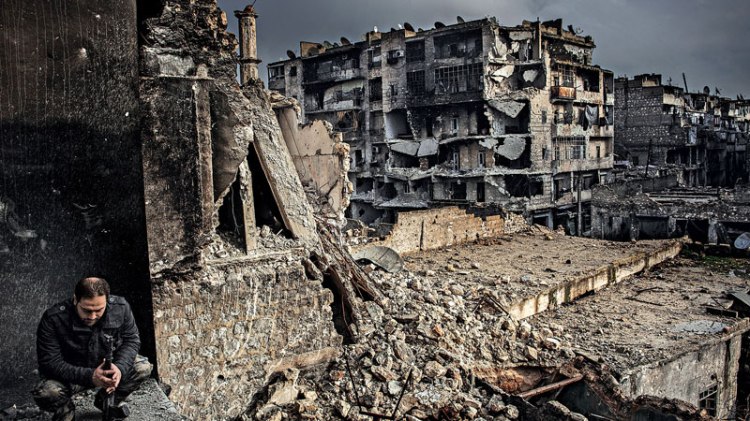
The case of Syria is especially instructive. Even when all the classic signs of a revolutionary situation appeared: open revolt in the cities, towns and villages, the popular masses questioning the established social relations and large swathes of a conscript army going over to the side of the people; with enough outside support and firepower counter-revolution seems the most probable outcome.
The Arendt quote reveals something else about revolution in the modern world. Once the left thought that revolution was almost guaranteed. It was objectively required by the telos of historical progress. The infrastructure of a society outgrew its political forms. These forms would be swept away in order for a new social regime to properly develop. It produced both new freer social relations and, especially, a more productive and rational organisation of the economy. The Third International claimed it was the ‘epoch of socialist revolution’ and expected many successful working class uprisings to capture state power (even as its own bureaucracy came to direct working class politics from above).
The C20th has shattered this, it has shown it to be a myth. Revolutions now appear like Arendt’s treasure – of course, these events arise off the back of suffering, oppression, and exploitation but considering the constancy of these causes, and the rarity of revolution, they cannot be reduced to them.
The entry of the masses into the political sphere is the only possibility of establishing freer more autonomous societies. Like Lefort, we must posit that democracy is an empty space that can foster a diversity of opinions underwritten by broad but firm principles. We should not situate power or truth in a leader, party or ideology. If the old idea of revolution is dead then we should posit another, merely as a contribution to revolutionary theory. Revolution is the opening of a psychological closure, torn open by rage and sickness of fear. It prises open the closure of established social and political relations, works against obedience and conformism. In drawing open this closure new forms of political speech and action are born, new social forms may appear that work toward less hierarchical institutions. Like how an analysand must speak through free association whatever comes to mind, and reflect on the course of her life with a new perspective using the material uncovered, might the process of revolution work in a similar fashion? Any student of the history of revolutions (rather than political activity in service to an ideology) knows the immensely creative and therapeutic effects of revolt can create new worlds. New forms, significations, and modes of being were born in the revolutions of the modern age. Even when they were lost, the meanings and forms they created were transmitted to the world as models and sources.
So the questions those of us who believe in social revolution must ask ourselves – an open question but with a current imperative of the utmost urgency – if revolution is an event irreducible to empirical factors, not guaranteed by a telos but rather a unique potentiality in the endless open page of human history.
What chance does revolution stand in the age of mass aerial bombardment and overwhelming firepower?
As popular revolts in an unconcerned wider world, very little. Syrian revolutionaries have repeatedly called for defensive equipment from aerial bombardment and later a ‘No Fly Zone’. We know that the intervention in Libya allowed the revolutionary forces to overthrow the old regime without the destruction of entire cities and the death or exile of their population. It has given a society recovering from a brutal four-decade dictatorship the chance to develop in the direction of freedom. One does not have to trust the motives of those intervening. Every revolution is a roll of the dice, we should listen to those who take the risk. No successful revolution has ever faced mass repression from a militarily and technological advanced enemy. With the fall of the Soviet Empire, the most recent wave of revolutions before the Arab Spring, the ruling classes knew their system was dying, and aside from the party gerontocracy, the cadre of the system saw a brighter future without party badges on their lapels. In a situation where the ruling class is likely to lose their privileges and wealth rather than set their eyes on new ones, the result is likely to be a counter-revolutionary fightback on the Syrian model. If revolutions are history’s rare treasure we as revolutionaries should consider solidarity over ideology and listen to those involved, not prioritise our own everyday struggles while they die or preserve the ‘established facts’ of our long-held positions or remain deaf to the treasure of their experience. Moreover, to retain our own humanity solidarity must come first, as any ends are determined by the means employed, if we devalue their lives and deaths we may find ourselves in the situation of many who started out as revolutionaries but ended somewhere quite different, as having a hand in creating a mountain of corpses.
by Joseph Aylmer


Pingback: Some Remarks on Hannah Arendt’s On Violence In the Age of the Syrian Revolution and Counter-Revolution | Paths & Bridges
Pingback: The Syrian Spring and the C21st Revolution | Paths & Bridges