
I
It seems the electoral meltdown widely foretold: Labour’s humiliation in the Gorton and Denton by-election by the victorious Greens, a self-inflicted defeat where Keir Starmer essentially cast away Labour’s sixth safest seat, has knocked the crisis embroiling the ex-Prince formerly known as Prince Andrew from the headlines.
Currently the apocalypse the US and Israel unleashed against Iran dominates headlines but even this will eventually pass thanks to the ‘missile math’, regime collapse, crashing stock markets, Trump’s ennui or a combination of these. Whatever the outcome the balance of forces pitting the world’s pre-eminent superpower with the MENA’s only nuclear weapons state in a patently malign and one sided might is right attack against the crisis wracked Islamic Republic, dictates there’s unlikely to be a favourable outcome for Iran.
So respite (a relative quantity) will be temporary and Andrew Mountbatten-Windsor – currently the 8th in line to the British crown until his ignominious removal (always a fanciful succession scenario) will again dominate the headlines of the redtops and serious broadsheets, not to speak of a tsunami of digital content. This is the sort of unwanted clean sweep illustrating the anachronism of P.T. Barnum’s adage ‘no publicity is bad publicity.’ Currently, Canada is the latest Commonwealth country demanding ‘citizen’ Andrew be removed from the hallowed line of succession.
Formerly resident of the 30-bedroom Royal Lodge in Windsor, ‘citizen’ Andrew has undergone a comedown of sorts and is currently holed up in the more ‘secluded’ 5-bedroom Wood Farm (with sea view) on the Royal family’s Sandringham estate in Norfolk pending another head spinning move to the nearby 5-bedroom Marsh Farm. Happily within dog walking distance moving won’t require a whirly bird. Out of the woods and into the marsh then. Except ‘citizen’ Andrew is neither out of the woods or the boggy stuff. There is no bolt hole on the Sandringham estate in Norfolk or anywhere that would allow him to quietly disappear or escape the enduring public disdain for the man disclosed by the Epstein files or the police investigation of his alleged misconduct as a special international trade representative for the British government, or the ignominy of being the first Royal arrested since Charles I in 1646 by parliamentary forces.
‘Citizen’ Andrew’s woeful appointment in 2001 was the wheeze of Blair’s New Labour government (echoes of Mandelson in 2025 anyone?) but was also supported by the future Tory chancellor and austerity hatchet man for the ages George Osborne and the CBI head Digby Jones who felt the ‘playboy prince’ would “put the country first.” But Blair and company were discreetly warned off making this appointment by an unlikely Cassandra. According to Entitled, a ‘biography’ cum patient piece of detective work of the errant ‘playboy prince’ by Andrew Lownie, Prince Charles counselled the government his brother was an unsuitable choice as he would be too busy “playing golf and chasing women.”
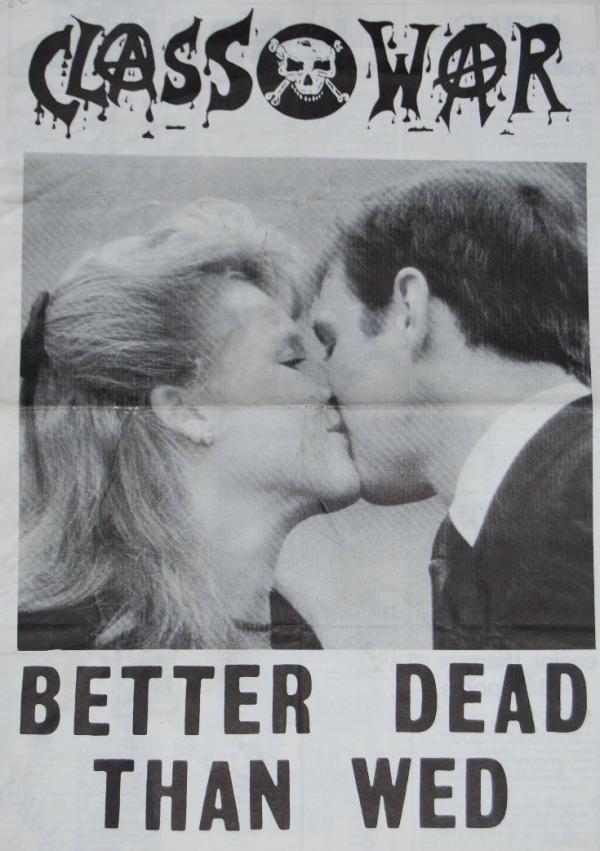
Damning enough you would think especially from your brother and prospective heir to the throne but obviously this verdict wasn’t damning enough for Tony Blair and Jack Straw. So knowing better (Royals are idiots after all), they appointed Prince Andrew any way. Yet Prince Charles’s whisper was also something of an understatement. Despite the concerns of Foreign Office underlings (knocked back by their superiors), Prince Andrew played fast and loose with the public purse. Helicopters were treated like uber taxis. Massages were charged to the taxpayer and much else. On one trip the whole floor of a Bangkok hotel was booked for the prince and his coterie. Though they were used to guests procuring prostitutes, hotel staff were reportedly “amazed” to see 10 prostitutes a day visiting Andrew’s room.
II
As the late Tom Nairn observed, the Windors’ inhabit the interface between glamour and the super-ordinary. They combine mundanity (even banality) with something more intangible and perhaps more super-charged than monarchies elsewhere. Relatedly, the Royals are supposed to exist in a rarefied world far above the heads of ‘us mere mortals’ and after a fashion Andrew has done so. Except mixed in with the usual folk hailing from Britain’s elite and satellite fixtures of its celebrity culture (however you feel about them there is something peculiarly diminishing and disappointing to learn Billy Connolly and Elton John among others, attended Andrew’s stag before his marriage to Sarah Ferguson), he also ran with Libyan gun runners, autocrats and dictators and their offspring, Chinese spies he considered friends and those at the shady, grifting end of wealth who (like Andrew himself) would have struggled to explain the source of their money if they were ever put on the spot (such as Jeffrey Epstein).
The Royal family in Britain have – excuse the hyperbole – almost twice ‘died out’ since the monarchy returned after the brief Cromwellian interregnum, only for Royals (and not so distant relatives) to be imported from the continent. The first was a member of the ‘House of Hanover’ whose line ended with Queen Victoria’s death in 1901, and then the ‘House of Saxe-Coburg and Gotha’ (both German principalities) via Victoria’s marriage to Prince Albert. Their son became Edward VII and shortly after a Royal House makeover introduced the ‘House of Windsor’ in 1917 to neutralise anti-German sentiment.
The fate of the ‘House of Windsor’ has been tied to the slow unwinding of Britain’s antique unitary state. For the most part the monarchy has functioned to bind the ‘home’ nations – periphery and centre – together into one. If all the ‘home’ nations were participants and beneficiaries of the joint enterprise of Britain’s rise to industrial and imperial ascendancy in the C18th and C19th, the monarchy was titular head of the show though its role wasn’t merely symbolic. For instance the monarchy was deeply involved in the transatlantic slave trade, chartered slave trading companies and had its own special royal brand for the slaves it owned. Charles expressed ‘personal sorrow’ that slavery had happened on a visit to Kenya in 2023 but the Palace has yet to issue a formal apology for its involvement.
British identity and monarchy are intimately related. In Britons: Forging the Nation 1707-1837 (1992), Linda Colley emphasized the exceptional importance of Britain’s many wars with France – a rivalry stretching from the end of the C17th to Victoria’s accession to the throne. For long periods this was an existential struggle for national survival often overlaid with a deep confessional significance. There was Catholic France versus Protestant Britain – though Britain’s confessional fractures gradually became attenuated with growing religious tolerance (Ireland was a different story because of the conflict between the Protestant plantation and the local Catholic population).
Britain’s struggles with France contributed to the formation of British national identity but this identity – or imagined community to use Benedict Anderson’s indispensable concept – was never a pure synthesis of separate English, Scottish and Welsh national identities but the union and subordination of each to something ‘new’ leaving space for these older identities to contribute to the forging of British identity. The institution of monarchy played an important mediatory role in the intersection of the separate nationalities. Yet the national components were never wholly equal while the monarchy rested heavily on the English part of Britishness. Also there were coercive aspects like forced assimilation and the persecution of Welsh language speaking in the C19th via the education system. The result was that by the early C20th Welsh language speakers had become the minority in Wales for the first time. Ironically, English had long become the dominant language in Scotland due to the influx of southern populations into the Scottish lowlands centuries beforehand.
Tom Nairn’s prescient anatomy of Britain’s break-up chiefly focused on the insurgent centrifugal force of ‘peripheral’ nationalism – Scottish, Welsh but also the peculiar conflict between Catholic republicanism and a hyper-British Protestant identity. Indeed Nairn’s exploration of an Ulster Protestantism rooted in the Protestant petit-bourgeoisie and working class, was unusual as a leftist analysis because Protestantism was treated seriously as a force with agency and not simply as an archaic tribal wrinkle destined to be erased by modernization or ‘transcended’ when socialism and the deflected Irish national question rendezvoused as the political unity of the Catholic and Protestant working class was established.
Within the framework of the unitary state, the British monarchy was simultaneously a part of, and set apart from society. Nairn’s exploration of the mortality of the British state extended to analysing the monarchy in The Enchanted Glass: Britain and its Monarchy (1988, 2011), which presented the royal institution as part of the warp and weft of British culture, identity and society. There was a period when the British monarchy was envied by foreign admirers for symbolising a prosperous and stable society. But the long drawn out “twilight” and gentle descent into the post-imperial age meant the monarchy was destined to share the fate of the British state which had become a token of rebarbative backwardness. More importantly the monarchy-British state were virtually incapable of implementing the reforms necessary to retool the economy and overhaul society. Clearly the impulse for such a project would come from elsewhere, from the popular democratic domain, and would represent a challenge to the status quo. The structural infirmities of the state exposed the mortality of the monarchy. Yet the British state and the monarchy still disposed of considerable resources to live on. In fact its institutional staying power was unquantifiable and underlined the challenge facing any project of radical democratization.
In 2026 Britain is undergoing a period of political polarisation. After two years in government Labour is already failing. What makes Labour’s failure so grave is that it follows more than a decade of catastrophically poor Tory governance against the backdrop of MAGA and Trump. More fallout from the ‘Andrew crisis’ is sure to follow (not to speak of the Mandelson scandal) and it all prompts a question: is Britain any nearer to becoming a Republic than it was in the year of the Royal family’s annus horribilis in 1992?
1992 was the year of the Royal divorce (Charles and Diana), the Royal separation (Andrew and Sarah) and the Windsor Castle fire. In 1997 divorcee Diana was killed in a car crash in Paris while being pursued by paparazzi resulting in a public crescendo of grief and anger aimed at the Royal family. In comparison a 20 year old Harry dressing up as a Nazi at a party or Sarah Ferguson’s cash for access sting at the hands of the News of the World in 2010 was ‘small beer’ (the rag was closed down a year later by Murdoch as a casualty of the phone hacking scandal). But in 2019 Andrew’s calamitous Newsnight interview with Emily Maitlis (“I have a peculiar medical condition which is that I don’t sweat”) was quickly followed by the Harry and Meghan imbroglio. The young couple married in 2018 but ‘quit’ the Royal family in 2020. Subsequently accusations of royal racism were aired.
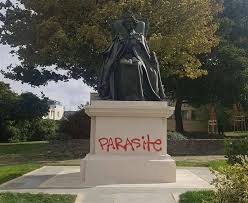
This is an edited reel of recent Royal scandals and the question is: how much scandal can one institution take? For Britain’s Republican minority, the Republic has often seemed a distant prospect. Despite the boom in declinist narratives dwelling on Britain’s sundown post-war years (timelines usually start with straitened circumstances Britain in 1945 with the humiliating 1956 Suez crisis marking a particularly sobering and clarifying milestone), the reign of Elizabeth II was by contrast (at least before 1992) remarkably serene and unruffled as a Royal press officer might say.
What do the polls currently say? A recent IPSOS poll (February 2026) shows just 28% of the public think the Royal family have handled the ‘Andrew crisis’ well compared to 38% who think the opposite. As the police investigation into Andrew’s alleged misconduct unfolds – initiated by the Thames Valley Police after a complaint by the anti-monarchist campaign Republic (not the Royal House or the government bear in mind), more questions are likely to be asked about who knew what and when and neither the King or the heir apparent and youthful clean broom in waiting, William are likely to escape scrutiny.
The same poll shows 25% support abolishing the monarchy (this is an increase of 10% in 10 years). 50% think the monarchy won’t exist in 50 years. There is a generational divide in support for the monarchy. Gen Z are, unsurprisingly, more negative about the Royal family than older generations as 39% think Britain would be a better country if the monarchy was abolished (compared to 20% who think it would be worse).
Though ‘William and Kate’ remain ‘popular’ (their numbers were slightly lower than the previous poll) and though 8 out of 10 respondents think the Royals will still be here in ten years, the age of deference is clearly over. Polls generally fail to capture the waning of attachment to monarchy, the intangible loss of potency of the past. In this respect, deference perhaps mutated on contact with the news media spectacle and celebrity culture which in an unholy alliance with the ‘House of Windsor’ launched the Royal Spectacle. In late modern society where being has increasingly displaced doing, there is a restless search for significance. A by-product of a culture focused on royals and celebrities is what psychologists term para-social relationships which describe intense, one-sided emotional investment of people in celebrities, royals and other people they don’t personally know. It’s often said the Royal family made a Faustian ‘bargain’ with the media allowing limited access to satisfy the demand for glamour but forestall cries for full access. A more sophisticated take on the Royal-media-public relationship might read: some access and Royal glamour to forestall a potentially fatal loss of public interest in the monarchy whatsoever.
In any case Britain’s first family is accessible and inaccessible, near and far, like us and not like us, of us but not of us. Both terms are essential to their continuing appeal, for the entertainment and consumption of the public who in this demotic age are increasingly ‘free’ to choose: a para-social obsession over royal doings, comings and goings or affect indifference or disdain and all the attitudes between these two poles. But whatever the choice – hardly a Sartrean choice in a social universe where ‘citizens’ are in fact subjects, the Royals would remain eternal and omnipresent until the day they aren’t.
It’s clear the ‘Andrew crisis’ will rumble on with disclosures from the Epstein files and the police investigation producing further tremors and shocks. There is irony in the fact the Epstein scandal and the file release, has so far had a greater impact in Britain than the US. This isn’t to discount future political earthquakes in the US. Lazy local ‘let’s pat ourselves on the back’ commentators who bemoan the lack of arrests stateside compared to Britain, forget this vast tranche of files exists because two individuals were arrested, charged and eventually jailed for criminal sex trafficking of minors: Epstein himself and Ghislaine Maxwell. The DoJ finally released those files because they were supposed to have completed their evidential review.
Yet it’s clear there are many other perpetrators of crimes related to Epstein’s sex trafficking. We are willing to concede that not everything has been released and much has been redacted. Victims are still not being listened to and obstacles to truth and justice remain. The suspicion lingers this is a partisan operation to shield Trump (and others) from closer scrutiny. But whether this is true or not, it hardly alters the fact it will probably take a change of administration in 2028 (actually taking office on January 2029) to revisit or reset the DoJ’s investigative priorities.
Even so Keir Starmer, who never met Jeffrey Epstein, isn’t mentioned in the 3.5m DoJ Epstein file dump, could yet lose his premiership due to his own hubris in selecting Peter Mandelson as the British ambassador to Washington. Some claim Andrew is a ‘small fish’ compared to the POTUS (or even ex-POTUS Clinton who recently testified before the House Oversight Committee). Perhaps but this view ignores how a scandal enveloping an entitled and venal individual, is reverberating throughout the monarchy and British society. The ‘Andrew crisis’ is grave but could escalate further and possibly capsize the monarchy. Britain’s monarchy is 1,200 years old, stretching back to the first Anglo-Saxon kingdoms of the C9th and England’s unification the following century. Though not the oldest monarchy (the distinction of the oldest continuous monarchy belongs to Japan) it is one the oldest and almost five times older than the American Republic (celebrating 250 years July 4 2026). Part of the peril of the ‘Andrew crisis’ springs from Charles’ failure to get ahead of the crisis from the start. Reactive, inadequate responses might ultimately leave Charles regretting he didn’t take more decisive action earlier.
If the monarchy is so damnably hard to shrug off with republicanism only making modest ground in public opinion despite all the scandals which dogged the last years of Elizabeth’s reign, then perhaps radicals should settle for reform of the institution?
Precedents for ending monarchy don’t all involve revolutionary regicide. The Great Revolutions in England, France and Russia (the last a belated peculiar version of the earlier revolutionary pattern) all notably ended with the execution of their monarchs (or royal families). But shedding blue blood to eliminate monarchy isn’t a necessity of the ideal-typical revolutionary path. Transitions to a Republic weren’t always lubricated with royal blood. Kaiser Wilhelm II abdicated during the 1918 November Revolution and fled to the Netherlands where he died in exile in 1941 in a country recently occupied by Nazi Germany. Exile has often been the fate of those royal heads whose dynasties were abruptly terminated by the interference of the masses in history. The last emperor of China abdicated at the age of six due to the Xinhui revolution which ended two thousand years of imperial dynastic rule. Later ‘Puyi’ was a Japanese puppet during the occupation of Manchuria but remarkably ended his days as a gardener and librarian in Beijing where he died of poor health aged 61 in 1967 during the tumult of the ‘Cultural Revolution.’ As recently as 2008 Nepal’s Constituent Assembly voted overwhelmingly to abolish its discredited monarchy compelling the Nepalese King to become a private citizen.
On a deeper level we might argue the Palace failed to divine the cultural shift Thatcherism ushered in. In Tom Nairn’s argument, Thatcher was hostile to consensus and the negative entropic force of tradition. Yet Thatcherism – a centralising as well as an avowedly decentralising project (free market, strong state) – was as much a demiurgic centrifugal force with the unexpected potential to dynamite the unitary British state as Irish Republicanism or Scottish constitutional nationalism aspired to be. This is a counter-intuitive, if contentious view of but let’s recall Thatcherism unleashed the destructive force of neo-liberalism resulting in mass unemployment, de-industrialization, widening social inequality (reversing a benign post-war trend) but also prompting a revival of popular nationalism, particularly English national identity which the monarchy as part of the British state had previously helped ‘contain’ within an Anglo-British identity.
Etiolated Scottish and Welsh identities could be comfortably tolerated within this matrix while English identity was sublimated in an Anglo-British or straightforwardly British identity (though British identity was always arguably heavily English). But once English identity began to differentiate itself from British identity it risked reinforcing a fissiparous logic of conflict focused on national identity, albeit apparently benign and pacific in nature because it played out within a relatively stable civic horizon though the conflict in Northern Ireland, where a hyper-British Protestant identity faced a Catholic Irish Republican identity (national grievances feeding confessional grievances and vice versa), demonstrated the potential for sharper conflicts.
As the nations began to gently pull apart aspects of ‘peripheral’ national identity began to come to the fore. Nairn noted Thatcher was clearly frustrated with Scotland’s resistance to her efforts to release the people’s slumbering entrepreneurialism. He speculated Celtic communal survivals and a non-conformist religious inheritance stymied the Tories appeal among Scottish voters (Wales demonstrated a similar immunity to Thatcher’s charms). We might add there were not dissimilar divisions within England like the North-South divide. In the 1980s the Tories strongest support was in the ‘Home Counties’ (Buckinghamshire, Hertfordshire, Essex, Berkshire, Middlesex, Sussex, Kent and Surrey). In some ways the South/’Home Counties’ was the foci of English identity.
We mention this because the monarchy was itself obviously English and yet it adopted symbols, emblems and traditions of the Celtic ‘Home’ countries, occupied Balmoral Castle in the Scottish Highlands for part of the year and even embraced tartanry: a repertoire of kitsch, sentimental and pseudo-folkloric elements denoting ‘Scottish’ culture which sprang from the aptly described ‘invention of tradition’ which took place in the last third of C19th, deriving inspiration from Sir Walter Scott and constituting a bowdlerisation of aspects of Scotland’s archaic clan tradition.
We have discounted ‘reforming’ the monarchy, establishing a new contract between the ‘House of Windsor’ and society. In the past discreetly retiring Royal miscreants would have done the job sweeping Royal scandals under the Wilton. No longer – hence the reform claque. Perhaps we could make the Royal family more civic and Ordinary Joe relatable like the bicycling Dutch Royals (literally known as the Bicycle Monarchy) instead of gloweringly totemic. But while: ‘they are just like us’ might appeal such a recasting risks dispelling the magical miasma haloing their Royal personages especially if the template for ordinary is deeply flawed like Andrew. In this respect the Royal family might be the one part of society that would have benefitted from a two child sovereign grant cap. Though its true the ‘spares’ – with so much time on their hands – will get up to mischief as Prince Harry has in his own modest fashion. In any case you can never predict where the ‘rotten eggs’ in the line of succession will pop up.
Muscle bound by social power clad in ermine and tradition, and clinging to the mystical principle blue blood sets them apart from the rest even in the modern age, poses dangers for the monarchy because it’s at odds with essentially the demotic temper of society. Equally relevance would constitue too much exposure. Despite the impression given off by Charles’ warning about Andrew’s unsuitability, that the King might possess the strategic acumen for steering the monarchy safely through treacherous waters, we suspect an inherent perspectival sctotomization prevents the monarchy detecting approaching icebergs. Naturally, we think this ‘blindness’ extends to the heir, William even if in other respects he is uncommonly bright for a Royal. Perhaps we also share something of this impairment – when the monarchy starts to slip away and the Republic beckons it may take us all by surprise.
In The Enchanted Glass (1988, 2011) Nairn pondered reforming the crown: a new, more circumspect ‘constitutional’ monarchy able to respect the principle of federalism and tolerate greater democracy. He discounted reform’s chances. ‘Late Nairn’ cleaved to democratic republican vistas and a radical overhaul of British state and society. Monarchy simply wouldn’t be compatible with such a dramatic popular democratic transformation. In the final analysis, the ‘House of Windsor’ was not only addicted to the “glamour of backwardness” but was an irreplaceable arch of a state whose authentic democratization would require us to remove this arch.
A Republican Britain has been glacially slow in appearing but if a political movement is to emerge and pose a frontal challenge it will happen in part because of the monarchy’s sclerotic infirmities but also because of the impact of ongoing internal and external shocks to wider British society. Those shocks included Thatcherism and Brexit (approaching its tenth anniversary). Both offered explicitly messianic projects of national revival and both have failed. Against the backdrop of the continuing effects of the 2008 global financial crisis, the years of austerity and the cost of living crisis, a different fully democratic project which spurns more painful snake oil ‘solutions’ of a grievance driven populist right is urgently required. Such a radical, democratic project would address the crisis of the status quo that is fundamentally about the absence of democratic control throughout British society where the economy serves a minority.
Ultimately monarchy is inseparable from this status quo and if the latter is to be democratically upended the former will surely also have to go. There is a paradox in the fact Britain could lead the global battle for democracy (autonomy) by belatedly joining the modern world.
Jules Etjim /// February-March 2026
Some reading referred or alluded to here:
Andrew Lownie Entitled: The Rise and Fall of the House of York (2025)
Tom Nairn The Enchanted Glass: Britain and It’s Monarchy (1988, 2011)
Tom Nairn The Break-Up of Britain (1977, 1981)
Tom Nairn After Britain (2000)
Linda Colley Britons: Forging the Nation 1707-1837 (1992)
Benedict Anderson Imagined Communities: Reflections on the Origins and Spread of Nationalism (1983)
Stuart Hall The Great Moving Right Show essay in Selected Political Writings (2017)

