‘Citizen’ Andrew

I

It seems the electoral meltdown widely foretold: Labour’s humiliation in the Gorton and Denton by-election by the victorious Greens, a self-inflicted defeat where Keir Starmer essentially cast away Labour’s sixth safest seat, has knocked the crisis embroiling the ex-Prince formerly known as Prince Andrew from the headlines.

Currently the apocalypse the US and Israel unleashed against Iran dominates headlines but even this will eventually pass thanks to the ‘missile math’, regime collapse, crashing stock markets, Trump’s ennui or a combination of these. Whatever the outcome the balance of forces pitting the world’s pre-eminent superpower with the MENA’s only nuclear weapons state in a patently malign and one sided might is right attack against the crisis wracked Islamic Republic, dictates there’s unlikely to be a favourable outcome for Iran.

So respite (a relative quantity) will be temporary and Andrew Mountbatten-Windsor – currently the 8th in line to the British crown until his ignominious removal (always a fanciful succession scenario) will again dominate the headlines of the redtops and serious broadsheets, not to speak of a tsunami of digital content. This is the sort of unwanted clean sweep illustrating the anachronism of P.T. Barnum’s adage ‘no publicity is bad publicity.’ Currently, Canada is the latest Commonwealth country demanding ‘citizen’ Andrew be removed from the hallowed line of succession. 

Formerly resident of the 30-bedroom Royal Lodge in Windsor, ‘citizen’ Andrew has undergone a comedown of sorts and is currently holed up in the more ‘secluded’ 5-bedroom Wood Farm (with sea view) on the Royal family’s Sandringham estate in Norfolk pending another head spinning move to the nearby 5-bedroom Marsh Farm. Happily within dog walking distance moving won’t require a whirly bird. Out of the woods and into the marsh then. Except ‘citizen’ Andrew is neither out of the woods or the boggy stuff. There is no bolt hole on the Sandringham estate in Norfolk or anywhere that would allow him to quietly disappear or escape the enduring public disdain for the man disclosed by the Epstein files or the police investigation of his alleged misconduct as a special international trade representative for the British government, or the ignominy of being the first Royal arrested since Charles I in 1646 by parliamentary forces.

‘Citizen’ Andrew’s woeful appointment in 2001 was the wheeze of Blair’s New Labour government (echoes of Mandelson in 2025 anyone?) but was also supported by the future Tory chancellor and austerity hatchet man for the ages George Osborne and the CBI head Digby Jones who felt the ‘playboy prince’ would “put the country first.” But Blair and company were discreetly warned off making this appointment by an unlikely Cassandra. According to Entitled, a ‘biography’ cum patient piece of detective work of the errant ‘playboy prince’ by Andrew Lownie, Prince Charles counselled the government his brother was an unsuitable choice as he would be too busy “playing golf and chasing women.”

Damning enough you would think especially from your brother and prospective heir to the throne but obviously this verdict wasn’t damning enough for Tony Blair and Jack Straw. So knowing better (Royals are idiots after all), they appointed Prince Andrew any way. Yet Prince Charles’s whisper was also something of an understatement. Despite the concerns of Foreign Office underlings (knocked back by their superiors), Prince Andrew played fast and loose with the public purse. Helicopters were treated like uber taxis. Massages were charged to the taxpayer and much else. On one trip the whole floor of a Bangkok hotel was booked for the prince and his coterie. Though they were used to guests procuring prostitutes, hotel staff were reportedly “amazed” to see 10 prostitutes a day visiting Andrew’s room.

II

As the late Tom Nairn observed, the Windors’ inhabit the interface between glamour and the super-ordinary. They combine mundanity (even banality) with something more intangible and perhaps more super-charged than monarchies elsewhere. Relatedly, the Royals are supposed to exist in a rarefied world far above the heads of ‘us mere mortals’ and after a fashion Andrew has done so. Except mixed in with the usual folk hailing from Britain’s elite and satellite fixtures of its celebrity culture (however you feel about them there is something peculiarly diminishing and disappointing to learn Billy Connolly and Elton John among others, attended Andrew’s stag before his marriage to Sarah Ferguson), he also ran with Libyan gun runners, autocrats and dictators and their offspring, Chinese spies he considered friends and those at the shady, grifting end of wealth who (like Andrew himself) would have struggled to explain the source of their money if they were ever put on the spot (such as Jeffrey Epstein).

The Royal family in Britain have – excuse the hyperbole – almost twice ‘died out’ since the monarchy returned after the brief Cromwellian interregnum, only for Royals (and not so distant relatives) to be imported from the continent. The first was a member of the ‘House of Hanover’ whose line ended with Queen Victoria’s death in 1901, and then the ‘House of Saxe-Coburg and Gotha’ (both German principalities) via Victoria’s marriage to Prince Albert. Their son became Edward VII and shortly after a Royal House makeover introduced the ‘House of Windsor’ in 1917 to neutralise anti-German sentiment.

The fate of the ‘House of Windsor’ has been tied to the slow unwinding of Britain’s antique unitary state. For the most part the monarchy has functioned to bind the ‘home’ nations – periphery and centre – together into one. If all the ‘home’ nations were participants and beneficiaries of the joint enterprise of Britain’s rise to industrial and imperial ascendancy in the C18th and C19th, the monarchy was titular head of the show though its role wasn’t merely symbolic. For instance the monarchy was deeply involved in the transatlantic slave trade, chartered slave trading companies and had its own special royal brand for the slaves it owned. Charles expressed ‘personal sorrow’ that slavery had happened on a visit to Kenya in 2023 but the Palace has yet to issue a formal apology for its involvement.  

British identity and monarchy are intimately related. In Britons: Forging the Nation 1707-1837 (1992), Linda Colley emphasized the exceptional importance of Britain’s many wars with France – a rivalry stretching from the end of the C17th to Victoria’s accession to the throne. For long periods this was an existential struggle for national survival often overlaid with a deep confessional significance. There was Catholic France versus Protestant Britain – though Britain’s confessional fractures gradually became attenuated with growing religious tolerance (Ireland was a different story because of the conflict between the Protestant plantation and the local Catholic population).

Britain’s struggles with France contributed to the formation of British national identity but this identity – or imagined community to use Benedict Anderson’s indispensable concept – was never a pure synthesis of separate English, Scottish and Welsh national identities but the union and subordination of each to something ‘new’ leaving space for these older identities to contribute to the forging of British identity. The institution of monarchy played an important mediatory role in the intersection of the separate nationalities. Yet the national components were never wholly equal while the monarchy rested heavily on the English part of Britishness. Also there were coercive aspects like forced assimilation and the persecution of Welsh language speaking in the C19th via the education system. The result was that by the early C20th Welsh language speakers had become the minority in Wales for the first time. Ironically, English had long become the dominant language in Scotland due to the influx of southern populations into the Scottish lowlands centuries beforehand.

Tom Nairn’s prescient anatomy of Britain’s break-up chiefly focused on the insurgent centrifugal force of ‘peripheral’ nationalism – Scottish, Welsh but also the peculiar conflict between Catholic republicanism and a hyper-British Protestant identity. Indeed Nairn’s exploration of an Ulster Protestantism rooted in the Protestant petit-bourgeoisie and working class, was unusual as a leftist analysis because Protestantism was treated seriously as a force with agency and not simply as an archaic tribal wrinkle destined to be erased by modernization or ‘transcended’ when socialism and the deflected Irish national question rendezvoused as the political unity of the Catholic and Protestant working class was established.  

Within the framework of the unitary state, the British monarchy was simultaneously a part of, and set apart from society. Nairn’s exploration of the mortality of the British state extended to analysing the monarchy in The Enchanted Glass: Britain and its Monarchy (1988, 2011), which presented the royal institution as part of the warp and weft of British culture, identity and society. There was a period when the British monarchy was envied by foreign admirers for symbolising a prosperous and stable society. But the long drawn out “twilight” and gentle descent into the post-imperial age meant the monarchy was destined to share the fate of the British state which had become a token of rebarbative backwardness. More importantly the monarchy-British state were virtually incapable of implementing the reforms necessary to retool the economy and overhaul society. Clearly the impulse for such a project would come from elsewhere, from the popular democratic domain, and would represent a challenge to the status quo. The structural infirmities of the state exposed the mortality of the monarchy. Yet the British state and the monarchy still disposed of considerable resources to live on. In fact its institutional staying power was unquantifiable and underlined the challenge facing any project of radical democratization.

In 2026 Britain is undergoing a period of political polarisation. After two years in government Labour is already failing. What makes Labour’s failure so grave is that it follows more than a decade of catastrophically poor Tory governance against the backdrop of MAGA and Trump. More fallout from the ‘Andrew crisis’ is sure to follow (not to speak of the Mandelson scandal) and it all prompts a question: is Britain any nearer to becoming a Republic than it was in the year of the Royal family’s annus horribilis in 1992?

1992 was the year of the Royal divorce (Charles and Diana), the Royal separation (Andrew and Sarah) and the Windsor Castle fire. In 1997 divorcee Diana was killed in a car crash in Paris while being pursued by paparazzi resulting in a public crescendo of grief and anger aimed at the Royal family. In comparison a 20 year old Harry dressing up as a Nazi at a party or Sarah Ferguson’s cash for access sting at the hands of the News of the World in 2010 was ‘small beer’ (the rag was closed down a year later by Murdoch as a casualty of the phone hacking scandal). But in 2019 Andrew’s calamitous Newsnight interview with Emily Maitlis (“I have a peculiar medical condition which is that I don’t sweat”) was quickly followed by the Harry and Meghan imbroglio. The young couple married in 2018 but ‘quit’ the Royal family in 2020. Subsequently accusations of royal racism were aired.
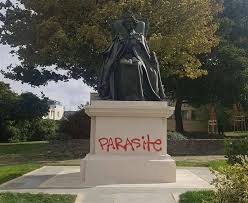
This is an edited reel of recent Royal scandals and the question is: how much scandal can one institution take? For Britain’s Republican minority, the Republic has often seemed a distant prospect. Despite the boom in declinist narratives dwelling on Britain’s sundown post-war years (timelines usually start with straitened circumstances Britain in 1945 with the humiliating 1956 Suez crisis marking a particularly sobering and clarifying milestone), the reign of Elizabeth II was by contrast (at least before 1992) remarkably serene and unruffled as a Royal press officer might say.  

What do the polls currently say? A recent IPSOS poll (February 2026) shows just 28% of the public think the Royal family have handled the ‘Andrew crisis’ well compared to 38% who think the opposite. As the police investigation into Andrew’s alleged misconduct unfolds – initiated by the Thames Valley Police after a complaint by the anti-monarchist campaign Republic (not the Royal House or the government bear in mind), more questions are likely to be asked about who knew what and when and neither the King or the heir apparent and youthful clean broom in waiting, William are likely to escape scrutiny.

The same poll shows 25% support abolishing the monarchy (this is an increase of 10% in 10 years). 50% think the monarchy won’t exist in 50 years. There is a generational divide in support for the monarchy. Gen Z are, unsurprisingly, more negative about the Royal family than older generations as 39% think Britain would be a better country if the monarchy was abolished (compared to 20% who think it would be worse).

Though ‘William and Kate’ remain ‘popular’ (their numbers were slightly lower than the previous poll) and though 8 out of 10 respondents think the Royals will still be here in ten years, the age of deference is clearly over. Polls generally fail to capture the waning of attachment to monarchy, the intangible loss of potency of the past. In this respect, deference perhaps mutated on contact with the news media spectacle and celebrity culture which in an unholy alliance with the ‘House of Windsor’ launched the Royal Spectacle. In late modern society where being has increasingly displaced doing, there is a restless search for significance. A by-product of a culture focused on royals and celebrities is what psychologists term para-social relationships which describe intense, one-sided emotional investment of people in celebrities, royals and other people they don’t personally know. It’s often said the Royal family made a Faustian ‘bargain’ with the media allowing limited access to satisfy the demand for glamour but forestall cries for full access. A more sophisticated take on the Royal-media-public relationship might read: some access and Royal glamour to forestall a potentially fatal loss of public interest in the monarchy whatsoever.

In any case Britain’s first family is accessible and inaccessible, near and far, like us and not like us, of us but not of us. Both terms are essential to their continuing appeal, for the entertainment and consumption of the public who in this demotic age are increasingly ‘free’ to choose: a para-social obsession over royal doings, comings and goings or affect indifference or disdain and all the attitudes between these two poles. But whatever the choice – hardly a Sartrean choice in a social universe where ‘citizens’ are in fact subjects, the Royals would remain eternal and omnipresent until the day they aren’t.

It’s clear the ‘Andrew crisis’ will rumble on with disclosures from the Epstein files and the police investigation producing further tremors and shocks. There is irony in the fact the Epstein scandal and the file release, has so far had a greater impact in Britain than the US. This isn’t to discount future political earthquakes in the US. Lazy local ‘let’s pat ourselves on the back’ commentators who bemoan the lack of arrests stateside compared to Britain, forget this vast tranche of files exists because two individuals were arrested, charged and eventually jailed for criminal sex trafficking of minors: Epstein himself and Ghislaine Maxwell. The DoJ finally released those files because they were supposed to have completed their evidential review.

Yet it’s clear there are many other perpetrators of crimes related to Epstein’s sex trafficking. We are willing to concede that not everything has been released and much has been redacted. Victims are still not being listened to and obstacles to truth and justice remain. The suspicion lingers this is a partisan operation to shield Trump (and others) from closer scrutiny. But whether this is true or not, it hardly alters the fact it will probably take a change of administration in 2028 (actually taking office on January 2029) to revisit or reset the DoJ’s investigative priorities.

Even so Keir Starmer, who never met Jeffrey Epstein, isn’t mentioned in the 3.5m DoJ Epstein file dump, could yet lose his premiership due to his own hubris in selecting Peter Mandelson as the British ambassador to Washington. Some claim Andrew is a ‘small fish’ compared to the POTUS (or even ex-POTUS Clinton who recently testified before the House Oversight Committee). Perhaps but this view ignores how a scandal enveloping an entitled and venal individual, is reverberating throughout the monarchy and British society. The ‘Andrew crisis’ is grave but could escalate further and possibly capsize the monarchy. Britain’s monarchy is 1,200 years old, stretching back to the first Anglo-Saxon kingdoms of the C9th and England’s unification the following century. Though not the oldest monarchy (the distinction of the oldest continuous monarchy belongs to Japan) it is one the oldest and almost five times older than the American Republic (celebrating 250 years July 4 2026). Part of the peril of the ‘Andrew crisis’ springs from Charles’ failure to get ahead of the crisis from the start. Reactive, inadequate responses might ultimately leave Charles regretting he didn’t take more decisive action earlier.

If the monarchy is so damnably hard to shrug off with republicanism only making modest ground in public opinion despite all the scandals which dogged the last years of Elizabeth’s reign, then perhaps radicals should settle for reform of the institution?

Precedents for ending monarchy don’t all involve revolutionary regicide. The Great Revolutions in England, France and Russia (the last a belated peculiar version of the earlier revolutionary pattern) all notably ended with the execution of their monarchs (or royal families). But shedding blue blood to eliminate monarchy isn’t a necessity of the ideal-typical revolutionary path. Transitions to a Republic weren’t always lubricated with royal blood. Kaiser Wilhelm II abdicated during the 1918 November Revolution and fled to the Netherlands where he died in exile in 1941 in a country recently occupied by Nazi Germany. Exile has often been the fate of those royal heads whose dynasties were abruptly terminated by the interference of the masses in history. The last emperor of China abdicated at the age of six due to the Xinhui revolution which ended two thousand years of imperial dynastic rule. Later ‘Puyi’ was a Japanese puppet during the occupation of Manchuria but remarkably ended his days as a gardener and librarian in Beijing where he died of poor health aged 61 in 1967 during the tumult of the ‘Cultural Revolution.’  As recently as 2008 Nepal’s Constituent Assembly voted overwhelmingly to abolish its discredited monarchy compelling the Nepalese King to become a private citizen.

On a deeper level we might argue the Palace failed to divine the cultural shift Thatcherism ushered in. In Tom Nairn’s argument, Thatcher was hostile to consensus and the negative entropic force of tradition. Yet Thatcherism – a centralising as well as an avowedly decentralising project (free market, strong state) – was as much a demiurgic centrifugal force with the unexpected potential to dynamite the unitary British state as Irish Republicanism or Scottish constitutional nationalism aspired to be. This is a counter-intuitive, if contentious view of but let’s recall Thatcherism unleashed the destructive force of neo-liberalism resulting in mass unemployment, de-industrialization, widening social inequality (reversing a benign post-war trend) but also prompting a revival of popular nationalism, particularly English national identity which the monarchy as part of the British state had previously helped ‘contain’ within an Anglo-British identity.    

Etiolated Scottish and Welsh identities could be comfortably tolerated within this matrix while English identity was sublimated in an Anglo-British or straightforwardly British identity (though British identity was always arguably heavily English). But once English identity began to differentiate itself from British identity it risked reinforcing a fissiparous logic of conflict focused on national identity, albeit apparently benign and pacific in nature because it played out within a relatively stable civic horizon though the conflict in Northern Ireland, where a hyper-British Protestant identity faced a Catholic Irish Republican identity (national grievances feeding confessional grievances and vice versa), demonstrated the potential for sharper conflicts.

As the nations began to gently pull apart aspects of ‘peripheral’ national identity began to come to the fore. Nairn noted Thatcher was clearly frustrated with Scotland’s resistance to her efforts to release the people’s slumbering entrepreneurialism. He speculated Celtic communal survivals and a non-conformist religious inheritance stymied the Tories appeal among Scottish voters (Wales demonstrated a similar immunity to Thatcher’s charms). We might add there were not dissimilar divisions within England like the North-South divide. In the 1980s the Tories strongest support was in the ‘Home Counties’ (Buckinghamshire, Hertfordshire, Essex, Berkshire, Middlesex, Sussex, Kent and Surrey). In some ways the South/’Home Counties’ was the foci of English identity.

We mention this because the monarchy was itself obviously English and yet it adopted symbols, emblems and traditions of the Celtic ‘Home’ countries, occupied Balmoral Castle in the Scottish Highlands for part of the year and even embraced tartanry: a repertoire of kitsch, sentimental and pseudo-folkloric elements denoting ‘Scottish’ culture which sprang from the aptly described ‘invention of tradition’ which took place in the last third of C19th, deriving inspiration from Sir Walter Scott and constituting a bowdlerisation of aspects of Scotland’s archaic clan tradition.

We have discounted ‘reforming’ the monarchy, establishing a new contract between the ‘House of Windsor’ and society. In the past discreetly retiring Royal miscreants would have done the job sweeping Royal scandals under the Wilton. No longer – hence the reform claque. Perhaps we could make the Royal family more civic and Ordinary Joe relatable like the bicycling Dutch Royals (literally known as the Bicycle Monarchy) instead of gloweringly totemic. But while: ‘they are just like us’ might appeal such a recasting risks dispelling the magical miasma haloing their Royal personages especially if the template for ordinary is deeply flawed like Andrew. In this respect the Royal family might be the one part of society that would have benefitted from a two child sovereign grant cap. Though its true the ‘spares’ – with so much time on their hands – will get up to mischief as Prince Harry has in his own modest fashion. In any case you can never predict where the ‘rotten eggs’ in the line of succession will pop up.

Muscle bound by social power clad in ermine and tradition, and clinging to the mystical principle blue blood sets them apart from the rest even in the modern age, poses dangers for the monarchy because it’s at odds with essentially the demotic temper of society. Equally relevance would constitue too much exposure. Despite the impression given off by Charles’ warning about Andrew’s unsuitability, that the King might possess the strategic acumen for steering the monarchy safely through treacherous waters, we suspect an inherent perspectival sctotomization prevents the monarchy detecting approaching icebergs. Naturally, we think this ‘blindness’ extends to the heir, William even if in other respects he is uncommonly bright for a Royal. Perhaps we also share something of this impairment – when the monarchy starts to slip away and the Republic beckons it may take us all by surprise.

In The Enchanted Glass (1988, 2011) Nairn pondered reforming the crown: a new, more circumspect ‘constitutional’ monarchy able to respect the principle of federalism and tolerate greater democracy. He discounted reform’s chances. ‘Late Nairn’ cleaved to democratic republican vistas and a radical overhaul of British state and society. Monarchy simply wouldn’t be compatible with such a dramatic popular democratic transformation. In the final analysis, the ‘House of Windsor’ was not only addicted to the “glamour of backwardness” but was an irreplaceable arch of a state whose authentic democratization would require us to remove this arch.

A Republican Britain has been glacially slow in appearing but if a political movement is to emerge and pose a frontal challenge it will happen in part because of the monarchy’s sclerotic infirmities but also because of the impact of ongoing internal and external shocks to wider British society. Those shocks included Thatcherism and Brexit (approaching its tenth anniversary). Both offered explicitly messianic projects of national revival and both have failed. Against the backdrop of the continuing effects of the 2008 global financial crisis, the years of austerity and the cost of living crisis, a different fully democratic project which spurns more painful snake oil ‘solutions’ of a grievance driven populist right is urgently required. Such a radical, democratic project would address the crisis of the status quo that is fundamentally about the absence of democratic control throughout British society where the economy serves a minority.

Ultimately monarchy is inseparable from this status quo and if the latter is to be democratically upended the former will surely also have to go. There is a paradox in the fact Britain could lead the global battle for democracy (autonomy) by belatedly joining the modern world.

Jules Etjim /// February-March 2026

Some reading referred or alluded to here:

Andrew Lownie Entitled: The Rise and Fall of the House of York (2025)

Tom Nairn The Enchanted Glass: Britain and It’s Monarchy (1988, 2011)

Tom Nairn The Break-Up of Britain (1977, 1981)

Tom Nairn After Britain (2000)

Linda Colley Britons: Forging the Nation 1707-1837 (1992)

Benedict Anderson Imagined Communities: Reflections on the Origins and Spread of Nationalism (1983)

Stuart Hall The Great Moving Right Show essay in Selected Political Writings (2017)

Syrian Spring in Winter: A Paths and Bridges Editorial

I

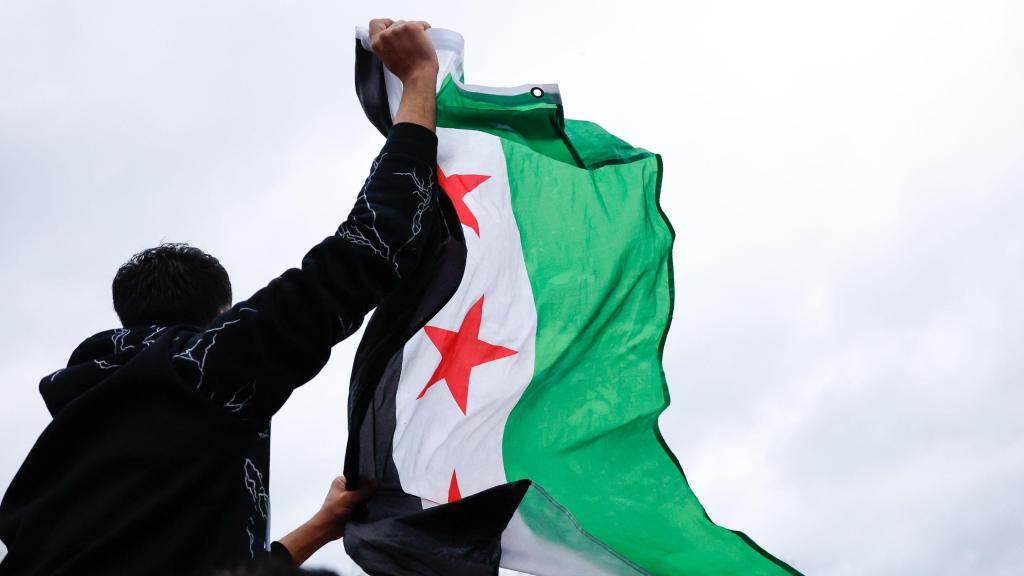
In this global season of wintry reaction Spring has burst forth, and unexpectedly so, in Syria. Today millions of Syrians are rejoicing at the end of Bashar al-Assad’s tyrannical rule. Whatever happens in Syria tomorrow Assad’s humiliating defeat is a significant historical watershed, the tangible fruition of some of the promises embodied by the 2010-11 ‘Arab Spring’ which swept across the MENA challenging autocracy and authoritarianism. This was a challenge which appeared to have exhausted itself. Syria was a tomb but today it’s something different. Now the immediate future will see the Great Return as millions of displaced Syrian refugees return to their homeland.

Perhaps the ‘Syrian Spring’ with its heavy inheritance of counter-revolutionary violence and scorched earth destruction will rapidly sour or wither as many anxiously fear and Orientalist churls confidently forecast. The latter have always displayed a deep scepticism about the agency of the Syrian people. Yet though it was late in coming this is Spring.

After inflicting deep wounds on Syria and its people with the help of its allies – Russia, Iran and Hezbollah’s Shia militias – Assad’s brutal Baathist regime collapsed like a house of cards. Facing defeat at the hands of the people in 2015, Assad survived thanks to Putin’s timely assistance when Iran persuaded Moscow to save his skin. As a result Iran’s revolutionary guards, Russian air power and Hezbollah’s militias tipped the balance of the civil war in Assad’s favour. Almost a decade later the once unlikely rehabilitation of the Butcher of Damascus and international pariah, had clearly begun when Assad appeared at the 2023 Arab League summit, the apparent ‘victor’ of the Syrian civil war.

If the collapse of Assad’s regime was a surprise this wasn’t because it was particularly strong or stable. On the contrary the regime had become hollowed out, weak and anaemic despite its power resting on a long established thanatocratic apparatus of terror and repression that imposed biological precarity on the population. Assad’s social base was narrow and derived from a small group of clans belonging to the Alawite minority. If this minority wasn’t subject to the same level of repression aimed at the Sunni majority, it was still a captive of the ruling circle. Baathism had long exhausted any legitimacy it might have once had. Baathist ideology had combined a faux Pan Arabism, fake anti-imperialism and statist Arab socialism. Also, Assad wasn’t shy in suggesting that he was conducting a local version of the War on Terror, a convenient exculpatory fable for international consumption that justified his exterminatory counter-revolutionary violence.

Perhaps to fully appreciate the tenacity of the Syrian people we should consider the sobering metrics of the destruction wrought by totalitarian Baathism since peaceful protests in 2011 were met by brutal violence and the civil war began in earnest: 400,000 to 600,000 people killed (Assad and his allies were responsible for the overwhelming majority of these deaths) and as many injured as civilians were targeted by air power, barrel bombs, rockets, tank fire, white phosphorous and chemical weapons. The deadliest regime use of chemical weapons was a Sarin gas attack on Ghouta in August 2013. Also 6.8 million people were displaced within the country and 5.4 million Syrians became refugees abroad according to the UNHCR mainly in Lebanon, Jordan and Turkey. All this in a country of 22 million people.

Thirteen years ago the ‘Syrian Spring’ first flared into life, part of a regional wave of protests that swept across the MENA after a poor street seller Mohamed Bouazizi set himself on fire outside the local Governor’s office in Sidi Bouzid in Tunisia on 17 December 2010. Egypt and Syria were the main centres of popular protest and revolution, two historically important Arab countries where the hopes for freedom were most heavily invested and also the two countries that in an earlier age of ‘high’ Pan Arabism had formed a short lived (and long forgotten) political union as the United Arab Republic (1958-61).

In 2011 peaceful protests throughout Syria were answered by the brutal violence of Assad’s repressive forces. As the people’s rebellion sprang into life feverish grassroots organising helped create neighbourhood Local Co-ordinating Committees (LCCs) that represented a demotic counter-power directly challenging Assad’s rule. Assad responded by doubling down on the repression and violence. As the Syrian opposition intellectual Yassin al-Haj Saleh observed in his book The Impossible Revolution (2017), the revolution was soon compelled to defensively take up arms itself while the previously dominant ‘humanist’, ‘civic’ and ‘participatory’ nature of the inclusive grassroots organising began losing ground to the martial and a more exclusive identitarian miliant Salafism. As Saleh put it, the revolution was acquiring an “Islamic face.” Early on as the revolution armed itself it had relied on defectors from the Syrian army to provide weapons and personnel for the Free Syrian Army (FSA). Very soon these forces would be joined by Salafist militants, many homegrown, intentionally released by Assad from his network of detention centres and prisons like Sednaya and Tadmor (factories for the production of torture and death that few emerged from alive). Evidently Assad intended to bolster his own support among minority groups not belonging to the benighted Sunni majority by stoking sectarian fears. Assad was not above using certain tropes from the international currency of Islamophobia to pretend his forces and allies were fighting ‘jihadis’, ‘extremists’ and ‘terrorists’ rather than the Syrian people.

After Assad it’s clear the Syrian revolution faces many internal and external hurdles and challenges – not least in repairing the frightful destruction of a regime that boasted it would rather burn down Syria before relinquishing power. Evidently navigating potential communal and sectarian divisions will also be a challenge but the Syrian people are more than capable of doing so. Saleh likened the chaos unleashed by Assad’s state to Thomas Hobbes state of nature or ‘war of all against all’ with the added novelty that this state had been deliberately cultivated by Leviathan itself. Similarly in a 2018 Paths and Bridges article we observed:

“Syria is a thanatocratic state whose kleptocratic ruling elite have tried to maintain their rule by freely resorting to genocide, systematically torturing and killing people on an industrial scale while using death, directly and indirectly to husband the populace in an escalation of governmental strategies to winnow targeted demographics and destroy those social ecologies felt to nourish rebellion. The genocidal destruction or disaggregation of some social groups by the thanatocratic state is accompanied by efforts to hothouse other demographics seen as compatible with one overriding imperative: survival of the ruling elite.”

A common refrain of the commentary on Assad’s fall suggests Syria and its people are at a crossroads. Paths and Bridges agrees, and this is a much better place to be than somewhere where the doors and exits are firmly closed or blocked. Paths and Bridges is also firmly convinced that a return to a totalitarian universe is unlikely for a variety of reasons. Briefly we think the comparisons between Syria and Libya are misleading (and even misunderstand events in Libya). Many have claimed Gaddafi’s overthrow led to internecine bloodletting and conflict, reducing Libya to an unenviable “failed state.” It’s true that chaos reigned in Libya with two rival governments with different foreign backers, vying for ultimate sovereignty. These two authorities fought a six year civil war (2014-20) that internally displaced half a million people and forced six hundred thousand people to flee abroad (in a country of six and half million people). There is now an uneasy ‘peace’ in Libya while certain political and social issues are yet to be resolved. Yet the lives lost in the Libyan civil war and the humanitarian violations carried out by all parties were just a fraction of the lives lost in the Syrian civil war.

It appears the immediate danger facing the Syrian people as they start rebuilding the country stems from foreign interference and presently this would be the role Israel is playing as the regional superpower and rogue state that is on a hubristic course of eternal war or war with impunity. Netanyahu and his government in Tel Aviv is utterly contemptuous of the international and humanitarian law and is aware that a simpatico friend will soon be occupying the White House – Donald Trump – who shares Netanyahu’s contempt for the global norms of governance. This isn’t to downplay Biden’s abysmal failures vis-á-vis Israel, Gaza and the fate of the Palestinian people and the US failure to check Israel’s escalating genocidal war against Gaza. It’s clear an emboldened Netanyahu is seizing this ‘new opportunity’ to extend his own maximalist notion of self defence (a euphemism for offence) by continuing air strikes against Syria and seizing land including an outrageous illegal incursion on the Golan heights buffer zone and plans to expand Israeli settlements.

There is some irony in the fact that it was Israel’s assault on Hezbollah in Lebanon and Iranian revolutionary guards in Syria while Russia was distracted by its invasion of Ukraine, that effectively tipped the balance in favour of the rebel coalition fighting Assad though this was by no means the whole story or reason for the success of the Hay’at Tahrir al-Sham’s (HTS) carefully laid plan to break out of north west Syria in Idlib that led to the rapid seizure of Aleppo (Syria’s second largest city) and Hama in co-ordination with other opposition groups in other parts of Syria. It’s apparent that a stable Syria doesn’t suit Netanyahu’s government who certainly regarded Assad as an enemy but also a useful enemy, a billboard for Arab authoritarianism (in opposition to Israeli democracy) but also a known quantity, weak in power and never any real threat to Israel. Indeed its likely Israel will continue to sow chaos and instability in its neighbour especially in light of the shift in the regional balance of power delivered by its superior arms.

It’s difficult to speculate on Syria’s future though that hasn’t prevented many from doing so. There are lots of unknowns. Despite our remarks about Israel’s desire to prevent a Syria ‘that works’ or the possibility of further external interference from Russia, Turkey, the US, Iran, Saudi Arabia or other countries, the Syrian people have (temporarily at least) subverted the primacy of the geo-political. Neither can Assad’s fall simply be reduced to his armed overthrow by the armed coalition of groups led by HTS. We need to remind ourselves the first chapter in Assad’s overthrow began with the peoples grassroots rebellion. Yet the country is broken and impoverished. 80% of the population needs humanitarian aid. Scars will remain from decades of autocratic rule. As Fawaz Gerges (an academic based at the LSE) recently asked: will religious, ethnic and clan based or other divisions fuel further conflict or will inclusive nation building win the day?

II

Finally there is a major question broached by Assad’s fall and the triumph of the Syrian Revolution. In the C21st demotic rebellion and revolution has remained a phenomena but these latter day revolutions have lacked the élan of the Great Revolutions of early modernity or even the 1979 Iranian Revolution. It’s a paradox (or an apparent paradox) that the disappearance of the socialist goal in our era hasn’t meant the end of revolution. Revolutions still happen and will continue to do so in the future but the contemporary revolution ‘perplexes’ what remains of the traditional left because it doesn’t fit the old models of social change or providential historical narratives, as Yassin al-Haj Saleh himself observed. The modern revolution lacks the gravitas or historical sweep of the Great Revolutions that helped birth and shape the modern world.

There was a historical moment when Progress was deemed an unimpeachable universal good, a desirable goal and horizon of collective social and political action but that point is now past. As Theodor Adorno expressed the idea, Progress was the providential promise of unfolding history that was synonymous with social development but turned out to be regression.

Perhaps this judgement was harsh or excessive. Perhaps. But it appears the revolution today has blank spaces and is missing steps while social struggles are rarely consummated and often have to begin again after a period of disorientation. Equally revolution appears to face far greater hurdles than in the past especially the greatly amplified repressive power of the modern Leviathan in the international state system which disposes of far greater ‘clairvoyance’ on the threat of social contestation than the past. Globalisation hasn’t been eclipsed but this does look like an age of the renewed inescapable power of Leviathan. This isn’t the whole explanation however. With the modern revolution lacking the élan of the Great Revolutions (whether American or French or even their Dutch and English prequels) in a world addicted to catastrophe and apocalypse but strangely indifferent to progressive social transformations, the contemporary revolution is often modest and small scale, arriving abruptly and departing like a furtive tsunami. Incomplete, destructive and leaving few traces.

Strangely this picture could describe the 1871 Paris Commune. Three years ago on the one hundred and fiftieth anniversary of the Paris Commune Leila al-Shami (among others) made the connection between the Paris Commune and the experience of the ‘Syrian Spring’ with its embattled grassroots rebellions in urban centres like Aleppo and Homs forced to defend themselves with arms. Perhaps we could extend this suggestive homology to other recent rebellions of the people like Myanmar, Belarus, Hong Kong and elsewhere. The threads connecting the Paris Commune to these ‘perplexing’ episodes of modern social contestation may appear tenuous but we think they exist but aren’t really obvious if we retain the traditional political and historical narratives for apprehending the Paris Commune.

Previously in the age of the classical workers movement, classical Marxism, the Second International and the short lived moment of Leninism – the Paris Commune was retrospectively read through the lens of a specific understanding of historical development and the formation of the working class as a global class-for-itself embodying a new collective social order in its collective institutions and social action. This global narrative was central to classical Marxism and yet even in 1871 (and 1917) when it was more obviously true than today, it was still fundamentally false.

Instead we would think there is a continuity or what we term the weak telos of autonomy defined as a broad, multi-faceted struggle to achieve, defend or extend the circumference of freedom and autonomy, to extend democracy throughout the world that takes many different forms that wasn’t (and isn’t) only confined to the working class or the labour movement. In this context the historic struggles of the working class were an important instance of this struggle for autonomy and democracy (Marx had even spoken of the “battle for democracy”). This could be true even if Marxism’s edifice constituted a misapprehension of the import of worker struggle. This isn’t to dismiss criticisms of liberalism or the shortcomings of representative democracy but addressing these deficiencies is inseparable from the defence of embattled democracy that is facing the external challenge of the new authoritarianism and the internal threat of Populism. In this context what used to be called the Social Question (or social justice) is, in the final analysis, highly relevant to the global struggle for freedom and autonomy and vice versa.

We think that events in Syria since 2011 illustrate the global nature of the struggle for autonomy and democracy. But the telos of this struggle is weak. What we mean by this is that we need to resist what Maurice Brinton described as the “Balkanisation of utopia”: the assumption social development was a fatalism and the accompanying notion that history had one inevitable terminus. If the modern world order is a global system that at some level imposes a certain genetic logic of the whole on the parts, it is also true the social-historical (Cornelius Castoriadis) is not closed but radically open: there are many locales, spaces, multiple modernities (as the Israeli sociologist S.N. Eisenstadt insisted) and there are many different agents and agencies which imply many different paths and destinations. In this sense autonomy and democracy have different social forms, are not a given and need to be fought for, defended and constantly renewed.

Jules Etjim / / / / / December 2024

Postscript >>>> In 2018 Paths and Bridges published Notes on Syria and the Coming Global Thanatocracy by Jules Etjim. Shortly after the post was translated into Spanish by Sinfor Fernández for Rebelión blog. It’s long overdue but we are now sharing this translation of this, perhaps, provocative argument and wish to thank Sinfor for sharing this post with a wider audience. The original English version (our most viewed post though all viewings are admittedly too few) can still be found on the Paths and Bridges site.

Contra-Polar World

I

Is the world inexorably becoming a contra-polar world? The present day war between the Russian Federation and Ukraine and Israel’s brutal military campaign in Gaza would seem to suggest so.

By contra-polar world we basically understand a situation where the global ‘order’ appears to be flying apart or breaking down while its constituent parts crash against each other as geo-political antagonisms become more intense and conflicts grow. So a contra-polar world would be characterised by chronic conflict and pitiless exterminatory violence spreading from the national or civil stage to the international plane and vice versa. A contra-polar world spells war’s return to regions that enjoyed decades of pacific stability, in part due to intensifying inter-state conflict. The chaos of a contra-polar world would be a stark contrast to the glacial bi-polar world of the Cold War which froze major conflict – at least in the developed First and Second World.  

Centrifugal tendencies have broken down longstanding blocs and alliances and forced the realignment of nation-states as “hot wars” that were unimaginable in recent decades, become plausible scenarios once again. The Russian-Ukrainian war is exemplary in this respect. A victory for the Russian war machine would surely embolden Putin to launch further military adventures given the successful annexation of Crimea in 2014 inspired the 2022 invasion of Ukraine. So far imperial ‘forever wars’ carolled by a paranoid nationalist narrative of grievance and entitlement have helped to entrench the Russian elite’s power especially as any opposition has been cowed and curbed with hundreds of thousands of mainly young Russians opting to flee abroad. ‘Z’ for Russian victory would not only mean success in carving out a huge territorial chunk of its neighbour but also help Moscow reassert political control of Kiev again and this would almost certainly mean the euthanasia of Ukraine’s fledgling democratic revival.

Today the blasé pro-Moscow stance of Orban’s government in Hungary could feasibly spread to other countries and further nourish a willingness to temporise with Putin. There are many who are persuaded Putin’s Russia represents a grave threat to European peace and democracy and decry any stance with echoes of the earlier appeasement of Hitler in the 1930s on the grounds that such a policy is unlikely to forestall the European war it assiduously wishes to avoid.

Another example of the ‘slippage’ is Recep Erdogan’s coolly calculating political hardball over the accession of Finland and, especially, Sweden to NATO (delayed for two years) though this was at least manageable by the leadership of the defence alliance. More cause for concern must be Turkey’s strengthening economic ties with Moscow indicated by an increased reliance on Russian oil and gas, plans for Russia to build a nuclear power station in Turkey and Ankara’s determination to retain a Russian missile system despite Washington’s stern protests and sanctions. There was also a plan for Putin to visit Turkey in February 2024 (subsequently cancelled by Moscow).  

Putin’s Russia is far from being a pariah on the world stage revealing major shifts in the geo-political order. Putin’s dubious re-election in March 2024 was welcomed beyond the ‘West’ in many countries including China, Brazil, India and various countries across the African continent. For example, Zimbabwe’s Electoral Commission declared Putin’s landslide victory (he ‘won’ 88% of the vote) “free, fair and credible.”  

What is to be made of Putin’s ‘success’ in rehabilitating Russia’s position since 2022? How does it relate to an emerging contra-polar world? Firstly, it reflects Russia’s changing fortunes in the last year on the Ukrainian battlefield, Moscow’s shift to a ‘war economy’ and some success in circumventing Western sanctions across the world where Putin’s war of aggression was finessed as a defensive reaction to Western imperialism’s machinations. Clearly Ukraine’s faltering defence – running short of ordinance, missiles and military hardware, has encouraged Putin to believe the US will abandon Ukraine (perhaps with a Trump election victory) while reinforcing the wider appeal of the Kremlin’s paranoid narrative.

Yet the presumption of a ‘Russian renaissance’ must be qualified as Putin’s success has been limited – the economy is heavily reliant on fossil fuel wealth as a source of national income and these are highly vulnerable to fluctuations in global energy prices. The uptick in Russia’s battlefield fortunes has come at an enormous cost in treasure and manpower – casualties are high and reserves of military manpower are not inexhaustible as demonstrated by the Moscow’s use of prisoners in its army (thought to be over a 100,000 men with a high casualty rate). Also Russia’s “no limits” friendship with China (as Beijing characterises its strategic alliance) certainly does have limits – China receives Russian gas and oil at extremely generous discounts, access to Russian military technological know how as it upgrades and expands its military forces and nuclear arsenal. Despite supportive rhetoric China is less generous in return reflecting the altered power balance between the two countries. Though Russia and China have conducted large scale military exercises together Beijing isn’t as forthcoming supplying military hardware as Putin would wish and continues making diplomatic noises about respecting every nation’s sovereignty despite Moscow loudly proclaiming Taiwan belongs to China (1).

But what does Russia’s international support tell us about the decline of American power? This has been an ever present debate since 9/11. The US has over 750 bases throughout the world in at least 80 countries (perhaps more as the US military presence in some countries is secret). So the US military is present in almost every part of the world as its sea, land air forces enjoy a global reach. A 2022 report by the Stockholm International Peace Research Institute noted the US accounted for 39% of global arms spending (3.5% share of its GDP or $877 billion) compared to its nearest superpower rival China which accounted for 13% of global arms spending (1.6% share of its GDP or $292 billion). Other rivals for global military strength trail even further behind US spending levels. For another comparison Russia accounted for just 3.9% of global arms spending. The 2022 estimates of the Institute for Strategic Studies (ISS) were slightly different but its top four global arms spenders: US, China, Russia and India, were identical with the US again outdistancing its main rivals.

Even so signs of US decrepitude are unmistakable though one of the remarkable features of Pax Americana is that for years it seemed gauche to talk of an American empire like earlier historical incarnations of empire despite its overall formidable power. Though US economic and military power underpinned the global order after the Second World War, Washington faced a systemic rival – the Soviet Union – during post-war decades also convulsed by the anti-colonial revolution and decolonisation. Clearly ‘illusions’ about the fundamental benevolence of US hegemony owed something to its far reaching global power.

Today the arms of smaller countries can’t be twisted so readily as they once were as rival power centres have newly arisen while the former respect (and fear) of the US has weakened. While the intangible decline of American power certainly predates Trump’s 2016-20 Presidency, what we might call the ‘Trump effect’ has added to the loss of the US’s global authority. Critically, for its old allies the US is no longer a safe port in a storm or the reliable friend of yesteryear. Even if Biden’s White House term had been matchless it could never have fully rehabilitated the US’s reputation. Added to this that what seemed truly improbable after his ejection from office – a second coming of Trump may well come to pass in November 2024.

NATO’s break-up would surely be nearer if the New Isolationism of Trump’s ‘America First’ replaced the internationalism of the US’s post-war global security architecture, with a second Trump term. Given this destabilising possibility we have to assume a wider European war would be more likely, Russia more bellicose. Recently, urging continuing solidarity with Ukraine, Poland’s new Prime Minister Donald Tusk claimed Europe’s post-war peace was finished with the entrance of a pre-war period. Though Putin’s invasion of Ukraine exposed certain limitations of the Russian war machine, the Kremlin has sympathisers in Europe – not Poland or the Baltic states to be sure but in Hungary and Serbia and a certain ‘red-brown’ constituency uniting elements of the the socially conservative and Populist right and sections of the left who see Putin as part of the ‘axis of resistance’ against US imperialism. Europe will probably have to increase defence spending as a proportion of GDP to counter Russia whose own spending has risen considerably during its Ukrainian war. But there are limits to checking Russian belligerence because of the degree of impunity owning the world’s largest nuclear arsenal allows.

The contra-polar world would dispel the brief uni-polar world that followed the Soviet Union’s collapse. Then the US was the undisputed superpower of the global order when George Bush Jr’s coterie of neo-con hawks hailed a New American Century before their hubris dissolved in the conjunctural collision of US imperial misadventures, the rise of China and the abrupt arrival of that asymmetrical social force Jihadist Islam determined to hurl back the global power of that Rome on the Potomac.

Whatever followed the US’s singular ascendancy, whether it was a multi-polar or a bi-polar world (the US versus a surging China), the contra-polar world currently emerging would not only amplify trends generating war, ethnic cleansing, genocide and the rest, but would do so as all the previous unitary, integrative processes – the institutions of world governance, international law, and globalisation were weakening.

Naturally many observers argue endemic, fratricidal war have been indelible features of the system for decades especially in the ‘zones of exception’ pockmarking the globe. It’s difficult to gainsay this fundamental reality in the age of Putin and pitiless counter-revolution to quell popular insurgencies like that of the ‘Arab Spring’, Belarus or Myanmar. But all this against the backdrop of climate breakdown shows things can get far worse.

II

Momentarily Paths and Bridges imagined we had coined the neologism contra-polar world to capture this new world blasted by war and related forms of mass killing that could become a central feature of relations between developed nation-states – very much a case of Leviathan redux. But a cursory online search shows the notion has some pre-history. Since 2012 a retired Indian Navy Commander C. Uday Bhaskar has written various comment and opinion pieces for the Indian press and sites like Global Trends 2030 (with links to US intelligence), using the term contra-polar world.

In a 2012 article Bhaskar described a “polycentric world” of multiple centres of power; a world shaped like a “heptagon” – seven sided and uneven dominated by seven major but contrasting power blocs: the US, Russia, China, the EU, India, Japan and Brazil. The US, the EU and Japan formed a strategic bloc while Russia and China were both countries “conscious of their non-Western orientation.” Russia’s governing elite reaffirmed this difference following a brief moment after the Soviet system’s collapse when it was hoped Russia’s political system would converge with the West. Recall Bhaskar was writing after Moscow’s short, successful war against Georgia in 2008 but before Russia and China’s deepening rapprochement accelerated by 2014 annexation of Crimea and especially the 2022 invasion of Ukraine.    

So the BRIC countries (Brazil, Russia, India and China) were contrasted to the ‘West’ – though India and Brazil are representative democracies, democracy is undergoing a stern test in both these countries and though Bolsonaro proved more electorally ephemeral than Narendra Modi and the BJP, a comeback can’t be excluded in this global Populist moment while Javier Melei’s Presidential triumph in Argentina shows Latin America’s appetite for Populist demagogues is far from exhausted. Back in 2012 Bhaskar claimed China would overtake the US within two decades as the biggest economy, speculating about how China’s new economic power would bolster its geo-political influence in the Far East Asia and beyond. According to Bhaskar this shift in the global power balance would inevitably lead Beijing to challenge the US led bloc on various issues.

There is an important subtext to Bhaskar’s geo-political reflections that are understandably Delhi-centric, reflecting the rise of India itself as a major power in its own right that is increasingly concerned to project the power commensurate with its growing economic status within an ever evolving global order. Therefore it’s no surprise a former Indian naval commander should focus on the China-India-Japan triangle, how their competitive interactions might reorder global power relations especially their part in breaking down the “binary division of the Cold War.” Speaking of the two global superpowers, would the US stand idly by as China tried to achieve hegemony in South East Asia? Eyeing China’s rise, the Obama administrations (2008-16) had already begun a ‘pivot to Asia’ (Hilary Clinton) to improve trade but also refocus the US’s strategic military priorities for the C21st. There is a greater emphasis on containing China’s own ambitions and military strength. Taiwan has been one recent flashpoint between Washington and Beijing while China’s errant ally North Korea, has proven an irritant to both capitals.

Back in 2012 Bhaskar claimed countries like Brazil and India would be bellwethers, acting as “swing states” between the two superpowers. Such a stance might also mean cleaving a ‘third way’ path or a studied neutrality – a prospect that for Paths and Bridges implies greater geo-political volatility and a degree of adversarial realpolitik towards the ‘West.’

Yet for all the ink spilled about the palpable decline of US power and China’s superpower rise, there are truly unpredictable elements fuelling the contra-polar world. Firstly, the anthropogenic climate breakdown mentioned above and secondly, the ideological headwinds political liberalism and democracy faced both internally – Populism, Trump and so forth, and externally, with the emergence of the new authoritarianism determined to challenge US power and reshape the international order whether it’s Putin’s rebarbative, paranoid style of authoritarian politics committing Russia to maintaining a permanent ‘war economy’ and engage in “forever wars” funded by its fossil fuel wealth. Accordingly the propaganda of the state-controlled media suggests the ‘West’ is conspiring to destroy Mother Russia like previous external enemies. Historical precedent reveals relinquishing empire is hard reinforcing the authoritarian idea countries like Ukraine can’t be allowed to lead a genuinely independent existence.

The Kremlin might calculate that “forever wars” would help Putin’s ruling faction keep their grip on the ship of state while keeping political rivals off balance and that such a course, if it didn’t Make Russia Great Again would arrest the decline in Russia’s status that followed the Soviet Union’s collapse. Obviously, the downside for the Kremlin would be military setbacks and war weariness taking hold of a sullen Russian population. Until the invasion of Ukraine, Putin had enjoyed a number of military successes – the levelling of Grozny, Georgia, the annexation of Crimea, stabilising Bashir al-Assad’s rule in Syria but Putin’s campaign against Kiev exposed underlying weaknesses in the Russian military machine.

III

War means that Leviathan isn’t redundant in the C21st. Globalisation and neoliberalism are widely assumed to have unleashed a process of globalised precarity defined by Wendy Brown as the ‘waning of sovereignty.’ But the reality was more complex. Neoliberalism and globalisation were often presumed to be the antipodes of the nation-state. However in many respects they were bedfellows, part of a process of the reordering of the state which in turn operated as a crowbar to open up areas of social life previously removed from the logic of the market and possessive individualism (every individual becomes a “speck of capital” as late Foucault argued).  

There has been much debate on possible global trajectories, of the shape of the coming ‘geo-political’ in various social scientific fields. A recent, interesting prognosis discussed here for its relevance to our contra-polar world hypothesis is a 2011 essay by genocide scholar Mark Levene who linked the “prospects” of genocide (his word) to the potential collapse of civilisation or even omnicide thanks to climate breakdown (2).

From its inception Levene’s scholarship linked genocide to the rise of nation-state, inter-state rivalry and war. Genocide has been a constant of the modern world from the C19th through to the first quarter of our present century. Genocide would metastasise as climate breakdown became severer amplifying the fragility of every state and functioning as a ‘threat multiplier’ (growing resource scarcity, climate refugees and so on).

Levene was a leading scholar of genocide before his study of its causes led him to widen his purview while respecting Raphael Lemkin’s original strictures on coining the term genocide in 1944 (it was adopted by the UN in 1948), to focus on the specific historical context of genocide and avoid over generalisation. The Nazi campaign in eastern Europe and the Holocaust was the immediate inspiration for Lemkin’s original formulation but though the extermination of European Jewry was evidently exceptional in many respects Lemkin believed it belonged to a class of similar events like the 1915-16 Armenian genocide and imperial Germany’s genocidal campaigns against the Hererro and Nama people in South West Africa early in the C20th.

Our immediate topic isn’t genocide or the classificatory controversies about what distinguishes it from other forms of mass killing in the modern age, what makes it such a radical, aberrant rupture – a distinction we fully accept. So the explanatory utility (and political charge) of genocide as a concept is absolutely indispensable for understanding the world today. Levene argues at length that genocide (and mass violence in general) requires certain pre-conditions. For Levene modernity’s emergence and the rise of the nation-state pursuing resource access and maximising wealth creation entailed perpetual conflict. The ‘West’ was a potent nexus of predatory actors, technological take off, and a military revolution that all over-determined the original Great Acceleration.

Though colonialism expired, the post-colonial state was driven by similar imperatives to develop the productive apparatus to ensure its survival in the competitive global system. The ‘metropolitan core’ retained overall hegemony at least until the recent challenge of the BRIC societies reflected in the unmistakable ‘provincialisation of the West.’ The efforts of post-colonial states to hothouse economic development and ‘catch up’ with the ‘West’ has often meant ‘shortcuts’ like state driven autarkic development, fostering sharp social conflict based on existing social divisions (often survivals of the colonial era).

Interestingly Levene proposed a 3 Tier model of the competitive inter-state system: (Tier 1) wealthy developed countries – the first comers of the modern world system like the ‘liberal West’; (Tier 2) the vast majority of modern states like the countries of the former Soviet bloc; (Tier 3) the weakest, poorest states already broken by the competitive race of the state system like the states of sub-Saharan Africa. Accordingly Tier 3 states were often subject to endemic social conflict including exterminatory violence and genocide. In contrast Tier 1 states are relatively insulated from genocidal violence though they are often indirectly responsible for the same elsewhere because of colonial legacies, their political sponsorship of malign anti-democratic actors or their stewardship of global economic governance. An example, would be the relationship between colonial Belgium and ‘the Congo’ arcing to the late C20th war in the Democratic Republic of Congo (DRC) that was the bloodiest war since the Second World War but received little of the news coverage of many smaller conflicts.  

Yet Levene considered Tier 2 states to be the most vulnerable to genocide because they were relatively strong states subject to the powerful competitive pressures of the inter-state system. Tier 2 states were vigorously pursuing development – often either catch up or keep up – to remain in the game or break into the Tier 1 Club. Arguably there are classificatory issues with Tier 2 states that in his account includes China and Russian at one pole and Rwanda and Burundi at the other. Almost two decades on this characterisation of China can certainly be challenged and while Russia is often deemed an ‘economic basket case’ having been divested of much of its informal empire and undergone declining population during the ruinous shock transition to the market economy. Today Russia is extremely reliant on its vast fossil fuel reserves (some problem some might say) though it remains a military superpower with the world’s biggest nuclear arsenal despite its self-inflicted Ukrainian travails.

So summarising, we have a three-way reciprocal relationship: the global system of states and world economy with its competitive pressures, each particular national conjuncture and climate breakdown. On this last Levene registers the fundamental reality that unsustainable national development and growth outstrips the ‘carrying capacity’ of the biosphere, feeding an increase in GHG emissions. As states are are hit by climate breakdown, all forms of civil conflict and martial violence will intensify.

Levene suggests two possible future scenarios: business as usual – growing population pressures, resource shortages resulting from over-exploitation and competition, as destabilising factors. Globally differentiated levels of consumption (vanishing in sub-Saharan Africa but grotesquely outsized in North America) translate into many Earths needed to sustain the consumption levels of the developed world. Inevitably resource scarcity means conflict and war with a genocidal escalation one possible outcome of such conflicts. The most powerful, developed states belonging to the Tier 1 and upper end of the Tier 2 club, are able to seize hold of, pay for or exploit these resources more readily than the weaker states of the lower end of Tier 2 and Tier 3 states. Levene discusses some concrete examples of how demand for resources like rare metals used in semi-conductors and computers created by, say, Western corporations or the Chinese state can create civic instability, poverty, internecine conflict and war in Tier 3 states due to factors like a weak state (lacking territorial legitimacy, inherited deep ethnic divisions as with many post-colonial states, and so on). As in the case of ‘warlordism’, a weak state may face other non-state actors simultaneously fighting for wealth and territory.

Levene recounts the dubious role played by British and British-Dutch corporations in the Democratic Republic of Congo and the British state’s defiance of UN injunctions to investigate the role of British business indirectly sponsoring conflict by creating the demand for the mineral wealth while also surreptitiously backing certain forces and actors and thereby destabilising society and state. Interestingly Britain is home to a number of globally operating Private Military Companies (PMCs) like Executive Outcomes UK that operate in various African countries in areas where British or British-Dutch oil companies have concessions from the state but face opposition from local or indigenous peoples. Paths and Bridges blog has previously noted the role of para-state military organisations and war machines in various ‘zones of exception’ or regions where the Tier 3 state is particularly weak (or often characterised as ‘failed states’ in IR parlance).

Such complex conflicts like the 1998-2002 war in DRC were an arena for the malign intervention of Tier 1 states (or rather corporations based in Tier 1 states, pursuing business as usual) but also other Tier 3 states like Uganda and Zimbabwe that produced not only an ecological crisis but also a “planetary backlash” according to Levene using language, whether consciously or not, framing the ecological crisis in Lovelockian terms that implies the biosphere itself is becoming an actor (4).

Levene doesn’t pursue his off the cuff observation (few do) but he does link the ecological crisis to increasing incidences of genocide and as a sort of ‘special case’ he introduces the notion of mass genocidal displacement linked to climate breakdown. Questions are prompted about whether this phenomenon would truly fit the definition of genocide given the absence of intention (no matter how capaciously genocide was understood or how low the bar of intention).

An example of this scenario, Levene explores a genocide within wider mass genocidal displacement – the fate of the indigenous people of Bangladesh’s Chittagong Hill Tract (CHT) brutally displaced by the Bangladeshi state over decades pursuing growth and ‘development’ and access to timber, fresh water mineral wealth. The state unleashed the army and Muslim radicals against the hill peoples of the CHT (mostly animists and Buddhists) who were only 0.5% of Bangladesh’s population. Many were killed while thousands fled across the border to India.

Today Bangladesh (a riverine delta region on the Bay of Bengal) faces the existential challenge of climate breakdown. Sea level rise and powerful cyclones have already permanently displaced 70 million Bangladeshi’s in a country with a population of 140 million people. As people abandon the delta, the population of the capital Dhaka swells further while its neighbour India embarks on constructing a 2,000 mile wall on its border with Bangladesh.

Levene concludes that business as usual allied to climate breakdown with increasingly disruptive earth systems feedback loops will not only increase the incidence of genocide but weaken international norms of humanitarian solidarity. Levene notes how the ranks of stateless people – are not only growing rapidly but are literally invisible. In Walled States, Waning Sovereignty (2017), Wendy Brown presented an acute diagnosis of how states (Levene’s Tier 1 and Tier 2 societies), adopted ‘walling’ – erecting walls to stop the flow of trans-national migration or create an impermeable barrier for terrorists, criminals, smugglers or migrants. ‘Walling’ was a response to securitarian fears and xenophobia of its citizens resulting from economic precarity and the anxiety that globalisation was eroding national and political sovereignty. Clearly elites and politicians are not simply responding or reacting but proactively conducting a high degree of political steering of the population.

In some places walls – part of a notable global trend of carceralisation and securitisation of societies – were erected to imprison a particular demographic group (regarded as Other) in whole or in part like the ethnic Uyghur people in China’s Xinjiang province where a Chinese government campaign against Muslim ‘terrorism’ led to 1.8 million Uyghur being detained for re-education (cultural genocide according to many critics) in vast internment camps. Also Israel’s ‘security’ wall between Israel and Gaza (built with cheap Palestinian labour) is discussed at length by Brown – years before Hamas’s 7 October attack in 2023.

Brown doubted these walls – like the US-Mexico wall – were truly effective in their stated aim. Instead walls securitised and regulated migration (and therefore labour) rather than halted it. Walls created fungible, undocumented and cheap labour while even politicians who were cognizant of the fundamental limits of walls and borders, nevertheless genuflected before the presumed necessity of ‘walling’ that actually had various purposes including the symbolic function of affirming the national, ethnic or political identity of the ‘in’ group or territorial based political community that in democratic and political theory was the basis of political sovereignty.

Crucially Brown disagrees with this last foundational assumption of liberal or democratic theory. Instead Brown appears to affirm the superiority of Carl Schmitt’s concept of political sovereignty which trumped the classical theories of democracy and sovereignty held by Locke and Rousseau. So Locke’s account of democracy was dismissed as compromised by its admission that sovereignty ultimately resided in the executive branch of Leviathan rather than the people. If we follow the logic of this critique, it’s the executive that ultimately exercises oversight not the people – the executive occupying the cockpit of Leviathan directing policy whose choices were ultimately revealed to be fundamentally decisionistic. Equally Rousseau’s theory of democracy was found wanting because it was utopian.   

So the specific political community constituting the foundation of sovereignty was illusory because sovereignty was actually lodged in Leviathan. In this sense it’s hard to avoid concluding that Brown endorses Schmitt’s realism and his understanding that the central political contradiction of the modern world was the friend/enemy distinction. This is not the place to fully unpack this democratic scepticism; the sense that democracy (liberal or representative democracy) must collapse under the weight of its contradictions, that it equals a façade (and charade) of power – a scepticism echoed in Achille Mbembe’s critique of the “nocturnal” underbelly of Occidental democracy (racist, exclusionary and potentially genocidal).

In what is described as the post-Westphalian era (in the sense of post qua following as opposed to post qua end of the Westphalian era), Brown argues that while it’s premature to say national sovereignty is exhausted it has undergone erosion due to globalisation. If we add the impact of climate breakdown then ‘walling’ and the effort to stop climate refugees or trans-national migration, lead to the re-territorialization of the world. Levene himself contrasts the opposed imperatives of globalization and territorialization.  

Levene discusses manifestations of re-territorialization in Tier 1 and Tier 2 societies – for example the Pentagon planning for unprecedented geo-political chaos due to abrupt, violent climate breakdown, walls, militarised borders and detention camps. The retreat from international law, humanitarian commitments, the embrace of walls, militarised borders, detention camps (many outsourced, on different continents). All these are born of realpolitik that ultimately lacks realism because the severity of climate breakdown is denied.

So there is Fortress America and Fortress Europe – both are as cruel as they are porous and their porosity enrages some citizens even further prompting further demands for stronger controls, bigger walls, more draconian punishments for ‘illegal’ migrants and refugees. All are short sighted responses in the final analysis because if business as usual remains the default no society, no matter how developed or powerful, will be able to outrun climate breakdown. Levene even suggests civilisational collapse is on the horizon: a “Hobbesian zero-sum game” or “a truly post-genocidal landscape in which atrocity is not simply the norm as perpetuated by the simple condition of extreme scarcity…” (5).

The scenario of civilisational collapse is increasingly seen as plausible by numerous observers. Paths and Bridges believes there are powerful centrifugal tendencies at work as the global space is subject to splintering and territorialization with the entropy of longstanding alliances and blocs. Some of these developments reflect shifting allegiances and new alliances but some also reveal a novel willingness by Leviathan to embark on re-territorialization and the consolidation of borders including annexation and (re)-claim back what was ceded to globalisation. This implies war in parts of the world beyond the benighted ‘zones of exception’ promising defiance of international law and a reawakened willingness to use force to achieve strategic, geo-political goals.

Our conclusion is a tentative at present – selecting certain historical trends while no doubt neglecting other equally significant developments. So it hardly seems plausible that globalisation will be totally reversed or that we will see a new age of autarkic nation-states cum ‘permanent war economies.’ Thinking of Putin’s Russia, the Kremlin is both pursuing a policy of revanchist re-territorialization (seizing hold of Crimea, eastern Ukraine, trying to re-impose its leadership on its immediate neighbours) and a path of alternative globalisation, meaning creating new diplomatic links and partnerships with other nation-states by exchanging oil, gas, arms and nuclear know how for a range of products and commodities (as well as currency) embargoed by Western sanctions after the invasion of Ukraine in 2022.

We don’t think a scenario of alternative globalisation contradicts the picture of an emerging contra-polar world. The two trends are complementary. Who are the ‘new’ allies of Putin’s Russia? Beyond the many alt right and alt left sympathisers in Tier 1 and 2 states they are generally authoritarian states like Russia itself, states from Europe like Orban’s Hungary and Serbia, states from the global South with their own sour view of the ‘West’ or democratic back sliders.

We have suggested a contra-polar world would also be a world of an emerging alternative globalisation but where would the main fault line of this last lie? The contra-polar world has a grave ideological component. Paths and Bridges think this would be the opposition between embattled democracy, currently on the back foot and untiringly identified by its enemies with compromised liberalism, against the new authoritarianism of Putin, Xi Ping and Modi. Presently Israel’s murderous assault on Gaza which at the time of writing has killed 32,000 Palestinians and created conditions approaching famine, has provoked widespread condemnation especially in the global South where few doubt Israel is responsible for ethnic cleansing if not genocide. Yet in the ‘West’ despite some muted criticism of Netanyahu’s brutal campaign the ‘G’ word is barely mentioned.

The ‘West’ rightly condemned Putin’s aggression against Ukraine, invoking international law, respect for national sovereignty, human rights and democracy against the despotism of the new authoritarianism. The double standards displayed by Washington, London, Berlin, Paris and other Western capitals are hard to ignore and have the effect of truly ‘provincializing the West’, exposing as hollow its claims to defend without favour universal values of human rights. Also the reservoir of social conservatives who admire Putin the Strongman and the defender of the Church and family, is only one strand of a pernicious Populism whose appeal in the US is undercutting the old realpolitik (and internationalism) of Washington.

Facing challenges at home and abroad – defending democracy necessarily requires its renovation given the flaws of representative democracy in developed but increasingly inegalitarian societies. Yet the defence is necessary. If democracy becomes hollowed out, a facade or Masque of the Populist circus, then authoritarian decisionism will come further to the fore. When Leviathan embarks on re-territorialisation then citizens are divested of the sovereignty arrogated by the state. This global tendency is leading to the crystallisation of the contra-polar world and reinforcing a catastrophic will to war.

Jules Etjim April 2024

NOTES

(1) See Lawrence Freedman’s Comment is Freed blog and the guest post Putin and Beyond: Making Russia Great Again? (Roderic Lyne 10 March 2024).

(2) Mark Levene ‘From Past to Future: The Prospects for Genocide and Its Avoidance in the C21st’ (2011) with an updated version appearing in Genocide: Key Themes (2022) pp.366-98, edited Donald Bloxham and A. Dirk Moses.

(3) Wendy Brown Walled States, Waning Sovereignty (2017).   

(4) Among Lovelock’s many works on the theme of Gaia (earth) and its life systems as an active agency see in particular James Lovelock The Revenge of Gaia: Why the Earth is Fighting Back – and How We Can Still Save Humanity (2006). 

(5) Levene cited p.388.

Eyeless In Gaza: A Paths and Bridges Editorial on the Israeli-Palestinian Conflict

It is almost three months since Hamas’s 7 October attack on Israel was followed by the hell visited on the Palestinian people of Gaza by Israel’s armed forces. Israel embarked on the systematic destruction of the already impoverished Gaza Strip – an area less than half the size of the metropolitan Hiroshima and more densely populated than Hong Kong. As everyone now knows Gaza is the suffocating home to 2.2 million Palestinian’s, half of them children.

At the time of writing roughly 18,000 people have been killed in Gaza – two thirds of those women and children. Significantly Israeli military casualties number less than 200 soldiers killed. This one sided conflict is conducted in the name of the Israeli state’s widely proclaimed right to self defence but in truth Israel’s armed forces have long enjoyed an unequalled impunity thanks to granite support Tel Aviv receives from Washington and other Western capitals and the tacit acquiescence of the mostly authoritarian rulers and elites across the MENA.

The indiscriminate nature of Israel’s onslaught against Gaza has fed growing disquiet and protest across the world. Some complain the Israeli state has violated international strictures on the ‘proper’ conduct of war (or jus in bello). Israel itself describes the devastating assault on the Gaza Strip as war (or a war on terror – truly a gloves off war of terror) but this isn’t war in the ‘old modern’ sense of the armies of rival sovereign states confronting each other. This ‘old modern’ picture paralleled the rise of the modern European state system – and could be called the Westphalian system. As Paths and Bridges has argued elsewhere, the Westphalian system of military conflict between discrete sovereign states exploded long ago. In the C20th and C21st war burst the boundaries of conflict limited to a specific theatre. The rupturing of the old boundaries was apparent with the total war of the Second World War. War between sovereign states often bled into domestic or civil conflicts. The exemplary war of the Westphalian system was perhaps the immobile war of position of the First World War though its breakdown was already prefigured at the end of the Franco-Prussian war when the Paris Commune was crushed but also the furious colonial violence that followed the European ‘Scramble for Africa’, the Boer War and the conquest of South East Asia.

Our own age is one where wars indiscriminately target civilian populations and the basis of everyday life. This trend has been apparent in Iraq, Myanmar, Chechnya, Syria, Yemen, Ukraine and now the Gaza Strip. Concerning war the appeals to ‘proportionality’ are mocked by the cruel reality of the dizzying, devastating acceleration of the martial in the C21st that has disclosed the growing power and impunity of Leviathan or, this is only a seeming paradox, the inflation of non-state para-military forces or ‘war-machines’ in those liminal zones of the global system where the sovereign authority of Leviathan is either absent, seriously contested or outsourced as with the Wagner group in Syria or Africa or the US military in many different places across the globe.

But if Israel is violating jus in bello (is this concept meaningful?) by prosecuting a ‘war’ that is really the collective punishment of Gaza’s 2.2 million population, Hamas also violated jus in bello and in doing so betraying the Palestinian national movement by the cruelty of the 7 October attack. What political or moral justification could there be for the pitiless slaughter carried out by Hamas fighters – mostly young men who had likely left the Strip for the first (and last) time in their lives? 1,200 mainly Israeli civilians were killed at the Re’im music festival, Be’eri, Kfar Aza, Nir Oz and elsewhere, including families, children, the elderly, young men and women some of whom were tortured, raped, mutilated and summarily executed. Paths and Bridges unequivocally states our conviction there is absolutely no future for a progressive or left politics that thinks it can selectively justify or excuse violence like the murder and rape of civilians or airily invokes the talismanic violence of the oppressed to excuse the worst of crimes. Neither are appeals to realism or necessity to justify the loftiest political goals credible.

Invoking the violence of the oppressed to say the murder of civilians is legitimate not only mocks the Palestinian cause but our humanity and our empathy and sympathy. Indeed this faculty helps us to realise the relevance of the context to Hamas’s 7 October attack, the historical arc from Israel’s bloody foundation eight decades ago shaped by ethnic cleansing and forcible transfer of the Palestinian people, to the present day oppression and occupation of the Palestinian people in Gaza, West Bank and East Jerusalem (not speak of the Diaspora across the MENA).

Therefore despite Hamas’s cruel actions nothing can excuse Israel’s collective punishment which continues the policy of repression and oppression. Hamas has been accused of using Gaza’s population as a sacrificial pawn in their struggle against the Zionist state. Hamas probably anticipated Israel’s brutal reaction. Now Gaza is at the centre of an unfolding humanitarian crisis with electricity, food, water and health provision severely hit by Israeli bombs and missiles. Various UN agencies have warned that cholera and typhus outbreaks among the population are imminent.

So it bears repeating that despite Hamas’s callousness only the light minded would charge the group with primary responsibility for Gaza’s destruction. The Age of Leviathan sees apologias for the ruling powers and the martial state drowning out critical voices and disrupting even the strongest moral or political compass. That Israel, the MENA’s only nuclear armed state, acts like Imperial Rome is lost on many observers. When Israel has finally finished blasting Gaza it will only remain to sow its soil with salt. Israel’s ferocious violence exposes those urging support for the MENA’s ‘only’ democracy – indeed Israel is more accurately described as a “flawed democracy” while in the region it is no longer entirely alone as a democracy (Lebanon, Tunisia, Iraq, Algeria, Turkey) albeit these countries are equally if not more “flawed” as democracies. Sadly the existence of ‘democracy’ albeit limited while hardly negligible, doesn’t automatically entail political amity.

Equally some of the rage at a distance displayed on ‘behalf’ of the Palestinian people is often unbalanced. We have in mind those who see Israel as uniquely iniquitous, who argue its revanchism is enabled by the major imperial power of the age, the US (itself often presented as though it were the only imperial power of the age). Such assertions are drastically one eyed when similar imperial tendencies or authoritarianism are apparent with countries like Russia, China or Iran (ignored or excused as intelligible reactions to Washington’s actions).

Some critics of Hamas consider the group totalitarian, it’s fundamentalism typical of that modern phenomena of religion-as-ideology, a group animated by a restless a desire to retain unchallenged dominance of the Palestinian national cause. Perhaps but Hamas exists because of the founding dispossession of the Palestinian people. It’s likely the group retains mass support – no matter how pro forma or halfhearted that support might be – because of the grim siege imposed by the Israeli state that turned Gaza into what has long been acknowledged across the world to be an “open air prison”. Therefore it’s hard to avoid the conclusion that Hamas’s 7 October attack were borne of desperation.

Paths and Bridges believes Hamas calculated that its appalling 7 October action would revive a ‘moribund’ Palestinian cause, sidelined in recent years by global indifference and Israel’s effectiveness in euthanising Palestinian resistance. On our reading Hamas’s initiative was a desperate one: to dent the seemingly impenetrable impunity of Israel’s ruling right wing government already dedicated to escalating the illegal settlement of the West Bank. Perhaps Hamas wished to head off the Israeli-Saudi rapprochement assiduously promoted by the US State Department. Perhaps Hamas believed attacking Israel would spark a wider regional conflict and renovate its political goals. Also Hamas’s ideological sang froid shouldn’t obscure the truth that talk of evil erases the social-historical context of the Israeli-Palestinian conflict. Equally Israel had choices other than flattening Gaza but chose collective punishment and ethnic cleansing (or as some argue, genocide), a choice that can’t simply be dismissed as a traumatic reaction because its use of overwhelming fire power, fits with existing policies designed to shatter resistance and marginalise the Palestinian people.

Israel’s military response in the Gaza Strip (and it’s actions in the West Bank and East Jerusalem before and after 7 October), are not only a dramatic upping of the ante but echo decades of Israeli policies designed to completely reduce, demoralise and atomise the Palestinian population. The containment and finally erasure of Palestinian national agency has long been a major Israeli policy goal. Indeed Israel stopped thinking of the Palestinian people as their partners in a final peace settlement and insofar as Israel ever did think in these terms, this reflected the effectiveness of Palestinian resistance.

Across the world more and more voices can be heard denouncing Israel for ethnic cleansing or even genocide including a number of the UN’s special rapporteurs after the UN Secretary-General Antonio Guterres called for a immediate ceasefire (a move still resisted by the US despite the noises it makes about the welfare of Gaza’s civilian population). Predictably Guterres was denounced as a Hamas spokesperson for his call. In the democratic West, promoter of human rights and international law, talk of genocide is absent in official governing circles and muted in the legacy media. The US, Britain, France and Germany are among Israel’s most unwavering allies. In the wider world the West’s position invites cynicism. It is hard to avoid the sense of a double standard at work when Russian missile, drone and rocket attacks on Ukrainian cities, towns, hospitals and dams are forthrightly condemned in Western capitals and denounced as war crimes (as they should be) while Israeli bombing is apologetically parsed. Where Western heads of state have aired misgivings about Gaza’s civilian casualties (as Israel’s honest friend) this is anxiety with the growing public restiveness at the scale of the Israeli army’s onslaught that has prompted huge public protests across the world. The nightly TV news and images of blasted moonscapes can’t fail to remind much of the public of earlier carnage in Iraq, Chechnya, Syria, Ukraine.

The ‘border’ between Gaza and Israel is a cordon sanitaire; a ramified infrastructure for holding a population captive – simultaneously Inside and Outside. The imprisoning of Gaza’s Palestinians, have seen Israel denounced as an apartheid state. Many critics underscore Israel’s exceptional status among the world’s states as an oppressive entity whose origins and existence rested on a people’s dispossession. Israeli’s are either in denial or indifferent about the facts of their society’s foundational violence whose bloody historical cartography is littered with place names like the infamous Deir Yassin but also Tantura, Khisas, Bilad al Shaykh and many other Palestinian towns and villages that were subjected to brutal Zionist violence and terror perpetrated against largely defenceless civilians. Of course Israel claims Gaza is not occupied (unlike the West Bank there have been no Israeli settlements since 2005) and yet the Israeli state controls all essential aspects of the Strip’s life. It is illegal for Gazan’s to leave the Strip, imports and exports are controlled by Israel as well as it’s airspace. Significantly international law regards the Gaza as occupied.

Leaving aside the debate about whether Israel is best described as a ‘settler state’ or whether the term apartheid captures the nature of Israeli society, arguments about Israel’s ‘exceptionalism’ can’t be entirely swerved. On the one hand, Israel’s exceptionalism as an oppressive entity is doubtful given the C21st presents a crowded field given the rising global tide of illiberalism, ethnic cleansing, exterminatory violence, where Leviathan’s bio-politics utilise political steering to recruit the People to a largely unacknowledged war of counter-insurgency against the people. Meanwhile ailing Western political liberalism proffers apologies for Israel and by denying its oppressive nature incidentally discredits the case for representative democracy on the global stage (including the respect for human rights and international law) against the malign menace of the new authoritarianism.

While Al-Shifa hospital in Gaza City was being bombed Al Jazeera reported that a 100 or so Israeli doctors had publicly defended bombing Palestinian hospitals and medical centres as legitimate because they were supposedly terror nests. These doctors who publicly supported bombing Palestinian hospitals were not simply reacting vengefully to Hamas’s 7 October incursion but articulating deeper sentiments in Israeli society. Just months ago politically embattled Netanyahu was threatening to sack his Defence Minister Yoav Galant when the minister sided with the movement defending Israel’s tattered democracy against the Orbanisation of Israeli political life. Yet at the start of Israel’s attack on Gaza, Galant – still in his ministerial post – claimed Israel was fighting “human animals” in Gaza.

The justifications for Israel’s frightful violence, the right to self defence or the idea Israel is locally prosecuting the global ‘war on terror’, are choking the truth. Orwellian doublethink and post-truth are rule in these barbarous times. Yet the Age of Leviathan isn’t as simplistic as leftist thinking might suggest. We reject the dubious notion of an axis of resistance comprising Iran, Russia, China and social movements like Hezbollah who are said to be supposedly challenging Washington’s hegemony or countering NATO expansion, as profoundly mistaken as a basic analysis of the world system, of the conflict between states and how the weak telos of the battle for democracy, freedom and autonomy including the struggle against oppression and authoritarianism, fits into the monstrous rivalries between Leviathans, on the domestic and global stage.

Paths and Bridges basic reading of this period is a world dominated by competing, over mighty Leviathan’s intoning lullabies to the Security of the Citizen (naturally implying the existence of the Other) as part of the mechanism of ‘political steering’ while directly engaging in, or discreetly supporting eternal manoeuvres of pacification against civilian populations in the name of the ‘War on Terror’. As Paths and Bridges observed in 2017 concerning Bashir al-Assad’s brutal counter-revolution against the 2011 ‘Syrian Spring’ (with the support of Russia, Iran and the murderous sectarian Hezbollah), the Baathist state pursued various strategies for winnowing ‘hostile’ social demographics and groups while hothousing or leveraging ‘friendly’ social groups to maintain the status quo. A hallmark of the period has seen Leviathan crafting and implementing governmental policies for the symbolic and physical erasure of the Other. Assad’s thanatocratic counter-revolutionary onslaught against the Syrian people can be regarded as an outlier on the spectrum of governmentality. Israel seems to have adopted policies vis-a-vis the Palestinian people with a similar objective – total atomisation and passivity of populations. The telos of such policies is totalitarian.

The reduction or destruction of populations is generally framed via authoritarian or totalitarian ideologies that present such groups as uniquely evil or undesirable. In recent decades there have been numerous one-sided conflicts between Leviathan and vulnerable populations that have rapidly become exterminatory or even genocidal. In Chechnya, Moscow first auditioned the shattering military tactics it would employ rescuing Assad against the ‘Syrian Spring’ and later in the invasion of Ukraine. Another instance was the genocidal persecution of the Muslim Rohingya minority in Myanmar that actually escalated under the government of Aung San Suu Kyi (Myanmar’s democratically elected head of state who defended the military’s actions though the latter was clearly very much in the driving seat of this brutal campaign) before the military ousted her government sparking a wider civil conflict that rages today. Other horrific episodes in this C21st authoritarian trend include China (incidentally backers of Myanmar’s military) which continues the cultural genocide of the 12 million strong Muslim Uyghur population in the Xinjiang province.

This politics of erasure is alive and well in Israel. We mentioned the Israeli doctors who publicly supported bombing Palestinian hospitals and the talk of the IDF fighting “human animals” that encapsulate in nuce the dominant attitudes of Israel’s political summit. It is surely significant Benjamin Netanyahu has been Israel’s most serially successful Prime Minister having served three different terms across 16 years and now leading Israel’s most right-wing government in years, full of extremist religious zealots whose support for a Greater Israel practically translates into backing illegal settlements on Palestinian land. In the West Bank Palestinian’s are being forcibly expelled from their farms by illegal settlers backed by the Israeli army. The ascendancy of such anti-Palestinian sentiment reflects settled Israeli opinion towards the Palestinian people and the determination of successive governments in Tel Aviv to thwart a final, just peace while burying the aspirations of the Palestinian people for a political settlement that would include a viable state (and a viable future) alongside an Israeli state.   

Any honest observer or partisan of genuine lasting peace not built on winners and losers, would readily admit successive Israeli governments have promoted policies designed to marginalise the Palestinian people and cancel something like the political settlement promised in the Oslo Accords peace process 1993-95 when the PLO recognised the state of Israel and Tel Aviv accepted the PLO as the legitimate representative of the Palestinian people. Despite its flaws, the Oslo Accords set out a roadmap to a peaceful political settlement based on accepting UN Resolutions 242 and 338. How far we have retreated from this point in the intervening years.

The distance travelled in the years since is shown by the real balance of power which favours Tel Aviv. Earlier commitments were ditched thanks to Washington’s connivance but also indifference in Arab capitals like Cairo, Riyadh and Amman. Israel’s actions in the West Bank show the real intent of its policies. The West Bank is presided over by the Palestinian Authority led by Fatah’s Mahmoud Abbas which nominally rules Areas A and B. In the mainly rural areas (designated Area C) forming 60% of the West Bank, the Israeli Defence Force (IDF or army) has and is currently supporting the “cleansing” of Palestinian farms and villages. Over 300 Palestinian’s have been killed in the West Bank since Hamas’s 7 October attack. Israeli peace activist Hagai El-Ad described the intimidation and violence of illegal Israeli settlers (many religious extremists) and their IDF backers in the West Bank, as one which had created a “coercive environment” compelling Palestinian’s to leave their land.

Israel’s stealthy, incremental strategy in the West Bank has escalated since 7 October with 13 Palestinian rural communities forced to fold. Typically Palestinian’s in the rural West Bank are denied water and electricity in already challenging conditions. Also Israeli authorities often deny building permits or permission for solar panels (donated by overseas relief agencies). This not so stealthy land grab and creation of facts on the ground, has been happening for 20 years and can’t simply be laid at the door of ‘bad’ illegal Israeli settlers but requires enablers and accomplices in the Israeli judiciary and the IDF. Meanwhile the world (including Washington and the US State Department) contrive to largely ignore this campaign of illegal settlement. The Economist estimated that there were as many as 500,000 illegal Israeli settlers in the West Bank (other estimates cite as many as 750,000 – both are staggering numbers). Every illegal settlement established in the West Bank or elsewhere, is another nail in the coffin of a possible viable Palestinian state.

If we try to imagine what presently feels inconceivable – a political endgame to the Israeli-Palestinian conflict, we must remember that unlike the British in India or Kenya or the French in Algeria, Israel will be at the negotiating table but it won’t be scurrying away across the ocean. Instead it will be the closest neighbour of any future Palestinian state. This truth reinforces the sense that talk of Israel as a settler state with the implication that it’s an artificial entity, even a ‘white European’ transplant in the MENA, is not only misleading (and a wish fulfilling reverie that Israel will vanish) but false.

Israeli’s and Palestinian’s will have to make peace together. As distant as such a settlement appears this would probably be some two-state solution notwithstanding the widely held opinion even among its former advocates and champions that it’s dead as a strategic goal. Ironically, in terms of a final peace it is Israeli citizens who are blinder to this possibility – eyeless in (or on) Gaza you might say than Palestinian’s themselves. This is because of the strength of the reactionary, authoritarian, illiberal mindset of Israeli’s towards Palestinian’s reinforces and is reinforced by a permissive environment for the Israeli government’s continuing efforts to erase Palestinian agency, efforts that have baleful implications for Israeli democracy itself.

Whatever Hamas’s motives were in trying to upend the suffocating status quo, the challenge to Israel’s attractions to the lures of impunity and consummating the Palestinian people’s dispossession has brought the conflict to a major crossroad. Ironically it is Hamas rather than Israel that has been more willing to talk and Hamas that essentially accepted UN Resolution 242 and the implied two-state solution therein. In contrast Israel’s governmental and defence establishment obviously felt Palestinian resistance was increasingly toothless.

A final thought – Paths and Bridges believes the Palestinian struggle to be part of a broader, global ‘battle for democracy’ or autonomy. This social-historical project to conquer democracy or autonomy (or defend its existing, often limited beach heads) is neither the real movement of history or akin to the providential socialist goal of Marxism but something far more modest, open ended, fungible, multi-faceted and marked by what we would describe as a weak telos. Recent flash points in this ‘battle for democracy’ include the 2009 ‘Green Revolution’ in Iran, the 2010-11 ‘Arab Spring’ across the MENA, Belarus, Hong Kong’s democracy movement. This particular ‘democratic wave’ has largely been thrown back but one of the most intriguing if under appreciated developments of this democratic wave was the unmistakable political churn in Islam offering further evidence of a radical reform minded Islam committed to pluralism and democracy. This trend was exemplified by the Muslim Brotherhood in Egypt but also political developments in Tunisia, Algeria and the short lived Local Co-ordinating Committees of the Syrian Spring that briefly revealed the possibilities of grassroots democracy in action.

Globally democracy today is embattled and faces serious external challenges like the new authoritarianism of China and Russia but also internal challenges like the disintegrative effect of Populism whose rise across Europe (Brexit, Orban in Hungary, Poland, Meloni in Italy, the march of the right in France, Germany, Spain, the Netherlands and so on), in the US (Trumpism), South America (Bolsonaro in Brazil and Milei in Argentina), has exposed a democratic entropy and creeping illiberalism at the heart of ostensibly democratic societies. The shortcomings of representative democracy as well as our specific historical moment are revealed by the support Israel has received for its barbarous campaign in Gaza across Western capitals.

This ought to be remembered when critics point to the limits of ‘democratic’ developments across the MENA we mentioned above. In contrast Paths and Bridges consider such developments to be significant. Israel’s political class was extremely nervous about the impact of the ‘Arab Spring’ and the prospect of facing Arab neighbours where a restive population unprecedentedly empowered by democracy would feel duty bound to come to the aid of their Arab-Muslim-Palestinian brothers and sisters with the urgency that had hitherto eluded Arab autocrats and elites. The election of Morsi of the Muslim Brotherhood as Egypt’s President clearly filled Tel Aviv with much trepidation because it threatened the basis of the Camp David agreement (though Morsi affirmed his commitment to continuing peace with Israel), the tacit pact between the two militaries of Egypt and Israel and Cairo’s attitude to Israel’s policies toward the Palestinian people. Tel Aviv prefers to deal with tyrants and autocrats that it can do business with rather than popular, democratic governments that while unlikely to abandon peace with Israel (MENA’s only nuclear armed state after all), would still be likely to upset the apple cart by at least challenging Israel’s persistent sabotage of a lasting peace with Palestinians. This sabotage extends to Israel openly and covertly collaborating with, and encouraging anti-democratic forces across the MENA despite the hollow boasts it is the regions ‘only’ democracy.

A setback for Israel in Gaza, the West Bank and elsewhere is vital for the cause of the Palestinian people and their long struggle for a viable Palestinian state. It’s also vital for the cause of democracy and autonomy everywhere including that potential Palestinian state and in Israel itself.  

Jules Etjim December 2023-January 2024