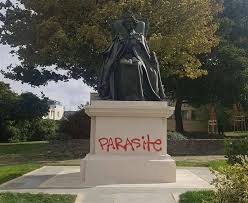
It seems the electoral meltdown widely foretold: Labour’s humiliation in the Gorton and Denton by-election by the victorious Greens, a self-inflicted defeat where Keir Starmer essentially cast away Labour’s sixth safest seat, has knocked the crisis embroiling the ex-Prince formerly known as Prince Andrew from the headlines.
Currently the apocalypse the US and Israel unleashed against Iran dominates headlines but even this will eventually pass thanks to the ‘missile math’, regime collapse, crashing stock markets, Trump’s ennui or a combination of these. Whatever the outcome the balance of forces pitting the world’s pre-eminent superpower with the MENA’s only nuclear weapons state in a patently malign and one sided might is right attack against the crisis wracked Islamic Republic, dictates there’s unlikely to be a favourable outcome for Iran.
So respite (a relative quantity) will be temporary and Andrew Mountbatten-Windsor – currently the 8th in line to the British crown until his ignominious removal (always a fanciful succession scenario) will again dominate the headlines of the redtops and serious broadsheets, not to speak of a tsunami of digital content. This is the sort of unwanted clean sweep illustrating the anachronism of P.T. Barnum’s adage ‘no publicity is bad publicity.’ Currently, Canada is the latest Commonwealth country demanding ‘citizen’ Andrew be removed from the hallowed line of succession.
Formerly resident of the 30-bedroom Royal Lodge in Windsor, ‘citizen’ Andrew has undergone a comedown of sorts and is currently holed up in the more ‘secluded’ 5-bedroom Wood Farm (with sea view) on the Royal family’s Sandringham estate in Norfolk pending another head spinning move to the nearby 5-bedroom Marsh Farm. Happily within dog walking distance moving won’t require a whirly bird. Out of the woods and into the marsh then. Except ‘citizen’ Andrew is neither out of the woods or the boggy stuff. There is no bolt hole on the Sandringham estate in Norfolk or anywhere that would allow him to quietly disappear or escape the enduring public disdain for the man disclosed by the Epstein files or the police investigation of his alleged misconduct as a special international trade representative for the British government, or the ignominy of being the first Royal arrested since Charles I in 1646 by parliamentary forces.
‘Citizen’ Andrew’s woeful appointment in 2001 was the wheeze of Blair’s New Labour government (echoes of Mandelson in 2025 anyone?) but was also supported by the future Tory chancellor and austerity hatchet man for the ages George Osborne and the CBI head Digby Jones who felt the ‘playboy prince’ would “put the country first.” But Blair and company were discreetly warned off making this appointment by an unlikely Cassandra. According to Entitled, a ‘biography’ cum patient piece of detective work of the errant ‘playboy prince’ by Andrew Lownie, Prince Charles counselled the government his brother was an unsuitable choice as he would be too busy “playing golf and chasing women.”
Damning enough you would think especially from your brother and prospective heir to the throne but obviously this verdict wasn’t damning enough for Tony Blair and Jack Straw. So knowing better (Royals are idiots after all), they appointed Prince Andrew any way. Yet Prince Charles’s whisper was also something of an understatement. Despite the concerns of Foreign Office underlings (knocked back by their superiors), Prince Andrew played fast and loose with the public purse. Helicopters were treated like uber taxis. Massages were charged to the taxpayer and much else. On one trip the whole floor of a Bangkok hotel was booked for the prince and his coterie. Though they were used to guests procuring prostitutes, hotel staff were reportedly “amazed” to see 10 prostitutes a day visiting Andrew’s room.
II
As the late Tom Nairn observed, the Windors’ inhabit the interface between glamour and the super-ordinary. They combine mundanity (even banality) with something more intangible and perhaps more super-charged than monarchies elsewhere. Relatedly, the Royals are supposed to exist in a rarefied world far above the heads of ‘us mere mortals’ and after a fashion Andrew has done so. Except mixed in with the usual folk hailing from Britain’s elite and satellite fixtures of its celebrity culture (however you feel about them there is something peculiarly diminishing and disappointing to learn Billy Connolly and Elton John among others, attended Andrew’s stag before his marriage to Sarah Ferguson), he also ran with Libyan gun runners, autocrats and dictators and their offspring, Chinese spies he considered friends and those at the shady, grifting end of wealth who (like Andrew himself) would have struggled to explain the source of their money if they were ever put on the spot (such as Jeffrey Epstein).
The Royal family in Britain have – excuse the hyperbole – almost twice ‘died out’ since the monarchy returned after the brief Cromwellian interregnum, only for Royals (and not so distant relatives) to be imported from the continent. The first was a member of the ‘House of Hanover’ whose line ended with Queen Victoria’s death in 1901, and then the ‘House of Saxe-Coburg and Gotha’ (both German principalities) via Victoria’s marriage to Prince Albert. Their son became Edward VII and shortly after a Royal House makeover introduced the ‘House of Windsor’ in 1917 to neutralise anti-German sentiment.
The fate of the ‘House of Windsor’ has been tied to the slow unwinding of Britain’s antique unitary state. For the most part the monarchy has functioned to bind the ‘home’ nations – periphery and centre – together into one. If all the ‘home’ nations were participants and beneficiaries of the joint enterprise of Britain’s rise to industrial and imperial ascendancy in the C18th and C19th, the monarchy was titular head of the show though its role wasn’t merely symbolic. For instance the monarchy was deeply involved in the transatlantic slave trade, chartered slave trading companies and had its own special royal brand for the slaves it owned. Charles expressed ‘personal sorrow’ that slavery had happened on a visit to Kenya in 2023 but the Palace has yet to issue a formal apology for its involvement.
British identity and monarchy are intimately related. In Britons: Forging the Nation 1707-1837 (1992), Linda Colley emphasized the exceptional importance of Britain’s many wars with France – a rivalry stretching from the end of the C17th to Victoria’s accession to the throne. For long periods this was an existential struggle for national survival often overlaid with a deep confessional significance. There was Catholic France versus Protestant Britain – though Britain’s confessional fractures gradually became attenuated with growing religious tolerance (Ireland was a different story because of the conflict between the Protestant plantation and the local Catholic population).
Britain’s struggles with France contributed to the formation of British national identity but this identity – or imagined community to use Benedict Anderson’s indispensable concept – was never a pure synthesis of separate English, Scottish and Welsh national identities but the union and subordination of each to something ‘new’ leaving space for these older identities to contribute to the forging of British identity. The institution of monarchy played an important mediatory role in the intersection of the separate nationalities. Yet the national components were never wholly equal while the monarchy rested heavily on the English part of Britishness. Also there were coercive aspects like forced assimilation and the persecution of Welsh language speaking in the C19th via the education system. The result was that by the early C20th Welsh language speakers had become the minority in Wales for the first time. Ironically, English had long become the dominant language in Scotland due to the influx of southern populations into the Scottish lowlands centuries beforehand.
Tom Nairn’s prescient anatomy of Britain’s break-up chiefly focused on the insurgent centrifugal force of ‘peripheral’ nationalism – Scottish, Welsh but also the peculiar conflict between Catholic republicanism and a hyper-British Protestant identity. Indeed Nairn’s exploration of an Ulster Protestantism rooted in the Protestant petit-bourgeoisie and working class, was unusual as a leftist analysis because Protestantism was treated seriously as a force with agency and not simply as an archaic tribal wrinkle destined to be erased by modernization or ‘transcended’ when socialism and the deflected Irish national question rendezvoused as the political unity of the Catholic and Protestant working class was established.
Within the framework of the unitary state, the British monarchy was simultaneously a part of, and set apart from society. Nairn’s exploration of the mortality of the British state extended to analysing the monarchy in The Enchanted Glass: Britain andits Monarchy (1988, 2011), which presented the royal institution as part of the warp and weft of British culture, identity and society. There was a period when the British monarchy was envied by foreign admirers for symbolising a prosperous and stable society. But the long drawn out “twilight” and gentle descent into the post-imperial age meant the monarchy was destined to share the fate of the British state which had become a token of rebarbative backwardness. More importantly the monarchy-British state were virtually incapable of implementing the reforms necessary to retool the economy and overhaul society. Clearly the impulse for such a project would come from elsewhere, from the popular democratic domain, and would represent a challenge to the status quo. The structural infirmities of the state exposed the mortality of the monarchy. Yet the British state and the monarchy still disposed of considerable resources to live on. In fact its institutional staying power was unquantifiable and underlined the challenge facing any project of radical democratization.
In 2026 Britain is undergoing a period of political polarisation. After two years in government Labour is already failing. What makes Labour’s failure so grave is that it follows more than a decade of catastrophically poor Tory governance against the backdrop of MAGA and Trump. More fallout from the ‘Andrew crisis’ is sure to follow (not to speak of the Mandelson scandal) and it all prompts a question: is Britain any nearer to becoming a Republic than it was in the year of the Royal family’s annus horribilis in 1992?
1992 was the year of the Royal divorce (Charles and Diana), the Royal separation (Andrew and Sarah) and the Windsor Castle fire. In 1997 divorcee Diana was killed in a car crash in Paris while being pursued by paparazzi resulting in a public crescendo of grief and anger aimed at the Royal family. In comparison a 20 year old Harry dressing up as a Nazi at a party or Sarah Ferguson’s cash for access sting at the hands of the News of the World in 2010 was ‘small beer’ (the rag was closed down a year later by Murdoch as a casualty of the phone hacking scandal). But in 2019 Andrew’s calamitous Newsnight interview with Emily Maitlis (“I have a peculiar medical condition which is that I don’t sweat”) was quickly followed by the Harry and Meghan imbroglio. The young couple married in 2018 but ‘quit’ the Royal family in 2020. Subsequently accusations of royal racism were aired.
This is an edited reel of recent Royal scandals and the question is: how much scandal can one institution take? For Britain’s Republican minority, the Republic has often seemed a distant prospect. Despite the boom in declinist narratives dwelling on Britain’s sundown post-war years (timelines usually start with straitened circumstances Britain in 1945 with the humiliating 1956 Suez crisis marking a particularly sobering and clarifying milestone), the reign of Elizabeth II was by contrast (at least before 1992) remarkably serene and unruffled as a Royal press officer might say.
What do the polls currently say? A recent IPSOS poll (February 2026) shows just 28% of the public think the Royal family have handled the ‘Andrew crisis’ well compared to 38% who think the opposite. As the police investigation into Andrew’s alleged misconduct unfolds – initiated by the Thames Valley Police after a complaint by the anti-monarchist campaign Republic (not the Royal House or the government bear in mind), more questions are likely to be asked about who knew what and when and neither the King or the heir apparent and youthful clean broom in waiting, William are likely to escape scrutiny.
The same poll shows 25% support abolishing the monarchy (this is an increase of 10% in 10 years). 50% think the monarchy won’t exist in 50 years. There is a generational divide in support for the monarchy. Gen Z are, unsurprisingly, more negative about the Royal family than older generations as 39% think Britain would be a better country if the monarchy was abolished (compared to 20% who think it would be worse).
Though ‘William and Kate’ remain ‘popular’ (their numbers were slightly lower than the previous poll) and though 8 out of 10 respondents think the Royals will still be here in ten years, the age of deference is clearly over. Polls generally fail to capture the waning of attachment to monarchy, the intangible loss of potency of the past. In this respect, deference perhaps mutated on contact with the news media spectacle and celebrity culture which in an unholy alliance with the ‘House of Windsor’ launched the Royal Spectacle. In late modern society where being has increasingly displaced doing, there is a restless search for significance. A by-product of a culture focused on royals and celebrities is what psychologists term para-social relationships which describe intense, one-sided emotional investment of people in celebrities, royals and other people they don’t personally know. It’s often said the Royal family made a Faustian ‘bargain’ with the media allowing limited access to satisfy the demand for glamour but forestall cries for full access. A more sophisticated take on the Royal-media-public relationship might read: some access and Royal glamour to forestall a potentially fatal loss of public interest in the monarchy whatsoever.
In any case Britain’s first family is accessible and inaccessible, near and far, like us and not like us, of us but not of us. Both terms are essential to their continuing appeal, for the entertainment and consumption of the public who in this demotic age are increasingly ‘free’ to choose: a para-social obsession over royal doings, comings and goings or affect indifference or disdain and all the attitudes between these two poles. But whatever the choice – hardly a Sartrean choice in a social universe where ‘citizens’ are in fact subjects, the Royals would remain eternal and omnipresent until the day they aren’t.
It’s clear the ‘Andrew crisis’ will rumble on with disclosures from the Epstein files and the police investigation producing further tremors and shocks. There is irony in the fact the Epstein scandal and the file release, has so far had a greater impact in Britain than the US. This isn’t to discount future political earthquakes in the US. Lazy local ‘let’s pat ourselves on the back’ commentators who bemoan the lack of arrests stateside compared to Britain, forget this vast tranche of files exists because two individuals were arrested, charged and eventually jailed for criminal sex trafficking of minors: Epstein himself and Ghislaine Maxwell. The DoJ finally released those files because they were supposed to have completed their evidential review.
Yet it’s clear there are many other perpetrators of crimes related to Epstein’s sex trafficking. We are willing to concede that not everything has been released and much has been redacted. Victims are still not being listened to and obstacles to truth and justice remain. The suspicion lingers this is a partisan operation to shield Trump (and others) from closer scrutiny. But whether this is true or not, it hardly alters the fact it will probably take a change of administration in 2028 (actually taking office on January 2029) to revisit or reset the DoJ’s investigative priorities.
Even so Keir Starmer, who never met Jeffrey Epstein, isn’t mentioned in the 3.5m DoJ Epstein file dump, could yet lose his premiership due to his own hubris in selecting Peter Mandelson as the British ambassador to Washington. Some claim Andrew is a ‘small fish’ compared to the POTUS (or even ex-POTUS Clinton who recently testified before the House Oversight Committee). Perhaps but this view ignores how a scandal enveloping an entitled and venal individual, is reverberating throughout the monarchy and British society. The ‘Andrew crisis’ is grave but could escalate further and possibly capsize the monarchy. Britain’s monarchy is 1,200 years old, stretching back to the first Anglo-Saxon kingdoms of the C9th and England’s unification the following century. Though not the oldest monarchy (the distinction of the oldest continuous monarchy belongs to Japan) it is one the oldest and almost five times older than the American Republic (celebrating 250 years July 4 2026). Part of the peril of the ‘Andrew crisis’ springs from Charles’ failure to get ahead of the crisis from the start. Reactive, inadequate responses might ultimately leave Charles regretting he didn’t take more decisive action earlier.
If the monarchy is so damnably hard to shrug off with republicanism only making modest ground in public opinion despite all the scandals which dogged the last years of Elizabeth’s reign, then perhaps radicals should settle for reform of the institution?
Precedents for ending monarchy don’t all involve revolutionary regicide. The Great Revolutions in England, France and Russia (the last a belated peculiar version of the earlier revolutionary pattern) all notably ended with the execution of their monarchs (or royal families). But shedding blue blood to eliminate monarchy isn’t a necessity of the ideal-typical revolutionary path. Transitions to a Republic weren’t always lubricated with royal blood. Kaiser Wilhelm II abdicated during the 1918 November Revolution and fled to the Netherlands where he died in exile in 1941 in a country recently occupied by Nazi Germany. Exile has often been the fate of those royal heads whose dynasties were abruptly terminated by the interference of the masses in history. The last emperor of China abdicated at the age of six due to the Xinhui revolution which ended two thousand years of imperial dynastic rule. Later ‘Puyi’ was a Japanese puppet during the occupation of Manchuria but remarkably ended his days as a gardener and librarian in Beijing where he died of poor health aged 61 in 1967 during the tumult of the ‘Cultural Revolution.’ As recently as 2008 Nepal’s Constituent Assembly voted overwhelmingly to abolish its discredited monarchy compelling the Nepalese King to become a private citizen.
On a deeper level we might argue the Palace failed to divine the cultural shift Thatcherism ushered in. In Tom Nairn’s argument, Thatcher was hostile to consensus and the negative entropic force of tradition. Yet Thatcherism – a centralising as well as an avowedly decentralising project (free market, strong state) – was as much a demiurgic centrifugal force with the unexpected potential to dynamite the unitary British state as Irish Republicanism or Scottish constitutional nationalism aspired to be. This is a counter-intuitive, if contentious view of but let’s recall Thatcherism unleashed the destructive force of neo-liberalism resulting in mass unemployment, de-industrialization, widening social inequality (reversing a benign post-war trend) but also prompting a revival of popular nationalism, particularly English national identity which the monarchy as part of the British state had previously helped ‘contain’ within an Anglo-British identity.
Etiolated Scottish and Welsh identities could be comfortably tolerated within this matrix while English identity was sublimated in an Anglo-British or straightforwardly British identity (though British identity was always arguably heavily English). But once English identity began to differentiate itself from British identity it risked reinforcing a fissiparous logic of conflict focused on national identity, albeit apparently benign and pacific in nature because it played out within a relatively stable civic horizon though the conflict in Northern Ireland, where a hyper-British Protestant identity faced a Catholic Irish Republican identity (national grievances feeding confessional grievances and vice versa), demonstrated the potential for sharper conflicts.
As the nations began to gently pull apart aspects of ‘peripheral’ national identity began to come to the fore. Nairn noted Thatcher was clearly frustrated with Scotland’s resistance to her efforts to release the people’s slumbering entrepreneurialism. He speculated Celtic communal survivals and a non-conformist religious inheritance stymied the Tories appeal among Scottish voters (Wales demonstrated a similar immunity to Thatcher’s charms). We might add there were not dissimilar divisions within England like the North-South divide. In the 1980s the Tories strongest support was in the ‘Home Counties’ (Buckinghamshire, Hertfordshire, Essex, Berkshire, Middlesex, Sussex, Kent and Surrey). In some ways the South/’Home Counties’ was the foci of English identity.
We mention this because the monarchy was itself obviously English and yet it adopted symbols, emblems and traditions of the Celtic ‘Home’ countries, occupied Balmoral Castle in the Scottish Highlands for part of the year and even embraced tartanry: a repertoire of kitsch, sentimental and pseudo-folkloric elements denoting ‘Scottish’ culture which sprang from the aptly described ‘invention of tradition’ which took place in the last third of C19th, deriving inspiration from Sir Walter Scott and constituting a bowdlerisation of aspects of Scotland’s archaic clan tradition.
We have discounted ‘reforming’ the monarchy, establishing a new contract between the ‘House of Windsor’ and society. In the past discreetly retiring Royal miscreants would have done the job sweeping Royal scandals under the Wilton. No longer – hence the reform claque. Perhaps we could make the Royal family more civic and Ordinary Joe relatable like the bicycling Dutch Royals (literally known as the Bicycle Monarchy) instead of gloweringly totemic. But while: ‘they are just like us’ might appeal such a recasting risks dispelling the magical miasma haloing their Royal personages especially if the template for ordinary is deeply flawed like Andrew. In this respect the Royal family might be the one part of society that would have benefitted from a two child sovereign grant cap. Though its true the ‘spares’ – with so much time on their hands – will get up to mischief as Prince Harry has in his own modest fashion. In any case you can never predict where the ‘rotten eggs’ in the line of succession will pop up.
Muscle bound by social power clad in ermine and tradition, and clinging to the mystical principle blue blood sets them apart from the rest even in the modern age, poses dangers for the monarchy because it’s at odds with essentially the demotic temper of society. Equally relevance would constitue too much exposure. Despite the impression given off by Charles’ warning about Andrew’s unsuitability, that the King might possess the strategic acumen for steering the monarchy safely through treacherous waters, we suspect an inherent perspectival sctotomization prevents the monarchy detecting approaching icebergs. Naturally, we think this ‘blindness’ extends to the heir, William even if in other respects he is uncommonly bright for a Royal. Perhaps we also share something of this impairment – when the monarchy starts to slip away and the Republic beckons it may take us all by surprise.
In The Enchanted Glass (1988, 2011) Nairn pondered reforming the crown: a new, more circumspect ‘constitutional’ monarchy able to respect the principle of federalism and tolerate greater democracy. He discounted reform’s chances. ‘Late Nairn’ cleaved to democratic republican vistas and a radical overhaul of British state and society. Monarchy simply wouldn’t be compatible with such a dramatic popular democratic transformation. In the final analysis, the ‘House of Windsor’ was not only addicted to the “glamour of backwardness” but was an irreplaceable arch of a state whose authentic democratization would require us to remove this arch.
A Republican Britain has been glacially slow in appearing but if a political movement is to emerge and pose a frontal challenge it will happen in part because of the monarchy’s sclerotic infirmities but also because of the impact of ongoing internal and external shocks to wider British society. Those shocks included Thatcherism and Brexit (approaching its tenth anniversary). Both offered explicitly messianic projects of national revival and both have failed. Against the backdrop of the continuing effects of the 2008 global financial crisis, the years of austerity and the cost of living crisis, a different fully democratic project which spurns more painful snake oil ‘solutions’ of a grievance driven populist right is urgently required. Such a radical, democratic project would address the crisis of the status quo that is fundamentally about the absence of democratic control throughout British society where the economy serves a minority.
Ultimately monarchy is inseparable from this status quo and if the latter is to be democratically upended the former will surely also have to go. There is a paradox in the fact Britain could lead the global battle for democracy (autonomy) by belatedly joining the modern world.
Jules Etjim /// February-March 2026
Some reading referred or alluded to here:
Andrew Lownie Entitled: The Rise and Fall of the House of York (2025)
Tom Nairn The Enchanted Glass: Britain and It’s Monarchy (1988, 2011)
Tom Nairn The Break-Up of Britain (1977, 1981)
Tom Nairn After Britain (2000)
Linda Colley Britons: Forging the Nation 1707-1837 (1992)
Benedict Anderson Imagined Communities: Reflections on the Origins and Spread of Nationalism (1983)
Stuart Hall The Great Moving Right Show essay in Selected Political Writings (2017)
What happened to the revolution? Is revolution dead in the C21st?
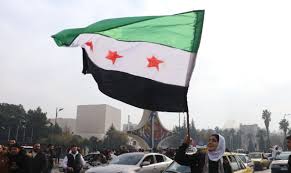
In a season of wintry reaction it appears so though the unexpected triumph of the Syrian Spring suggests revolution still has some claim on the future. In December 2024 millions of Syrians rejoiced when Bashir al-Assad’s tyrannical rule finally ended. Whatever the future holds Assad’s humiliating ouster and flight to Moscow, is a watershed for Syria and the region. Yet months after Assad’s fall, victory appears to be a cruel illusion given the prosaic conduct of Syria’s new rulers. Let’s briefly signpost three reasons why this is so. Firstly, the tardiness of anti-Assad forces victory in a country ruined by years of devastating conflict. Destruction was part of the survival plan and Assad travelled a nihilistic path of ‘we win or we burn the whole country down.’
Secondly, there is a wider sense revolution isn’t a primary experience of our late modern age, and, thirdly, the cascading impact of a global ‘crisis of democracy’ following a decade on the heels of the collapse of ‘actually existing socialism.’ Political liberalism in retreat deprives popular opposition in authoritarian arenas of confident democratic lodestars that could both galvanise and clarify progressive goals though democratic politics hasn’t disappeared. After the 2008 financial crash, climate breakdown, renewed Great Power competition and surging Populism, the future of revolution is shrouded in doubt.
In Power Politics (1971), Martin Wight claimed revolution was still at the heart of the modern inter-state system and international politics. Wight noted that between 1462 and 1960 there had been 256 years touched by revolutionary storms in contrast to 212 years of non-revolutionary calm. Many longstanding stable social orders had revolutionary origins. Yet revolutionary origins or otherwise, social change in these societies wasn’t wholly pacific as they were subject to the original Great Acceleration of modernity and capitalism’s take-off including brutal land enclosures, explosive urbanisation and industrialisation, the conquest of the New World and the Atlantic slave and plantation economy and later, colonialism and fratricidal world wars.(1)
If we grant Wight’s claims for revolution’s foundational role in making modernity, it should also be admitted ‘revolutionary years’ is somewhat misleading without weighing the degree of their international impact for no ‘revolutionary year’ is ever uniformly revolutionary. Few social ruptures haven’t also provoked reaction or counter-revolution. Consider the tumultuous year of 1848: a fierce revolutionary wildfire swept Europe and shook the ancien regime to a degree rarely matched in later upheavals. Yet by 1849 the counter-revolution was in the saddle and radicals were in despair. But these revolutions had happened. A failed revolution is no less of a revolution despite defeat. Equally, a revolution may formally triumph but fall short of its original promise. Something similar can be said of the Arab and Syrian Spring.
A stark feature of the C21st revolution like the social ruptures of the Arab Spring in 2010-13, is they appear politically homeless and lacking the élan or gravitas of the Great Revolutions that helped birth modernity like 1776 and 1789 (not to mention their Dutch and English prequels) or the C20th ‘communist’ sequels in Russia and China. Once there was an unalloyed confidence in humanity’s Progress; of history as providential narrative of One Humanity travelling in the same direction but such weltanschauungs have been shattered with darker visions coming to the fore.
The C21st revolution even suffers in comparison to the 1979 Iranian Revolution and Eastern Europe 1989-91, and underwhelms in a world obsessed with the apocalypse but largely indifferent to dramatic social transformations. Instead the C21st revolution seems to constantly miss steps while social struggles are rarely consummated, often extinguished by repression and compelled to begin again after a period of disorientation. Today, episodes of major social contestation like revolution often arrive abruptly and then depart like a furtive tsunami, perplexing, sometimes destructive but leaving few tangible traces.
Our basic position is revolutions still happen but they are unsung. They are essentially popular expressions of a democratic constituent power or social struggle whose weak telos is democracy if not self-government of the people (direct democracy). They are inherently anti-statist but occur in a period where ‘democratic backsliding’ is gathering pace across the world, a trend greatly amplified by an ailing American Republic. In the post-war years US hegemony and the ascendancy of political liberalism in the developed world effectively foreclosed questions about more radical forms of democracy like autonomy, self-government or self-management of society.
Given this global social-historical context it’s no surprise the late modern revolution has not only fallen well short of a social transformation but often happened in societies relatively marginal to the global system in contrast to the foundational revolutions (1776, 1789, 1917, 1949 and so on).
The question to be posed is where does the Arab and Syrian Spring fit in this picture?
II
The Syrian Spring has been the subject of a surprising comparison we think is fruitful to explore.
2021 was the 150th anniversary of the 1871 Paris Commune and some observers detected parallels between 1871 and aspects of the Syrian revolution. Leila al-Shami perspicaciously noted the role of embattled urban revolutionary centres like Aleppo and Homs, where the green shoots of participatory democracy appeared in the form of Local Co-ordinating Committees (LCCs) and women and youth played an active role as Assad and his foreign allies unleashed a ferocious counter-revolution. Al-Shami described the LCCs as “remarkable experiments in autonomous self-organization” and pointedly underlined the unsung heroism of the nascent Syrian Commune that succeeded in grimly enduring far longer than the 72 days of its illustrious revolutionary forebear. As we know this wasn’t the view of all and the Syrian Spring attracted an assortment of bad faith critics. The dilemmas of the late modern revolution are real enough but views of the revolution – latterly Salafist dominated – as having always been so, or driven by US regime change, were wide of the mark.(2)
Comparisons with the Paris Commune prompt questions whether 1871 is remotely relevant today? At this distance the Commune is no more than a distant historical footnote, a fleeting revenant incidentally confirming the obsolescence of the socialist goal. In the early 1960s the Situationist International (SI), affirming the ludic revolutionary horizons opened up by the Communards, described the Paris Commune as the greatest festival of the C19th. A feature of a festival is it briefly interrupts the mundanity of the everyday before ‘normal life’ resumes.(3)
Though revolution may not be redundant it’s surely the case no radical rupture like 1871 is strictly repeatable. As Heraclitus observed: you can’t enter the same river twice. No social-historical event repeats but the river still flows and revolutionary eruptions still happen. It’s possible something like the Commune – a creative constituent power of the people, was trying to be born in Syria 2011-12 and perhaps also in Belarus, Thailand, Hong Kong, Myanmar, Sudan, Lebanon and elsewhere.
So aspects of the Syrian Spring resembled the Paris Commune 150 years before especially the grassroots democracy of the popular movement in besieged urban areas. But there were also negative parallels as both faced counter-revolutionary violence of domestic and international reaction operating in concert. In the late 1930s Franz Borkenau concluded the crushing of the Spanish Republic was the apotheosis of a definite trend in international politics reinforced by fascism’s arrival and ‘clairvoyant’ reaction’s new found capacity to anticipate the peril revolution posed to the existing order and unite in a destructive alliance to prevent revolution fulfilling its own internal logic unimpeded. Events in the Arab Spring’s theatres appear to confirm the sense of a qualitative threshold having been reached in terms of the geo-political and the fate of the C21st revolution.(4)
The Great Revolutions that helped usher in modernity – the 1776 American Revolution, the 1789 French Revolution or even the C20th ‘communist’ revolutions, revealed there were different paths to modernity. Studies of revolution reveal common features and recurring patterns but 250 years of revolution also discloses major discontinuities. We think revolution is intimately connected to modernity, its development and diffusion. Revolution isn’t amenable to a univocal interpretation. In her classic comparative historical study of social revolution, Theda Skocpol focused on the most rarefied revolutionary peaks that successfully reached their term with radical social transformations of society (1789, 1917 and 1949). But a revolution is still a revolution even if it failed or was defeated. A multi-faceted explanans of revolution would be a poor tool if it only included a restricted category of revolution, say Skocpol’s social revolution or its ‘successful’ exemplars.(5)
Clearly the Paris Commune was a ‘failure’ – crushed and drowned in blood but were there any positive parallels?
Firstly, can we confine the Paris Commune to the model celebrated by the classical workers movement as a harbinger of world-wide socialism? We propose reclaiming 1871 from socialist politics and Marxism and reframing the Commune as an exemplar of radical democracy or autonomy. Cornelius Castoriadis suggested the Athenian polis (C8th-5th BCE) – self-government, freedom, direct democracy – was the first truly democratic rupture in the history of human civilisation and a fundamental break with heteronomy. Basically, heteronomy or cognitive closure denoted a societies where the people were not self-consciously creating their own society but instead dominated by their social institutions, religions, myths and culture.(6)
“Flashes” of autonomy like the Athenian polis or the republican tradition of the Italian Renaissance city-states, the early workers movement or the Paris Commune, were rare precedents as social-historical departures in the face of history as fatality. Indeed these ruptures pointed to the indeterminacy or potential radical openness of history as creation and the insurgent constituting power of the people.
The rarefied nature of full-blown autonomy may well explain why Castoriadis baulked at conceiving the Athenian polis as a model (aside from the limitations that women and slaves were excluded from the democratic life of the polis). It was far too positivist and open to unwarranted providential readings. Instead autonomy displayed a weak telos meaning it wasn’t wholly evanescent but neither was autonomy “the real movement that abolishes the present state of things” as Marx had once written of communism. Weighing autonomy’s purchase Castoriadis invoked the metaphor of a potentially transmissible “germ.” Something similar might be said about the Paris Commune. Marx’s appraisal framed the Second International’s belief the Commune prefigured the socialist future. Marx had claimed to understand the historical telos of the Paris Commune better than most of its participants though he also conceded the Commune was the subject of many different interpretations. During the years of the Second International and the moment of Leninism, the Commune was still retroactively seen as part of a providential history of the formation of the working class as a class-for-itself, the premature anticipation of a new socialist order.
But the Paris Commune suffered from what Maurice Brinton described as the “Balkanisation of utopia” – fought over and claimed by various sectarian radical traditions springing from the workers movement and socialist politics. As a “flash” of autonomy we think the Paris Commune wasn’t a singular possibility but various social-historical possibilities that were bloodily suppressed and lost to counter-factual oblivion. Something similar applies to the Arab Spring. The socialist goal disappeared but revolution remains an actuality, perplexing the left. It would be more fruitful to see the Paris Commune as a link in a chain of battles extending to present day ruptures like the Arab Spring and popular efforts to win, extend or defend democracy (including autonomy) – a more radical prospectus than Marxism’s utopia in our view.(7)
On a more rarefied level the Arab Spring is part of a chain of ruptures resulting from modernity’s contradictions. The late sociologist of modernity and revolution S.N. Eisenstadt proposed there were multiple modernities whose corollary was multiple paths to modernity, a social-historical vista that is also a theme of Johann P. Arnason’s Civilizational Theory, a truly ambitious undertaking heavily indebted to ‘late Castoriadis’ that is trying to rethink modernity and the longue durée of civilizations together, offering a more supple and variegated conceptualisation of the social-historical field than classical sociology or Marxism though Arnason does build on the insights of Durkheim and Weber in particular.(8)
We noted the brief flourishing of the LCCs during the Syrian Spring. We think these belong to the revolutionary tradition of councilism – a “flash” of the constituent power of the people apparent in 1789 and the C19th and reappearing repeatedly in the C20th and still displaying signs of life in our dark age. Council democracy has continually established itself in revolutionary ruptures across the last two centuries but also varied in its social content and institutional form from revolution to revolution. The LCCs belonged to the Syrian Spring’s earliest days – conditions that didn’t appear promising for popular democracy. As a participant Marcell Shehwaro described the dilemma: “we knew nothing of self-organized civil society. We had to learn” (quoted in Yassin-Kassab and al-Shami).
We concede the Syrian Spring’s LCCs weren’t full fledged popular grassroots democratic forms. Rather they were the initiative of activists taking distance from political and confessional sectarianism who wished to build participatory structures in local areas but had to do so in semi-clandestine ways because of repression. As Robin Yassin-Kassab and Leila al-Shami recount in Burning Country (2016, 2018), the LCCs emerged soon after the 15 March 2011 Day of Rage demonstration which was met with brutal Assadist violence. Individuals were tasked with returning to their areas and creating a LCC to link up with similar bodies set up elsewhere.(9)
The LCCs were inclusive and rejected foreign intervention, supported non-violent resistance and called for dialogue among the opposition. The LCCs were internally democratic, undertook grassroots organising, collected reports on the country wide resistance and provided digital and cyber security training to expose Assadist lies about the popular movement. It’s clear the LCCs could have developed further and become a national framework for popular democracy rooted locally but the militarisation of the resistance in the face of fierce counter-revolutionary violence stymied this development.
Also many LCCs activists favoured a transition to a representative democracy with party political competition. This was understandable given the failures of the past (One Party-State rule, bureaucracy, authoritarianism, totalitarianism), meaning ‘democracy’ – understood generically – was considered a goal in itself and not only as a means to an end. This is important because councilism needs its partisans to make the case for popular grassroots direct democracy as an alternative to liberal democracy.
So we view LCCs as proto-councils, the “germ” of a constituent power which found its political form in a reconstructed civil society. Yassin-Kassab and al-Shami note there were no glimpses of worker self-management in Syria as there was in Tunisia and Egypt attributing this absence to the legacy of Baathist repression of the labour movement (crushed under heel for decades while Stalinism simply produced political disorientation) and the composition of the labour force where only 16% of workers were employed in manufacturing, mining, oil construction while many businesses were family enterprises with few employees or artisanal workshops, not to mention the existence of a vast informal sector.
Hannah Arendt saw council democracy as the basis of the truerepublic (echoing a young Marx who in 1843 invoked the “true democracy”) and the lost treasure of revolution because with defeat or counter-revolution such popular grassroots organs of everyday democracy had disappeared. We think councilism which has repeatedly appeared, isn’t a utopia but the potential basis of a popular democratic Republic embodying the democratic instituting power of its active citizens. This political vision is wider than Marxism’s whose relation to councilism is more ambivalent than is generally appreciated and whose ban on utopian thinking and too detailed reflection on socialism’s institutional lineaments tends to reinforce a view of the egalitarian society as homogenous without differentiation or complexity. Indeed various thinkers have conceptions of revolutionary organicism including Rousseau, Marx and Lenin.(10)
III
The authoritarian social universe lacks a public sphere stricto sensu because of the invading repressive state imposes uniformity on society. That said there are clearly civilisational variations between different forms of authoritarianism and totalitarianism. Thus the countries of the MENA in the early C21st didn’t look like ‘classic’ totalitarianism and might best be described as belonging to the authoritarian universe. The impact of neoliberalism and globalisation meant a drastic reduction in welfare spending, chronic levels of unemployment, the growth of the informal sector – a ‘withdrawal’ of the state in some respects then – but not as a unitary repressive force.
The Arab Spring and other episodes of social contestation in the C21st share features in common. If the public sphere hardly exists, the explosion of protest across the MENA in 2010-11 helped revitalise it again as a fulcrum of protest against authoritarianism. Various ethnographic studies revealed an informal ‘shadow’ civil society across the urban MENA. In his studies on regional resistance (or its absence), Asef Bayat coined the term social non-movements illustrating how social contestation still exists but had become subterranean in the face of authoritarianism.(11)
When the Arab Spring erupted Bayat linked the ‘Arab Square’ as a site of popular protest to similar protests in Madrid, Bangkok, Sāo Paulo, Kyiv (Maidan or Independence Square) and Hong Kong’s “umbrella revolution” among others. Bayat also pointed to the role of provincial towns and villages in the Arab Spring which started in December 2010 in Tunisia in the “depressed” town of Sidi Bouzid and spread to other towns before reaching the capital Tunis. In Egypt, Cairo was the centre of the revolution but social contestation also rocked Suez, Mahalla, Port Said, Ismaila, Tanta, Aswan, Alexandria and other urban centres. In Libya, the provincial towns of Misrata and Sirte were notable centres of revolt against Gaddafi while in Yemen in Sanda and Taiz protestors occupied their town squares and refused to leave until President Al Saleh had stepped down from office. In Syria, various provincial towns and suburbs of Damascus were part of the revolutionary movement.
A sharp spatial divide existed within the MENA’s major cities recalling Mike Davis’s portrait of a late modern planet of slums arising from the intersection of explosive urbanisation and the inflation of the informal sector. In his Life as Politics, Bayat discussed these neglected urban spaces of the poor, working class and impoverished middle class. While they weren’t arenas of a frontal challenge to authoritarianism they were spaces carved out by the urban mass using their wits, building their ‘illegal’ homes, illicitly connecting to the mains and water supplies, establishing an informal economy or overarching urban habitus. This was a city of the dispossessed encroaching on the ruling power. What Bayat defined as social non-movements (paradoxically communal and atomised) was very different from those older depictions of class based social contestation. Perhaps the figure of Michael Hardt and Toni Negri’s multitudes (admittedly wider than the urban poor of the cities of the global South) fits this new late modern social terrain. As we know the multitude (leaning into Spinoza, Marx and Deleuze and Guattari) was conceptualised as a nascent social subject composed of a plurality of singular groups (“singularities”) formed in the struggle for democracy.(12)
So social non-movements of the urban poor imposed themselves by means of their everyday activity; a surreptitious crooked path of encroachment, using what the late James C. Scott memorably termed the “weapons of the weak.” Though not obviously political or openly oppositional, a pragmatic, capillary-like, adaptable practice was quietly effective in life world building – for millions across the MENA. Perhaps the Arab Spring was positive confirmation a transition from the socialnon-movement to open contestation, was possible after all?(13)
IV
We concluded the C21st revolution lacks the grandeur of the Great Revolutions as a result of its peripheral place and inability to deliver fundamental social change (two related conditions no doubt). Yet aspects of the Arab Spring were also a refreshing departure from this pattern of relative marginality which incidentally set it apart from the Paris Commune. So we would qualify the notion the C2st revolution lack the élan of past revolutions. This isn’t to disavow our judgement given the eclipse of the socialist goal and the bankruptcy of the idea of universal Progress against the backdrop of a global paralysis in tackling climate breakdown. We could add political distemper of illiberal Populism fuelling the ‘crisis of democracy.’ Arguably this last primarily afflicts the developed world and testifies to the US’s senescence. But this would be too simplified. The ‘crisis of democracy’ is more widely relevant as it raises the issues of popular sovereignty, self-government and freedom – which all pertain to democracy’s modalities and how to realise authentic popular sovereignty as democratic rule.
In Populism and Civil Society (2021), the political scientists Andrew Arato and Jean Cohen explore the causes, and nature of Populism and its challenge to liberal democracy and constitutionalism and conclude a simple return to the status quo ante or defending liberal or representativedemocracy cannot by itself spare democracy from Populism’s impact whose own energies derive from democracy’s infirmities. Effectively defending democracy also demands the “democratisation of democracy.”(14)
We would suggest there are two distinct features of the Arab Spring.
The decades long trend of revolution pivoting east and south globally continued with the Arab Spring. A corollary of this social-historical tendency is the continuing provincialisation of Europe (Dipesh Chakrabarty) to which we might add North America. The US share of the global economy measured in GDP declined from 40% in the 1960s to 23% early in the C21st as incomes for the majority of the country’s working population stagnated while the wealthiest became even more wealthier. China’s rise to superpower status means the US faces a global peer competitor threatening to surpass it as a hegemon. Equally it’s hard not to conclude Trump’s governance – for many observers a response to relative US decline – will prove a failure for America and has already weakened its power and influence and incidentally disclosed the outsized impact particular individuals and political programs can have on events.(15)
As diminished Old and New World retreat, the social-historical weight of the rest with China, India, Brazil at their head, looms larger. This new reality, this extraordinary shift in the centre of gravity of theglobal system isn’t fully appreciated in what was once the developed ‘core’ of global capitalism.
The second distinct feature of the Arab Spring was that it was that social-historical rarity: a transnational revolutionary wave.
The Arab Spring was sparked in December 2010 when a poor young street vendor Mohammed Bouazizi set himself alight outside the governor’s office in his hometown in Tunisia after years of persecution and humiliation. Popular protest flared into life across the MENA decrying authoritarianism, economic stagnation, poverty and chronic unemployment.
In the past there had been notable regional episodes of social contestation – for example, Egypt’s central role with the rise of Nasserism after the 1952 revolution and the overthrew of the monarchy, strengthened national sovereignty, delivered major land reform and also boosted anti-colonial Arab nationalism. Then in 2011 and 2013 Egypt was in the eye of the storm again when the regional revolutionary wave delivered its most stunning advance: the country’s first democratically elected President, Mohamed Morsi of the Muslim Brotherhood, before his military ouster a year later.
The region as a whole (MENA/Persia) was fundamental to the world economy thanks to oil and gas and in the post-war decades was the epicentre of at least three revolutionary waves. The first post-war revolutionary wave was detonated by Nasserism in Egypt and was a powerful beacon of resistance to the West across the region. Nasser defied Britain and France and nationalised the Suez Canal and in the late 1950s the appeal of pan-Arab nationalism saw a brief political union between Egypt and Syria. in the 1960s Baathism emerged from this ferment marrying Arab nationalism and statist socialism.
The second revolutionary wave – the Black Wave saw the arrival of political Islam greatly boosted by the 1979 Iranian Revolution which culminated in hierocratic rule in Tehran, and the Soviet invasion of Afghanistan. Designating the Black Wave as revolutionary is contentious.(16) We would agree with those arguing the Ayatollahs consolidation of power was an abrupt counter-revolutionary full stop to the revolution. Political Islam is a complex entity and by no means homogenous. It’s certainly possible to imagine a reformist Islam. Equally, the Muslim Brotherhood in Egypt, Tunisia and elsewhere, whatever their flaws, share little in common with the sectarianism or nihilism of Hezbollah, Islamic State or al-Qaeda (nihilism is Yassin al-Haj Saleh’s oft used description).(17)
The third revolutionary wave was the Arab Spring (foreshadowed by Iran’s 2009 Green Revolution) whose central demands were democracy, dignity, an end to authoritarianism and corruption and social equality. We think the struggles encompassed by the Arab Spring demonstrated the weak telos of autonomy.
The literature on revolution and revolutionary waves is vast. John Markoff made a persuasive case linking social movements as a phenomena of modernity par excellence, to transitional waves of democratisation, waves often displaying a high degree of struggle. Interestingly, transitions to democracy have sprung from revolutionary ruptures or relatively pacific emulative paths which could be understood as forms of passive revolution (to purloin Antonio Gramsci’s concept) with social reform imposed “top down” by established elites wishing to neutralise the possibility of properly radical social transformation. A dimension of such strategies given the radical openness of the social-historical in general, is they would produce many unintended consequences.(18)
Such “top down” democratic transitions weren’t confined to forms of passive revolution and belie certain assumptions about class and revolutionary agency. Ruth Berins Collier’s comparative historical study of the C19th and C20th democratic transitions in Western Europe and South America reveals how democratic political projects were driven by various social forces: established elite groups and class fractions including some improbable candidates as radical agents like elite ‘In Groups’ driving democratisation as well as more obvious candidates such as Middle Sector Groups and subaltern ‘Out Groups’ including coalitions of ‘In’ and ‘Out Groups.’(19)
Following Castoriadis we think representative democracy is inherently flawed and not simply because of the aristocratic principle’s limitations (the critical ancient Greek characterisation) or democracy’s subordination to ‘consumer society’, capital or the state but also due to the democratic deficits Arato and Cohen claimed arose from the aporias of modernity’s cultural, economic and political logics though democracy’s C21st fate before ‘democratic backsliding’ and rising authoritarianism, remains in the contested balance.
Modernity’s appearance meant a prolonged struggle to redefine political sovereignty against Absolutism as ascriptive identities broke down and subjects became citizens. Civil society emerged from forms of corporatism counter to Absolutism drawing on the estates, new forms of economic activity, religious dissent embodying a “new form of public life” offering a prototype of modern civil life.(20) The movement against Absolutism helped consolidate the sovereignty of ‘the People’ as a constituent power whose authority and legitimacy rested on the people as sovereign, signifying the entrance of a novel social-historical force. Yet representative democracy, initially extremely circumscribed, emerged in lock-step with the nation-state and nationalism.
Universal conceptions of a political community where citizens belonged pitted pluralism against more exclusive definitions of a territorially bounded community which could be defined in national, ethnic or racial terms though these two apparently exclusive views could also be combined. A discursive construction of ‘the People’ was possible on the basis of the friend-enemy distinction – a process apparently contrary to liberal constitutionalism but enabled by political competition in the national political arena.
In On Revolution (1963), Hannah Arendt speculated most revolutions turned despotic had done so because they were, first and foremost, revolutions against Absolutism. Emmanuel Joseph Sieyès, lucidly formulated the French Revolution’s logic, simply transposing the unitary sovereignty of the Absolute monarch whose will was the legitimate source of power and the law, to the Third Estate which pars pro toto functioned as a synecdoche of ‘the People.’ Absolutism shaped the context of the revolutionary reconstitution of legitimate sovereignty though for Sieyès the Constituent Assembly wasn’t wholly legitimate because its power was established before the constitution or law. Expressed differently, sovereign power was inevitably usurping. Locating power, authority and law in the Third Estate as the legitimate representative of the nation were “fictive ideals”, running counter stricto sensu to constitutional alternatives like the very different democratic approach of Montesquieu’s separation of powers underpinning his “empire of laws.” The French Revolution’s aftermath witnessed a series of constitutional crises with dictatorial rule frequently standing in for the supposed ‘General Will’ of the nation.
Nationalism leaned into particularism and tradition with an organic vision of identity subsuming class, confessional or ethnic identities (all supports of hierarchy and status) within a bounded administrative territory. Think of the British state, a unitary state ‘incorporating’ the English, Scots and Welsh but other European states undertook similar assimilationist missions (these by definition were also selective or exclusionary) – the 1789 French Revolution gave a great boost to demiurgic force of French nationalism pulling the countries different regions closer together under the ‘Marseilles’ a unitary process already evident at the end of the Hundred Years War. So 1789 symbolised an inclusive vision of citizenship within the framework of popular sovereignty and was a powerful impetus to French nationalism.
At the start of the C19th democracy was severely limited wherever it notionally existed. John Markoff observes that in 1800 Britain was one of the few ‘democratic’ countries but only 10% of the adult male population were able to vote in elections lacking a secret ballot and where the House of Lords, the Church and Monarchy were enormously influential. Democracy was both an exclusive club and a promising opening with subsequent social struggles in this period focused on widening democracy’s scope.
Markoff examined the relation between social movements and democratisation processes in the context of the waves of democracy debate. Focusing on the transnational modalities of democratisation and the impact of political challenges and demands on states and elites but also emerging social movements elsewhere. The trans-Atlantic fight to abolish slavery was an example. At the end of C18th this oppressive system appeared stable but disappeared within decades. How? An extraordinary sustained slave rebellion (Haiti) played a huge role as did a transnational anti-slavery social movement which bridged the Atlantic. European countries faced powerful grassroots social movements like that in Britain which included support from broad sections of the working class including cotton millworkers.
Emulation was a driver of the growth of social movements and democratisation. French abolitionists took inspiration from the artisanal London Society of Friends. More generally, the French Revolution, a veritable social and political earthquake contributed, or demonstrated the power and efficacy of various communicative, associational or political repertoires, greatly expanding a republican political culture with its political clubs, pamphleteers, crowds, journalism and so on.
Benedict Anderson explored how print capitalism facilitated the formation of the imagined community whose exemplars in his classic account were national communities but social movements also exploited the possibilities of cheaper printing, growing communication, literacy’s spread in the burgeoning public (plebian) sphere. With rapid urbanisation in the C18th and C19th, a variety of political and reform movements also formed including the early labour movement which fed from the international spread of democracy. So waves of democracy and transnationalrevolutionary waves were intimately linked.(21)
The global ‘crisis of democracy’ was a backdrop to the Arab Spring which nevertheless stirred with strong democratic impulses. If older visions of Progress have been discredited, something like such a vision, albeit of a more sober temper, needs reinventing. The immediate post-war years were years of optimism but the consensus omnium life chances for the majority would steadily improve, evaporated as living standards stagnated for the majority. ‘Democratic backsliding’ gathers pace everywhere and nowhere more so than the ailing American Republic that may well be approaching a tipping point into a hybrid authoritarian regime after Trump’s second coming.
Representative democracy’s problems are exposed in countries which democratised at the tail end of the ‘Third Wave’ especially in eastern Europe: Hungary, Poland, Slovakia, the Czech Republic and others, displaying extraordinary signs of accelerated decrepitude within a generation. Perhaps this reflects Soviet authoritarianism’s legacy but the crisis also demonstrates Populism’s impact as a global phenomenon. Arato and Cohen have elaborated a rich variegated context dependent model of Populism but also suggest a fundamental conflict between political sovereignty and constitutionalism. The spread of illiberal Populism throughout the club of democratic nations, is paralleled by the threat of the new authoritarianism led by China and Russia. The Peoples Republic of China ruthlessly ended Hong Kong’s restive democratic experiment (the revolution of umbrellas), a movement difficult to envisage reviving without doing so inside China itself.
We have underlined how democracy and modernity were companions with the former shaped by the unfolding logics of social differentiation, social mobility, urbanisation and widening autonomy amplified by the global spread of capitalist modernity. Yet the reality of democratic transitions suggests underlying drivers were at play distinct from, but aided by Markoff’s emulative mechanism. Though modern representative democracy was ‘inferior’ to the rarefied democratic peak of the Athenian polis Castoriadis proposed it was superior at least in one respect: it was transnational and based on the bold idea democracy assumed one common humanity.
As a revolutionary wave the Arab Spring lacked the extensive impact of the French Revolution whose seismic ripples continued long after 1789. Perhaps the Arab Spring resembled the European Revolution of 1848 which by 1849 was dead. Similarly the early impetus of the various popular movements of the Arab Spring, were either beaten back by fierce reaction or descended into protracted civil conflicts. Victories for the popular movement were short lived or laced with disappointment. Social struggles fragmented whether it was the counter-revolutionary removal of Morsi by Egypt’s armed forces (full of cruel illusions for many would be opponents of authoritarianism who felt Morsi was the revolution’s greatest enemy) or Libya’s protracted ‘war of all against all’ after Gaddafi’s overthrow and death.
Given the Arab Spring’s mixed balance sheet, how is Assad’s belated overthrow in Syria to be assessed?
V
The Syrian Spring is an unambiguous example of John Locke’s notion of a people’s fundamental right of revolution in the face of tyranny. Locke’s right of revolution rested on C17th political philosophy of the social contract and natural law and essentially argued popular rebellion would be justified if a ruler violated the natural right to life, liberty and property and therefore forfeited their authority or right to rule.(22)
On the face of it, the C17th Lockean right of revolution – both timid and bold as befits a doctrine intended to justify the 1688 Glorious Revolution (an elite ‘top down’ and self-limiting project if there ever was one) – is anachronistic but then tyranny is the anachronism which flourishes with many other thriving anachronisms in our late modern moment.
In one sense its clear Locke’s right of revolution was self-limiting because of his conception of the relation of people and government. Civil society was the location of the natural rights of the people to life, liberty and property – fundamentally a negative definition of freedom as its basis was the individual’s right to property. A notional popular sovereignty resided with the people. In practice what would later be characterised as the constituent power of the people was to be dispersed via the separation of powers of government though Lockean government was limited and its authority strictly conditional. Locke belongs to lineage of political philosophy embracing the mixed constitution and dispersal of power as the most suitable guarantor of liberty and freedom.
Generally, we might argue the arrival of modernity and the age of revolution also meant the entrance of the people constituted as – or rather constituting themselves – as a popular sovereign. But how authentic is such a constitution of the people as a democratic subject or sovereign? We mentioned the discursive construction of ‘the People’ by a part (a party, the charismatic leader of a party or movement) which suggests all sorts of political formations which owe little or nothing to the people as a democratic agency. So contemporary defenders of this broad conception, are essentially claiming only representative democracy with its mixed constitution, political pluralism and the separation of powers, is an effective prophylaxis against authoritarianism and totalitarianism. Claude Lefort discussed how popular sovereignty was best understood as an “empty place” meaning in part, that democracy was contradictory: both representing ‘the People’ and and nobody. There was no single fulcrum of democracy. Such political conceptions were ultimately illusory. At best unitary sovereignty was to be resisted and power dispersed in a mixed constitution – a political arrangement which acknowledged the pluralism of society.(23)
Though we can’t fully explore the subject here for space, we might argue such self-limiting models ultimately result in the enervation of democracy and a notional popular sovereignty because although constitutionalising the revolution, may forestall authoritarian or totalitarian developments, in placing obstacles before a revolutionary constituent power that could deliver autonomy (or direct democracy) from the anti-statist location of civil society, an opportunity to deepen and secure the fullest democracy is missed. Critics of the council tradition, autonomy and direct democracy typically complain such a political project is utopian and rests on latent revolutionary organicism whose telos is ultimately totalitarian.(24)
We disagree with this judgement and instead endorse Castoriadis’s critical assessment of representative democracy. Despite breaking with Marxism in the early 1960s, Castoriadis maintained his earlier commitment to councilism and in doing so retained something of his former Marxist hauteur toward ‘bourgeois democracy’ but broadened its scope by uncoupling direct democracy from socialism and the clearly redundant ideology of the working class as the ‘universal class’ of history. Autonomy indicated a self-governing community lucidly making and remaking its own laws and institutions. Instead contemporary societies were marked by heteronomy or cognitive closure defined by hierarchy, authority, domination and the absence of self-government.
Castoriadis was an early critic of representative democracy‘s malaise. In articles and interviews before his death in 1997, he presented his exposure of Western liberalism’s shortcomings whose conjunctural aspect indicated democracy’s “decomposition”, the spread of civic apathy and disengagement from politics that accompanied the professionalisation of politics. Such trends were reinforced by ‘consumer society’ and ‘private existence’ as the capitalist economy eroded the public sphere (ekklèsia) and democratic participation. ‘Late Castoriadis’ noted the generation of passivity erected obstacles to the deepening of democracy. Castoriadis was deeply unimpressed with representative democracy (or liberal oligarchy) as it fell woefully short of democracy proper. In the late modern age and the ‘crisis of democracy’, democracy needs to be vigorously defended but a viable defence also requires accepting this crisis partially stems from the flaws of representative democracy.
A case can be made that the Syrian Spring’s early period which saw the formation of the LCCs in besieged revolutionary neighbourhoods, was direct democracy in action – an example of Castoriadis’s uncommon “flashes” of autonomy. However in Syria, the green shoots of participatory democracy and popular sovereignty were never fully realised because of the revolution’s militarisation. Equally, we would add that in Syria – as in Egypt – despite our criticisms, firmly establishing representative democracy in societies warped by decades of authoritarianism, would be an undoubted major democratic advance.
VI
In Syria the victory of the opposition headed by the Salafist Hay’at Tahrir al-Sham (HTS) which broke out of Idlib in northern Syria at the head of a motley coalition which quickly swept through the country and toppled Assad, could be seen as a (partial) fruition of the promise of the Arab Spring and a blow to authoritarianism and autocracy across the MENA.
After 14 years of destructive conflict Assad appeared to be in the ascendancy despite lacking control of Syria’s entire territory. As recently as 2023 a formerly unlikely rehabilitation was on the cards as Assad arrived at the Arab League summit as the apparent ‘victor’ of a conflict finally winding down. The country was a tomb until the unexpected turn of events in December 2024 promised a new beginning.
Yet a post-Assad Syria faces an unenviable inheritance due to the scorched earth counter-revolutionary violence of the Baathist state that was determined to prevent the formation of a popular movement as a counter-power to the regime in the country’s symbolic public spaces as it was doing in Egypt.
Today many fear post-Assad political arrangements will breakdown sooner or later. Overcoming sectarian and communal divisions presents a grave challenge as well as securing peace and stability as the recent clashes in early 2025 in the eastern coastal region show. Government forces fought Assad’s supporters escalating to the killing of Alawite civilians. Shortly after three-way violence broke out between Druze, Bedouin and government forces in the southern city of Suweida which allowed Israel’s opportunistic intervention on behalf of the Druze community, carrying out air strikes against the new governments security forces in Damascus.
Israel is the regions undisputed military superpower (and the MENA’s only nuclear weapons state), and a major source of destabilisation for its Arab and Iranian neighbours indicating how the fate of a MENA wide revolution is inseparable from inter-state rivalries. Many observers of the Syrian Spring have churlishly demonstrated a phobic scepticism about the Syrian people’s agency and displayed Islamophobia or a truly Olympian detachment from the struggle against authoritarianism across the MENA.
Some who doubt the Syrian Spring’s revolutionary bona fides belong to the global left and retail the arid political doxa of neo-campism. This part of the left has lost its political compass and think of our conjuncture as shaped by a primordial geo-political struggle between the US and its allies, the imperialist camp (or at least the dominant imperialist camp) and the rest: China, Russia and the global South. So neo-campism treated the Syrian Spring as bogus and portrayed the embattled Damascus regime – flawed for sure – as objectively anti-imperialist with its ‘Axis of Resistance’ backers basically supporting resistance to regime change sponsored by Washington, Riyadh and others.
Such politics speaks more to the obsessions of a section of the left than any cogent analysis of the Syrian Spring. Downplaying the agency of the popular movement in the revolution’s early days inevitably meant fixating on the Salafist militants and jihadis who joined the struggle. Though imperialism (however that is understood in the C21st) has influenced the struggle’s arc (after all, and in no particular order, the US, Russia, Turkey, Saudi Arabia, Iran, Israel and others, all intervened to a greater or lesser degree at various points), a nuance lite insistence on the geo-political’s primacy, prevents analysis of social ruptures in the round.(25)
After subjecting the Syrian people to grievous violence with the aid of its allies (Russia, Iran and Hezbollah’s Shia militias), Assad’s brutal thanatocracy finally collapsed like a house of cards. In 2015, on the brink of defeat, Assad survived thanks to Putin’s timely intervention (Iran persuaded Moscow to save his skin). A combination of Assad’s ruthlessness, Iran’s Revolutionary Guards, Russian airpower and Hezbollah’s fiercely sectarian militias, helped tip the civil war’s balance in Assad’s favour. Yet the Baathist state wasn’t particularly strong or stable. The regime had become hollowed out despite its power resting on a long-established apparatus of death, terror and repression and the imposition of biological precarity on the populace. (26)
The Baathist state’s social base was extremely narrow mainly resting on a few Alawite clans – a minority of a minority. This ‘worked’ for a period given the extensive apparatus of repression but once revolt had reached a certain point then the state’s continued survival was doubtful. Baathism sprang from the flowering of Arab nationalism in the Mashriq but had long squandered any legitimacy it might once have enjoyed. Faux Arab nationalism, fake anti-imperialism and statism and clientelism retailed as Arab socialism all wore thin with the impact of neoliberalism, economic crisis, systemic corruption, chronic unemployment and increasing reliance on repression, all accelerating Baathism’s longstanding decomposition. Assad’s opportunism was such that he was reduced to claiming he was fighting his own local version of the global War on Terror, just as Putin justified terror in Chechnya and the US the invasions of Iraq and Afghanistan – an exculpatory discourse that in the C21st has helped veil imperial projects and counter-revolutionary violence.
VII
This brings us to two related questions: what was or is the nature of the Syrian revolution? Did Assad’s fall signify the revolution’s victory? In a recent article the veteran Syrian radical and intellectual Yassin al-Haj Saleh formulated an answer for the second question but – perhaps diplomatically – left the first question about the revolution’s nature, largely unanswered.(27)
Can the revolution be counted a success? On this score, Saleh is deeply sceptical Ahmed al-Sharaa and the HTS’s rise to power is the fruition of the hopes generated by the Syrian Spring. For Saleh (and most observers including this author), the popular movement’s highpoint was 2011 and 2012 when feverish grassroots activity saw the formation of the neighbourhood based LCCs.
The LCCs were a demotic counter-power and an existential threat to Assad’s rule. As Saleh observed in The Impossible Revolution (2017), in its early days the revolution was predominantly ‘civic’, ‘humanist’ and ‘participatory’ before its inclusive popular radicalism began to be warped by the devastating counter-revolutionary violence of the Baathist state, compelling a part of the opposition to take up the arms of revolutionary self-defence (this was basically the birth of the Free Syrian Army or FSA). Yet revolutionary self-defence was quickly overtaken by the growing influence of martial Salafism and its nihilistic ultra-violence as Saleh described it. Thus he summarised the dilemma: a revolution forced on the back foot was acquiring an “Islamic face.” (28)
Saleh notes the foreign military interventions in Syria – the US in 2014, Russia 2015 and Turkey in 2016 (not to mention Iran, Assad’s constant ally) and the inescapable influence of the geo-political. The conflict began to escape the control of the popular movement as atavistic sectarian conflict became more prominent. Assad’s deliberate cultivation of sectarian violence meant Sunni identity increasingly informed the opposition struggle. By 2016 the revolution’s decay was glaring. Sectarian Salafist forces increasingly dominated the armed struggle vis-a-vis the FSA.
A mordant Saleh even doubts whether any other social force could have felled Assad than the Sunni Salafist coalition finally able to reap the rewards of a favourable window that opened in 2024 despite their absence from the revolution’s early days. Yet Saleh is highly critical of groups like Jabhat al-Nusra (a split from al-Qaeda which merged with other groups to form the HTS) whose ‘politics’ are “rooted in a savage, transnational nihilism that rejects both our societies and the world.” Salafist ideology erased politics and aspired to impose a crude sectarianism on the rich tapestry of Syrian society.
Militant Salafism’s nihilism has been a recurring theme of Saleh’s commentary on the Syrian civil conflict. Salafism as an ideology is a form of Timothy Snyder’s politics of eternity: animated by victimhood and curdled by nostalgia for a mythical past and armed with a program for the future that would attempt to revive that lost ‘Golden Age.’(29)
Yet contemporary fundamentalist movements are a thoroughly modern phenomenon despite their anti-modern goals. The social scientist S.N. Eisenstadt claimed modernity was in many ways a product of sectarian heterodox social movements which had reworked (and often secularised) millenarian aspirations for ‘heaven on earth’ of the nonconformist religious sects that appeared in Europe from the C16th onwards. (30)
The 1979 Iranian Revolution and the Soviet invasion of Afghanistan greatly boosted the rise of fundamentalist political Islam which shared a distinctive form of activist organisation orientated to achieving maximalist social and political goals which Eisenstadt termed the Jacobin model. There was a close functional fit between centralised, hierarchical groups and their ideological programs – that specific content aside, Islam, Zionism, Christian fundamentalist, Hindutva, Communism or fascism and so on – tended to contrast the present as fallen world with a world made pristine again. Such visions of a remade future tend towards homogeneity and contradict the complexity and differentiation of modernity. The ‘Golden Age’ to come was either lost to be recovered or pregnant dialectical possibility re-emerging at a ‘higher level.’ So militant Salafism shared much in common not only with other millenarian religious weltanschauungs like those of C16th Reformation or other modern fundamentalist religious movements but secular political ideologies as well.
Militant Salafism as a form of ‘radicalism’ should be distinguished from the quotidian religion of the ordinary faithful and their simple taken for granted piety. So we differentiate religion-as-faith (mundane and pacific) and religion-as-ideology (militant, sectarian, vanguardist) which wants to remake the world. In this context, post-revolutionary regimes often see the Insurgent Party remake itself as the Party of Order whether secular or hierocratic (as in the case of Iran) implementing their program top-down and unconstrained by popular democracy.
The limited political room for manoeuvre for Syria’s new rulers, Al-Sharaa and HTS makes pursuing maximalist sectarian goals extremely risky. Given the sectarian aspect of Syria’s civil conflict stoked by the Baathist state and the depth of the country’s devastation Syria is highly sensitive to the wider geo-political context and the possibility of destabilisation. Adopting similar sectarian governmental strategies for rule to the Baathist state would reinforce existing confessional divisions and not so latent centrifugal tendencies and leaving the country more vulnerable to external actors like Israel or Turkey.
So far the new government has displayed pragmatism including conciliating the US and actively joining its anti-IS coalition. Anti-democratic, repressive and even sectarian measures can’t be confidently ruled out though the Ministry of Justice is making a show of pursuing those responsible for killing Alawite civilians earlier in the year after clashes with remnants of Assad’s regime. A recent World Bank report estimated it would cost $216 billion to rebuild a shattered Syria illustrating the serious challenge facing any nascent political authority. The Assad regime’s narrow social base was further weakened by corrosive levels of corruption which was intended to bind individuals and groups to the regime but instead hollowed out of the Baathist state.
The 2025 March Agreement, al-Sharaa signed with Mazloum Abdi, commander of the Kurdish dominated Syrian Democratic Forces (SDF), proposes incorporating of the SDF into the new state among other measures based on a five year transitional period before the election of a new Syrian President. As 2026 approaches this agreement hasn’t been fully implemented yet and is also opposed in various quarters (the movers behind the agreement were few) and basically amounts to a moratorium on democracy given the lengthy transitional period envisaged. Al-Sharaa would remain President until 2030 without a Prime Minister, and wield a great deal of executive power. Meanwhile the limited elections held in November 2025 can only be described as typical of a ‘managed democracy’ however they are officially justified.
Returning to Saleh’s views, he recommends Syrian Democrats ground their political reactions to the new rulers in “sobering reality” presumably to forestall illusions preceding a profounder disenchantment. Though Assad’s fall was a “tectonic shift” Saleh concludes the the revolution hasfailed. The signs are of a new authoritarianism and rebuilding centralised state power. What Saleh describes as “genocidal violence” unleashed against ordinary “peaceful Alawites” in the eastern coastal region, exposes the vengeful sectarianism of the new regime. The Syrian Spring’s early days had promised a new country of democracy, equality, dignity, the rule of law, an end to sectarianism and the industrial torture state but the victory for the last opposition standing exposes a great gulf between the earlier ideals and the dispiriting reality of al-Sharaa’s rule.
Despite his downbeat assessment Saleh counsels prudence towards the country’s new rulers but notably insists another revolution will be needed though that revolution is for the future. This pragmatic political orientation allows Saleh to dismiss talk of the post-Assad regime as “terrorist” and equally oppose calls for further foreign intervention in Syria as another form of nihilism – more of the same destructive non-politics. With the country again at a crossroads a peaceful transition is desperately needed so a start to rebuilding the country can begin. Saleh commends a comprehensive political settlement based on pluralism and a unity that accepts the country’s diversity: its Alawite, Druze, Christian, Kurdish and other minorities, as well as the Sunni majority. This seems fundamental to any roadmap for Syria’s future and part of that future – whether near or far – demands a proper, deep going democratic settlement for all the people.
Jules Etjim September-November 2025
NOTES // REFERENCES (1) Martin Wight Power Politics (1971) p.56.
(5) Theda Skocpol States and Social Revolutions: A Comparative Analysis of Social Revolutions in Russia, France and China (1979).
(6) Cornelius Castoriadis The Greek Polis and the Creation of Democracy (1982) in The Castoriadis Reader (1997) edited by David Ames Curtis.
(7) Maurice Brinton The Balkanization of Utopia (1965). Available: libcom.org/article/balkanization-utopia
(8) S.N. Eisenstadt Multiple Modernities (2002), J.P. Arnason Civilizations in Dispute (2003). Arnason’s overview of revolution and its continuing relevance is also recommended – see Social Transformations and Revolutions edited by Arnason and Hrubec (2016).
(9) Robin Yassin-Kassab and Leila al-Shami Burning Country: Syrians in Revolution and War (2017).
(10) Hannah Arendt On Revolution (1962).
(11) Asef Bayat Life as Politics (2009) but also Revolution Without Revolutionaries: Making Sense of the Arab Spring (2017).
(13) James C. Scott The Weapons of the Weak: Everyday Forms of Peasant Resistance (1985).
(14) Andrew Arato and Jean Cohen Populism and Civil Society (2021).
(15) Dipesh Chakrabarty Provincializing of Europe: Postcolonial Thought and Historical Difference (2002).
(16) Kim Ghattas The Black Wave: Saudi Arabia, Iran and the Rivalry That Unravelled the Middle East (2020).
(17) Yassin al-Haj Saleh The Impossible Revolution: Making Sense of the Syrian Tragedy (2017).
(18) John Markoff Waves of Democracy: Social Movements and Historical Change (1996).
(19) Ruth Berrins Collier Paths Toward Democracy: The Working Class and Elites in Western Europe and South America (1999).
(20) Andrew Arato and Jean Cohen Civil Society and Political Theory p.86 (1994).
(21) Benedict Anderson Imagined Communities: Reflections on the Origin and Spread of Nationalism (1983).
(22) John Locke Two Treatises on Government (1689), chapter three.
(23) Claude Lefort The Logic of Totalitarianism essay in The Political Forms of Modern Society: Bureaucracy, Democracy, Totalitarianism (1986).
(24) See Benjamin Ask Popp-Madsen Visions of Council Democracy: Castoriadis, Lefort, Arendt (2022) for a stimulating discussion of the tradition of councilism and its viability as a model of democracy.
(25) An excellent riposte to those on the global left who can only see Western imperialism’s machinations and downplay struggles for democracy and autonomy, can be found in Rohini Hensman’s Indefensible: Democracy, Counter-Revolution and the Rhetoric of Anti-Imperialism (2018).
(26) See the Paths and Bridges blog article Notes on Syria and Coming Global Thanatocracy (July 2017). After this blog article appeared our attention was drawn to Salwa Ismail’s excellent The Rule of Violence: Subjectivity, Memoryand Government inSyria (2017) which coincidentally features many similar arguments about political violence, biopower and governmental strategies deliberately cultivating a ‘state of nature’ (to echo Yassin al-Haj Saleh echoing Thomas Hobbes) or what Ismail describes as a pedagogy ofrepression and violence intended to form subjects of government to maintain elite social power in Baathist Syria. Ismail makes the argument far more rigorously and elegantly than our blog post and was based on extensive research in Syria. Both the Paths and Bridges post and Ismail draw on Agamben, Foucault and Mbembe. Clearly, in our late modern moment of authoritarianism, climate breakdown and genocide the themes of these thinkers (biopower, violence, sovereignty and so on), are literally in the air – themes for example of Hardt and Negri’s two books on the nature of the C21st global order and resistance Empire and Multitude), deliberately cultivating a “state of nature” or zone of biological precarity as a means of reproducing elite power and drawing from a similar stable of thinkers about the nature of late modernity and violence. Ismail even mentions thanatopolitics though the notion of thanatocracy seen as a nascent global trend played greater part in our article where it was considered as a global dimension of our present moment whose backdrop is climate breakdown and revivified fascism. Our first encounter with thanatocracy as a concept was Peter Linebaugh’s historical study of crime, punishment and class in Georgian England and Mbembe’s iteration of necropolitics but our immediate inspiration was a stunning essay by Yassin al-Haj Saleh on torture and Leviathan as the progenitor of the “state of nature” available online as Letter to Samara (5) Love, Torture, Rape and…Annihilation. See Peter Linebaugh The London Hanged: Crime and Civil Society in the Eighteenth-Century (1991) and Achille Mbembe Necropolitics (2019) based on Mbembe’s earlier essay from 2003. Paths and Bridges has, admittedly, long delayed posting a finished review of Mbembe.
(28) “Ultraviolence” was a neologism first coined by Anthony Burgess in A Clockwork Orange (1961). See Yassin al-Haj Saleh The Impossible Revolution: Making Sense of the Syrian Tragedy (2017).
(29) Timothy Snyder The Road to Unfreedom (2018).
(30) S.N. Eisenstadt Fundamentalism, Sectarianism and Revolution: The Jacobin Dimension of Modernity (1999). See also Norman Cohn’s classic The Pursuit of the Millennium: Revolutionary Millenarians and Mystical Anarchists of the Middle Ages (1957).