I
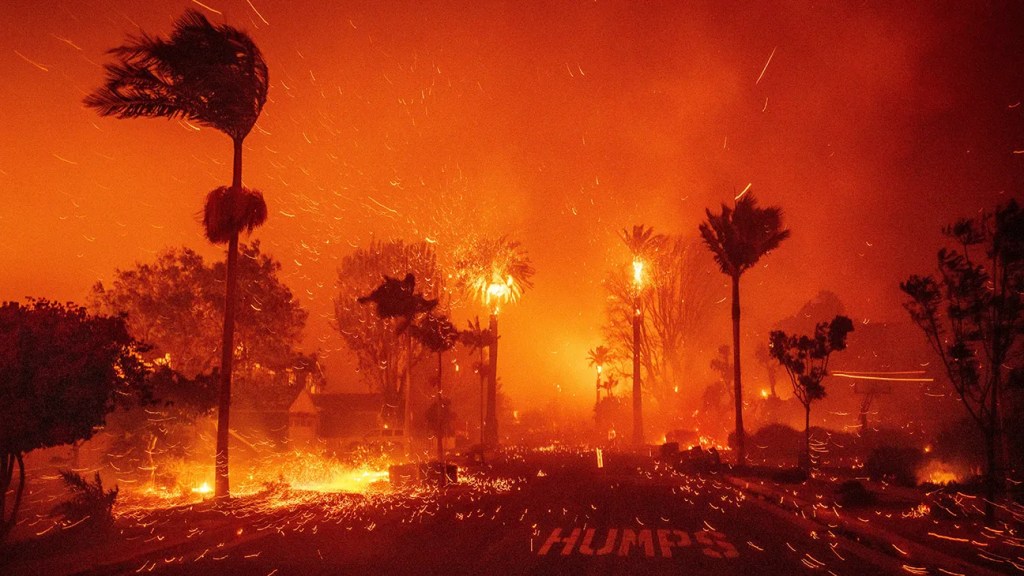
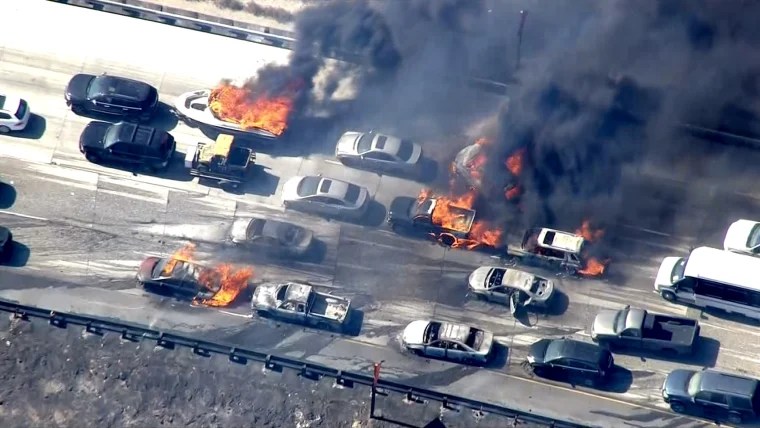
This summer wildfires severely impacted Europe especially Spain and France where infernos threatened Madrid and Bordeaux and hundreds of thousands of people were evacuated from their homes. In Britain firefighters responded to almost a thousand reports of wildfire while Italy, Greece, Croatia, Albania, Ireland, the Netherlands, Belgium and Ukraine were also affected. Though Europe is the fastest warming region virtually every continent was touched by wildfires. Fierce, recurring heatwaves created tinderbox conditions. Britain has had five successive heatwaves with many wildfires. These were all the result of burning fossil fuels and pumping GHGs into the atmosphere.
By now the truth of climate breakdown is surely understood by everyone even the bad faith contrarians who enjoy megaphoning denialism. Spain, France and Britain’s political leaders – Sanchez, Macron and Burnham all concede anthropogenic climate breakdown is causing their country’s wildfires. Yet governments everywhere are still failing to meet the challenge of climate breakdown with sufficient urgency. Prolix promises remain promises while supposed moves away from oil, coal and gas, are delayed or swerved despite the incontrovertible fact the heatwaves will return again soon.
Before the apocalyptic wildfires in Europe, the adoption of Green policies was already faltering in the EU amidst signs of opposition from some political parties and voters, particularly but not exclusively on the right. Climate action hesitancy at the political summit of society is apprehended by the public. In Britain, the newly installed PM Andy Burnham, was immediately tested: should disposable BBQs be banned when ongoing wildfires had destroyed 57,000 acres of land and homes? Eventually Burnham opted for a risible temporary ban while reports suggest he’ll allow drilling to proceed in the Rosebank and Jackdaw oil fields in the North Sea.
Commitments to cap the rise in global temperatures at 1.5 degrees centigrade was agreed by 194 parties including the EU when the 2015 Paris Climate Agreement was signed. Since 2015 individual countries have adopted legally binding targets to achieve Net Zero to honour the overall goals of Paris and move away as quickly as possible from peak global emissions. Mitigation of GHG emissions demands a sustained global effort and would mean nothing less than a major transformation of society especially energy, transport and consumption.
The recent fifth edition State of Climate Action 2025 (produced by the US based National Oceanic and Atmospheric Administration), translates the Paris’s chief climate goal into actionable targets for 2030, 2035 and 2050, covering key sectors like energy, agriculture, building, industry, forests and land. Of 45 benchmarks none are on track to contribute capping warming at 1.5 degrees centigrade. While most indicators are heading in the right direction many indicators are alarmingly “well off track.”
The overall message is: climate action needs to be stepped up. Deforestation (10% of global GHGs) is ongoing threatening biodiversity. Currently we are in the midst of the Sixth Mass Extinction since life began 3.7 billion years ago because of human activity. The largest source of GHGs in the energy sector is coal and we need to ditch it fast. Funds for climate action need to be scaled up. Climate action finance hit a high of $1.3 trillion in 2023 (mainly in China and Europe) but $1 trillion is needed annually. In comparison public fossil fuel finance has received $75 billion annually since 2014. Meanwhile steel decarbonisation has stalled. Introducing decarbonised cement (the second most used material or resource after water) is virtually non-existent because of prohibitive costs and endemic low profitability in the sector (see below). Expanding rapid transport networks (buses, light rail, metros) needs to be 5 times faster. Other mitigation measures like technological carbon capture or removal also need speeding up (10 times faster), and so on.
Effective climate action faces formidable obstacles while further rises in GHG are already locked-in. Meanwhile the Anthropos may already have passed certain ‘tipping points.’ Coherent climate action is hampered by our geopolitical moment in the hyper-modern era such as the retreat from global norms of governance and international law, the rise of revanchist nationalism and Leviathan’s renewed appetite for unilateral action such as re-territorialisation and war. The chaos of conflict is not only producing more GHG emissions but makes breaking the fossil fuel habit harder. Russia’s war to conquer eastern Ukraine and reassert its hegemony over Kyiv is funded by selling its fossil fuels.
A prominent sign of the clean energy future is the rise in EVs which promise to remake transport whose main arch is the car economy. EVs are considered a leading edge of the energy ‘revolution.’ But would simply replacing the GHG emitting Internal Combustion Engine (ICE) with electric actually deliver the transition that’s needed? We question this conclusion below while sketching a political ecology of the car economy. This argument echoes past critical voices overlooked in current discussions about transport and Net Zero. Instead it’s often assumed climate action would leave the world largely unaltered. But a more radical remaking of global transport is needed than simply replacing ICE vehicles with EVs. The car is central to life currently but is it viable in the longer term? Perhaps only a sustainable civilization that abandoned the car would stave off species ecocide?
Before addressing such a question let’s begin by running a quick eye over the ‘EV revolution.’
II
Around 5% of the total global car stock is EVs (80 million vehicles including battery and plug-in hybrids) while 25-30% of vehicle sales are EVs (this proportion is growing). The more new cars sold are EVs, the more their share of the global car fleet. Also technology is improving (longer battery life, faster charging), costs are falling, government support for EVs, charging infrastructure and clean energy is growing – all important steps but the pace of change needs to accelerate.
China leads the charge to a clean energy future with over half of global EV sales while rapidly introducing the essential charging infrastructure. These are key state-led priorities while the size of China’s domestic market is a huge boost to global climate action. In 2025 20 million EV cars were sold – one in four of all cars sold globally. China built 60% of these vehicles. Though China was the biggest market Europe was the fastest growing EV market in 2025. Norway led with EV sales hitting more than 95% of new cars sold – 30% of all Norwegian vehicles though this includes plug-in hybrids. Sweden and Denmark followed with 58% and 56% respectively while 48% of all car sales in China were EVs (joint fifth highest of 2025). Norway’s flourishing EV market demonstrates the importance of generous subsidies encouraging EV uptake.
China, Europe and the US shared 95% of all EV sales though other regions have started their journey to adopt EVs. Ultimately success will be clinched by the coverage of a plug-in charging infrastructure. Equally government subsidies and regulatory support reinforce public confidence the future lies with EVs and clean energy. Most EV charging is at home while two thirds of public charging point installation since 2020 was in China. Here the ratio is 1:10 (charging points to EVs). The US has 200,000 public charging points while there are a million plus in Europe which leads on coverage density (fast chargers every 50km on autoroutes). Everywhere charging points are getting faster.
If emissions targets are to be hit all road vehicles will have to be electrified. For example heavy duty trucks are 10% of ICE road vehicles but produce 70% of all ICE CO2 emissions. In 2024 75,000 EV trucks were sold in China. China was the best performer and was also the biggest market for electric buses. In 2024 Volvo and Scania introduced electric trucks with a range of 600km. The NOAA’s SoCA 2025 report argues EVs will need to reach 75-95% of all passenger vehicle sales by 2030 if transport is to contribute to limiting global warming to 1.5 degrees centigrade. Given the global community is “off track” on transport the EV uptake will have to be faster while any temptation to relax benchmarks is resisted. More is needed everywhere.
Still the question remains: will replacing ICE vehicles with EVs deliver the global transport revolution that could properly tackle climate breakdown?
III
In some corners of social science and political economy, the global order after 1945 was defined as Fordism (or sometimes, relatedly, Americanism). Though Fordism as a neologism originated in the 1920s a decade after Henry Ford’s Highland Park plant in Michigan started producing Model T automobiles, its most celebrated usage was by the Italian Communist Antonio Gramsci who elliptically explored the idea of Fordism, Taylorism and Americanism in a fascist prison cell.
Gramsci was a university student who joined the Italian socialists (PSI) in 1913. He politically cut his teeth among the militant car workers of Turin northern Italy. Many of these workers had migrated from the countryside. Gramsci himself was a transplant from Italy’s impoverished rural south (Sardinia). Gramsci was ambivalent about Fordism which subordinated workers to a labour process now fully capital’s object (Marx’s real subsumption of labour-power coeval with the destruction of artisanal labour and craftism). But Fordism was the future supposedly encapsulating a more ‘rational’ social organisation than the admixture of old and new typical of Europe. Fordism and Americanism promised to liquidate the pre-modern survivals of European society. In the Soviet Union of Lenin and Trotsky, Henry Ford’s cult flourished among workers and intellectuals.
Analysis didn’t narrowly define Fordism but understood standardised mass production underpinned consumerism while this model was exported and imitated across the world. Fordism lent stability to the mid-C20th world economy. Developed economies enjoyed full employment and affluence reflected in organised labour’s apotheosis, especially in Western Europe where Labour/Social Democracy established a consensus uniting cradle to grave welfarism and expansive state intervention.
Today cars are everywhere and we are auto dependent but originally they were “playthings of the wealthy” (Peter Dauvergne). It’s worth emphasising more radical critiques of the global car economy are rarely aired when deliberating about climate action. Andre Gorz criticised a political economy that allowed a luxury object to become a mass-produced object available to the many. Cars were not discrete use objects like a bicycle but required extensive auxiliary businesses, infrastructure and the oil industry to support them. The symbiotic relationship of cars and oil meant every car owner was a customer for Big Oil’s ‘gas.’
Gorz argued the car was inherently contradictory, a “luxury object undermined by its dissemination.” He employed an analogy illustrating his point: grant everyone a villa on the Riveria, the Riveria would cease to exist. Society faced a social choice: continuing elite access to the Riveria (villas, private beaches, exclusive views and so on) or socialise the Riveria and create public beaches and turn villas into guest houses, public gardens, public swimming pools and so on.
The car economy has profoundly remade the built environment of towns, cities and beyond. As the spatial was reconfigured all other modes of transport were either pushed aside or subordinated to the car’s primacy. Cars were consumerism gone awry. Invoking an older language Gorz suggested this primacy was a triumph of “bourgeois ideology” – a dominant social imaginary exalting the car as freedom or self-contained independence, a metal silo separating people from people. If the consumer qua car owner was sovereign, the Other was an obstacle. But universalising the car was killing the car itself or at least the notional freedoms of the car.
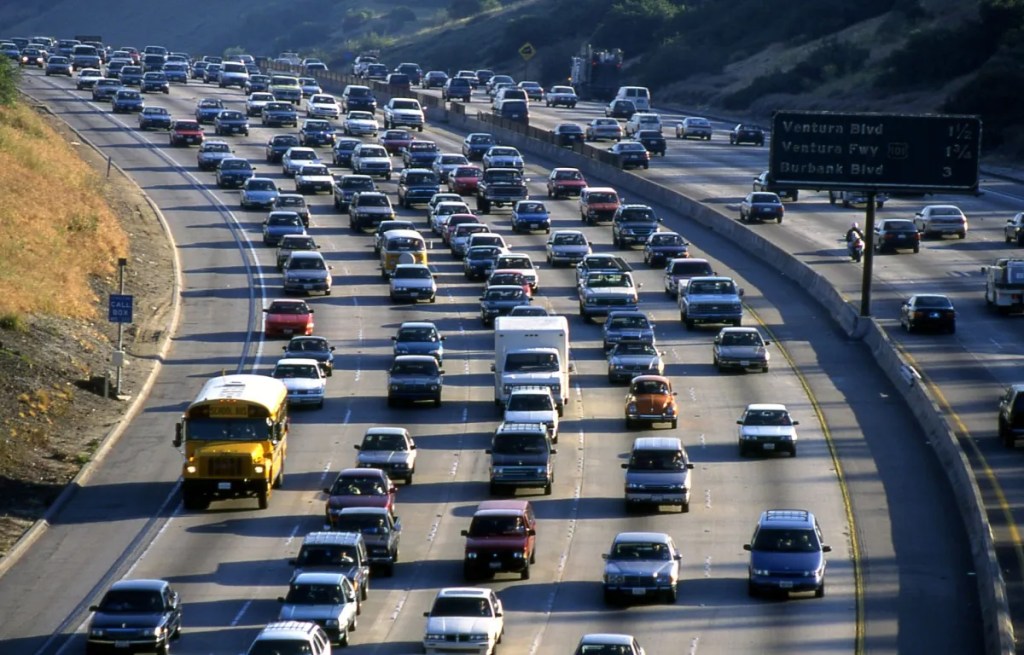
Currently there are 1.7 billion cars, trucks and commercial vehicles globally. That is one vehicle for every 4.8 people. Road transport accounts for 12% of global GHG emissions.
Henry Ford and rivals like General Motors created the mass automobile market for the ‘common man.’ The modern assembly line was adapted from innovations introduced in the Chicago meatpacking yards in the 1860s. Prices were slashed to near cost, costs was constantly lowered, politicians were lobbied and rival transport forms like the electric trolley bus, were crushed or marginalised. ‘Obsolescence’ was a built-in feature of cars as old models would be replaced by new models. Cars were ultimately products of consumption, ultimately disposable with the negative consequences this entailed for the environment.
The Model T car first appeared in 1910. Growth was rapid with the Highland Park plant eventually churning out 15 million Model T’s before production was ended in 1927. By then half the world’s cars were Model T’s. In 1914 260,720 cars were built by a 13,000 strong workforce. Prices tumbled from $850 in 1910 to $260 in 1921, a far lower price than rivals, making the Model T affordable to the average American worker. Millions of affordable cars meant more streets and highways. The Federal Highway Act 1921 subsidised state highway departments local road building programs while states taxed ‘gas’ to raise more finance for construction.
In the C20th a strong nexus between production and consumption was established though occasionally disrupted by recurrent economic crisis. The arrival of neo-liberalism reshaped Fordism with observers inferring post-Fordism’s arrival. The latter was considered a watershed heralding greater flexibility in production, just in time supply lines, greater automation and more widely the feminization of the workforce and the rise of new sectors like services signalling the end of jobs for life. Organised labour was also weakened. Latterly we have seen the internet’s arrival, digital tech, platform capitalism and AI that as Big Tech’s handmaiden threatens to reshape employment even further. Yet there is also continuity. Key features of Fordism remain in our hyper-modern world especially consumerism. But the citizen as sovereign consumer increasingly diminishes the citizen as endless consumption becomes sovereign.
IV
A viable electric battery is a recent development. Cars were universally powered by the ICE using oil. As an energy source oil is a hydrocarbon (or carbon) whose source is dead animals. These ‘stores’ of carbon, the decayed remains of marine animals, zooplankton and algae which settled in many layers hundreds of millions of years ago, transformed over eons into petroleum by heat and pressure combined. Such subterranean energy sources were the vast if finite natural basis of that unnatural human enterprise: the car-carbon economy that underpinned the Second Industrial Revolution. This Second followed the First Industrial Revolution whose primary energy source was coal – still part of the energy picture two centuries later.
The socially imaginary premise of the car-carbon economy was originally the promise of peak Americanism: freedom for the citizen. In post-war US society, the car-carbon economy brought the now symbolic America frontier simultaneously within reach and erased it as (white) flight from the cities established the suburban sprawl, new industries and employment which dictated an explosive extension of cars and roads. Car ownership and suburbia were inevitable companions. Fordism/Americanism created the blueprint for the global car-carbon economy, its spread from North American to its planetary triumph in the C20th. While fossil fuels was the world economy’s primary energy, the latter’s competitive dicta was eternal growth and endless consumption which ignored ecological limits and acted as though the resources of several earths were available.
Fordism globalised but in the post-war decades US manufacturing inevitably lost its dominance as its share of the world car market fell from 75% in 1950 to 19% in 1991. This development was partly about new foreign competitors in other countries adopting Fordist patterns of car ownership and modifying its blueprint (lean production, automation and so on).
Today there are 1.7 billion cars and road vehicles in the world. According to the International Panel on Climate Change (IPCC) the transport sector as a whole accounted for 23% of global CO2 emissions in 2010. GHG emissions have risen 250% since 1970 during the Great Acceleration. IPCC projections for 2020-50 suggest further increases in passenger travel demand in every region of the world. The US based Union of Concerned Scientists noted cars and trucks emit a fifth of all US CO2 emissions while every gallon of gas consumed produces 23 pounds of CO2 (19 pounds straight from the tailpipe). Overall transport accounts for 30% of the US’s CO2 emissions – more than any other sector. Globally road transport’s share of all transport GHG emissions is 75%. Cars account for 60% of the road transport total – far more than any other mode of transportation. Overall the transport sector (roads, shipping, aviation and so on) is the source of 15-16% of global GHG emissions.
Cars not only emit CO2 but also other noxious GHGs like sulphur dioxide, nitrous oxide (NO2) and particulates at levels harmful to human health despite strict tailpipe emission standards in some parts of the world. Research published in The Lancet Public Health (Britain) revealed London’s ULEZ restricting vehicles in the city centre introduced by its Mayor Sadiq Khan, helped NO2 roadside levels fall by 27% directly boosting children’s lung capacity and resulting in fewer respiratory and heart problems.
So road vehicles are a major source of CO2 emissions. Formidable obstacles face any transition to a clean energy future. Merely replacing ICE road vehicles with EVs will fall short of clean energy and emission goals if the car retains its dominant place. This is despite the endeavours of countries like China, supposedly building an electro-state according to respected observers like Adam Tooze, as it exports its clean energy revolution to receptive countries in the global South. These countries, desperate for energy, also wish to escape the disciplinary regime of fossil fuel dependence and its global backstop, an increasingly erratic US. Baleful Trumpian decisionism means full blooded support for Big Oil and fossil fuels.
V
In a 2020 study of the ‘political economy of car dependence’ Mattioli, Roberts, Steinberger and Brown (henceforth MRSB) examined the difficulties of decoupling ‘human well-being’ from the car and fossil fuels. The authors identified five major constraints on any radical overhaul of transport. These were: (i) the car manufacturers, (ii) the ongoing provision and maintenance of transport infrastructure especially the road network, (iii) the broader political economy or reality of urban – or suburban – sprawl, (iv) the provision of public transport, and finally, (v) cultures and patterns of car consumption.
MRSB critically recommended a ‘systems of provision’ approach rooted in political economy. The plural aspect is key. Each element is linked to the other elements and mutually reinforcing, they form an iron cage of “carbon lock-in.” There were important subsidiary issues most importantly the state’s ‘capture’ by car manufacturers and Big Oil. It can also be argued such powerful interests were virtually immune to any accountability given democracies qua representative democracies were basically liberal oligarchies (Cornelius Castoriadis). This meant the executive was insulated from democratic control. Elected representatives played a mediatory role in a process of opinion formation and political steering whose imperatives were ultimately drafted by the executive. There is a broad political consensus on transport lending an apolitical façade to transport policy. We might say this is a largely an acceptance of ‘what is.’
Globally passenger travel is expected to increase. Currently road transport accounts for half of all final oil use. These projected increases inevitably outweigh mitigation measures for GHGs or attempts to make transport more energy efficient. MRSB believe “need satisfaction” is a hurdle for climate mitigation efforts as high car use stems from the belief cars are considered fundamental to independence. Yet near universal access or use of cars, destroys independence and social inclusion though in an environment made for cars this is a difficult criticism to land. Overall climate action and alternative transport models are incompatible with consumerism and the car’s continued dominance.
Some scientists and radical ecologists fear this is an era of Nature’s erasure, of post-Nature. Some insist the Anthropocene, the result of human activity, is here. In 2024 the International Union of Geological Sciences (IUGS) hotly debated this topic but finally voted to reject the idea a new geological epoch had displaced the Holocene, the remarkably stable geological epoch of the last 11,700 years and the foundation of settled agriculture and human civilization.
Perhaps the rhetoric of post-Nature was exaggerated though the IUGS is likely to revisit this debate soon. Recently a group of Israeli scientists led by Ron Milo proposed a novel way of thinking of human civilisation and its relation to Nature. Milo’s team calculated humanity’s actual physical output they defined as Anthropogenic Mass (AM). This AM has outweighed the living biomass of the biosphere since 2020. AM – or Partha Dasgupta’s ‘produced capital’ (roads, factories, machines, tunnels, ships and so on) – is the product of homo faber and forms civilization’s material basis. Milo’s team estimated this AM weighs 1.1 teratonnes or more than one trillion metric tonnes. A teratonne is one followed by twelve zeroes. For every living person AM equalling or exceeding her body weight is produced every week. The mass pf plastic – now everywhere – is greater than the mass of all land-based mammals, a sobering metric. The building materials of the world’s roads and highways (a mixture of aggregates, asphalt, bitumen, sand and concrete) forms a significant proportion of AM.
In a recent article in Phenomenal World Jack Copley explains how quarrying and production of cement/concrete, the world’s most ubiquitous construction material (and the most consumed article on the planet after water), contributes a staggering quarter of the world’s industrial carbon emissions. For every ton of cement there is a ton of CO2. ‘Green’ decarbonised cement is feasible but its 100% cost mark-up is prohibitive given the chronic low profitability of the sector. Cement/concrete production, requiring capital intensive plant, is crisis prone for various reasons including an inherent tendency to overcapacity as cement is relatively perishable (and doesn’t travel far) meaning localised production subject to the cyclical vicissitudes of the construction industry more generally. To this staggering emission cost we should add the aggregated mass of 1.7 billion road vehicles made from steel, iron (both 50-60% of a car’s mass), aluminium, rubber, glass, plastics and copper.
In 1896 Bridget Driscoll was the first ‘pedestrian’ killed – run over by a car in Crystal Palace. The coroner deemed Driscoll’s death an “accident” and “hoped such a thing would never happen again.” Since 1896 millions have died in road traffic accidents.The World Health Organisation (WHO) estimates 1.6 million people currently die in annually on the roads. Yet transport policy is widely seen as apolitical. There is silence about the link between consumerism and car ownership’s promotion as the acme of freedom. Yet car mania destroys the ‘commons.’ Road building, often justified as the solution to traffic congestion, spells induced demand: as congestion on two lanes is replaced by congestion on three lanes and so on.
MRSB emphasise car owners strong attachment to their cars despite the marginal cost benefits. Yet malls, schools, hospitals, workplaces, retail parks and the rest, though notionally accessible by other forms of transport, were built for cars first, buses second and trains rarely. Not all bus services are a form of public transport provision in any case. In Britain, Thatcher’s 1985 Transport Act created a deregulated bus service market which predictably led to a race to the bottom. Subsidies were cut, companies privatised, routes and service disappeared, fares rose and drivers pay was hit as passenger numbers fell. Cars dominance of social space – or anti-social space – was reinforced. Unsurprisingly households with multiple car ownership are on the rise. In 2024 a third of UK households had access to two or more cars. As MRSB conclude the habitus of car consumption feeds transport policy inertia.
With neoliberalism the state is both both deregulatory and regulatory. Thatcher’s transport policy promoted deregulation, privatisation, market forces and shareholder windfalls. Decades later the disastrous results of this policy direction are clear. MRSB emphasise the state’s role vis-à-vis transport provision described as a mixed private-public system: individuals buy cars, pay insurance and car tax etc while public pays for infrastructure via taxation. In effect the public is paying a hidden subsidy benefitting car owners. We should also recall that many roads existed before the arrival of ICE vehicles and were essentially expropriated or remade for the ICE.
MRSB identified five key features of the car industry including high capital intensity or sunken cost (design, manufacturing and marketing), endemic overcapacity and overproduction reveal a glut of global competitors and low/or declining profit margins. Car and vehicle manufacture have an outsized economic significance for society. Presently global turnover of car manufacture is between $2.75 and $3 trillion or 1% of total global GDP (and a higher proportion of manufacturing than this figure implies). With the growing importance of computer tech, AI and the rise of ‘platform capitalism’, the main car giants aren’t as dominate as they once were but still occupy seven places in the top fifty richest corporations. At the time of writing Amazon is the wealthiest corporation while Toyota and VW are the highest placed car manufacturers.
Economies of scale were a key feature of car manufacture. With the introduction of the single steel body in the 1920s mass production received a boost. Yet large capital investment was essential for a viable car industry but even a large domestic market (like the US and China) car manufacturers were compelled to become global producers. ‘Global models’ were made for many national markets while manufacturing was internationalised to exploit cheaper labour or gain market entry. These and other factors raised the entrance level of manufacture, driving corporate centralisation and monopolisation. State support had an important role promoting economic development. Late entrants like Japan and South Korea saw an active state using tools like import substitution and protection of domestic markets to help their fledgling industries grow. Inevitably the state today is essential to facilitate EV takeoff.
Earlier we alluded to ‘planned obsolescence’ – a market driven process treating cars as disposable or supposedly a matter of ‘consumer choice.’ New models would replace old while it was popularly believed short-lived models generated greater sales (and unnecessary waste). Yet the picture is more complicated. Obsolescence is unavoidable in a system dominated by competition and capital accumulation but is also an inherent feature of technological innovation. Car manufacture has been a leading edge of innovation and productivity overall. This is reflected in the fact cars on the road today are on average older than those from 20 or 30 years ago, partly because they were engineered and built better.
Yet as MRSB argue despite annualised model updates, the car is basically a highly standardised product offering only superficial variations in design, trim, colour and so on. High levels of fixed capital investment in manufacture limits flexibility. Such sunken costs of plant and machinery and the competitive pressure for more investment and greater productivity has paralleled a long secular decline in profitability with overproduction and overcapacity stubborn persistent features of the industry.
Though tailpipe emissions are the focus of GHGs and CO2, the car industry across the board is inherently wasteful of resources, materials with its own emission costs. Roughly 10% of a car’s lifetime carbon footprint is generated making it. Presently EV manufacture creates more GHGs than ICE vehicles primarily due to electric battery manufacture. Despite climate breakdown only superficial adjustments are being introduced by vehicle manufacturers – mainly the fanfare introducing EVs. Consider the huge growth in SUVs currently 55-60% of new passenger car sales globally. Just 20% of SUVs are EVs. Yet SUVs are heavier and larger than the average car and emit 20-25% more CO2. They are also more lethal for pedestrians in collisions especially children. Leaving aside the litany of criticism of SUVs let’s simply observe that in the age of climate breakdown, the narcissism in purchasing an SUV is extraordinary.
VI
Currently cars dominate global transport. Still mainly based on the ICE, the car is energy and resource hungry in a way no longer ecologically sustainable in the medium to long term. Neither is the replacement of ICE vehicles with EVs and clean energy grids a wholly satisfactory solution if mass individual car ownership are retained. It seems any effort to roll back individual ownership and use will engender further battles.
In other words technology isn’t neutral – it’s always historically specific, belonging to a distinct social field as Don Ihde argues. Technology is as old as humanity as a species but the difference with the emergence of ‘civilization’ as sedentary dominance hierarchies around 5,000 years ago, is that technology was not only greatly amplified but controlled by elites and used to maintain their rule. On this understanding technology is never simply the application of technique or ‘disinterested’ science but is entangled in relations of social domination and the exploitation of Nature.
Consumerism needs to be ditched as well as forms of car use based on the separation of each from all. Separation appears to indicate complexity and differentiation in society. In contrast a social-political project aiming to rollback consumerism, might seem utopian and authoritarian, an assault on ‘choice’ and the spontaneous freedom of the consumer. But this would be a false conclusion. The car owner as sovereign consumer is nourished by an ‘illusion’ springing from a peculiar communal break with reality unable to grasp the ecological limits of human activity. For the late Bruno Latour this was a socially necessary illusion and it obscured the truth climate breakdown was an emergency. We would add an acute observation of the late French sociologist Alain Touraine who speculated late modern societies were undergoing de-modernization and de-socialisation, becoming less differentiated as various social-historical trends transformed citizens into consumers and social action once defined by doing, withered with contemporary society marked by being.
The car and the ramified infrastructure supporting it, confronts us all as a given or fait accompli. It isn’t really subject to democratic control or genuine social regulation. Any remaking of transport, society and the social-historical project to tackle climate breakdown would necessarily be democratic. In fact it would require an extension of democracy, grassroots citizens democracy to challenge corporate power and its state backers. Such a project would draw on what Cornelius Castoriadis described as the ‘revolutionary potency of ecology’ not only mobilising citizens democratic energies but fully accepting humanity’s embeddedness in Nature. The destination would be a new sustainable, balanced relation to the natural foundations of human life.
Jules Etjim August-September 2026
Some resources and reading:
Mattioli et al or MRSB The Political Economy of Car Dependence (2020): https://www.sciencedirect.com/science/article/pii/S2214629620300633?via%3Dihub#sec0004
World Resources Institute summary of NOAA annual report includes link to 2025 report: https://www.wri.org/research/state-climate-action-2025
Jack Copley https://phenomenalworld.org/analysis/cements-stubborn-emissions/
Ron Milo et al: https://www.nature.com/articles/s41586-020-3010-5
Cornelius Castoriadis The Revolutionary Potency of Ecology (1992)
Partha Dasgupta On Natural Capital: The Value of the World Around Us (2025)
Peter Dauvergne The Shadows of Consumption: Consequences for the Global Environment (2008)
Peter Freund and George Martin The Ecology of the Automobile (1993)
Andre Gorz Ecologica (2010)
Don Ihde The Philosophy of Technology: An Introduction (1993)