I
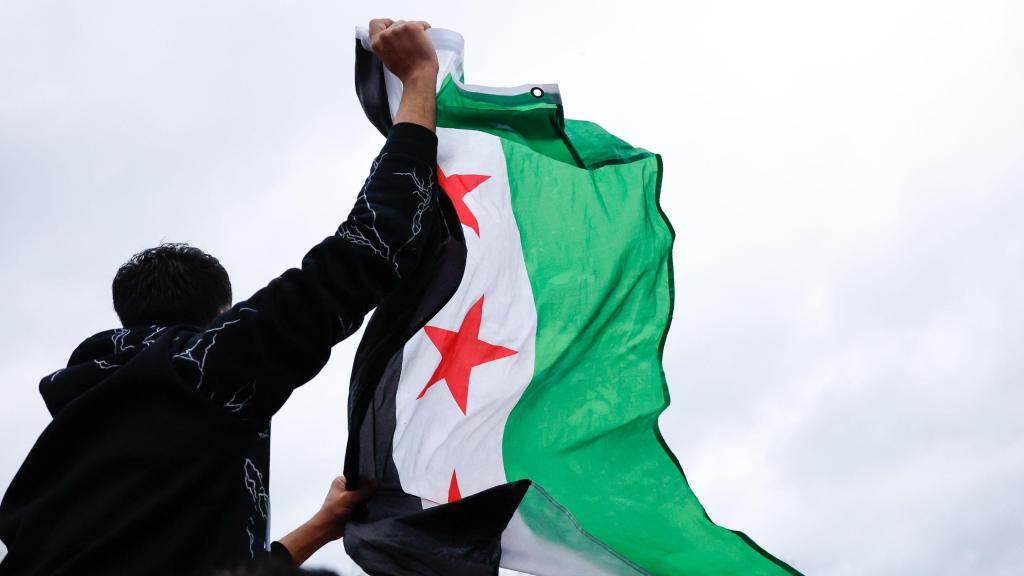
In this global season of wintry reaction Spring has burst forth, and unexpectedly so, in Syria. Today millions of Syrians are rejoicing at the end of Bashar al-Assad’s tyrannical rule. Whatever happens in Syria tomorrow Assad’s humiliating defeat is a significant historical watershed, the tangible fruition of some of the promises embodied by the 2010-11 ‘Arab Spring’ which swept across the MENA challenging autocracy and authoritarianism. This was a challenge which appeared to have exhausted itself. Syria was a tomb but today it’s something different. Now the immediate future will see the Great Return as millions of displaced Syrian refugees return to their homeland.
Perhaps the ‘Syrian Spring’ with its heavy inheritance of counter-revolutionary violence and scorched earth destruction will rapidly sour or wither as many anxiously fear and Orientalist churls confidently forecast. The latter have always displayed a deep scepticism about the agency of the Syrian people. Yet though it was late in coming this is Spring.
After inflicting deep wounds on Syria and its people with the help of its allies – Russia, Iran and Hezbollah’s Shia militias – Assad’s brutal Baathist regime collapsed like a house of cards. Facing defeat at the hands of the people in 2015, Assad survived thanks to Putin’s timely assistance when Iran persuaded Moscow to save his skin. As a result Iran’s revolutionary guards, Russian air power and Hezbollah’s militias tipped the balance of the civil war in Assad’s favour. Almost a decade later the once unlikely rehabilitation of the Butcher of Damascus and international pariah, had clearly begun when Assad appeared at the 2023 Arab League summit, the apparent ‘victor’ of the Syrian civil war.
If the collapse of Assad’s regime was a surprise this wasn’t because it was particularly strong or stable. On the contrary the regime had become hollowed out, weak and anaemic despite its power resting on a long established thanatocratic apparatus of terror and repression that imposed biological precarity on the population. Assad’s social base was narrow and derived from a small group of clans belonging to the Alawite minority. If this minority wasn’t subject to the same level of repression aimed at the Sunni majority, it was still a captive of the ruling circle. Baathism had long exhausted any legitimacy it might have once had. Baathist ideology had combined a faux Pan Arabism, fake anti-imperialism and statist Arab socialism. Also, Assad wasn’t shy in suggesting that he was conducting a local version of the War on Terror, a convenient exculpatory fable for international consumption that justified his exterminatory counter-revolutionary violence.
Perhaps to fully appreciate the tenacity of the Syrian people we should consider the sobering metrics of the destruction wrought by totalitarian Baathism since peaceful protests in 2011 were met by brutal violence and the civil war began in earnest: 400,000 to 600,000 people killed (Assad and his allies were responsible for the overwhelming majority of these deaths) and as many injured as civilians were targeted by air power, barrel bombs, rockets, tank fire, white phosphorous and chemical weapons. The deadliest regime use of chemical weapons was a Sarin gas attack on Ghouta in August 2013. Also 6.8 million people were displaced within the country and 5.4 million Syrians became refugees abroad according to the UNHCR mainly in Lebanon, Jordan and Turkey. All this in a country of 22 million people.
Thirteen years ago the ‘Syrian Spring’ first flared into life, part of a regional wave of protests that swept across the MENA after a poor street seller Mohamed Bouazizi set himself on fire outside the local Governor’s office in Sidi Bouzid in Tunisia on 17 December 2010. Egypt and Syria were the main centres of popular protest and revolution, two historically important Arab countries where the hopes for freedom were most heavily invested and also the two countries that in an earlier age of ‘high’ Pan Arabism had formed a short lived (and long forgotten) political union as the United Arab Republic (1958-61).
In 2011 peaceful protests throughout Syria were answered by the brutal violence of Assad’s repressive forces. As the people’s rebellion sprang into life feverish grassroots organising helped create neighbourhood Local Co-ordinating Committees (LCCs) that represented a demotic counter-power directly challenging Assad’s rule. Assad responded by doubling down on the repression and violence. As the Syrian opposition intellectual Yassin al-Haj Saleh observed in his book The Impossible Revolution (2017), the revolution was soon compelled to defensively take up arms itself while the previously dominant ‘humanist’, ‘civic’ and ‘participatory’ nature of the inclusive grassroots organising began losing ground to the martial and a more exclusive identitarian miliant Salafism. As Saleh put it, the revolution was acquiring an “Islamic face.” Early on as the revolution armed itself it had relied on defectors from the Syrian army to provide weapons and personnel for the Free Syrian Army (FSA). Very soon these forces would be joined by Salafist militants, many homegrown, intentionally released by Assad from his network of detention centres and prisons like Sednaya and Tadmor (factories for the production of torture and death that few emerged from alive). Evidently Assad intended to bolster his own support among minority groups not belonging to the benighted Sunni majority by stoking sectarian fears. Assad was not above using certain tropes from the international currency of Islamophobia to pretend his forces and allies were fighting ‘jihadis’, ‘extremists’ and ‘terrorists’ rather than the Syrian people.
After Assad it’s clear the Syrian revolution faces many internal and external hurdles and challenges – not least in repairing the frightful destruction of a regime that boasted it would rather burn down Syria before relinquishing power. Evidently navigating potential communal and sectarian divisions will also be a challenge but the Syrian people are more than capable of doing so. Saleh likened the chaos unleashed by Assad’s state to Thomas Hobbes state of nature or ‘war of all against all’ with the added novelty that this state had been deliberately cultivated by Leviathan itself. Similarly in a 2018 Paths and Bridges article we observed:
“Syria is a thanatocratic state whose kleptocratic ruling elite have tried to maintain their rule by freely resorting to genocide, systematically torturing and killing people on an industrial scale while using death, directly and indirectly to husband the populace in an escalation of governmental strategies to winnow targeted demographics and destroy those social ecologies felt to nourish rebellion. The genocidal destruction or disaggregation of some social groups by the thanatocratic state is accompanied by efforts to hothouse other demographics seen as compatible with one overriding imperative: survival of the ruling elite.”
A common refrain of the commentary on Assad’s fall suggests Syria and its people are at a crossroads. Paths and Bridges agrees, and this is a much better place to be than somewhere where the doors and exits are firmly closed or blocked. Paths and Bridges is also firmly convinced that a return to a totalitarian universe is unlikely for a variety of reasons. Briefly we think the comparisons between Syria and Libya are misleading (and even misunderstand events in Libya). Many have claimed Gaddafi’s overthrow led to internecine bloodletting and conflict, reducing Libya to an unenviable “failed state.” It’s true that chaos reigned in Libya with two rival governments with different foreign backers, vying for ultimate sovereignty. These two authorities fought a six year civil war (2014-20) that internally displaced half a million people and forced six hundred thousand people to flee abroad (in a country of six and half million people). There is now an uneasy ‘peace’ in Libya while certain political and social issues are yet to be resolved. Yet the lives lost in the Libyan civil war and the humanitarian violations carried out by all parties were just a fraction of the lives lost in the Syrian civil war.
It appears the immediate danger facing the Syrian people as they start rebuilding the country stems from foreign interference and presently this would be the role Israel is playing as the regional superpower and rogue state that is on a hubristic course of eternal war or war with impunity. Netanyahu and his government in Tel Aviv is utterly contemptuous of the international and humanitarian law and is aware that a simpatico friend will soon be occupying the White House – Donald Trump – who shares Netanyahu’s contempt for the global norms of governance. This isn’t to downplay Biden’s abysmal failures vis-á-vis Israel, Gaza and the fate of the Palestinian people and the US failure to check Israel’s escalating genocidal war against Gaza. It’s clear an emboldened Netanyahu is seizing this ‘new opportunity’ to extend his own maximalist notion of self defence (a euphemism for offence) by continuing air strikes against Syria and seizing land including an outrageous illegal incursion on the Golan heights buffer zone and plans to expand Israeli settlements.
There is some irony in the fact that it was Israel’s assault on Hezbollah in Lebanon and Iranian revolutionary guards in Syria while Russia was distracted by its invasion of Ukraine, that effectively tipped the balance in favour of the rebel coalition fighting Assad though this was by no means the whole story or reason for the success of the Hay’at Tahrir al-Sham’s (HTS) carefully laid plan to break out of north west Syria in Idlib that led to the rapid seizure of Aleppo (Syria’s second largest city) and Hama in co-ordination with other opposition groups in other parts of Syria. It’s apparent that a stable Syria doesn’t suit Netanyahu’s government who certainly regarded Assad as an enemy but also a useful enemy, a billboard for Arab authoritarianism (in opposition to Israeli democracy) but also a known quantity, weak in power and never any real threat to Israel. Indeed its likely Israel will continue to sow chaos and instability in its neighbour especially in light of the shift in the regional balance of power delivered by its superior arms.
It’s difficult to speculate on Syria’s future though that hasn’t prevented many from doing so. There are lots of unknowns. Despite our remarks about Israel’s desire to prevent a Syria ‘that works’ or the possibility of further external interference from Russia, Turkey, the US, Iran, Saudi Arabia or other countries, the Syrian people have (temporarily at least) subverted the primacy of the geo-political. Neither can Assad’s fall simply be reduced to his armed overthrow by the armed coalition of groups led by HTS. We need to remind ourselves the first chapter in Assad’s overthrow began with the peoples grassroots rebellion. Yet the country is broken and impoverished. 80% of the population needs humanitarian aid. Scars will remain from decades of autocratic rule. As Fawaz Gerges (an academic based at the LSE) recently asked: will religious, ethnic and clan based or other divisions fuel further conflict or will inclusive nation building win the day?
II
Finally there is a major question broached by Assad’s fall and the triumph of the Syrian Revolution. In the C21st demotic rebellion and revolution has remained a phenomena but these latter day revolutions have lacked the élan of the Great Revolutions of early modernity or even the 1979 Iranian Revolution. It’s a paradox (or an apparent paradox) that the disappearance of the socialist goal in our era hasn’t meant the end of revolution. Revolutions still happen and will continue to do so in the future but the contemporary revolution ‘perplexes’ what remains of the traditional left because it doesn’t fit the old models of social change or providential historical narratives, as Yassin al-Haj Saleh himself observed. The modern revolution lacks the gravitas or historical sweep of the Great Revolutions that helped birth and shape the modern world.
There was a historical moment when Progress was deemed an unimpeachable universal good, a desirable goal and horizon of collective social and political action but that point is now past. As Theodor Adorno expressed the idea, Progress was the providential promise of unfolding history that was synonymous with social development but turned out to be regression.
Perhaps this judgement was harsh or excessive. Perhaps. But it appears the revolution today has blank spaces and is missing steps while social struggles are rarely consummated and often have to begin again after a period of disorientation. Equally revolution appears to face far greater hurdles than in the past especially the greatly amplified repressive power of the modern Leviathan in the international state system which disposes of far greater ‘clairvoyance’ on the threat of social contestation than the past. Globalisation hasn’t been eclipsed but this does look like an age of the renewed inescapable power of Leviathan. This isn’t the whole explanation however. With the modern revolution lacking the élan of the Great Revolutions (whether American or French or even their Dutch and English prequels) in a world addicted to catastrophe and apocalypse but strangely indifferent to progressive social transformations, the contemporary revolution is often modest and small scale, arriving abruptly and departing like a furtive tsunami. Incomplete, destructive and leaving few traces.
Strangely this picture could describe the 1871 Paris Commune. Three years ago on the one hundred and fiftieth anniversary of the Paris Commune Leila al-Shami (among others) made the connection between the Paris Commune and the experience of the ‘Syrian Spring’ with its embattled grassroots rebellions in urban centres like Aleppo and Homs forced to defend themselves with arms. Perhaps we could extend this suggestive homology to other recent rebellions of the people like Myanmar, Belarus, Hong Kong and elsewhere. The threads connecting the Paris Commune to these ‘perplexing’ episodes of modern social contestation may appear tenuous but we think they exist but aren’t really obvious if we retain the traditional political and historical narratives for apprehending the Paris Commune.
Previously in the age of the classical workers movement, classical Marxism, the Second International and the short lived moment of Leninism – the Paris Commune was retrospectively read through the lens of a specific understanding of historical development and the formation of the working class as a global class-for-itself embodying a new collective social order in its collective institutions and social action. This global narrative was central to classical Marxism and yet even in 1871 (and 1917) when it was more obviously true than today, it was still fundamentally false.
Instead we would think there is a continuity or what we term the weak telos of autonomy defined as a broad, multi-faceted struggle to achieve, defend or extend the circumference of freedom and autonomy, to extend democracy throughout the world that takes many different forms that wasn’t (and isn’t) only confined to the working class or the labour movement. In this context the historic struggles of the working class were an important instance of this struggle for autonomy and democracy (Marx had even spoken of the “battle for democracy”). This could be true even if Marxism’s edifice constituted a misapprehension of the import of worker struggle. This isn’t to dismiss criticisms of liberalism or the shortcomings of representative democracy but addressing these deficiencies is inseparable from the defence of embattled democracy that is facing the external challenge of the new authoritarianism and the internal threat of Populism. In this context what used to be called the Social Question (or social justice) is, in the final analysis, highly relevant to the global struggle for freedom and autonomy and vice versa.
We think that events in Syria since 2011 illustrate the global nature of the struggle for autonomy and democracy. But the telos of this struggle is weak. What we mean by this is that we need to resist what Maurice Brinton described as the “Balkanisation of utopia”: the assumption social development was a fatalism and the accompanying notion that history had one inevitable terminus. If the modern world order is a global system that at some level imposes a certain genetic logic of the whole on the parts, it is also true the social-historical (Cornelius Castoriadis) is not closed but radically open: there are many locales, spaces, multiple modernities (as the Israeli sociologist S.N. Eisenstadt insisted) and there are many different agents and agencies which imply many different paths and destinations. In this sense autonomy and democracy have different social forms, are not a given and need to be fought for, defended and constantly renewed.
Jules Etjim / / / / / December 2024
Postscript >>>> In 2018 Paths and Bridges published Notes on Syria and the Coming Global Thanatocracy by Jules Etjim. Shortly after the post was translated into Spanish by Sinfor Fernández for Rebelión blog. It’s long overdue but we are now sharing this translation of this, perhaps, provocative argument and wish to thank Sinfor for sharing this post with a wider audience. The original English version (our most viewed post though all viewings are admittedly too few) can still be found on the Paths and Bridges site.

