/// A Political Crisis in the Making ///
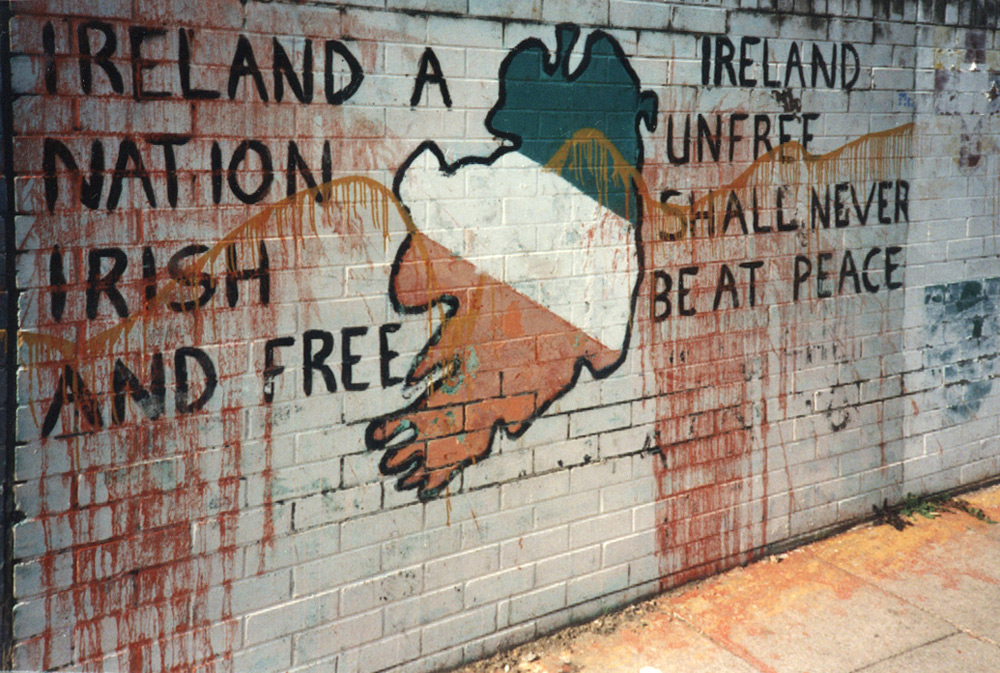
After the May elections in Britain last year we claimed that Britain as a unitary state (England, Scotland, Wales and Northern Ireland) was displaying morbid symptoms of decay (see P&B post United Kingdom: Living Too Late May 2021). We also claimed powerful centrifugal forces were inexorably unstitching the seams of an increasingly disunited kingdom, fraying a once teak tough, if informal, constitutional framework in situ since Britain’s industrial and imperial takeoff three centuries ago. What is today often described as the Celtic fringe hosts restive want away democratic and national political forces.
This profound disordering has long been unfolding but was given a huge fillip by Brexit. While a plurality in England voted in 2016 to leave the EU (53.4%), Scotland voted remain (62%) as did Northern Ireland (55.8%), ignoring the Democratic Unionist Party’s backing for leave in doing so. On the other hand, Wales voted to leave (52.5%) but three years later in the 2019 General Election the strong Brexit sentiment of 2016 didn’t benefit the Welsh Tories as it did in England where Boris Johnson skittled many Labour ‘Red Wall’ seats in winning 80 seat landslide majority.
The essential diagnosis of Britain’s faltering post-imperial trajectory was originally sketched by Tom Nairn (soon joined by his New Left confrère Perry Anderson). Nairn found his analytical métier exploring the startling re-emergence of nationalism in Britain in the late 1960s and 1970 exemplified by SNP’s landmark victory in the 1967 Hamilton by-election and the tumult of Catholic civil rights in ‘the North’ (Northern Ireland) which provoked a brutal counter-reaction from the ‘Orange state’ that saw the onset of ‘the Troubles.’
The ‘Nairn-Anderson’ thesis in nuce proposed the British state had become antique in comparison to rivals, as a once trailblazing economy steadily fell behind and squandered successive opportunities to properly retool and modernise. Having enjoyed the advantages of pioneer status in the Industrial Revolution: an earlier episode of globalisation, the first comer was now reaping the disadvantages of the same.
On the face of it nationalism’s re-entry might seem surprising in the post-war years of the ‘Great Boom’ and the arrival of consumer society. But ‘full employment’ and civic inclusion didn’t extend to all corners of the British polity. In any case much left analysis was wedded to a providential narrative of economic integration, promoting class corporatism and ineluctably erasing archaic communal identities, and so contrived to miss the import of nationalism’s renaissance. Widely seen as recrudescent and redundant, nationalism emerged to amplify existing strains on Britain’s unitary state whose earlier global hegemony had rested on a syncretic social compact of the industrious social classes and the home nations as an indispensable fulcrum of imperial pre-eminence.
Writing in the mid 1970s Nairn suggested ‘recidivist’ nationalism’s return wasn’t simply a “relic” or residual archaism but a “portent” of trends functioning as a reaction against, and challenge to the economic and social forces seeking multi-national integration or what would decades later be dubbed globalisation. Nairn linked the rise of civic nationalism to wider developments and believed Europe had relinquished its earlier status as a demiurgic force. Invoking uneven development, Nairn argued faltering economic growth weakened social bonds (though in the 1950s and 1960s those like NI’s Catholic working class who were shut out from the benefits of post-war economic growth chafed against their continued marginal status) and allowed ‘ancient’ festering grievances to air again.
Nairn’s idiosyncratic analysis was distant from the militant leftist elan of the period. Against the backdrop of a struggle for civil rights, the main social agency in the leftist imaginary was considered to be the oppressed Catholic (working class) minority whose struggle against sectarianism had not only rocked the NI statelet but constituted a renewal and coda of the earlier, deflected Irish national liberation struggle. Leftist ‘orthodoxy’ had anticipated the intersection of the ‘national question’ and socialism and with it the promise of a radical consummation – in fierce opposition to ‘British imperialism’ which was cast as the main barrier to reunification. The political establishment in London, especially its hegemonic Tory Party wing, had been chief instigator of the ‘Orange state’ in 1921 with its junior partner, a compact of Unionist-Protestant urban and rural classes though there were quibbles about agency and where it primarily lay. Even so this analysis implied there was only one relevant national question in NI.
However Nairn demurred. To begin with, invoking ‘imperialism’ and Britain’s objective interest in retaining NI, more than plausible in 1890 or 1921 when Ireland’s industrialised north east was vital to the enterprise of Empire, increasingly made less and less sense by the early 1970s. Provocatively (then though not now) Nairn dismissed any supposed homology of the Catholic struggle with the Viet Cong against US imperialism. The progressive prospectus and its expectation of a fusion of republicanism and socialism, was deemed utopian because it lacked a serious analysis of the Protestant working class or its powerful attachment to the ‘Orange state.’ Apart from the national question exercising the left there was, so to speak, a shadow national question: Protestant workers allegiance to Britain exemplified by the Loyalist social imaginary (the Protestant Ascendancy, King Billy, the Orange Lodge, pipe and drum marching bands and all that), which patently over-determined any material interest this group was inferred to have. Identity was made from whole cloth and not readily amenable to being trumped by the Social Question.
The left was not only guilty of a wishful thinking downplaying NI’s sectarian reality but also assuming the Catholic minority was the exclusive, dynamic vector in the overall mix of social forces. The Protestant-Loyalist working class disposed of significant social power which was unleashed in the Ulster general strike that sank Heath’s Sunningdale Agreement in May 1974. The Agreement was meant to replace a suspended Stormont government with power sharing while introducing greater cross-border co-operation with Dublin (London and Dublin over other possible heads) by reviving the long defunct Council of Ireland.
Clearly much has changed since the 1970s – the ‘war’ ended and power sharing with Dublin’s involvement partnering London and Washington as ‘honest broker’ and guarantor, did finally arrive in 1998. Since then power sharing between the two main political traditions in NI – Unionism and Nationalism – has seen a few political ‘bumps in the road’ with major crises resulting in various Assembly suspensions. There were two major periods of abeyance: 2002-2007 when police raided Sinn Féin’s Stormont offices amid allegations of IRA intelligence gathering and 2017-2020 when Martin McGuinness, the Deputy First Minister resigned his post because of the Renewable Heat Incentive scandal that engulfed Arlene Foster’s executive. A third extended period of suspension is possible if the DUP persist in refusing to go back into power sharing unless the Protocol is scrapped.
There was also broader social change in NI as demographic change saw Catholics became more numerous. Meanwhile the Irish Republic economically modernised under the EU umbrella, earning the sobriquet of the ‘Celtic Tiger’ thanks to rapid growth and a generous corporate tax regime attracting inward foreign investment and foreign corporations (particularly US firms) wanting to access the European market. Also as Ireland became a more socially liberal society the Catholic Church’s power and influence receded. These – and a few other developments – have transformed the situation of Unionism-Loyalism but its Nationalist interlocutor, Sinn Féin, was also changed, not only in the obvious headline sense of having ditched the armed struggle but also because it accepted the principle of consent would determine NI’s future though happily for Republicanism this turns out to be processual ie. a question that can be revisited again and again. The principle of consent was a cornerstone of the Good Friday Agreement and rested on a double recognition: acceptance of the legitimacy of the aspiration for a united Ireland and the wish of the majority of NI’s people to remain part of Britain. Underpinning this double recognition, London and Dublin agreed that only NI’s people would decide the fate of NI.
Acknowledging the Protestant-Loyalist community would have to be persuaded to support a united Ireland Sinn Féin opted to play a patient political game to achieve its ultimate objective but no doubt also persuaded itself the ‘interested parties’ ie. Washington, Dublin and even London, would use their own leverage in NI in manner attentive to the post-imperial secular trends ‘rationalising’ NI’s polity and softening some of Loyalism’s fierce attachments. Whether this was a realistic political calculation still remains to be seen.
****
In 2021 the full implications of the local election results across Britain, were ignored by a media that carolled the Tories Hartlepool triumph, held on the same day. Labour’s electoral chastening in Hartlepool was real enough and certainly exacerbated the humiliating defections of 2019 when once sure bet northern Labour seats fell for Johnson’s confected Populist ‘insurgency’ flying under the unlikely colours of taking back control. But Hartlepool’s turnout was low by by-election standards (42.7%) while an ostensibly stellar 16% swing to a candidate (significantly representing the governing party), couldn’t hide the fact the triumphant candidate won just 23% of the eligible votes.
Brexit clearly energised many former Labour voters but a prominent feature of the contest was voter lethargy. No other British political party grasps this logic better than the vaunted ‘natural party of government.’ The Tories are well versed in using the executive levers of power to strategically energise their voters. The Tories preternatural instinct for retaining power have certainly been sharpened by the possibilities disclosed stateside by the Republican Party’s energetic voter suppression tactics and culture war strategy. Hence Johnson’s 2022 Election Bill designed to discourage those groups least inclined to vote Tory from voting at all.
This all matters a great deal more in England where discreetly ‘gaming’ the electoral playing field further to favour the Tories is possible thanks to FPTP’s as the established electoral yardstick in contrast Scotland or Northern Ireland. But then the spectre of ‘eternal’ Tory dominance south of the border clearly repels Scots and anti-Tory voters elsewhere in the Celtic fringe. Even so the 5 May local elections shows that a pincer movement combining Labour’s continuing, if fitful, revival, and a Liberal Democrat challenge where they are second to the Tories, could deprive the governing party of its majority at the next election. The Tories gamely tried to downplay the 5 May results despite eye catching losses (including Wandsworth and Westminster councils and 485 council seats shed nationwide) with Johnson temporarily reprieved thanks to the confected ‘Beergate’ scandal and Labour’s hesitant progress in the lost ‘Red Wall’ seats.
Yet the most stunning result wasn’t the Tories in most parts of Britain but Sinn Féin’s emergence as Northern Ireland’s largest party. In Scotland the SNP also celebrated their best local election results despite having been the incumbent party for fifteen years. Fittingly Scotland’s First Minister Nicola Sturgeon conveyed the magnitude of Sinn Féin’s success, stating: “If [Sinn Féin] emerge as the largest party today…that will be an extraordinary result and something that seemed impossible not that long ago.” Sturgeon added: “…there are fundamental questions being asked of the UK as a political entity right now. They are being asked here in Scotland, they’re being asked in Northern Ireland, they’re being asked in Wales and I think we’re going to see some fundamental changes to UK governance in the years to come and I am certain one of those changes is going to be Scottish independence.”
Currently opinion on Scottish independence is evenly split though Sturgeon justifiably claims the SNP’s 2019 election triumph was a mandate to prepare another referendum. Sturgeon is understandably cautious about setting a new poll date – strongly resisted by London. Given how evenly divided Scottish opinion is, a wary attitude to a premature poll is unsurprising. The stakes are high and another independence defeat would be a grave setback. What is remarkable is how readily Scottish independence bounced back thanks to the SNP’s continued hegemony and Tory misrule of the union.
In 2019 many commentators concluded Johnson’s election landslide was game changing and likely to usher in another decade of Conservative ascendancy. Today we see Johnson’s triumph was far more brittle than the hyperbole allowed. To begin with Brexit, combining a flawed project finessed by political opportunism, was only ever going to lead to economic self harm but as the hard Brexit the Tories favoured, it has been catastrophic as British trade with Europe fell off a cliff with no comparable market to replace it.
Yet to judge public opinion Brexit’s dire effects have been obscured by the pandemic. Neither a timid opposition or suppliant media wish to revisit a question that could provoke a ‘populist’ backlash at their expense. But truly abysmal bad governance from London can’t be ignored indefinitely. Brexit has been compounded by the cost of living crisis and plummeting living standards as many more people are forced to rely on food banks to survive while stagflation, supposedly banished, looms. In such circumstances talk of “levelling up” recedes into the distance but then it was always a dubious proposition coming from the party of the City and a decade of punishing austerity; a party that today baulks at introducing a “windfall tax” on the energy companies.
Perhaps time is the greatest friend of the independence movement as Brexit reverberates, the economy tanks and households struggle. Unsurprisingly Scottish voters were always more clear eyed about Brexit than their dozy southern counterparts on whom political steering is more effective. Until recently the Tories could rely on that enviable political bounty: an English electorates benefit of doubt (generous where Tory governance is concerned). In 2014 Project Fear, orchestrated from London, hammered home the message of the grave economic dangers imperilling Scots if they left the UK – arguments could be marshalled with greater accuracy against the Brexit incendiaries two years later, many of whom were among the Union’s most diehard defenders.
With the inexorable drift of political tides Ireland’s peaceful reunification which would also return the province to the EU – still some distance admittedly – seems far more tangible. For the first time since 1998 Good Friday Agreement finessed power sharing between Unionism and Nationalism and ended the attritional war between armed republicanism and the British state, Sinn Féin has become the biggest party in NI’s Assembly with right to select the First Minister.
Indeed this is the first time Sinn Féin has ever been the largest political party in the ‘province’ since the NI statelet was founded in 1921 to thwart Irish independence. In the December 1918 General Election in Britain and Ireland, Sinn Féin campaigned for an Irish parliament (promising to boycott Westminster) in an independent Ireland to end to the country’s status as Britain’s first colonial dominion. SF won 73 of the 105 seats contested in 1918 across Ireland. There could hardly have been a more clear cut endorsement for Irish independence.
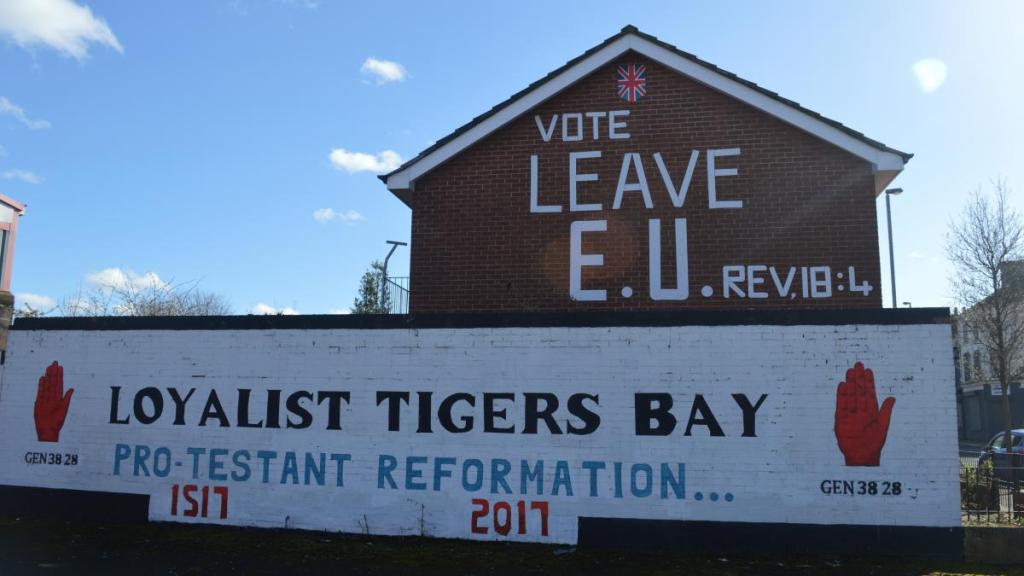
Originally Unionist/Protestant strength was greatest in Ulster because of the ‘plantation’ of settlers from the mainland two centuries before (mainly Scots but also Welsh and English). Colonial ‘plantation’ entailing seizing land from the Irish clan chieftains was overlaid by the English Reformation which stoked bitter sectarianism between Catholics and Protestants. Unionism later emerged from these deeply entrenched class, confessional and sectarian conflicts, in its explicit political form in 1885-86 in order to check the Irish Home Rule movement. But in 1918 Unionism was defeated everywhere except in six of the north east Ulster counties (Armagh, Down, Fermanagh, Antrim, Derry and Tyrone). Here voting favoured Unionism two to one and the Unionist architects of what would become the NI statelet decisively jettisoned the other three Ulster counties as their inclusion would have greatly reduced the Unionist-Protestant majority. As Michael Farrell stated, the Unionist camp “quailed” at the idea of holding down three counties where Catholics were the overwhelming majority. Better to save two thirds of a ship’s passengers than let everyone drown because of a reluctance to leave some behind as Unionist MP Thomas Moles sagely reasoned.
****
Fintan O’Toole recently suggested Britain had “devoured” its Unionist children. O’Toole was in part alluding to the inevitable decline of political Unionism which as an in-group allegiance was surely always something more than the symbolic balm of identity that an assorted coterie of commentators and political scientists promise can be cashed in for relinquishing the benefits of Protestant dominance. The Unionist-Protestant-Loyalist social imaginary (Cornelius Castoriadis) was, and still is powerful. Religious sectarianism, a peculiarly skewed militant anti-Papism, a supercharged patriotism that has no parallel elsewhere in Britain (and its corollary, an acute sensitivity to the ever lurking threat of Establishment betrayal), the psychological compensations of belonging to a strong affinity group with an out-group to hate and all the other components of an entrenched Protestant-Loyalist identity, could never simply be reduced to favouring Protestant workers on bread and butter issues. In the past this political position had forlornly bet on a revival of social struggles to awaken ‘proletarian’ class consciousness and break down sectarianism.
Yet Protestant identity was virtually inseparable from Unionism while the NI statelet was designed with an in-built Protestant majority to contain a restive Catholic minority. This necessitated a sectarian, repressive apparatus enforcing discrimination in housing and employment and preventing Catholics gaining political redress by their curbing civil and democratic rights (including gerrymandering). Protestant workers got preferential treatment in jobs while major engineering and shipbuilding employers like Harland and Wolff in Belfast were bastions of working class Loyalism. In 1970 500 Catholic workers were sacked shortly after the ‘Troubles’ started. But these workplaces couldn’t escape post-war Britain’s relative economic decline and global recession in the 1970s that meant de-industrialisation and the weakening the foundation of loyalist Protestant dominance.
The NI statelet faced fresh challenges from Catholics in the course of the 1960s in an era when expectations of improved living standards, civic freedom and personal liberty prevailed. In 1968 the Catholic dominated the Civil Rights Association (CRA) emerged calling for reforms and an end to Catholics second class status especially in employment and housing. CRA’s peaceful marches were met with brutal violence by NI’s Protestant dominated police force. Police riots and sectarian pogroms in Catholic areas followed and barricades were erected. In 1969 London sent the army at Stormont’s request to restore ‘law and order.’ Many Catholic communities welcomed the respite from Protestant violence but it soon became apparent the army’s presence was about policing a politically reawakened minority whose struggles challenged the ‘Orange state’ and its raison d’etre as peacekeeping morphed into occupation and urban counter insurgency.
Clearly there will be no referendum on Ireland’s reunification in the immediate future but it is closer after the 5 May MLA election. Ultimately a significant majority within NI would have to consent to reunification and majority consent would also have to be obtained in the Republic. No one – not even the supporters of a ‘united Ireland’ – now thinks a majority in the Republic would suffice. To reiterate there must first of all be an independence majority in the north. The principle of consent for Irish reunification rules out coercion and this simply shows that violence whether republican or loyalist, bankrupt and peripheral, is unlikely to find support in any community. A quarter of a century after the Good Friday Agreement turned the page on the bitter ‘Troubles’ much has changed in the ‘province.’ This isn’t to wholly discount the possibility of an uptick in, say, recidivistic Loyalist paramilitary violence to prevent the apparent ‘inevitable’ drift to betrayal and a united Ireland but it is difficult to envisage such a violence acquiring the tacit, broader support of communities that was possible in the past.
A useful analysis of the Assembly results can be found at the LSE British Politics and Policy blog and here we draw on some of their election metrics for comment.
As we know Sinn Féin was the biggest party in the NI Assembly – the first time SF or any nationalist party achieved such a position since 1921 when Stormont, in essence a Unionist parliament, voted to secede from the new Irish Free State. SF’s triumph in NI is deeply significant but the party’s political star has also been rising in the Republic where it challenges the traditional duopoly of Irish politics: Fianna Fáil and Fine Gael who have been in a coalition government with the Green party since 2020 (a historical first for such an unlikely coalition) making SF, as the third largest party in the Republic, the main political opposition.
In the NI Assembly election itself SF won 29% of the available first preference votes and this translated into 27 of the possible 90 Members of the Legislative Assembly (MLA). As we know this gives SF the right to nominate the First Minister – symbolically significant but also practically less important than it appears as the Good Friday Agreement was designed to ensure the two traditions – Unionism and Nationalism – shared power, meaning the Deputy First Minister is equally as important as the First Minister.
SF won the same number of seats as 2017 and triumphed partly because the Democratic Unionist Party (DUP), the main party of Protestant loyalism went backwards. In 1998 the GFA won overwhelming public support in NI but the DUP fiercely opposed it because they believed it would legitimise SF (the party of the gunmen as the DUP hypocritically argued given its close links to Loyalist paramilitarism). In the first new devolved Assembly government, the Ulster Unionist Party (UUP) led by David Trimble and the Social Democratic and Labour Party (SDLP) led by John Hume were the two largest parties. But in the 2003 Assembly election the DUP supplanted its ‘establishment’ Unionist rival and became the biggest party. Similarly, SF overhauled its Nationalist-Catholic rival, the SDLP, in 2003.
So the DUP came second in first preference votes with a 21.3% vote share. This was well down on the 28.1% the party won in 2017 and it lost 3 seats giving it 25 MLAs out of 90 available. In the main the DUP lost votes to Traditional Unionist Vote (TUV), a hardline Unionist group that captured Loyalist votes mainly protesting the DUP’s woeful handling of the NI Protocol (on ballot papers next to the TUV was the pithy slogan: No Sea Border). The TUV won 7.6% first preference votes but gained only 1 seat (1/90 or 1.1%) mainly because the party didn’t get many transfer votes (second preferences).
Alongside SF’s result the centrist Alliance Party has received much attention in coming third by winning 13.5% of the first preference votes but also performed strongly in winning transfer votes. The Alliance Party, neutral on the reunification question, doubled its seat tally compared to 2017 with 17 seats (17/90 or 18.8% thanks to those second preferences). An intriguing sub-plot of the Alliance Party growing support, is the extent to which it indicates the ‘normalisation’ of NI’s politics. Does it a prefigure a breakdown of confessional identity shaping politics? This assumption could be more carefully parsed and though surely part of the party’s appeal it’s also the case SF would hardly have acquired a majority of Nationalist-Catholic support if it had simply focused on the border issue to the exclusion of every other question.
Crucially as the LSE blog underlines, the DUP wasn’t wiped out in the Assembly election while SF’s modest improvements were not translated into more seats. Yet SF and the DUP still benefit from being seen as the political tribunes of their respective communities. The two ‘blocs’ won 35-37/90 MLA seats and 42% of the first preference votes. By contrast the non-aligned ‘bloc’ won 16.4% of the first preference votes but 20% of the available seats thanks to the Alliance Party’s ‘seat bonus.’ The overall picture changed little since 2017. The main story was the DUP faced fiercer competition from within Unionism (UUP and TUV) mainly because of Brexit and the Protocol.
So the Unionist bloc has 37 MLAs –> 25 DUP MLAs + 9 UUP MLAs + 1 TUV MLA.
The Nationalist bloc has 35 MLAs –> 27 SF MLAs + 8 SDLP MLAs.
Others –> 17 Alliance MLAs + 1 People Before Profits MLA.
On these figures the Unionists remain the largest ‘bloc’ with 41% while the Nationalist ‘bloc’ has 38.9% and others including independents retain a 20% seat share. Interestingly, the LSE team have roughly weighed attitudes on the ‘national question’ by tallying first preference votes gained by candidates considered as representatives of different positions, with these results: Unionism 42.2%, Nationalism 41.4% and Others 16.4%. So Unionism remains dominant but only just though we are still some distance from a referendum on reunification.
On the immediate horizon a political storm is gathering because the DUP refuses to take part in the Assembly until the NI Protocol (and the Irish sea border) is scrapped. The Protocol was negotiated by Johnson’s government shortly after he became Prime Minister and shortly before he went to the country and won the 2019 General Election. The Protocol prevented a ‘hard border’ on the island of Ireland between the north and south to guarantee the stability of the political arrangements created by the GFA. But a freely chosen hard Brexit meant a hard border and this had to go somewhere and so it went in the Irish sea separating NI from the rest of Britain because Johnson agreed to such a move. The DUP initially ‘acquiesced’ to a measure they would hardly have accepted from Theresa May. Inevitably the Protocol’s introduction could only increase Unionist opposition to the measure.
Essentially NI remained in a form of customs union enjoying easier access to the goods and services of the Republic (and the EU) and vice versa and whose corollary was harder access to Britain’s economy. In one press conference Johnson even denied there would be checks on goods moving between NI and mainland Britain. The Protocol – designed with a 2024 expiry when some other negotiated arrangement would need to be substituted – helped temporarily alleviate Johnson’s immediate political headache and removed an obstacle to his dash to the polls in December 2019.
The ironies abound because the DUP helped depose Theresa May to install Johnson as Tory leader and Britain’s PM. The DUP had favoured a hard Brexit (as Theresa May also did), voting down a customs union option for Britain as a whole not at all fazed by the fact a majority of NI voters had opted for Remain in the 2016 referendum. A customs union for Britain would certainly have prevented the present political crisis in NI. As it is the DUP is demanding the Protocol be scrapped, unilaterally if need be, preventing power sharing and stymying the restoration of an Assembly executive whose complexion would probably include four Nationalists, four Unionists and two Alliance ministers.
It bears repeating that parties backing the Protocol’s continuation, albeit with reforms where they could be consensually negotiated with Brussels and Dublin, won 53 of the 90 seats in the Assembly elections. It remains to be seen if Johnson or Liz Truss will unilaterally seek to scrap the Protocol as a whole or modify it by invoking Article 16 but it certainly appears the British government and its Unionist claque, is on a political collision course with Brussels and Dublin in a move that flagrantly disregards the views of a majority of NI’s voters. Though predictions are foolish it’s clear a crisis is unfolding because of the political impasse in NI centred on the DUP’s intransigence and Tory brinkmanship with the EU amidst a wider crisis of Britain’s post-Brexit trade policies. Yet in the final analysis these questions pale in comparison with how Brexit’s wider impact is amplifying the longstanding strains on Britain’s unitary state in an era when its post-imperial decline continues in the absence of any major initiative for reform or modernisation of its framework at its centre.
Jules Etjim
References
Michael Farrell Northern Ireland: The Orange State (1973)
Patrick Buckland Irish Unionism (1973)
Tom Nairn The Break-Up of Britain (1977, 2021)
LSE British Politics and Policy Blog
Fintan O’Toole Opinion The Guardian 9 May 2022

