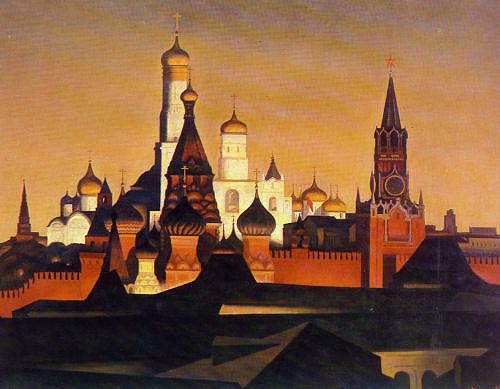
Pyotr Ossovsky ‘Moscow Kremlin at night’ (1979).
“A natural dionysism and a Christian asceticism are equally characteristic of the Russian people. A difficult problem presents itself ceaselessly to the Russian—the problem of organizing his vast territory. The immensity of Russia, the absence of boundaries, was expressed in the structure of the Russian soul. The Landscape of the Russian soul corresponds with the landscape of Russia, the same boundlessness, formlessness, reaching out into infinity, breadth”. Nicolai Berdyaev, The Origin of Russian Communism
Preliminary Remarks
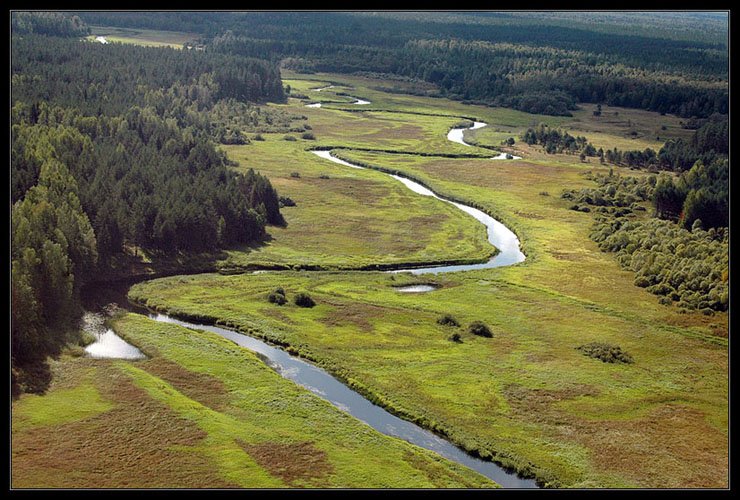
In the West, Russia stands for alterity. An idea of a place of endless grasslands and forests, of mountain ranges and rivers that run from banks arctic to verdant. Also a land of cruelty and cynicism – the land of the great lie as Ante Ciliga called it. Of men in prison and men imprisoned in rituals of faith. A world itself, enclosed and barricaded. This boundlessness is closed because of the lack of differentiation and the paucity of the intersubjective aspect. In thinking and writing about Russia an outsider may lean on and be seduced this alterity and deceived by its mythologies. Nonetheless it seems necessary to note that this imaginary Russia is part of the Russian imaginary, the combined significations and endless referrals of circulating meanings that make a society and create its unique iteration of reality. This is the Great Russian imaginary. One always views the world from somewhere, through a socially instituted vision that is reality for the subject. This is as true for the New Atheist as it is for the Russian village shopkeeper.
My interest in the subject is prompted by this Russian imaginary and its sharp contrast, as otherness, to the culture of Western Europe and North America. This essay concerns the distant Russian past, its influence in the C20th and how its otherness casts a shadow on the contemporary world. If I don’t address parts of Russian culture and history that appear distant from the closed, heteronomous and traditional Russia it is because reality has many domains and an essay, like any individual, can only be a fragment of it.
I From Muscovy to Communism
For Russia the early many modern period was marked by the development of what is now considered its most obvious political aspect: a centralized state dominating all other actors in a vast, expanding territory. While the Western European city gave rise to a heterogeneous social field shaped by political, economic and religious struggles that eventually dissolved the foundations of the social order of the Middle Ages, in Russia the state successfully outlawed the urban assemblies of Kievan Rus while monopolising and fostering a captive foreign trade whilst also closely following the trail blazed by the Cossacks colonization of lands in the south and east.
Statism and autocracy was the rule, blessed by the Russian Orthodox Church that added the Tsar to its Icons. The Josephite tendency in the Orthodox Church favoured a Byzantine model and asked Ivan III to become a kind of Caeseropapist ruler. Ivan had some sympathy with the mystic hermit tradition of the Orthodox Church, which renounced worldly things and state power in favour of the transformation of the inner self through benediction and prayer. Even so the Josephite vision of social Christianity for people and state was too attractive for the man who would be Tsar. When his grandson Ivan IV crushed the Boyars, his Oprichnina was styled as a monastic order founded in the countryside near Moscow – a theological-political order with the Tsar as Abbot.
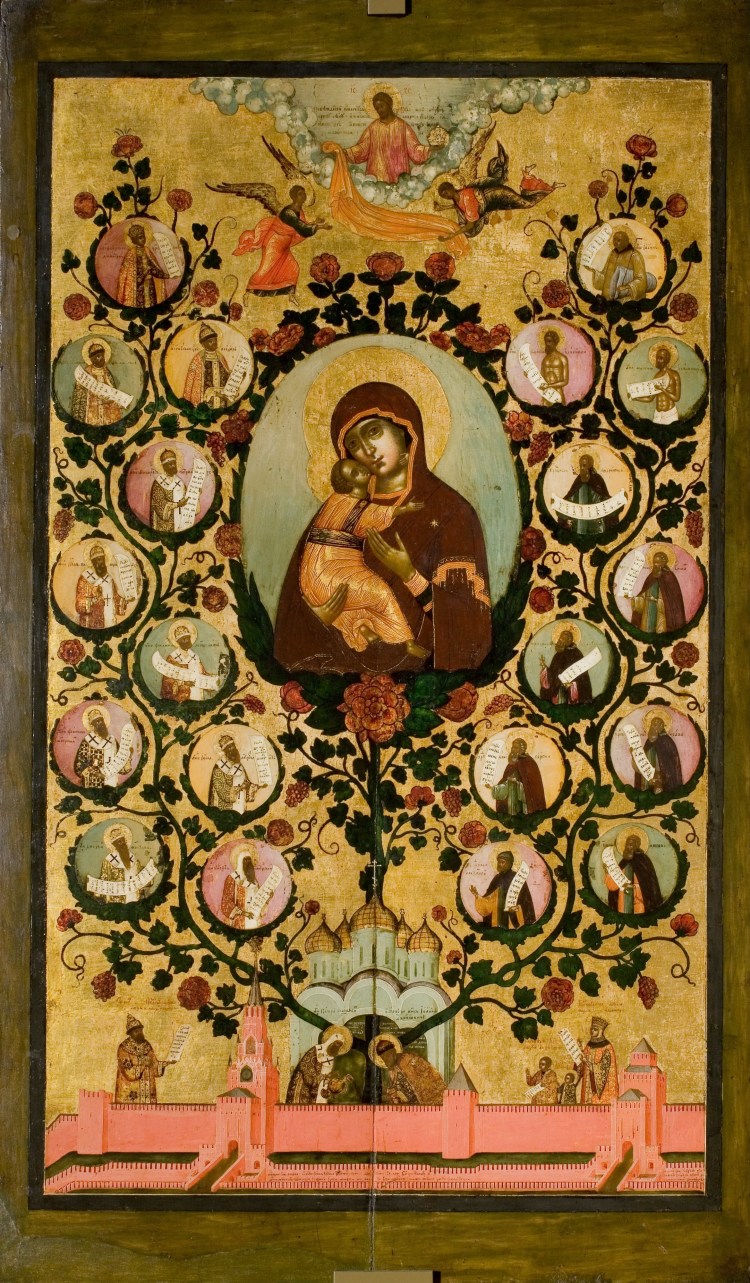
Simon Ushakov, Genealogy of the state of Muscovy (Panegyric to the Virgin of Vladimirsk) (1668).
In the nineteenth century the central question for Russia’s small and marginal intelligentsia generally captivated by Germany, was whether their society was a western or eastern society. Eventually for many the telos of Marxism provided the answer to this question, in the sense that a Western Europe defined by industrial capitalism, was in the vanguard of an inevitable planetary transformation. Today with the return of much of the symbolism of a pre-Soviet historical past in the post-Soviet present and the continuity of autocratic, authoritarian government, the question of the particular unique significations of Russian society, of who the Russians are to Russians themselves and how the idea of closure informs this reflection, seem to possess a special relevance.
A general feature of Russian society that had long been evident was a particular Russian heteronomy that is deeply intertwined with the Christianity of the Russian Orthodox church, marked by political quietism, mysticism and passive intellectualism. The religious philosopher Nicolai Berdyaev who had spent his youth in the Russian socialist movement and lived in Communist Russia until his deportation on the famous philosophers’ ship, believed the connection between Orthodoxy, autocracy and closure, profoundly influenced the revolution.
The twin impulses of modernity in the West, of rationalization and maximalization on the one hand, and the project of individual liberty and collective rights on the other, barely touched Russia until late in the nineteenth century. While Europe was transformed by an ideology declaiming the ceaseless expansion of material outputs, a draconian Russian state often neglected to put to work the rebels it dumped in its vast wilderness to fend for themselves. The official discourse presented a holistic society and a people at one with the Tsar. In contrast revolutionary ideology presented a stupefied but noble peasantry whose suffering under absolutist tyranny would finally lead to the yoke being thrown off and claiming of the land. A boundless, vast steppe littered by Stations of the Cross, fortresses, holy fools, church domes, formed the real and symbolic staging of the social realm.
The apparent terminus of this world in the revolutionary explosions of 1905 and 1917-19, was the result of a peculiar westernization – the militant class struggle of the working class of the cities mixed with a vision of an eschatological, global revolution that was predicated on a very Russian Orthodox idea of the suffering people as vassals abandoned in a cruel world finally being redeemed. Johann Arnason surmised the emergence of Russian Marxism and Bolshevism in particular, as a mixture of these influences:
“As the Russian state became more deeply involved in the global state system and its conflicts, a similar internationalization of the frame of reference took place within the Russian revolutionary movement. But on the whole, the results did not go beyond the projection of Russian perspectives onto the international arena and the translation of Russian models into a more universal language. The Russian revolutionary tradition had developed in the wake of Westernizing revolution from above, and the pioneers of its Marxist phase saw themselves as radical Westernizers, but the underlying significance of Marxist orthodoxy turned out to be the very opposite: it helped to consolidate the independence and hegemonic aspirations of a revolutionary movement which had now become capable of subordinating its original sources of inspiration to its own strategic principles. Lenin’s belief in the ‘actuality of the revolution’ should as suggested above, be interpreted from this point of view: the appropriation of Marxist categories enabled him to rationalize the Russian vision of imminent revolution. The same applies to the notion of the revolutionary vanguard; in What Is To Be Done?, Lenin claims international relevance and a universal-historical mission for a specifically Russian variant of Jacobinism. Lenin’s ideological experiments during the world war can be seen as a further step in this direction. His ‘theory’ of imperialism was an unorganized mixture of unoriginal ideas, but it served a strategic purpose in that it helped to link the revolutionary perspective to a visible rather than an expected crisis.”1
Nicolai Berdyaev, who faced down Felix Dzerzhinsky himself to assert his freedom of thought according to Aleksandr Solzhenitsyn, had an unusual answer to a question that has stood at the crux of C20th history. Why did the theory of proletarian revolution triumph in a country that was, by any conventional reading, so apparently ill-suited to Marxist doctrine? Even if we take Berdyaev’s answer as partial, the suggestion that Marxism, or at least a particular side of it, was attractive to Russian thinking and further, that Marxism covertly masked a continuity with traditional forms of thought while ostensibly repudiating their content (traditional forms that could not be resuscitated), is a compelling question when one considers the return to national-imperial ideology after revolutionary energies ebbed.
“Totalitarianism, the demand for wholeness of faith as the basis of the kingdom, fits in with the deep religious and social instincts of the people. The Soviet communist realm has in its spiritual structure a great likeness to the Muscovite Orthodox Tsardom. The same feeling of suffocation is in it. The nineteenth century in Russia was not an integrated whole; it was divided up; it was the century of free enquiry and revolution. The revolution created a totalitarian communist realm in which the free spirit was stifled, free enquiry disappeared. In it the experiment is being made of subjecting the whole people to a political catechism”2
The Socialist Revolutionary Party (for all their renowned love of the peasant), and the Mensheviks (for all their stagiest dogmatist), considered their projects ongoing and provisional, open to revision. Both parties were aware of the terrible toll demagoguery might inflict on politics. In short they shared a belief that the class struggle was not a zero sum game and that actual means would be far more influential whatever the original subjective intention.
Lenin’s insistence that there was only one correct ‘line’ on any question, this line being not only being politically judicious but uncomplicatedly reflecting the ‘objective interest’ of the working class as a whole (as determined by Lenin) discovered though a dialectical analysis that damned contrary positions as reflecting alien class influences, was essentially theological. One could apparently determine a correct position through a series of analytical and conceptual categories that collectively constituted Marxism. Debate, deliberation and inter-subjectivity were ultimately a distraction from the grand tectonic movement of social classes in history whose telos was a visible, known goal. Berdyaev saw something of the Russian past in Bolshevik certitude:
“[Lenin] combined in himself two traditions: the tradition of the Russian revolutionary intelligentsia in its most maximalist tendency, and the tradition of Russian government in its most despotic aspect. The social democrat Mensheviks and the socialist revolutionaries remained in the stream of the first tradition only, and that in a mitigated form. But combining in himself traditions which in the nineteenth century had been in mortal conflict, Lenin was able to fashion a scheme for the organization of a communist state and to realize it. However paradoxical it may sound, still Bolshevism is the third appearance of Russian autocratic imperialism; its first appearance being the Muscovite Tsardom and its second the Petrine Empire. Bolshevism stands for the strong centralized state. A union was achieved of the will to social justice and the will to political power, and the second will was the stronger. Bolshevism entered into Russian life as a power which was militarized in the highest degree”3
For Lenin, the working class like the peasantry for the Narodniks, was an emotional image that however sincere ones attachment, functioned predominantly as a cultural source, an energia to draw from and animate a lifeless, pre-determined philosophy of history. For the masses crashing the historical stage, first in revolution and later in the ceaseless mobilization of labour resources the Soviet bureaucracy had to rely on to overcome backwardness, an:
“…integrated doctrine was needed, a consistent general outlook, and symbols which held the State together were required. In the Muscovite Tsardom and in the Empire the people were held together by a unity of religious faith; so also a new single faith had to be expressed for masses in elementary symbols. Marxism in its Russian form was wholly suitable for this”4
Bolshevism’s basic doctrine was that if one eliminated the bourgeoisie and simple economic exploitation entailed by the private capitalist factory system, a different anthropological type might be born if given the correct ideological training. Changes in the economic ‘base’ would give rise to their equivalent in broader social relations.
“[Lenin] believed that a compulsory a compulsory social organization could create any sort of new man you like, for instance, a completely social man who would no longer need to use force. Marx believed the same thing, that the new could be manufactured in factories”5
Berdyaev suggests Bolshevism was a rationalization of the irrational and if we regard the irrational as a psychical otherness that is other than what is posited as rational and right in the dominant imaginary, then Berdyaev’s suggestion might be a justifiable proposition. The Russian tradition of redemptive revolution was also an otherness positing a just world. As Arnason noted this utopian otherness marked all the revolutionary tendencies in Russia.
“The peasants considered that the land was God’s; in other words, it belonged to no human being. The peasants always considered the acquisition of the land by the gentry an injustice, as they did serfdom. The communal collective ownership of land was much more to the mind of the Russian people and especially to the Great Russians, thanks to the existence of the commune”6
Looking to the massive horizon the peasant desired to be at one with the land without landlords or officials. This was a desire for the just and a will to unification. The beauty of the land was intrinsically related to feelings of wholeness, oneness and return. Its affect reawakened the primary process feelings of in-utero perfection defined by the lack of want and the symbiosis of the mother-child dyad before individuation proper. Authority in the figure of the Father-Lord, was banished or murdered. If this represents a positive aspect to this desire, the negative aspects relate to the desire to recapitulate natality by recapturing this oneness. This tone feeling decisively influenced the Russian revolutionary tradition, even though committed ‘Westernizers’ like Lenin and Trotsky barely registered it.
Although what Freud called ‘primary narcissism’ is generally considered a myth on modern research, nevertheless this idea of an ‘original psychical situation’ did try to explain the desire for oneness and merger that Joel Whitebook describes as
“…a plenum-like experience of unity, fullness and perfection and a denial of externality, otherness and privation. And once the original experience of unity has been broken, individuals strive to recapture it, in one or another, throughout their lives”7
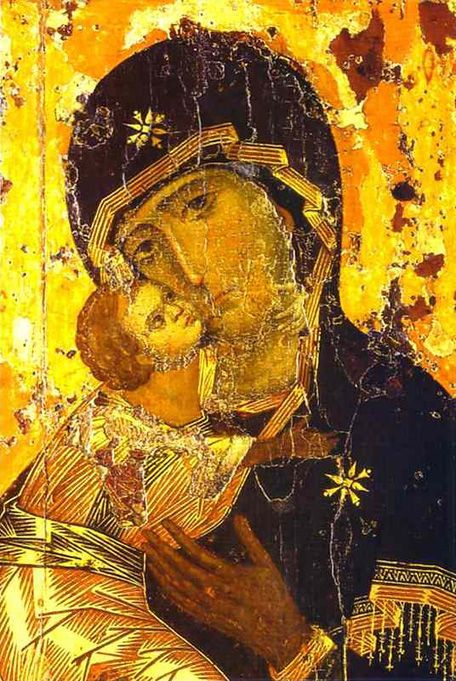
Janine Chausseguet-Smirgel observed that in totalitarian politics, the Leader is a figure of identification, investment and unification; of closure and engulfment that smothers difference. Chausseguet-Smirgel related this identification to an ever present global desire to return to the pre-oedipal state of undifferentiation and symbiosis with the Mother, that Loewald suggested was a tacit understanding derived from the ‘unofficial’ Freud.8 If Russia simply experienced one authoritarian system replacing another authoritarian system with the Party-Leader displacing Church-Tsar as ‘primal mother’, then the change of signifiers did not mean a change in the essential material, phenomena or content. It was surely no accident that the theotokos (iconic representation of Madonna and child) as the emblematic image of Russian art, was replaced by the Party leader’s photograph or socialist realist portrait, as the most common image circulating in Russian society?
“Lenin could not realize his plan of revolution and the seizure of power without a change in the soul of people. This change was so great that the people who had lived by irrational beliefs and had been submissive to an irrational fate suddenly went almost mad about the rationalisation of the whole of life without exception. They believed in a machine instead of in God. The Russian people having emerged from the period of being rooted in the soil, and living under its mystic domination, entered upon a technical period in which it believed in the almighty power of the machine, and by the force of ancient instinct began to treat the machine like a totem”.9
The collapse of the old order left a psychical space that needed to be filled. If we follow Castoriadis in viewing historical change as the emergence of otherness as the older imaginary foundations of society begin to lose their power to satisfy while this novel otherness needs to be socially instituted with significations in order to found a new social order, it follows that we can speculate that Marxist ideology was the functional equivalent of a religion for the new Soviet man. The otherness, worked through in revolution, will, in a heteronomous society, become a whole itself, a weltanschauung, a total vision of the world.
The militant Russian working class in the pre-revolutionary period was strongly attached to the land – as the grandsons, sons, granddaughters and daughters of serfs (serfdom was formally abolished in 1861) but also Social Democratic ideology, the latter more powerful than just a political conviction. The famous ‘Lenin levy’ instituted after Lenin’s death in January 1924, saw a massive influx of former peasants and workers into the Communist Party, who were innocent of the relatively democratic traditions of pre-war Russian Social Democracy which at least tempered the totalitarian element. A wish for social advancement and the new religion of socialist man were in no way exclusive. Equally a belief that the science of modern industry powered the rising People’s State while underwriting the movement of history toward Communism, was central to the new Soviet state religion.
If Orthodoxy could no longer supply the necessary logos for the Westernizing intelligentsia of the C19th, the subterranean longing for the original psychic situation still required sublimation. In Marxism’s claims to totality we see a new iteration of this desire raised to the status of scientific theory. It fulfilled certain requirements for both revolutionary intellectuals and militant workers in that it was a total theory, a theory of the utopia that lay ahead that was a cartography and explanation of the massive, often disastrous social changes occurring in industrializing societies that also provided consolation by positing that, all its evils aside, capitalism was laying the ground for an emancipated society that would abolish social division. As Castoriadis noted, “whether it is the philosopher or the scientist the final dominant intention to find across difference and otherness, manifestations of the same…a primary unity.”10 Similarly Chaussguet-Smirgel suggests to that to purse this unity in the social and political realm can lead to a drive to omnipotence. This perspective views crushing everything via political violence that stands outside the schema of sameness, as part of the project of recapturing oneness so evident as a goal of totalitarian movements and justifying hatred of all those considered other.
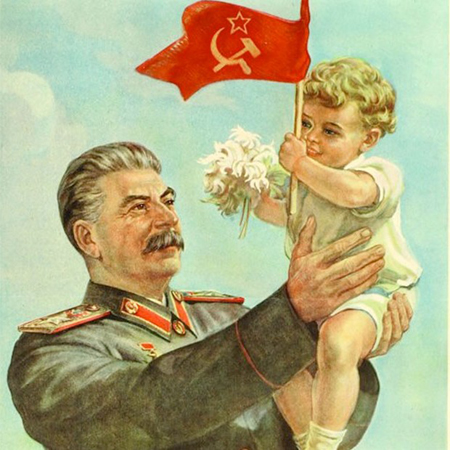
Bolshevik instrumentalism leaned on this dynamic for support. If one side of life in an underground party was Oedipal with members as symbolic Fathers to the broader masses, drawing the latter away from the phantasms of religion and inchoate politics (childhood) into the Marxist reality of the world (maturity), then Leninism’s totalitarian side ultimately represented not a movement to autonomy but a reflexive heteronomy based on a schematic closed worldview. The early resort to ostensibly political iconography, propaganda or revolutionary pedagogy and repression of rival socialist parties and anarchists in the course of 1918, clearly illustrates the primal mother-omnipotence principle at work. This informed the belief that only a Leninist [Bolshevik] has the ‘correct’ line on anything that mattered. This incipient Stalinism – the leadership principle, secret police, party cadre and bureaucratic functionaries – was the omnipotent principle run riot, a state that controlled not only its people but history and ultimately reality itself.
For Western radicals looking east and supporting Stalinism, and who could not fully identify with their own societies for quite comprehensible reasons, there existed an Otherness in the world that had a name and a home, and this was enough for these radicals to disregard the inconvenient facts that everybody should now know.
II The Eurasianist Imaginary
Berdyeav’s argument, despite being the work of a Christian existentialist skeptical of all authority, has some affinities with the thought of a group of Russian émigrés associated with a strand of Russian nationalism of an orientalist hue. One, curiously, happened to be a founding father of structuralism: Nikolai Trubetzkoy. Trubetzkoy, P.N. Savitsky, G.V. Vernadsky and G.V. Floravsky inaugurated Eurasianist theory with their collection of essays Exodus to the East. Trubetzhoy’s book The Legacy of Genghis Khan is their most succinct historical statement.
Eurasianism is a branch of thought related to Slavophile anti-modernists like Konstantin Leontiev and Nikolai Danilevsky. The historian Vernadsky taught with Trubetzskoy at the Russian School in Prague. In Vernadsky’s monumental, highly readable History of Russia, he made a very straight case for the Eurasian doctrine, contending that the development of Russian civilization was fundamentally influenced by Mongol rule. The principalities of Kievan Rus were based on princely rule with a popular and direct democratic element. The Veche – a popular assembly of the adult male citizens in provincial capitals – could hold princely power to account and elect officials. In Novgorod and Vladimir-Suzdal, the Veche wielded substantial power though less so in the aristocrat dominated Galicia and Volynia.
Vernadsky believed that Mongol conquest and rule wiped out this part of the Russian experience. The autocratic principle that Vernadsky essentially saw as a positive aspect of Russian culture, was a particular fusion of Slavic, Byzantine and Mongol elements:
“What was of considerable importance was that the people were trained by the Mongols to take orders, to pay taxes, and to supply soldiers without delay. They continued to perform the same duties for their own grand duke, who became their leader in the national struggle against the Mongols. This change in attitude gradually resulted in a new concept of state and society. The old free political institutions were replaced by an authority of the grand duke. The free society was gradually transformed into a network of social classes bound to state service. The new order took definite shape in the post-Mongol period but its beginnings are to be found in the changes introduced into Russia by the Mongols as a result of their rule”.11
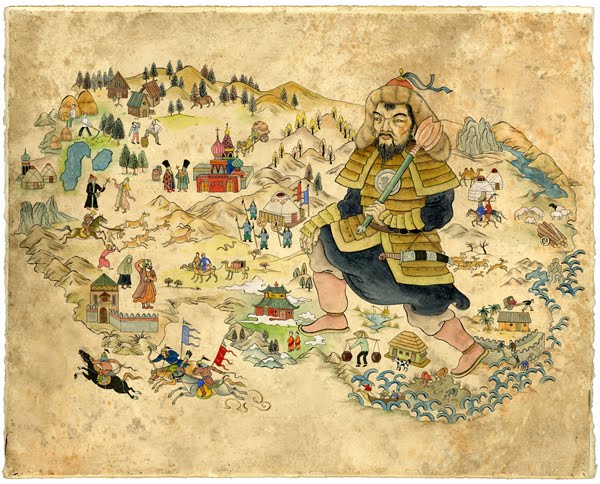
It should be noted that the life of nomads forms an inherent unity in contrast to large settled societies where different elites (aristocratic, military and so on), trades and social classes existed, negating an organic whole and necessitating the Veche. Traditionally the nomadic ger (yurt) is decorated as cosmos with areas representing earth, sky, sun and other elements. The ideal of the organic unity of society (or the world) was immensely attractive and a persistent feature of Russian thought.
The discredited notion of ‘oriental despotism’ has long been considered anachronistic, an orientalist belief based on the idea that all non-Western societies were closed, hierarchical tyrannies. However, the Eurasianists – monarchist and authoritarian in their politics – utilised this notion in an odd manner. For them Russia – neither East nor West but an original fusion of the two – was profoundly influenced by the Mongol occupation. This unique Russian vision of the world alloyed with a base Mongol vision – in which the stultifying suffering of a strict, impoverished and heteronomous social order perversely enriched the soul’s inner life – was played out on the great steppe and in the endless forests and in isolated communities scattered in boundless space, below endless sky. The ceaseless desire for expansion by conquest was also a method to render the Other (those different people encountered across the plain) the same, to make them ‘them’ and force ‘them’ to submit to ‘us’ (or become ’us’) or destroy ‘them.’ This impulse was integrated into the emerging Russian worldview.
Increasingly, the many affinities of the Russian worldview with primary narcissism become clear.
The arctic, forest, steppe and desert ran horizontally across the Eurasian landmass atop of each other – as one realm that couldn’t be artificially separated into Europe and Asia. Geography played an important role in Eurasian theory – polycentrism was an accepted fact of the Eurasian landmass which added up to a broader civilization. While the differences between peoples were evident, their relation to the broader landmass had fused them into a differentiated unity and while some lived on the Steppe and others lived on the rivers, they could be identified in a broader cultural complex.
The original context of Eurasianist thinking was the early C20th debates around the centrality of European models to the project of modernity. The Eurasianists denied that European culture represented the future of the world. Trubetzkoy posited a multilinear world history where different cultures unfurled their own potentialities. So Eurasia stood for an ascetic and fixed collective identity, heteronomously given by ancestors. The vaunted ‘individualism’ of Western Europe was egotism and was bound to lead to the dissolution of national culture. For Trubetzkoy, Peter the Great’s westernizing reforms were the start of Russia’s downfall. The modern enemy was, of course, cosmopolitanism and European chauvinism alike which could only dilute and destroy the intrinsic qualities of other cultures whether by integration, economic transformation or imperialism. He saw the Communist revolution as yet another Western model likely to both fail in Russian conditions but also fundamentally distort Eurasian society.
Lev Gumilev, a highly influential thinker in post-Soviet Russia, gave these Eurasianist ideas a scientistic, behaviourist and more overtly racist complexion. Gumilev was profoundly shaped by Eurasianism and the ‘Marxist-Leninist’ biological and behaviourist theory that found official favour in the USSR from the 1920s onwards. Gumilev was the only son of two famous late-Tsarist era poets (his father was executed by the Cheka in 1921) and suffered three spells in the Gulag including the notorious Norilsk camp in the Arctic north because of his bourgeois, anti-Soviet origins. After the Khrushchev thaw he very slowly managed to gain positions in the Soviet academy. But it was only as an elderly man in poor health in the 1990s that Gumilev was finally feted as an important Russian scholar (Gumilev died in 1992).
Gumilev, a notorious anti-semite, thought that Ethnoses – essentially ethnic-cultural groups – were structured to behave in certain ways according to new behavioural models strongly influenced by terrain and bio-chemical processes, created by the acts of unique individuals or groups of individuals who Gumilev called passionaries. Gumilev’s pseudo-scientific idea held that civilizational complexes formed a biological-behavioural phenomena (though these were not determinate or teleological) created by specific large scale laws of history which human societies were subject to. Thus Ethnoses rose, went through periods of great innovation before they finally settled into cultural stasis. Gumilev presented a cyclical philosophy of history of a type familiar from Oswald Spengler but what would be another pseudo theory is regarded seriously as Gumilev is feted in Russia and Central Asia today.
Like Trubetzkoy, Gumilev justified closed, authoritarian society on the basis of culture, particularly the Asiatic strand of Russian culture. It is little wonder that L.N. Gumilev Eurasian National University is located opposite the Presidential palace in Astana. While Putin, Nazarbayev and other authoritarians may believe it, there is nothing intrinsically European about an open, cosmopolitan attitude to the world. The Eurasianist imaginary – as a curious reaction to modernity – has had a profound influence in post-Communist Eurasia.
III Post-Soviet Traditionalism, Civilizational Orthodoxy and Fascism
Originally the post-Soviet oligarchy wanted a partnership with the Western powers contrary to realist geopolitical claims but accession to NATO among former Soviet dominated European countries and the ongoing imperial ambitions of the Russian state, made this impossible. The deep anger against the disaster provoked by the headlong rush to embrace free market capitalism which impoverished the masses while astronomically enriching a tiny unsavoury elite, eventually drew a response from the statist wing of the ruling class especially when less connected oligarchs started meddling in politics. During Putin’s second Presidential term a civilizational narrative was becoming prevalent as the power-holders became increasingly interested in promulgating ideas drawn from classical sources of Russian exceptionalism. Thus the old currency of the Orthodox world became the general currency.
The apex of Russian state power remained in the hands of former members of the Soviet security apparatus and people who had cut their teeth in the rough and tumble of 1990s Petersburg (sometimes known as the Petersburg lawyers group). Vladimir Putin, a KGB officer who had made in his name in the local administration of Russia’s former imperial capital, is perhaps the only person who can legitimately thought of as part of both groups.
As a bastion of anti-liberal opinion, the Church was a key ally. Mikhail Maslovskiy and Nikita Shangin wrote that:
“The church supports the idea of a strong centralized Russian state. More liberal periods of twentieth-century Russian history are treated negatively by the church hierarchs. Thus perestroika and the first half of the 1990s are associated in their eyes, not with the revival of the church, but the moral decline and the spread of ‘sects’. On the other hand, there is a nostalgia for the more authoritarian periods. Thus the Brezhnev era is seen as stable and quite attractive and there are hopes for Putin as a leader with a ‘strong hand’.”12
Though those professing a deep attachment to religious faith remain a minority, Orthodoxy is widely regarded as part and parcel of the Russian world. The world of closure that is Orthodox theology and the church hierarchy, is a symbolic referent for Russia itself – Russia and Orthodoxy on a symbolic level constituting a unity, indivisible and without remainder.
Again Maslovskiy and Shangin, drawing on the work of sociologist Alexander Verkhovsky, note that:
“State-controlled media creates the image of the Orthodox Church that corresponds to the interests of the regime. In the media the church is presented as supporting all kinds of state policies. The Orthodox Church does not support treating the Russian Federation as a nation-state. The church is not ready to confine itself in the state boundaries since the ‘Holy Russia’ includes also Belarus and Ukraine. The ‘canonical territory’ of the Russian Orthodox Church ‘roughly corresponds to the territory of the former empire’ and thus the church is ‘the last really existing structure that has been preserved on the imperial scale after the disintegration of the USSR’”13
In the rationalizing ideologies of modernity one might be tempted to consider this Russian imaginary as a purely ruling class ideology, a mere screen for the interests of the Russian establishment. As we have noted the state did indeed ally with the Church to bolster the foundations of its rule after the strategic alliance with the West failed. But again we should be clear that imaginaries are not ideologies. Rather, an imaginary is functionally necessary for society. Also rationalising ideologies are imaginaries themselves even if their adherents do not consider them as such.
In his geopolitical theory, the Russian fascist Alexander Dugin has offered a historically dubious but conceptually strong civilizational, geopolitical defence of Putin’s securocratic government, especially its expansionist policies. Dugin’s neo-Eurasianist ideology represents a hodge-podge of Eurasianism, post-war European fascist thought and traditional Great Russian imperialism.
If Russia, as so many have claimed, is a unique cultural entity then it is not surprising that its foreign or geopolitical policy, seeks to preserve itself in a rapacious world system. Also, if as is the view of this author, Russia is a weaker imperialist state ruled by an utterly cynical police-oligarchy compact, then cynical, authoritarian rule does not preclude being invested in this ideology. Freud noted long ago that it is perfectly possible for two contradictory thoughts to occupy the same space. Reflexive heteronomy and cynical instrumentalism in relation to passionately held ideas and beliefs are hardly uncommon in history.
A multi-polar world constituted by different civilizational entities is the world favoured by Dugin – at least until the Russian imperial state is strong enough to go beyond reclaiming its ‘lost’ territories. Essentially Dugin’s worldview is a radical right wing version of the ‘anti-globalisation’ narrative while his propaganda tracts take aim at the ‘globalists’ by which he means both free market capitalism and cultural cosmopolitanism. When Marine Le Pen declared that this century would be a battle between ‘Patriots and Globalists’, this cri de coeur of C21st fascism was pure Dugin.
At Hugo Chavez’s funeral Putin’s close ally Igor Sechin described the deceased president as the founder of the multi-polar world. The Russian oligarchy was posing as ‘anti-imperialist’ and extending that sobriquet to similar second order powers, particularly a cohort of tyrant-oligarchs whose ‘anti-imperialism’ insulated them against popular domestic challenges to their rule in the name of the rights of nations and sovereignty. Bashar al-Assad at least was paying attention. Neo-Eurasianism and Putinism had joined hands on the national and the international (or geopolitical) level.
Unsurprisingly Dugin believes Putin saved Russian civilization from Gorbachev’s betrayal and Yeltin’s ruinous delirium and since the war with Georgia in 2008 successfully reasserted Russia’s imperial and traditional foundations as a political entity. For Dugin the Western countries represent thassalocracy: the civilization of the sea, standing for mercantilism, cosmopolitanism, individualism and a trajectory of asymptotic historical progress. The global image of the Western countries is one of fluidity, change and the promise of free will with all its tragic and bathetic potentialities.
Dugin derived the binaries of thassalocracy and tellurocracy from an obscure British academic Halford Mackinder who in a 1904 lecture to the Royal Geographical Society argued that Britain’s main strategic opponent was Russia rather than Germany. Essentially Mackinder invented geopolitics by predicting that the enduring strategic, geopolitical rivalry would prove to be that between Britain and the United States with their naval power on the one hand, and Russia with its vast steppes and spaces, on the other. For Russia the first goal of geopolitics was control of the Eurasian ‘heartland.’ After the Second World War, the US took over the role as the centre of world thassalocracy. As a civilization of sea, the US had enormous strength being a continental power protected by two world oceans. Dugin also borrowed from Carl Schmitt’s small book Land and Sea (1954), on the consolidation of the modern state system. Schmitt presented the binary of the land and sea as antipodal: whale and bear, leviathan and behemoth, fluid and fixed. Societies that were sea based were in relative flux, open to historical possibilities. Pirates and privateers, merchants and adventurers had, “fulfilled a thirteenth-century English prophecy: ‘The lion’s cubs will turn into the fishes of the sea’. At the end of the Middle Ages, the lion’s cubs were tending sheep in the main, and fleece, sold in Flanders, was processed there into cloth. It was only in the sixteenth and seventeenth centuries that this nation of shepherds recast itself into a sea-roaming nation of privateers, into the ‘children of the sea’”14
In contrast Russia was tellurocratic: a civilization of the land standing for closure, social unity and fixed historical dimensions. A synchronic image of Russia exists in perpetuity as an ideal for the realm of politics to emulate while its truth qua truth was essentially inarticulate for Dugin and his comrades because of Russia’s ideological and ethnological purity. But for us from a Freudian standpoint Dugin’s conception of Russia leans on an unconscious desire for integration without remainder with the primal mother, presented as a unique cosmos of tundra, plain, forest, river, Kremlin and pogost, repressed and forgotten, prelinguistic.
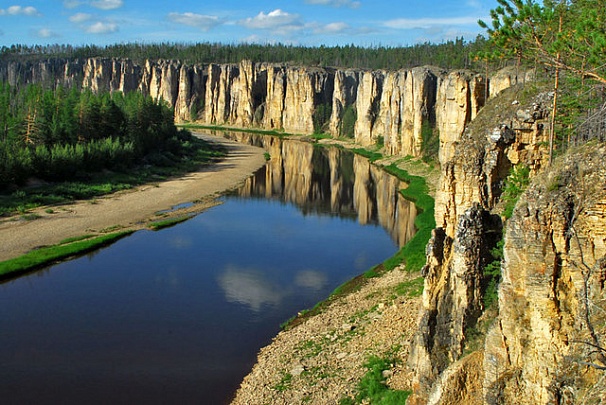
For Dugin the Western world view has colonized the global imagination to such a degree that he is forced to admit – like fascists and reactionary anti-modernists before him – that compromises with modernity are inevitable but even so the tellurocratic ideal of Russia stands as a cultural source or a Kitezh for the modern Russian soul. Dugin views the current world situation as a battle between liberalism and authoritarian traditionalism. Unlike other fascist ideologies, neo-Eurasianism reclaimed and defended the tellurocratic aims of the Soviet Union especially (though not exclusively) its High Stalinist period. Dugin views communism’s emphasis on the ‘people-as-one’ as an ultimate good with Lenin’s takeover of the Tsarist state fortuitous and Stalin’s expansionism as standing in the Great Russian tradition.
In contrast Dugin’s political theory considers Atlanticism, liberalism and postmodernism to be expressions of the same phenomena: the unipolar world under American leadership. So Dugin channels Rene Guenon and Julius Evola in seeing individualism, democracy and capitalism as ills blighting the modern age and therefore proposes that anti-capitalists, traditionalists, authoritarian states and white nationalists should all unite against the American world order. Unsurprisingly the rapid descent into conspiracy theories about the New World Order is not far behind.
If communism (the second political theory) and fascism (the third) were remnants of a bygone age, Dugin’s Fourth Political Theory united the anti-capitalism from communism and the nationalism from fascism, into a new anti-cosmopolitan and anti-individualist theory, the Fourth Political Theory, that was a harbinger of a multi-polar world of civilizational complexes without internal schisms or autonomous populations. Instead each distinct peoples would be shaped by a traditional outlook determined by their specific history and geography in heteronomous ‘units’ whose interrelations would be conducted by elite power-holders.
To use Lefortian terminology, the unique symbolism integral to democracy in which power is an open space occupied by the competing claims of different groups, is repudiated in favour of autocratic rule on behalf of the ‘people-as-one’. The Other(s) who must be respected and accepted as a legitimate actors in a democratic polity are to be cast out and annihilated in a traditionalist polity. According to Dugin, the symbolic space of power is now filled by that modern Tsar, Vladimir Putin and his state. Thus in Castoriadian language, Dugin aspires to a new social imaginary based on a very firm idea of what Russia is – in which gender roles are conceived in traditional terms and strictly maintained, the ‘nations’ of the Russian empire are under Moscow’s dominance (exposing Dugin’s unconvincing claims to respect all ‘Eurasian’ cultures) and Russian civilization is a world of closure based on traditional values. The endless plain is the infinite stage for Eurasian civilization that reaches back to the golden horde and pre-Petrine Tsardom.
This perfectly encapsulates a philosophical version of Putin’s worldview:
“Do not harbour any illusions,” [Putin] once told US vice President Joe Biden…”We are not like you. We only look like you. But we’re very different. Russians and Americans resemble each other only physically. But inside we have very different values.” According to one of his closest aides, Putin thought long and hard about traditional Russian values. “Putin was more concerned about values than about Russia’s unique path,” says the aide. “He believed that building capitalism was every country’s destiny.” The main source of Putin’s contemplations was the philosopher Ivan Ilyin. Based on Ilyin’s works, Putin placed the basic values of Russian society in this order: God, family, property”15
Though Dugin’s influence is often overstated (he is certainly not at all influential on the power holders policy decisions), he has not been short of work or commissions in Putin’s Russia (Dugin can be seen on RT cable news regularly). Putin himself has recommended Russian’s read Gumilev and the genuinely frightening Slavophile fascist Ivan Ilyin. Dugin lost some of his influence when his outright genocidal fascism – calling for all Ukranians resisting Russian power to be killed – proved a bit too much for the notoriously cynical and savvy operators in the Kremlin. However, the annexation of Crimea, the repression of that peninsula’s Tatar population and the invasion of Eastern Ukraine complete with the founding of bogus ‘Peoples Republics’ (Donetsk and Lugansk) was an operation that drew the support of every Russian fascist and not a few nominal leftists for whom the recycled symbolism of Stalinist power was too libidinally heady to resist. The whole annexionist enterprise was predicated on the traditional imperial symbolism of the Russian imaginary of the Orthodox-Eurasian civilization and fully supported by the Church. Russia’s outrageously effective sponsoring of the European far right and, above all, Donald Trump’s Presidential campaign, was again posited on the basis of strong opposition to cosmopolitanism in favour of a traditional-reactionary weltanschauung based on closure, white nationalism and patriarchy. In that sense both Putin and Dugin were swimming in the same stream.
Conclusion
Why talk about Russia now other than its importance as a great power? One reason is because of its Otherness. Indeed it might be this Otherness that attracts some sections in Western democracies repelled the meaningless of contemporary consumerist culture, as the ideological bearings of traditional forms of identity come apart further. Not only Donald Trump but Nigel Farage, Marine Le Pen and the various leaders of the continental post-fascist parties, have all expressed admiration for Putin. Right-wing populist politics in North America and across Europe is mutating into a traditionalist-reactionary block that openly admires authoritarian states like Russia which stand for anti-cosmopolitanism and heteronomy. Much of the North American and European left has fallen for this Putin mania – with a myopic inflation of the dangers of America imperialism leading them to campist conclusions. For evidence, witness much of the left’s open or more cryptic support for Bashar al-Assad’s war on his own people on the basis of opposition to non-existent American intervention and phantasmagorical regime change. Such powerful illusions again recall our earlier point about the psychical feelings of oneness, unity and wholeness which can be derived from the anthropological (ontogenetic) experience of the infant that underpin the appeal of monistic weltanschauungs, as a particular response to the meaningless of modern society.
The pioneers of the classical psychoanalytical tradition studied psychotics not just to ‘treat’ the afflicted as physicians but because they believed these benighted psychotic individuals who found reality as a whole literally so painful they had broken with it (the psychotic break) and constructed their own world, revealed to us something profound about the human psyche. I am not suggesting that heteronomous societies are psychotic but rather that closed worldviews cannot adequately cope with the inter-subjectivity required by a modern world whose inherent nature means human rights, human autonomy and diversity are important positive values. Recently Joel Whitebook suggested that Trump supporters rejection of modern American, particularly the reality of an America where whites are no longer a majority, has led then to reject reality altogether:
“Of course, a clinical psychoanalytic experience and general social experience are not strictly analogous. But a comparison of them can prove illuminating. Just as disorientation and bewilderment tell analysts something significant about what they are experiencing in the clinical setting, so to our confusion and anxiety in the face of Trumpism can tell us something important about ours. I am suggesting, in other words, that Trumpism as a social experience can be understood as a psychotic-like phenomena”.16
Does Trump represent the primal mother to his supporters? Perhaps. But a social phenomenon like Trump or Brexit or even continental post-fascism, Modi or Duerte, all share a backward gaze to a past that in fact never existed. Where the majority ruled without uppity minorities demanding to be accounted for, when the nation was ‘one’, homologous, home. The tendency of the psyche to strive for undifferentiated oneness finds potentially dark and dangerous material here.
In an important article Hartmut Rosa discussed those attracted to such politics:
“Their relationship with the world is precarious and rebarbative, they feel unheard, unseen, isolated and voiceless in an indifferent or even threatening environment, where the most important thing is, as far as possible, to keep the world at bay. The Other, the vital, the young, the intangible must not affect them, either physically or spiritually, let alone transform them. The more disillusioned and depressed, the more alienated people feel, the more drastic becomes their craving for a strategy of immurement. The world that seems a threat to them must be kept at a distance and their relationships with it reduced to a minimum…Parties such as the AfD (Alternative for Germany) in Germany, the PiS (Law and Justice) in Poland, the SPO (Party of Civic Rights) in the Czech Republic, the Front National in France, the Partij voor de Vrijheid (Party of Freedom) in the Netherlands and the FPO (Freedom Party) in Austria all converge in their repressive and at times racist refugee policies, which are geared towards the radical exclusion of foreigners. This is the ‘essence of their brand’, and it is no coincidence that this is also the key to Donald Trump’s success. Foreigners and their ways are to be kept out with walls and fences – and if necessary with mines and guns”17
The necessity of fashioning a proper response to this phenomenon is urgent. The C20th versions of radicalism, of left politics, produced more of the same: monistic worldviews that became functionally similar to the ideologies they ostensibly replaced. A new imaginary is vital but it must avoid ideology and certainty and instead inscribe diversity and otherness as positive values at its centre. It must be aware of the temptations and dangers of the psychic drive to unity and put such drives to work in ways that benefit inter-subjectivity – in music, art and the appreciation of a natural world that humanity is ineradicably connected to. Perhaps then our otherness may not be the darkness lurking in our psyches.
by Joseph Aylmer
Notes
1. Arnason, The Future That Failed: Origins and Destinies of the Soviet Model
2. Nicolai Berdyaev, The Origin of Russian Communism.
3. Berdyaev, ibid.
4. Berdyaev, ibid.
5. Berdyaev, ibid.
6. Berdyaev, ibid.
7. Joel Whitebook, Monotheism and the Repudiation of Feminity
8. See the discussion of Loewald on the relationship of pre-Oedipal to the Oedipal, the maternal to the paternal in the ‘official’ and ‘unofficial’ in Whitebook, Freud, An Intellectual Biography pp.169-70.
9. Berdyaev, ibid.
10. Cornelius Castoriadis, The Imaginary Institution of Society.
11. George Vernadsky, History of Russia
12. Maslovskiy and Shangin, Orthodox Religion and Politics in Post-Soviet Russia from ‘Religion and Politcs: European and Global Perspectives’ Edited by Johann P. Arnason and Ireneusz Pawel Karolewski
13, Maslovskiy and Shangin, ibid.
14. Carl Schmitt, Land and Sea
15. Quoted in Karen Dawisha, ‘Putin’s Kleptocracy: Who Owns Russia?’
16. Joel Whitebook Trump’s Method, Our Madness https://www.nytimes.com/2017/03/20/opinion/trumps-method-our-madness.html?mcubz=3
17. Harmut Rosa ‘Adaptation not Fossilization, Two Responses to the Refugee Crisis’ http://www.eurozine.com/adaptation-not-fossilization/

